
Introduction
Why Mechanical Pest Control Methods Are the Smartest First Line of Defense
Mechanical pest control methods are physical, hands-on techniques used to block, remove, or destroy pests — without sprays, chemicals, or harm to your garden’s ecosystem.
Here’s a quick overview of the main approaches:
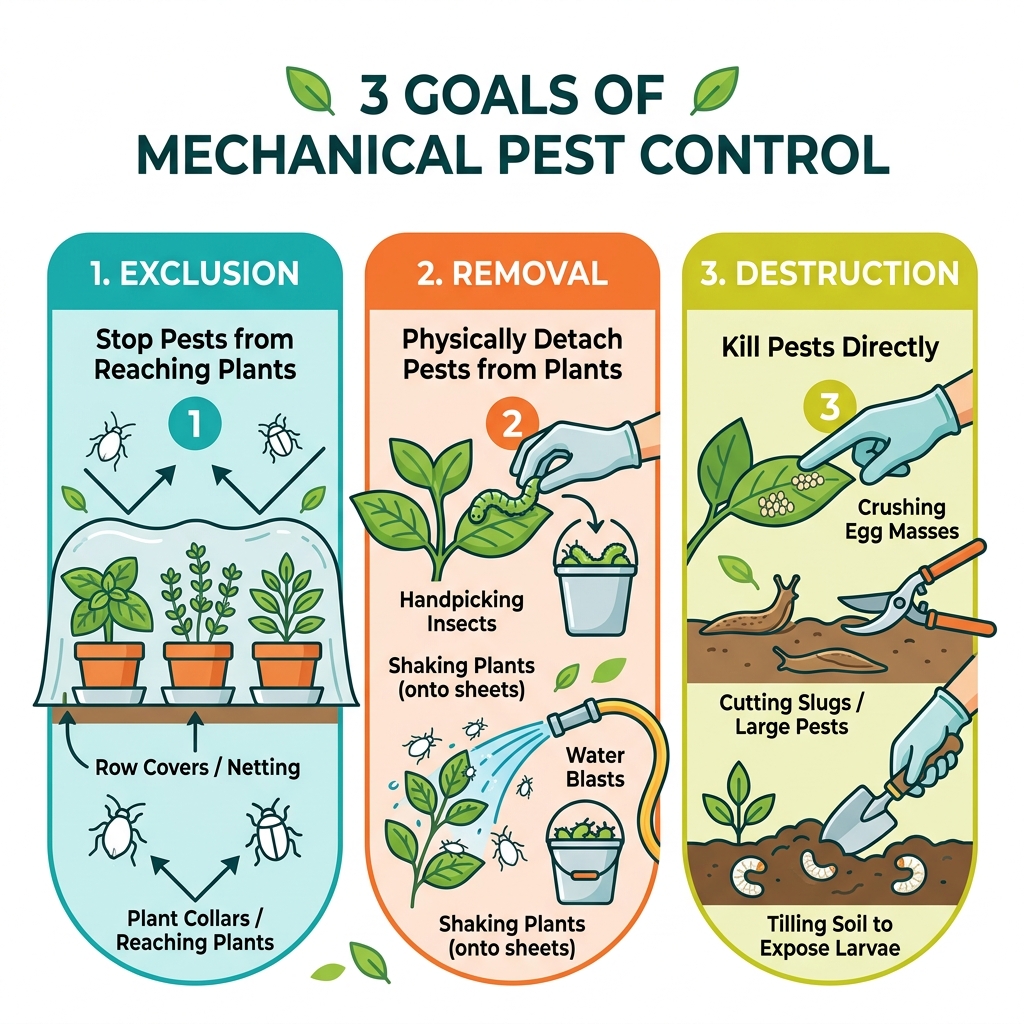
- Exclusion — Use row covers, netting, collars, or barriers to physically stop pests from reaching your plants
- Removal — Handpick insects, shake plants over a sheet, or blast pests off with a strong stream of water
- Destruction — Crush egg masses, cut slugs, till soil to expose larvae, or use traps to kill pests directly
- Environmental manipulation — Adjust moisture, temperature, or debris to make your garden less inviting to pests
These methods work especially well for herb gardens, where you really don’t want chemical residues anywhere near plants you’re going to eat or smell.
The good news? Most of these techniques require nothing more than your hands, a hose, or a simple screen. They’re low-cost, safe for kids and pets, and they leave beneficial insects like bees and ladybugs completely unharmed.
The challenge is that pests don’t wait. A single aphid colony on your basil can explode in days. Knowing which physical method to use — and when — makes all the difference between a thriving herb garden and a frustrating one.
This guide breaks down every major mechanical method, from sticky traps to soil solarization, so you can build a smarter, chemical-free defense for your plants.
Core Mechanical Removal and Environmental Manipulation
When we talk about Mechanical pest control, we are looking at the most direct way to interact with the environment to stop a pest’s progress. Unlike chemical solutions that linger in the soil, mechanical methods are “active” interventions. We aren’t just waiting for a spray to work; we are physically changing the landscape to make it uninhabitable for invaders.
One of the first steps in any successful management plan is identifying the little black bugs eating your herbs. Once you know who the culprit is, you can decide which environmental “lever” to pull.
Tillage and Soil Manipulation
Tillage is a classic agricultural technique that serves as a powerful mechanical control. By turning the soil, we expose soil-dwelling insects, such as grubs or wireworms, to the surface. This does two things: it subjects them to desiccation (drying out in the sun) and makes them an easy snack for local birds. Furthermore, tillage can help plants outgrow pest feeding by warming the soil faster in the spring, giving your herbs a head start.
Soil Solarization
If you’re dealing with a persistent patch of soil-borne pests or diseases, soil solarization is a brilliant “set it and forget it” mechanical method. This involves covering moist, bare soil with a clear plastic mulch (usually 0.015–0.05 mm thick) for 4 to 6 weeks during the hottest part of the summer.
The plastic traps solar energy, heating the soil to temperatures over 100°F (38°C). This intense heat destroys heat-sensitive pests, fungi, and weed seeds. While it is highly effective, keep in mind that it is non-selective; it may also reduce populations of beneficial soil organisms, so we recommend using it as a targeted “reset” button for troubled garden beds.
Temperature and Moisture Control
Manipulating the environment also includes managing “abiotic” elements—the non-living parts of your garden. Pests love moisture and shade. By clearing away leaf litter, stones, and debris, we remove the “housing” that pests like slugs and earwigs rely on. In indoor herb gardens, managing humidity can be just as important. For instance, 10 best herbs for pest control to save your garden can be integrated into your layout, but if the air is too stagnant, you might still face issues.

Handpicking and Manual Destruction
Handpicking is the most ancient and direct of all mechanical pest control methods. It is often the quickest way to deal with a small, visible infestation before it reaches a “tipping point.”
- Egg Masses: Many pests, like the sugarcane top shoot borer or the Colorado potato beetle, lay conspicuous egg masses on the undersides of leaves. Finding and crushing these in March or May can prevent a massive outbreak later in the season.
- Larvae and Adults: Large, slow-moving pests like tomato hornworms, squash bugs, and the Colorado potato beetle are perfect candidates for handpicking.
- The Soapy Water Trick: Instead of just squashing bugs (which can be messy), we recommend carrying a small bucket of soapy water. When you find a beetle or a caterpillar, simply flick it into the bucket. The soap breaks the surface tension of the water, ensuring the pest cannot crawl out.
For those just starting out, natural pest control for beginners often begins with this simple daily walk-through of the garden. According to Mechanical Methods of Insect Pests Control, manual collection is highly effective in smaller plots where labor intensity isn’t a barrier.
Using Water Sprays as mechanical pest control methods
Sometimes the best tool in your arsenal is a garden hose. High-pressure water sprays are incredibly effective against soft-bodied, wingless pests like aphids and spider mites.
If you find aphids on basil indoors are a real buzzkill, a sharp stream of water can physically dislodge them from the stems and leaves. For many of these tiny sap-suckers, once they are knocked to the ground, they are unable to find their way back up to the tasty new growth of your herbs.
Pro-Tip: Use water sprays in the morning. This allows the foliage to dry out during the day, which prevents fungal diseases from taking hold. While this provides “temporary suppression,” it is a fantastic way to keep populations below the damage threshold without using a single drop of pesticide.
Physical Barriers and Exclusion Techniques
If removal is the “offense,” then exclusion is the “defense.” Barriers are designed to keep the pest and the plant from ever meeting. This is the cornerstone of smarter pest management because it prevents damage before it starts.
Row Covers and Netting
Floating row covers are lightweight, spun-bonded polyester fabrics that “float” over your crops. They are a gardener’s best friend for several reasons:
- Pest Exclusion: They provide a physical wall against flea beetles, cabbage loopers, and aphids.
- Microclimate: They can offer frost protection and reduce wind damage.
- Yield Boost: By warming the air around the plant, they often lead to earlier harvests.
When netting your way to flea beetle freedom, the secret is in the seal. You must completely secure the edges of the fabric to the ground using soil, rocks, or staples. If there is a gap, the pests will find it.
Timing is Everything: Remember to remove row covers when your plants begin to flower if they require insect pollination. You don’t want to exclude the “good guys” like bees while trying to keep out the “bad guys.”
Copper Tape and Protective Collars
For crawling pests like slugs and snails, copper tape acts as a mechanical “electric fence.” When the slime of a slug touches the copper, it creates a tiny, unpleasant reaction that turns the pest away. This is perfect for potted herb gardens.
For cutworms, which wrap themselves around the base of young stems to feed, a simple paper or cardboard collar (about 2-3 inches tall) pushed an inch into the soil can provide a life-saving shield for your seedlings.
Specialized Barriers: Trenches and Bands
In larger agricultural settings, more robust mechanical pest control methods are used:
- Trenches: Digging a trench (roughly 30-60cm wide and deep) around a field can stop marching pests like armyworms or locusts from moving from one area to another.
- Metal and Sticky Bands: Placing tin or plastic bands around the trunks of trees (like coconut palms or mango trees) prevents rats and mealybugs from climbing up to the fruit. A 25cm wide polythene sheet smeared with grease is a classic way to stop mealybug nymphs in their tracks.
Best Practices for mechanical pest control methods
To make these methods work, you can’t just set them and walk away. Successful pest control for herb gardens requires a strategy:
- Monitoring (Scouting): Check your plants at least twice a week. Look under the leaves! Early detection is the difference between handpicking five beetles and losing an entire crop.
- Sanitation: Keep the area clean. Remove “volunteer” plants and weeds that might act as hosts. natural weed control methods for your organic garden is a vital part of pest management because weeds are often the “bridge” pests use to reach your herbs.
- Action Thresholds: Don’t panic at the sight of one bug. Determine how much damage you can tolerate before you spend hours handpicking.
- Timing: Many pests are most active at dawn or dusk. Shaking a tree to dislodge beetles is much more effective in the cool of the morning when the insects are sluggish.
If you are struggling with specific sap-sucking insects, follow stop the sap suckers: a guide to aphid-free herbs for a tailored approach to these common invaders.
Traps and Monitoring in mechanical pest control methods
Traps serve two purposes: they tell you what pests are present (monitoring) and, in some cases, they can reduce the population (mass trapping).
| Trap Type | Target Pest | Primary Use | Mechanism |
|---|---|---|---|
| Yellow Sticky Traps | Aphids, Whiteflies, Fungus Gnats | Monitoring & Control | Color attraction + adhesive |
| Pheromone Traps | Codling Moths, Beetles | Monitoring | Chemical “scent” lures |
| Light Traps | Moths, Leafhoppers | Mass Trapping | Attraction to UV/Light + water basin |
| Shingle/Board Traps | Squash Bugs, Slugs | Collection | Providing “artificial” cool shelter |
Sticky Traps
Yellow is a color that many flying insects find irresistible. By placing yellow sticky cards at the height of your plant canopy, you can catch aphids and whiteflies. This is a staple in greenhouse management. While natural pest control methods for organic gardening often include these, be careful not to place them where birds or beneficial butterflies might get stuck.
Pheromone and Light Traps
Pheromone traps use the “scent” of female insects to lure males. These are highly specific and excellent for sampling populations to see if a pest has arrived in your area. Light traps, often using a kerosene-water mixture at the base, can drown hundreds of nocturnal pests in a single night.
For those who enjoy a bit of tinkering, diy organic pesticides for home gardeners can often be paired with these traps to create a comprehensive defense system.
Frequently Asked Questions
What is the difference between mechanical and biological control?
Mechanical control uses physical force or barriers (hands, nets, fences) to manage pests. Biological control relies on living organisms, like ladybugs or parasitic wasps, to hunt and kill pests. Mechanical methods are usually faster for acute problems, while biological control is a longer-term “balancing” of the ecosystem.
Are mechanical methods effective for large-scale farming?
While some methods like handpicking are too labor-intensive for large farms, others scale perfectly. Tillage, crop rotation (which starves out specific larvae), and large-scale row covers are used by organic farmers worldwide. Mechanical “hopper dozers” and specialized residue-crushing equipment are also used to manage pests across hundreds of acres.
How does soil solarization work for pest management?
It works through “pasteurization.” By trapping the sun’s heat under clear plastic, the soil temperature rises 10-20°C above the ambient temperature. This heat essentially “cooks” nematodes, weed seeds, and soil-borne pathogens without the need for toxic soil fumigants.
Conclusion
Embracing mechanical pest control methods is about more than just avoiding chemicals; it’s about becoming a more observant and connected gardener. By using physical barriers, manual removal, and smart traps, we can protect our plants while keeping the local ecosystem healthy and vibrant.
At Ponto de Arte, we believe that the best way to enjoy your herbs is to know they were grown with care and safety in mind. Whether you are using a simple paper collar to protect a seedling or deploying a fleet of sticky traps, these physical methods are the foundation of a sustainable garden.
Ready to take your garden to the next level? Protect your aromatic herb garden with our specialized tips and ensure your basil, mint, and rosemary stay pest-free the natural way. Happy gardening!
