
Understanding the Enemy: What Are Aphids and How Do They Damage Plants?
To defeat an enemy, we must first understand how they operate. According to research from the University of Florida: Aphid Biology, aphids are small, soft-bodied insects that are typically pear-shaped. While they are often green, they can also appear white, black, brown, gray, or even pink. There are more than 4,000 species of aphids described worldwide, and roughly 250 of these are considered significant garden pests.
In our aromatic herb gardens, aphids act like tiny vampires. They use their needle-like mouthparts to pierce plant tissue and siphon off the nutrient-rich sap. This process does more than just “make the plant thirsty.” It causes a range of visible and physiological issues:
- Stunted Growth: By stealing the plant’s energy, aphids prevent new shoots from developing properly.
- Leaf Distortion: You will often see curled or twisted rosemary needles where the aphids have been feeding.
- Virus Transmission: Aphids are notorious for spreading plant diseases as they move from one host to another.
- Sooty Mold: As they feed, aphids excrete a sticky, sugary substance called honeydew. This residue often becomes a breeding ground for a black fungus known as sooty mold, which blocks sunlight and interferes with photosynthesis.
- Nutrient Deficiency: Large colonies can cause a systemic decline in plant health, mimicking signs of mineral deficiencies.
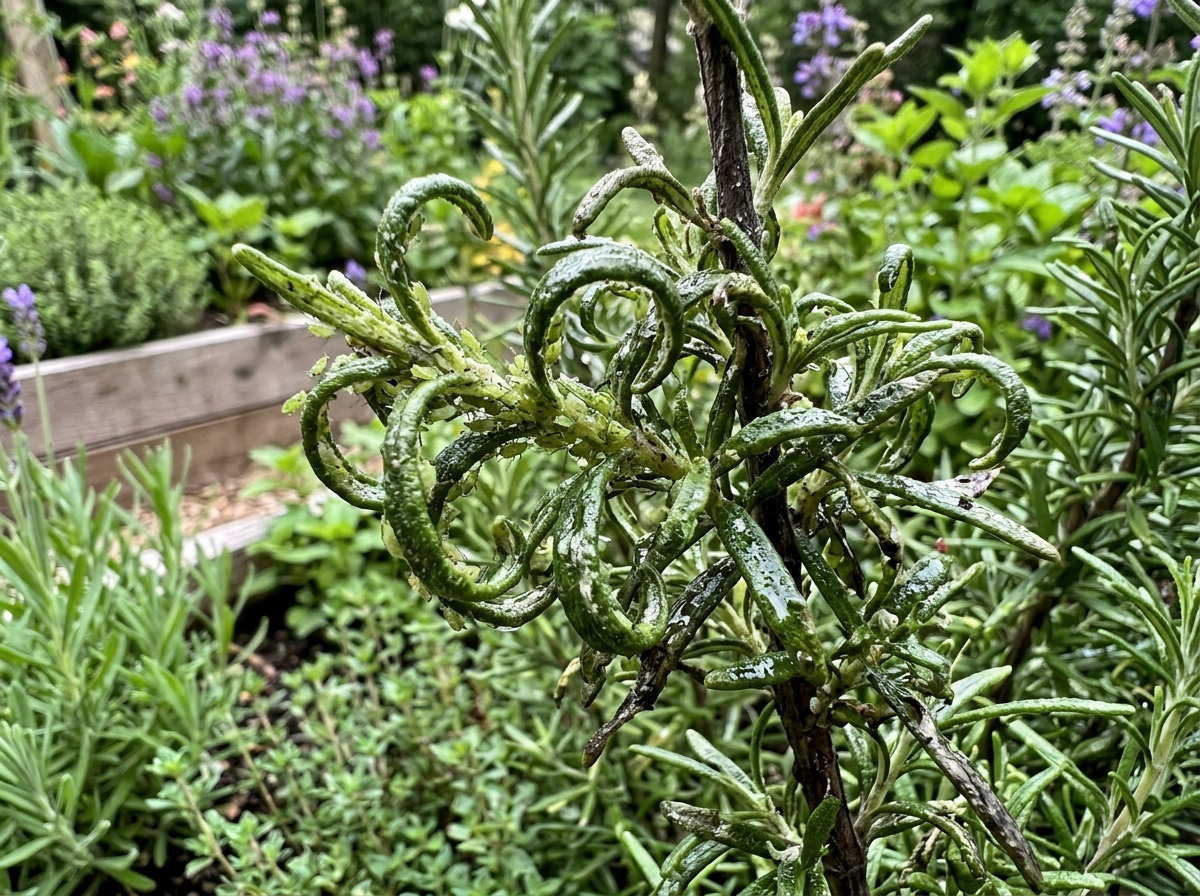
Common Signs of an Aphid Infestation
Vigilance is our best tool. Because aphids reproduce so quickly—remember, one egg can result in 50 more aphids in a very short window—catching them early is vital. Look for these red flags:
- Clumping Insects: Check the tender new growth at the tips of your rosemary and the undersides of the leaves.
- Sticky Residue: If your fingers feel sticky after touching your herbs, you’re likely feeling honeydew.
- Ant Trails: Ants love honeydew. If you see ants marching up your rosemary, they aren’t there to eat the plant; they are “farming” the aphids and protecting them from predators.
- White Shed Skins: As aphids grow, they molt, leaving behind tiny white “ghost” skins on the leaves or the soil surface.
- Yellowing Foliage: A heavy infestation will cause leaves to turn pale and eventually drop.
For more detailed help on spotting these pests, you can refer to this guide on the identification and management of aphids.
Why Choose Natural Remedies Over Chemical Pesticides?
At Ponto de Arte, we specialize in protecting aromatic herb gardens. Because rosemary is an edible herb used in cooking and teas, spraying it with harsh synthetic chemicals is something we strongly advise against.
Choosing natural remedies for aphids offers several advantages:
- Pollinator Safety: Chemical pesticides don’t just kill aphids; they kill the bees and butterflies that make our gardens thrive.
- Protecting Beneficials: Nature has its own “pest control department.” Chemicals often wipe out the ladybugs and lacewings that would otherwise help us manage the aphid population.
- Preventing Resistance: Insects can develop resistance to synthetic sprays over time, making them harder to kill. Natural methods remain effective.
- Health and Safety: Using organic methods ensures your rosemary is safe to harvest and consume immediately.
For those just starting their journey into eco-friendly gardening, we recommend checking out our guide on natural-pest-control-for-beginners.
5 Effective Natural Remedies for Aphids and How to Use Them
When the infestation is active, you need solutions that work on contact. We have tested many methods, and these five are the most reliable for home gardeners.
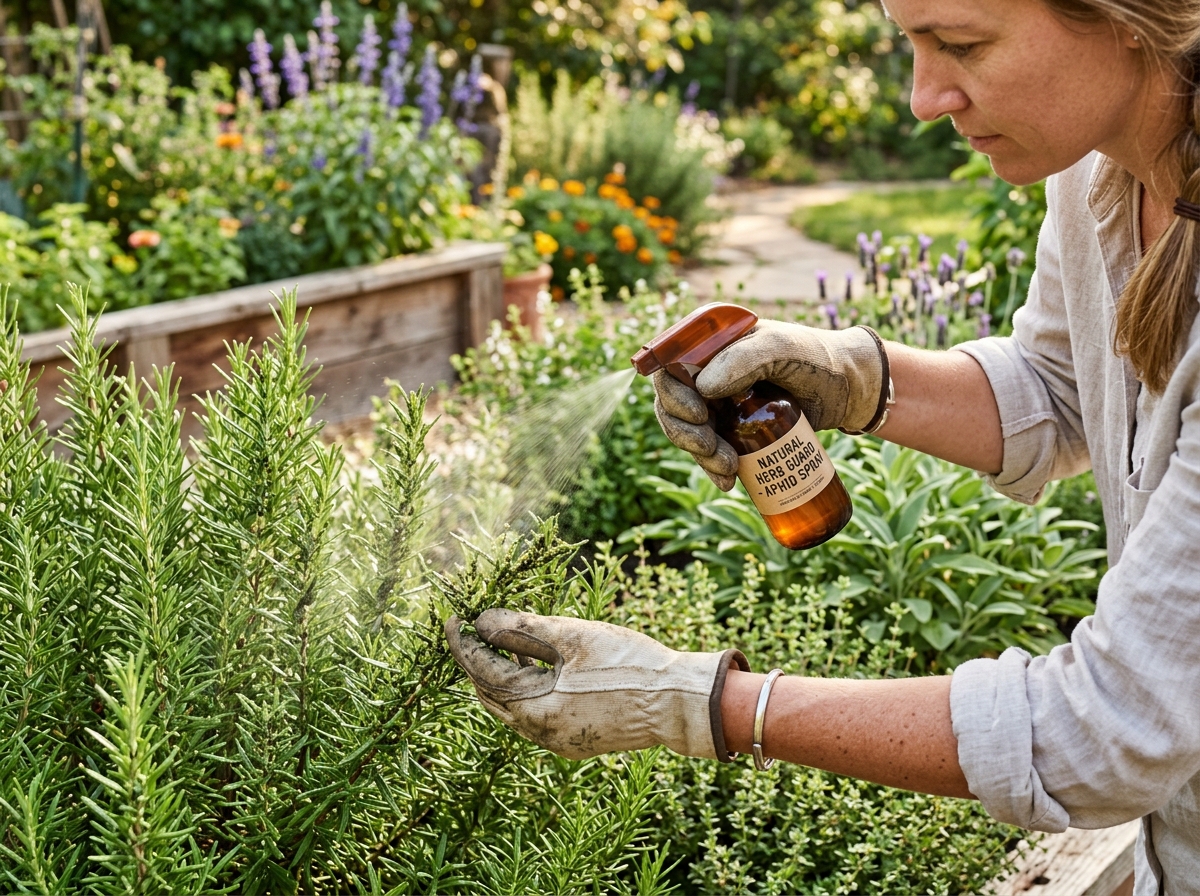
- Homemade Soap Spray: This is perhaps the most famous of the natural remedies for aphids. Pure castile soap is excellent because it lacks the harsh degreasers found in many dish soaps. Mix 1 tablespoon of soap per quart of water. The soap dissolves the aphid’s protective outer layer, causing them to dehydrate. You can also find pre-mixed insecticidal soaps that are specifically formulated for plant safety.
- Neem Oil: This is a powerhouse in organic gardening. A neem oil spray works in two ways: it acts as a repellent and, more importantly, it disrupts the insects’ hormones, preventing them from growing and laying eggs. It is highly effective against a variety of pests, including mealybugs and whiteflies.
- Essential Oil Blends: Many aromatic herbs already use oils to protect themselves. We can boost this by creating a spray with essential oils like peppermint, clove, rosemary, and thyme. Mix 4-5 drops of each in a small spray bottle with water. These oils are particularly effective at targeting larvae and eggs.
- Garlic and Chili Infusions: Aphids have a strong sense of smell and a delicate constitution. Steeping crushed garlic or hot peppers in water overnight creates a pungent spray that makes your rosemary very unattractive to pests.
- Alcohol Swabs: For small, localized infestations on a single indoor plant, you can use a cotton swab dipped in 70% isopropyl alcohol to dab the aphids directly. This kills them instantly without needing to spray the whole plant.
For more recipes and ratios, see our article on diy-organic-pesticides-for-home-gardeners.
How to Apply Natural Remedies for Aphids Safely
Even natural sprays can stress a plant if applied incorrectly. Here are our golden rules for application:
- The “Patch Test”: Before spraying your entire rosemary bush, apply the solution to one small branch and wait 24 hours. If the leaves look healthy, proceed.
- Timing is Everything: Never spray in the heat of the midday sun. The combination of oil or soap and intense sunlight can “burn” the leaves. Apply in the early morning or late evening.
- Thorough Coverage: Aphids are masters of hide-and-seek. You must spray the undersides of the leaves and deep into the stem clusters to be effective.
- The Rinse Cycle: For soap sprays, it is often helpful to wait an hour or two and then gently rinse the plant with fresh water. This prevents the soap from clogging the plant’s pores (stomata).
If you are looking for a specific recipe using household staples, many gardeners have found a recipe to make my own using peppermint castile soap for an extra repellent kick.
Using Natural Remedies for Aphids Through Soil Health
A healthy plant is often its own best defense. Aphids are attracted to plants that are stressed or have an imbalance of nutrients. Specifically, an excess of nitrogen—often from over-fertilizing—creates a flush of soft, succulent growth that aphids find irresistible.
We recommend focusing on long-term soil health to prevent future outbreaks:
- Worm Castings: There is a fascinating one theory is that worm castings contain chitinase. Chitinase is an enzyme that breaks down chitin, the material found in insect shells. When a plant absorbs nutrients from worm castings, it may become less palatable to aphids.
- Balanced Nutrition: Ensure your rosemary has a proper phosphorus-to-nitrogen ratio. Avoid high-nitrogen “quick-start” fertilizers.
- Probiotics for Soil: Using mycorrhizal fungi and beneficial bacteria helps the roots stay strong, making the plant more resilient to pest attacks.
You can learn more about building a resilient garden in our guide to natural-pest-control-methods-for-organic-gardening.
Biological Warfare: Beneficial Insects and Companion Planting
If you want a “hands-off” approach to natural remedies for aphids, let nature do the heavy lifting. In a balanced ecosystem, predators keep the aphid population in check.

The Predator All-Stars
- Ladybugs (Lady Beetles): An adult ladybug can eat up to 5,000 aphids in its lifetime. However, it’s the larvae—which look like tiny black and orange alligators—that are the real eating machines. You can purchase Live ladybugs to release in your garden.
- Green Lacewings: These are often called “aphid lions.” Lacewing larvae are even more voracious than ladybugs, sometimes eating aphids 20 times faster. You can buy Green lacewing eggs and hatch them directly on your infested plants.
- Hoverflies and Parasitic Wasps: These occur naturally if you provide the right habitat. Hoverfly larvae eat hundreds of aphids, while parasitic wasps lay eggs inside aphids, killing them from the inside out.
To keep these “good bugs” in your garden, you need to provide them with flowers for nectar and avoid using broad-spectrum pesticides. We discuss this further in our specialty piece on pest-control-for-herb-gardens.
Trap Crops and Repellent Companion Plants
Companion planting is a strategic way to manage pests. You can either plant things that aphids hate or things they love more than your rosemary. Understanding these dynamics is part of what we call “The Best of Enemies: A Brief Guide to Companion Planting,” where we use plant relationships to create a self-sustaining pest management system.
| Plant Type | Examples | Function |
|---|---|---|
| Repellent | Alliums (Chives, Garlic, Onions) | The strong scent masks the smell of the host plant. |
| Repellent | Marigolds, Petunias | Produce compounds that deter aphids and other pests. |
| Trap Crop | Nasturtiums | Aphids love these! They flock to the nasturtiums, leaving your herbs alone. |
| Trap Crop | Sunflowers, Zinnias | Act as a diversion, drawing aphids away from the main garden bed. |
When using a trap crop like nasturtiums, place them about 10-15 feet away from your rosemary. Once the nasturtiums are covered in aphids, you can simply pull the plant and dispose of it (or spray it heavily), effectively removing the colony from your garden.
Specialized Control: Root Aphids and Greenhouse Management
Not all aphids live on the leaves. Root aphids are a different beast entirely. They live in the soil and suck sap from the roots, often causing the plant to look like it is suffering from underwatering or a nutrient deficiency.
Because they are underground, soap sprays won’t work. Instead, we use:
- Beneficial Nematodes: These microscopic organisms are introduced via a soil drench. They seek out and destroy soil-borne pests like root aphids. You can find beneficial nematodes online or at specialty nurseries.
- Diatomaceous Earth (DE): Dusting food-grade DE on the soil surface can help deter the ants that protect root aphids.
- Yellow Sticky Traps: In addition to soil treatments, yellow sticky traps are highly effective in greenhouse settings for catching winged aphids before they can land and begin a new colony.
- Reflective Mulch: In greenhouses or raised beds, silver reflective mulch can disorient flying aphids, preventing them from landing on your plants in the first place.
In a greenhouse environment, ventilation is your best friend. Stagnant, humid air is an invitation for aphid colonies to explode. Ensure you have good airflow and prune the lower branches of your rosemary to improve circulation. For more greenhouse-specific tips, visit natural-pest-control-for-beginners-2.
Frequently Asked Questions about Natural Aphid Control
How long does it typically take for natural methods to fully control an aphid infestation?
Natural methods are rarely a “one and done” solution. While a water blast or soap spray kills aphids instantly, more will hatch from eggs or fly in from neighboring plants. Typically, you should see a significant reduction within 24 to 48 hours of spraying. However, to fully break the life cycle, you usually need to repeat treatments every 5-7 days for at least two to three weeks.
What common mistakes should gardeners avoid when using natural aphid remedies?
The biggest mistake is inconsistency. Many gardeners spray once, see the aphids are gone, and stop. Because aphids reproduce so fast, the population can rebound in days. Another mistake is over-application of oils or soaps during the day, which can damage the plant’s foliage. Lastly, don’t forget to check your “hitchhikers.” New plants brought into the garden should be quarantined for a few days to ensure they aren’t bringing in a fresh colony.
How do I handle root aphids differently from above-ground aphids?
Root aphids require systemic or soil-based treatments. While you can wash above-ground aphids away with a hose, root aphids require a soil drench (like neem oil solution or beneficial nematodes) to reach the pests. You may also need to repot the plant, washing the roots thoroughly and using fresh, sterile potting soil.
Conclusion
Managing a rosemary aphid infestation doesn’t have to be a desperate struggle. By using an integrated pest management (IPM) approach—combining manual removal, natural sprays, and biological predators—you can protect your aromatic herbs effectively and safely.
Persistence is the key to success. Keep your plants healthy, monitor them weekly, and don’t be afraid to use a mix of these natural remedies for aphids to find what works best in your unique garden environment. At Ponto de Arte, we are dedicated to helping you grow the most vibrant, pest-free herb garden possible.
For more information on protecting your aromatic plants and ensuring your kitchen garden thrives, explore our other resources or reach out to us for specialized advice on herb garden protection. Happy gardening!
