
Why the Best Herbs to Grow Together Can Transform Your Garden
The best herbs to grow together are ones that share similar needs — and the right pairings can mean fewer pests, healthier plants, and better harvests without any chemicals.
Here’s a quick reference to get you started:
| Herb Group | Best Companions | Key Benefit |
|---|---|---|
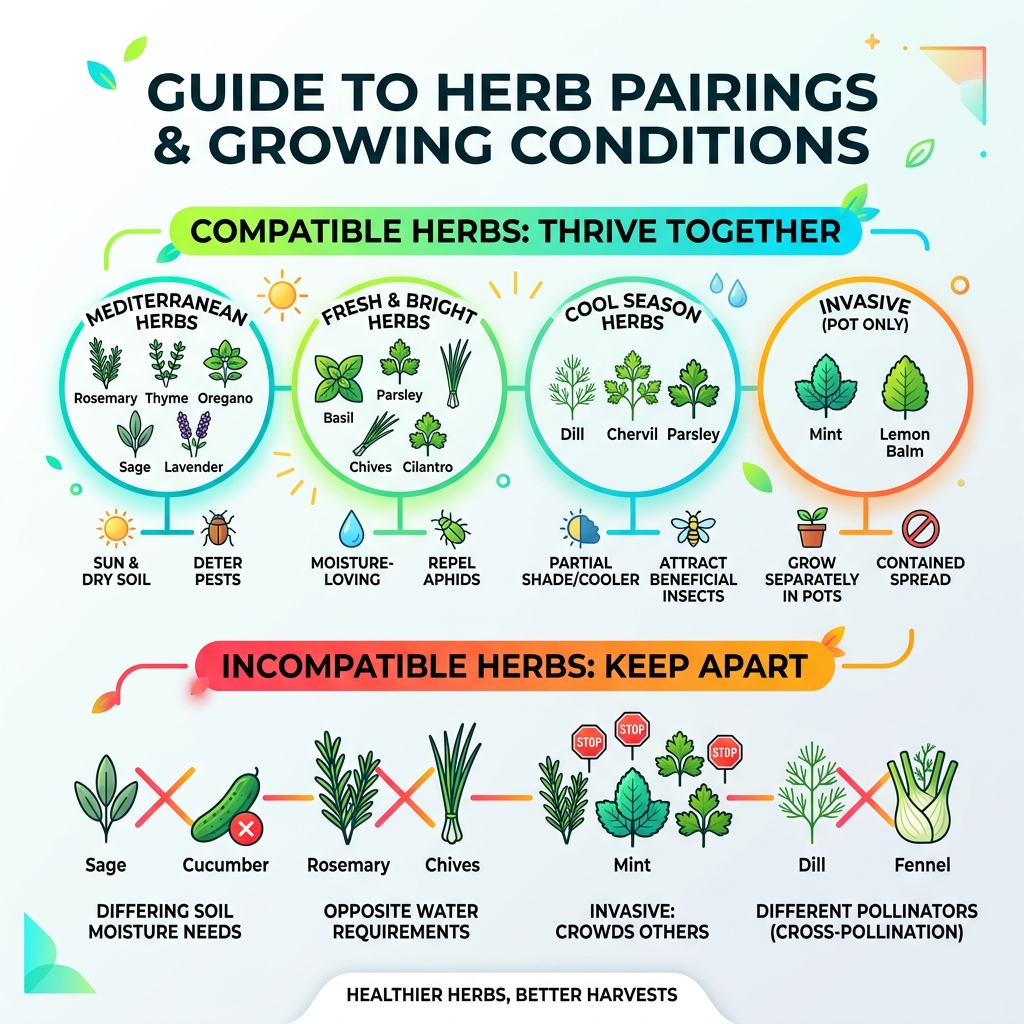
| Mediterranean | Rosemary, Thyme, Oregano, Sage, Lavender | Shared sun/dry soil needs; deter pests |
| Fresh & Bright | Basil, Parsley, Chives, Cilantro | Similar moisture needs; repel aphids |
| Cool Season | Dill, Chervil, Parsley | Attract beneficial insects |
| Invasive (pot only) | Mint, Lemon Balm | Keep contained; still pair well in large pots |
If your herb garden has ever felt like a mess — some plants thriving, others fading for no obvious reason — the problem might not be sunlight or water. It could be the company your herbs are keeping.
Certain herbs genuinely help each other. They share resources underground, confuse pests with their aromas, and create a small, self-regulating ecosystem right in your garden bed or container.
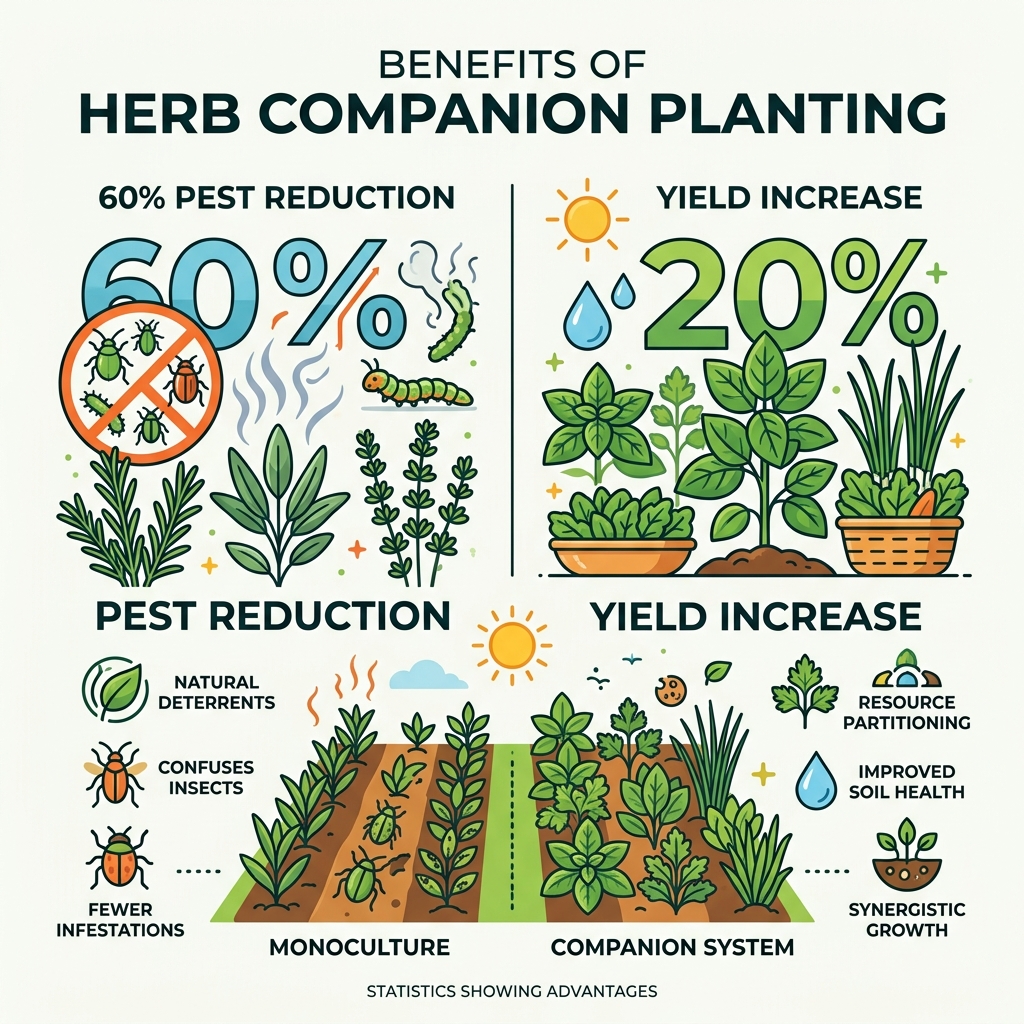
Research backs this up: intercropping herbs instead of growing them in single-species rows can reduce pest pressure by up to 60%. The volatile oils that give herbs their beautiful scent are also what disorient insects looking for a host plant — but only within about 12–18 inches, so placement really matters.
This guide walks you through exactly which herbs to pair, which to keep apart, and how to set up your garden for the best results.
The Science of Companion Planting: Why Grow Herbs Together?
At Ponto de Arte, we believe that understanding the “why” behind your garden is the first step toward a thriving, aromatic sanctuary. Companion planting isn’t just a traditional gardening trick; it is a sophisticated biological strategy. When we talk about the best herbs to grow together, we are really talking about “intercropping” — the practice of growing two or more crops in proximity to create a beneficial ecosystem.
One of the most significant scientific benefits is the reduction of pests. Statistics show that diverse companion systems can experience up to 60% fewer pests compared to monocultures (growing just one type of plant). This happens through several mechanisms. First, the volatile oils in herbs like rosemary, sage, and thyme act as a natural “cloaking device.” These scents are so strong that they interfere with the olfactory cues pests use to find their favorite vegetables. For example, a 2022 Cornell trial found that plots with mixed herb borders of sage, thyme, and oregano experienced 63% fewer leek moth larvae than beds with just alliums.
Beyond pest control, growing the best herbs to grow together improves the soil itself. Certain companion plants, like beans or peas often tucked near herb beds, act as “nitrogen-fixers,” adding between 50–200 lbs of nitrogen per acre annually to the soil. This natural fertilization supports the heavy-feeding annual herbs nearby. Furthermore, mixed systems can see a 20% or higher yield increase. This is due to “resource partitioning,” where plants with different root depths (like shallow-rooted chives and deep-rooted rosemary) don’t compete for the same nutrients.
We also see “allelopathic synergy,” where compounds like eugenol from basil can actually suppress harmful pathogens in the soil, protecting neighboring plants. To dive deeper into these biological relationships, check out this Herbs That Grow Well Together: Science-Backed Companion Planting Guide or explore our guide on Natural Pest Control Methods for Organic Gardening.
Choosing the Best Herbs to Grow Together
When we help our community plan their gardens, we always start by grouping herbs into “neighborhoods” based on their cultural needs. You wouldn’t want to pair a plant that loves a swampy environment with one that prefers a desert!
The Mediterranean Group
Most of our favorite culinary perennials come from the Mediterranean. These plants thrive in full sun (6–8+ hours) and well-draining, somewhat sandy soil. They actually prefer to dry out between waterings. If you overwater these, you risk root rot.
- Key Members: Rosemary, Thyme, Sage, Oregano, Lavender, Hyssop.
- Why they work: They share identical sun and moisture requirements. They also grow at a similar, manageable pace. You can learn more about two of the most popular members in our guide on Growing Thyme and Oregano.
The Moisture-Lovers (Fresh & Bright)
These herbs are typically annuals or short-lived perennials that need consistent moisture to keep their leaves tender and flavorful. If they get too dry, they often “bolt” (go to seed) prematurely, which ruins the flavor.
- Key Members: Basil, Parsley, Chives, Cilantro, Tarragon.
- Why they work: They enjoy richer soil with more organic matter and need regular watering. Basil and parsley are particularly “best friends” because they both love the sun but demand a drink every time the top inch of soil feels dry.
Comparison Table: Mediterranean vs. Moisture-Loving Needs
| Feature | Mediterranean Group | Moisture-Loving Group |
|---|---|---|
| Sunlight | Full Sun (6–8+ hours) | Full Sun to Partial Shade |
| Watering | Let dry out completely | Keep consistently moist |
| Soil Type | Sandy, rocky, well-draining | Rich, loamy, compost-heavy |
| Fertilizer | Very little (lean soil) | Moderate (organic compost) |
| Life Cycle | Mostly Perennial | Mostly Annual/Biennial |
Best herbs to grow together for natural pest defense
At Ponto de Arte, our specialty is protecting your aromatic treasures from invaders. Choosing the best herbs to grow together is your first line of defense.
- Chives and Basil: Chives have a mild oniony scent that is a nightmare for aphids. Planting them near basil helps protect the tender basil leaves from being sucked dry. If you’ve struggled with these pests before, read our Guide to Aphid-Free Herbs.
- Rosemary and Sage: This duo is excellent at deterring cabbage moths and bean beetles. Their combined strong aromas create a “no-fly zone” for many common garden pests.
- Dill and Cilantro: While these can cross-pollinate if left to seed, growing them together in the leafy stage is great for attracting beneficial insects like hoverflies, which eat aphids.
- Thyme and Strawberries: Thyme is a wonderful groundcover that attracts pollinators while deterring garden worms.
For more strategic pairings, see our list of the 10 Best Herbs for Pest Control to Save Your Garden and learn how to handle Aphids on Basil Indoors.
Best herbs to grow together in pots and containers
Can you grow all your herbs in one pot? Yes! In fact, it’s often easier because the larger volume of soil stays more stable than tiny individual pots. We recommend a container at least 12 inches deep and wide (a 17-gallon tub is ideal for a full kitchen garden).
When planting in a shared container, follow the “Center and Edge” strategy:
- Center: Plant your annuals (Basil, Cilantro, Dill) in the center. This is where the soil stays moist the longest.
- Edges: Plant your perennials (Thyme, Oregano, Rosemary) around the edges. The soil dries out faster near the walls of the pot, which these Mediterranean herbs love.
Make sure your container has plenty of drainage holes. Herbs hate “wet feet.” Using a mix of coarse sand, topsoil, and compost creates the perfect well-draining environment. For more tips on maximizing small footprints, check out Herb Garden in Small Spaces and this guide on Tasty Combos For Pots.
Herb Garden Rivals: Which Plants to Keep Apart
Just like a dinner party, some guests simply don’t get along. To keep your garden “happy,” you must know which herbs to keep at a distance.
The “Invasive” Mint Family
Mint and Lemon Balm are the “bullies” of the herb world. Mint uses underground runners (rhizomes) that can penetrate 24 inches deep and spread 3 feet wide in a single year. If you plant mint in a shared bed, it will eventually choke out the roots of your rosemary and thyme.
- The Solution: Always plant mint in its own pot, or sink a pot into the ground to provide a physical root barrier. If you want to grow it at home, follow our specific advice on Growing Mint at Home.
The Allelopathic Fennel
Fennel is often “blacklisted” by experienced gardeners. It is allelopathic, meaning it secretes chemicals into the soil that can inhibit the growth of almost all other herbs, especially cilantro and dill. It can also cross-pollinate with dill, resulting in weird-tasting seeds for both plants. Keep fennel in its own corner, at least a few feet away from your main herb bed.
Cross-Pollination Concerns
- Dill and Cilantro: If you are growing these for seeds (like coriander or dill seed), keep them apart. They can cross-pollinate, which ruins the distinct flavor of the resulting seeds.
- Sage and Onions: Some research suggests that sage can actually stunt the growth of onions, so keep these separate in your vegetable garden.
Essential Care for Your Co-Planted Herb Garden
Once you’ve selected the best herbs to grow together, keeping them thriving requires a bit of “maintenance magic.”
The One-Third Rule Never harvest more than one-third of a plant at a time. This ensures the herb has enough foliage left to photosynthesize and recover. For “bushy” herbs like basil or mint, always pinch the stems just above a leaf node to encourage two new stems to grow in its place.
Morning Harvests The best time to harvest your herbs is in the morning, right after the dew has dried but before the sun gets too hot. This is when the essential oils (the flavor!) are at their highest concentration. For more on this, see our guide on Harvesting Herbs at Home.
Watering Wisdom Water the soil, not the leaves. Wet foliage can lead to fungal issues like powdery mildew, especially in crowded companion plantings. If the soil is dry one inch down, it’s time to water. We have more detailed Tips for Watering Herbs to help you find the right balance.
Soil and Drainage Avoid heavy clay soil. Most herbs prefer a sandy loam. If you are planting in the ground, consider a raised bed to ensure the drainage is sharp. You can find our recommendations for Organic Soil for Herbs and Preparation Tips for Organic Soil on our site.
Frequently Asked Questions About Herb Pairing
Can I grow all my herbs in one single pot?
Yes, you absolutely can! It is actually easier for many beginners because a single large container (at least 12–15 inches wide) holds moisture more consistently than five small pots. The trick is to place the moisture-loving annuals (like basil) in the center and the drought-tolerant perennials (like thyme) near the edges where the soil dries faster. Just remember to keep mint in its own separate container to prevent it from taking over.
Does companion planting for herbs have scientific evidence?
It does! While some pairings are based on traditional folklore, many are backed by modern agricultural science. Studies have shown that the volatile organic compounds (VOCs) released by herbs like rosemary and sage can reduce pest settlement by over 60%. Furthermore, the “trap crop” method — where one plant attracts pests away from another — is a well-documented biological control strategy used in organic farming worldwide.
What is the best layout for a mixed herb garden bed?
We recommend a “tiered” or “staggered” layout. Place your tallest herbs (like Rosemary and Dill) at the back or in the center. Medium-sized herbs (like Basil and Sage) should go in the middle, and low-growing “creepers” (like Thyme and Oregano) should be placed at the front or along the borders. This ensures every plant gets enough sunlight and allows for easy harvesting. If you have very limited space, an “herb spiral” is a fantastic way to create different microclimates (dry at the top, moist at the bottom) in a small footprint.
Conclusion
Creating a thriving herb garden is all about understanding relationships. By choosing the best herbs to grow together, you aren’t just planting a garden; you’re building a resilient, aromatic ecosystem. Whether you’re pairing basil with tomatoes to enhance flavor or using chives to shield your parsley from aphids, these intentional choices lead to a more productive and lower-maintenance harvest.
At Ponto de Arte, we are dedicated to helping you protect these precious aromatic spaces. Our specialized focus on organic pest management ensures that your herbs remain healthy and chemical-free. From identifying those little black bugs eating your herbs to providing DIY Organic Pesticides, we are here to support your gardening journey.
Ready to take your garden to the next level? Explore more of our Organic Herb Gardening Tips and start building your perfect herb community today!
