
Why Rosemary Beetle Control Tips Could Save Your Herb Garden
Rosemary beetle control tips are something every herb gardener needs when these striking but destructive insects show up uninvited.
Here are the most effective ways to deal with them:
- Hand-pick beetles and larvae by shaking branches over newspaper or a bucket of soapy water
- Use natural sprays like neem oil, garlic spray, or insecticidal soap
- Encourage natural predators — birds, frogs, and ground beetles all feed on rosemary beetles
- Prune damaged growth and clear leaf litter to remove hiding spots
- Check plants regularly, especially between late summer and spring when beetles are most active
- Use chemical controls only as a last resort, and never spray flowering plants
The rosemary beetle (Chrysolina americana) arrived in the UK in the 1990s and has spread rapidly ever since. It targets rosemary, lavender, sage, and thyme — the very herbs that make a home garden smell and taste incredible.
The damage can happen fast. One gardener reported that from the first signs of feeding, it took just about a week for a plant to be completely beyond saving. These beetles are small — only 6 to 8 mm long — but they work quickly, especially in groups.
The good news? You don’t need harsh chemicals to protect your herbs. Most infestations can be managed organically, keeping your plants safe to cook with and your garden healthy for wildlife.
Identifying the Rosemary Beetle and Its Target Plants
Before we can dive into our rosemary beetle control tips, we need to make sure we are looking at the right culprit. The rosemary beetle, or Chrysolina americana, is actually quite beautiful, which is how it often tricks gardeners into leaving it alone for too long.
What Does the Rosemary Beetle Look Like?
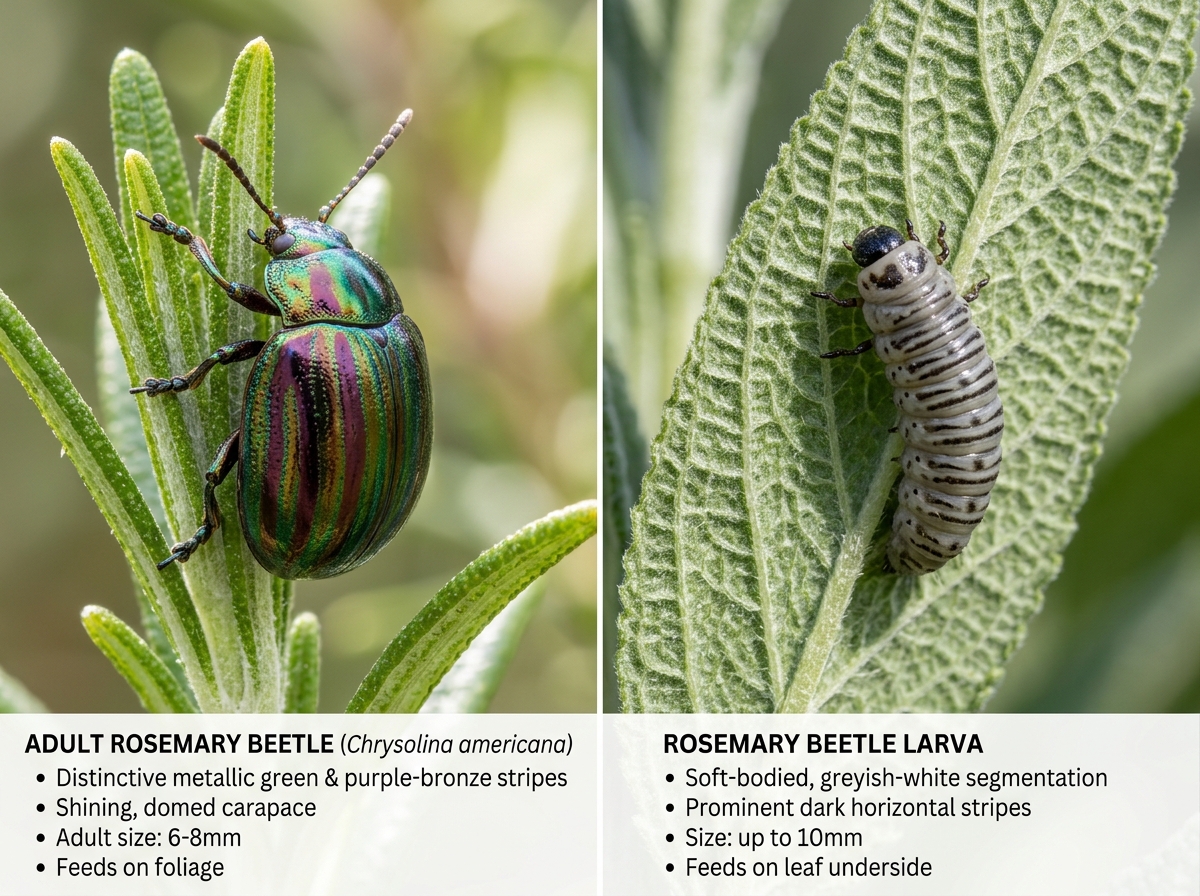
Adult beetles are small, measuring between 6mm and 8mm in length (about 1/3 of an inch). They have a distinct metallic appearance with shiny green and purple-bronze longitudinal stripes running down their wing cases. If you see a tiny, jewel-like beetle glimmering in the sun on your herbs, it’s almost certainly this pest.
The larvae are a bit less glamorous. They are soft-bodied, greyish-white grubs with darker stripes running along their bodies. When fully grown, they can reach about 8mm in length. You will often find them huddled together on the undersides of leaves or nestled in the tender new growth at the tips of stems.
Which Plants Are at Risk?
As the name suggests, Rosmarinus officinalis is the primary target. However, these beetles aren’t picky eaters when it comes to the Lamiaceae (mint) family. They are particularly fond of plants with high camphor levels. In our experience at Ponto de Arte, we frequently see them jumping between:
- Lavender: Both Lavendula augustifolia and French varieties.
- Sage: Including the common Salvia officinalis and ornamental Russian sage.
- Thyme and Mint: They will occasionally move onto these if their preferred hosts are stripped.
If you are growing rosemary at home, keeping a close eye on these specific aromatic companions is vital for early detection.
Understanding the Life Cycle and Damage Symptoms
To master rosemary beetle control tips, we must understand when these pests are most vulnerable. Unlike many garden pests that disappear in winter, the rosemary beetle is active throughout the colder months.
The Annual Cycle
There is typically one generation per year, but because the adults are long-lived, you might see them year-round.
- Late Summer to Autumn: This is when the real action starts. Adults become active in August and September. They begin laying elongated, small eggs on the undersides of leaves.
- Winter: On warm winter days, egg-laying continues.
- Spring: The eggs hatch after about 10 days. The larvae feed voraciously for about three weeks.
- Early Summer: Once they’ve had their fill, the larvae drop to the soil to pupate. They remain in the ground for about two weeks before emerging as new adults.
Spotting the Damage
The symptoms of an infestation are often more obvious than the beetles themselves. Because they feed on the tender tips of stems, you will notice:
- Brown, shrivelled leaf edges: New growth appears distorted and dies back.
- Stripped stems: In severe cases, the foliage is reduced to short, greyish-brown stumps.
- Flower damage: These beetles aren’t above eating the blossoms of your lavender or rosemary, which can be devastating for pollinators.
If left untreated, a heavy infestation can cause a plant to look sickly within a season and potentially die within 2-3 years. Check out our guide on pest control for herb gardens for more on identifying common herb enemies.
Effective Rosemary Beetle Control Tips for Your Garden
At Ponto de Arte, we believe the best approach is one that balances effectiveness with environmental safety. Since most of us grow these herbs to use in our kitchens, keeping them free of toxic residues is a top priority.
Manual Removal: The “Shake and Catch” Method
The most effective of all rosemary beetle control tips is simple physical removal. Because these beetles have a natural “drop” reflex when disturbed, we can use this against them.
- The Setup: Place a sheet of newspaper, a light-colored towel, or a shallow tray underneath the branches of your herb bush.
- The Shake: Gently but firmly tap or shake the branches. You will hear a characteristic “crackling” sound as the beetles hit the paper.
- The Disposal: Gather the beetles and larvae and drop them into a bucket of soapy water to drown them.
Manual picking is easiest in the morning when the insects are less active. If you have children, this can actually be a fun garden chore—one gardener noted that the beetles in a jar became “enormously interesting” to local kids!
| Method | Effectiveness | Best For |
|---|---|---|
| Hand-Picking | High | Small to medium infestations; zero chemical residue |
| Shaking/Tapping | Very High | Large bushes; quick collection of many adults |
| Organic Sprays | Medium | Reaching larvae in dense foliage |
| Pruning | High | Removing eggs and concentrated larval groups |
For more DIY ideas, see our article on diy organic pesticides for home gardeners.
Natural Sprays and Homemade Rosemary Beetle Control Tips
If manual removal isn’t enough, or if the infestation is in a very dense hedge, natural sprays can help.
- Neem Oil: A classic in natural pest control methods for organic gardening. Mix two tablespoons of pure neem oil with a teaspoon of mild detergent in a gallon of water. It disrupts the beetle’s life cycle and deters feeding.
- Garlic Spray: Garlic contains sulfur compounds that act as a natural repellent. It’s a great way to make your plants less appetizing to wandering beetles.
- Insecticidal Soap: These soaps damage the protective outer layer of the larvae, causing them to dehydrate.
- Pyrethrin: This is a more potent organic insecticide derived from chrysanthemums. It paralyzes the beetles on contact. Note: Only use this as a last resort and apply it in the evening when bees and other pollinators are tucked away.
Proactive Rosemary Beetle Control Tips for Future Seasons
Prevention is often about garden hygiene. Since the larvae pupate in the soil, we recommend:
- Clearing Leaf Litter: Removing the thick “duff” under your plants removes overwintering sites for adults.
- Light Hoeing: Carefully hoeing the soil around the base of your herbs in late spring can expose pupating larvae to birds.
- Vigilance: Check your plants daily. It is much easier to squish three beetles in August than to deal with three hundred larvae in April.
For those just starting out, our guide on natural pest control for beginners offers a great foundation.
Biological Solutions: Encouraging Natural Predators
We love a garden that takes care of itself. One of the best rosemary beetle control tips is to stop thinking of your garden as a collection of plants and start seeing it as an ecosystem.
Attracting the “Good Guys”
- Birds: Many garden birds, especially during nesting season, will happily snack on beetle larvae. Install bird feeders and nesting boxes near your herb garden to encourage them to stick around.
- Frogs: You might be surprised to learn that a single frog can eat thousands of insects in its lifetime! Scientific research on frog diets shows they are opportunistic hunters. Creating a small pond or water feature can bring these effective pest controllers to your yard.
- Ground Beetles: While the rosemary beetle is a “bad” beetle, predatory ground beetles are your best friends. They live in the mulch and soil, where they hunt for rosemary beetle larvae as they drop down to pupate.
By increasing biodiversity, you create a natural check-and-balance system. You can learn more about this in our second guide on natural pest control for beginners-2.
Frequently Asked Questions about Rosemary Beetles
Should I tolerate rosemary beetles or always control them?
This is a personal choice! The RHS often suggests that if your plants are healthy and established, they can tolerate a small population of beetles without much harm. If you view them as a “colorful addition” to your garden’s biodiversity, you might choose to let them be. However, if you rely on your herbs for cooking, you’ll likely want to keep numbers low to ensure you have plenty of clean, undamaged foliage to harvest.
When is the rosemary beetle most active?
They are most active from late summer (August) through to the following spring (April). This is when they are feeding and breeding. During the peak of summer (June and July), they often go into a period of rest (aestivation) to escape the heat, so you might see fewer of them then.
Can a rosemary beetle infestation kill my plants?
Usually, no. A healthy, well-watered rosemary or lavender bush is very resilient. However, if a plant is already stressed by drought or poor soil, or if the infestation is allowed to go unchecked for several years, the constant loss of new growth can eventually kill the plant.
Conclusion
At Ponto de Arte, we know how much heart goes into a home herb garden. Seeing your favorite rosemary bush stripped of its leaves can be frustrating, but with these rosemary beetle control tips, you have everything you need to fight back.
By combining manual removal, natural sprays, and a healthy dose of garden biodiversity, you can keep your aromatic herbs thriving and ready for the kitchen. The key is consistency—a few minutes of checking your plants each week can save you hours of work later.
Protect your herb garden with our expert guides and keep your garden a safe, organic haven for both your family and local wildlife. Happy gardening!
