
Fresh Herbs in Your Kitchen — No Garden Required
The easy to grow indoor herbs on this list will have you snipping fresh basil, chives, and mint into your meals within weeks — no outdoor space, no experience, and no green thumb needed.
The easiest herbs to grow indoors are:
- Basil — fast-growing, loves warmth and bright light
- Chives — nearly indestructible, tolerates low light
- Mint — vigorous grower, best kept in its own pot
- Lemon balm — mint’s easygoing cousin, great for tea
- Thyme — drought-tolerant, thrives on neglect
- Oregano — Mediterranean tough guy, loves dry conditions
- Parsley — slow to start but lasts up to two years
Most of these herbs need only 4 to 6 hours of sunlight daily and grow well in pots just 6 inches deep. That’s a sunny windowsill and a few small containers — nothing more.
Here’s why it’s worth doing. Fresh herbs make everyday cooking taste restaurant-quality. They’re available year-round. And unlike that jar of dried oregano in the back of your cabinet, there’s no expiration date to worry about.
The one catch? A few common mistakes — overwatering, bad drainage, not enough light — can quietly kill even the toughest herb. This guide covers all of it.

Top 7 easy to grow indoor herbs for beginners
Starting an indoor garden doesn’t require a degree in botany. In fact, many of the most flavorful herbs are actually “weeds” in their native habitats, meaning they are biologically programmed to survive. For those of us who are culinary challenged, these plants are forgiving. They have shallow roots, meaning they don’t need massive, heavy planters, and most stay relatively compact.
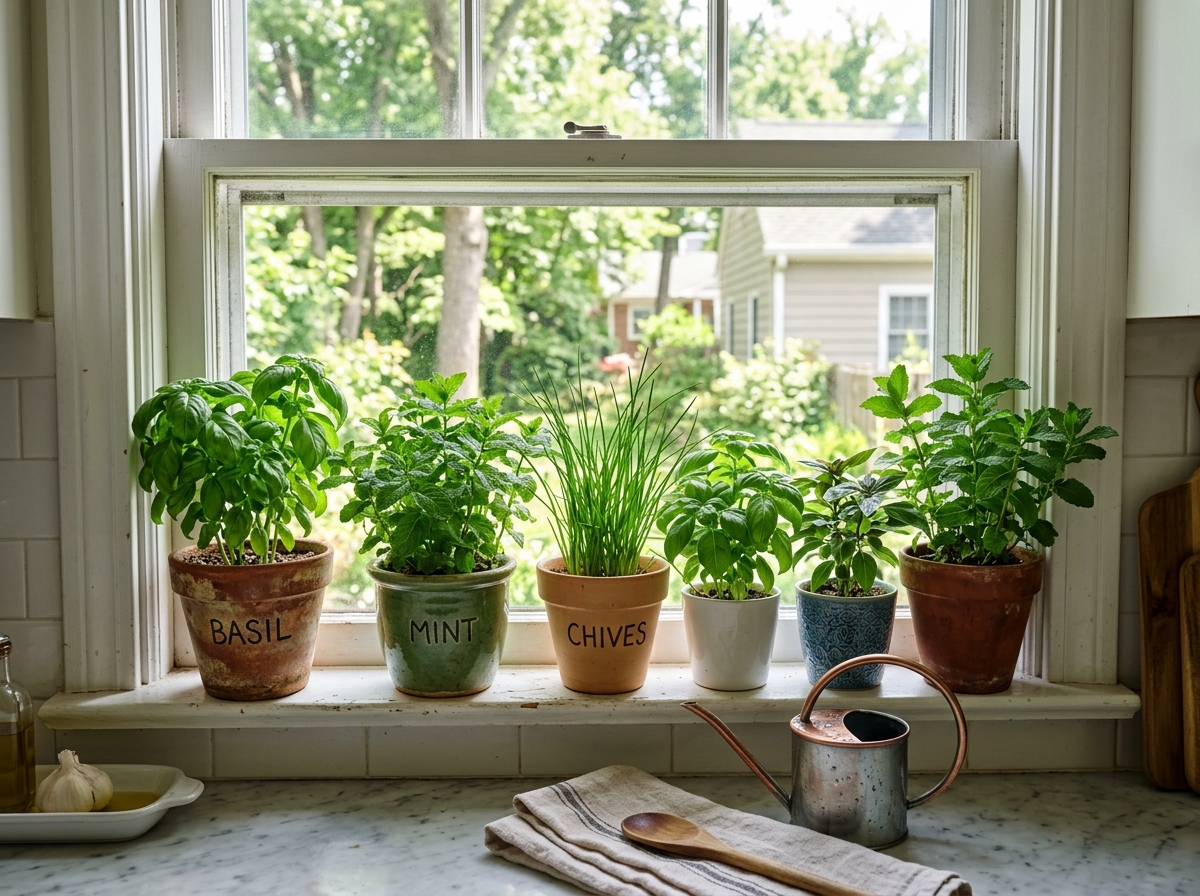
To help you choose your first “roommates,” we’ve put together a quick comparison of the most popular easy to grow indoor herbs:
| Herb | Growth Speed | Light Needs | Water Needs |
|---|---|---|---|
| Basil | Fast (3-5 weeks) | High (6-8 hrs) | Consistent moisture |
| Chives | Moderate | Low to Medium | Let top inch dry |
| Mint | Very Fast | Medium | Damp but not soggy |
| Thyme | Slow to Moderate | High | Drought-tolerant |
| Oregano | Moderate | High | Likes to dry out |
| Parsley | Slow | Medium | Consistent moisture |
| Lemon Balm | Fast | Medium | Likes to stay moist |
Basil: The king of easy to grow indoor herbs
If you only grow one thing, make it basil. Specifically, Genovese basil is the gold standard for pesto and Caprese salads. It is incredibly rewarding because it grows visibly almost every day. However, basil is a bit of a “sun hog.” It needs at least 6 to 8 hours of bright light to stay lush.
The secret to a long-lasting basil plant is pruning. If you let it grow tall and thin, it will eventually flower and die. By pinching off the top sets of leaves, you force the plant to grow outward, becoming a bushy masterpiece. For a deep dive into keeping this royal herb happy, check out this How to Grow Basil Indoors: Easy Beginner Guide or our own tips on growing-basil-indoors.
Chives: The ultimate “set it and forget it” herb
Chives are the unsung heroes of the kitchen-windowsill-herb-garden. They are essentially tiny onions that you can haircut. They are remarkably hardy and can handle temperature fluctuations better than almost any other herb.
When you need a garnish for eggs or baked potatoes, just snip what you need with scissors. As long as you leave at least 2 inches of growth above the soil, they will grow back. They even tolerate the lower light levels found in many kitchens during the winter months.
Mint and Lemon Balm: Vigorous easy to grow indoor herbs
Mint and its citrusy cousin, lemon balm, are famous for their “invasive” nature. In an outdoor garden, they will take over your entire yard. Indoors, this vigor makes them fantastic easy to grow indoor herbs. The most important rule? Keep them in their own separate containers. If you plant mint with other herbs, it will choke them out within weeks.
Lemon balm is particularly lovely for making fresh herbal tea. It has a calming scent and, like mint, is very easy to growing-mint-at-home. For more specific care details, see this Lemon Balm: Indoor Plant Care & Growing Guide.
Thyme and Oregano: Drought-tolerant Mediterranean favorites
These herbs are perfect for the forgetful waterer. Native to the rocky, dry hillsides of the Mediterranean, thyme and oregano actually prefer it when you let their soil dry out completely between waterings.
Thyme stays low and compact, making it ideal for small pots. Oregano is a bit more trailing and looks beautiful in a hanging basket. Both develop more intense flavors when they are grown in lean, well-draining soil. These are essential “pizza herbs” that every home cook should have within arm’s reach. Learn more about their shared needs in our guide to growing-thyme-and-oregano.
Essential setup for your indoor herb garden
You don’t need a high-tech laboratory to grow herbs, but you do need to get the basics right. Most indoor herb failures happen because of the “wrong shoes”—meaning the wrong pot or soil.
- The Pot: Aim for containers at least 6 inches deep. While plastic works, we often recommend terra cotta because it is porous and helps “breathe,” preventing the roots from sitting in stagnant water.
- Drainage: This is non-negotiable. Your pot must have holes at the bottom. If it doesn’t, your herbs will likely succumb to root rot. We recommend drilling holes every 3-4 inches if you’re repurposing a container.
- The Soil: Never use “garden soil” from outside; it’s too heavy and may contain pests. Instead, use a high-quality organic-soil-for-herbs. A mix of two parts soilless potting mixture and one part perlite provides the perfect balance of moisture retention and air circulation.
Lighting requirements for success
Light is the fuel for your herbs’ flavor. Without enough of it, your plants will become “leggy”—stretching out with long, weak stems and tiny, flavorless leaves.
A south-facing window is the “gold coast” of indoor gardening, providing the most consistent sun. A west-facing window is the next best option. If your kitchen is on the darker side, don’t worry! You can use LED grow lights. Modern grow lights are energy-efficient and can be set on a timer for 12-14 hours a day to mimic a perfect summer day. Check out more indoor-herb-garden-ideas for creative ways to light your space.
Temperature and humidity control
Most herbs thrive in the same temperatures we do: between 65°F and 70°F during the day. However, indoor air can be notoriously dry, especially in winter. Herbs like rosemary and basil appreciate a bit of humidity.
You can increase the moisture in the air by placing your pots on a tray filled with pebbles and a little water (just make sure the pot isn’t sitting in the water). Regular misting also helps, but don’t overdo it, as stagnant water on leaves can lead to fungus. For those in tight quarters, indoor-gardening-turning-small-spaces-into-green-havens offers great advice on climate control in small areas.
Maintenance tips to keep your herbs thriving
Maintaining easy to grow indoor herbs is mostly about observation. We suggest the “finger test”: stick your finger an inch into the soil. If it feels dry, it’s time to water. If it’s still damp, wait a day.
- Bottom Watering: To avoid attracting gnats and to ensure the roots get a good drink, try placing your pot in a sink with an inch of water for 15 minutes. The soil will wick up exactly what it needs.
- Feeding: Herbs don’t need much food. A diluted liquid organic fertilizer once a month during the growing season is plenty. Over-fertilizing can actually make your herbs taste less potent! For more watering wisdom, see our tips-for-watering-herbs.
Harvesting for continuous growth
One of the most common beginner mistakes is being “too nice” to your plants. Herbs want to be eaten! Frequent harvesting actually encourages the plant to produce more leaves.
The “1/3 Rule” is your golden guide: never harvest more than one-third of the plant at a time. Always snip just above a “leaf node” (the spot where new leaves are branching out). This tells the plant to split into two new stems, making it bushier and more productive. For a step-by-step on the best techniques, visit harvesting-herbs-at-home.
Propagating new plants from cuttings
Once you have a successful basil or mint plant, you can create “clones” for free. This is called propagation. Simply snip a 4-inch stem, remove the lower leaves, and place it in a glass of water on your windowsill.
In a week or two, you’ll see tiny white roots emerging from the nodes. Once the roots are about an inch long, you can transplant your new baby herb into soil. It’s like a magic trick that results in a never-ending supply of growing-basil-indoors-2.
Troubleshooting common indoor gardening mistakes
Even with easy to grow indoor herbs, things can go sideways. If your leaves are turning yellow, you are likely overwatering. If the stems are stretching toward the window like they’re desperate for a hug, they need more light.
Managing pests like aphids and fungus gnats
Pests are the “buzzkill” of the indoor garden. aphids-on-basil-indoors-are-a-real-buzzkill is a sentiment every indoor gardener understands. You might notice tiny green bugs (aphids) or little black flies (fungus gnats) hovering around the soil.
For aphids, a simple spray of mild soapy water usually does the trick. For fungus gnats, letting the soil dry out more between waterings is the best cure, as they love damp environments. If you’re struggling to figure out what’s eating your plants, our guide on identifying-the-little-black-bugs-eating-your-herbs can help.
Preventing fungal diseases and powdery mildew
If you see a white, flour-like substance on your leaves, you’re dealing with powdery mildew. This is usually caused by poor air circulation and high humidity. To prevent this, make sure your plants aren’t crowded together. Give them some “personal space” so air can flow around the leaves.
Our experts at Ponto de Arte specialize in helping you stop-the-sap-suckers-a-guide-to-aphid-free-herbs and maintaining a clean, organic environment for your culinary treats.
Frequently Asked Questions about indoor herbs
Can I grow different herbs in the same container?
Yes, but choose your roommates wisely. Group herbs with similar needs. For example, rosemary, thyme, and oregano all love dry soil and lots of sun. However, never plant mint with anything else—it doesn’t play well with others. For more on maximizing your space, check out herb-garden-in-small-spaces.
How much light do indoor herbs really need?
Most easy to grow indoor herbs need a minimum of 6 hours of direct sunlight to produce the essential oils that give them flavor. If you’re using grow lights, they need closer to 12-14 hours because artificial light isn’t quite as intense as the sun. For a breakdown of which herbs are best for your specific light levels, see best-herbs-for-beginners.
What are the best herbs for low-light kitchens?
If your kitchen is more “cozy cave” than “sunroom,” stick with mint, parsley, and chives. These are the most shade-tolerant options. While they won’t grow as fast as they would in a sunny window, they will still provide fresh flavor for your meals. This guide on the Easiest Herbs to Grow Indoors with Low Light – Hearth and Vine offers more great tips for low-light success.
Conclusion
Growing an indoor herb garden is one of the simplest ways to upgrade your cooking and bring a little bit of nature into your home. Whether you start with a single pot of chives or a full windowsill of easy to grow indoor herbs, the reward is always worth the effort.
At Ponto de Arte, we are passionate about protecting your aromatic herb gardens. We know that pests can be a major hurdle for beginners, which is why we offer specialized, organic-friendly solutions to keep your kitchen garden thriving. From selecting the 10-best-herbs-for-pest-control-to-save-your-garden to setting up your first kitchen-windowsill-herb-garden, we are here to support your journey from culinary challenged to windowsill master. Happy growing!
