
What is Hot Pepper Wax Repellent?
At its core, hot pepper wax repellent is a specialized garden spray that combines the culinary heat of peppers with the protective qualities of wax. While many gardeners have tried DIY pepper sprays, those home brews often wash away with the first morning dew. This professional-grade solution is different because it uses a patented process to bind the irritants to the plant surface.
The “magic” happens through the combination of two primary components: capsaicin and food-grade paraffin. Capsaicin is the active heat component found in cayenne peppers. When an animal like a rabbit or a deer tries to nibble on a leaf coated in this substance, they experience an immediate, harmless, but very unpleasant burning sensation. The paraffin wax acts as the delivery vehicle, ensuring the capsaicin stays put even through light rain or overhead watering.
Understanding the Active Ingredients
The potency of hot pepper wax repellent comes from capsaicinoids. In most commercial formulations, such as those used in our herb garden protection strategies, the concentration of Capsaicin and other capsaicinoids is approximately 0.00001125%.
While that number might look small, it is perfectly calibrated for a “taste-aversion” response. It is strong enough to irritate the mouth and nose of a foraging animal but refined enough that it won’t damage the delicate tissues of your herbs. The wax used is highly refined, similar to the wax found on supermarket apples, which means it doesn’t “smother” the plant. Instead, it creates a breathable, micro-thin film. For those looking to dive deeper into how these elements fit into a broader garden strategy, check out our guide on natural pest control methods for organic gardening.
Available Formulations: RTU vs. Concentrate
When you’re looking to protect your spices and herbs, you’ll generally find two ways to buy this repellent:
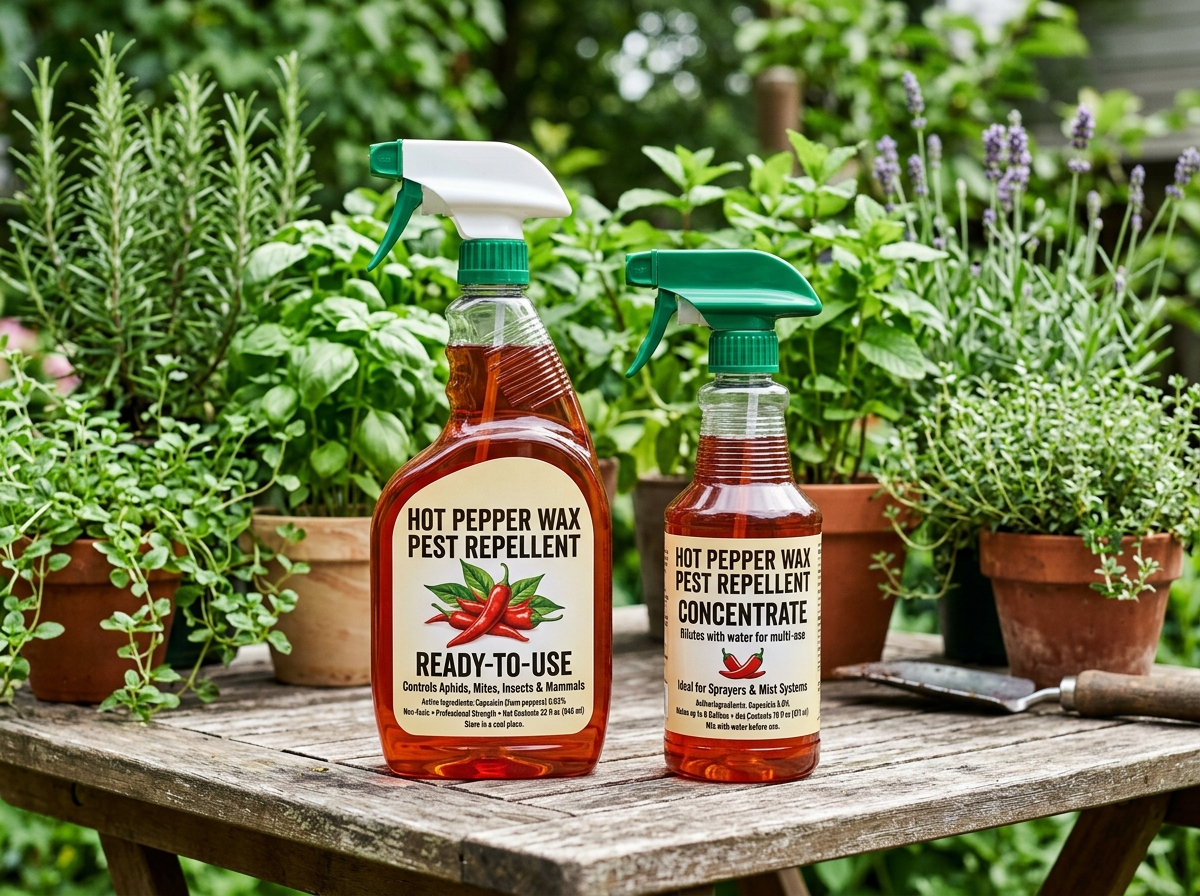
- Ready-to-Use (RTU): These typically come in 22 oz pump-spray bottles or 32 oz spray bottles. The Bonide Hot Pepper Wax Animal Repellent 32 Oz Ready-to-Use is a favorite for beginners because there is no mixing involved. You just shake the bottle and start protecting your basil.
- Concentrate: For larger gardens or those of us who find ourselves spraying frequently, the concentrate is more economical. You generally mix this at a 1:16 ratio (one part concentrate to 16 parts water).
Regardless of the version you choose, the goal is the same: creating an invisible “keep out” sign for your garden.
How Hot Pepper Wax Repellent Protects Your Herb Garden
We often get asked how a simple wax can stop a hungry deer. The secret is a triple-threat approach: taste, smell, and touch.
When an animal approaches a plant treated with hot pepper wax repellent, the smell of the concentrated capsaicin acts as the first warning. If they decide to take a “test bite,” the heat hits their tongue immediately. Finally, for soft-bodied insects, the wax itself can physically interfere with their ability to move or feed. This multi-layered defense is a cornerstone of effective pest control for herb gardens.

The Science of the Wax Barrier
The “wax” part of the name is what makes this product a game-changer. Through a patented process, the capsaicin is suspended in a micro-thin film of paraffin. This film is so thin that it doesn’t interfere with transpiration—the process by which plants “breathe” and release moisture.
Because the wax is waterproof, the repellent doesn’t vanish the moment it gets cloudy. According to resources like Hot Pepper Wax – Garden Talk, this barrier allows the repellent to remain active for much longer than traditional water-based sprays, often remaining effective for up to three weeks for insects and up to four weeks for animals.
Applying Hot Pepper Wax Repellent for Maximum Efficacy
For the best results, we recommend “spraying to wet.” This means you should apply the product until the foliage is completely saturated and the liquid begins to bead or drip off.
Timing is also key. You should apply the repellent on a clear day when no rain is predicted for at least 24 hours. This gives the wax time to “set” and bond to the leaf surface. If you are dealing with a particularly stubborn pest problem, you might need a more aggressive initial schedule. For more on crafting your own garden defenses, see our article on diy-organic-pesticides-for-home-gardeners.
Application Frequency Comparison Table
| Pest Type | Initial Application | Maintenance Frequency | Weather Impact |
|---|---|---|---|
| Insects (Aphids/Mites) | Every 3-7 days for 2 weeks | Every 2-3 weeks | Reapply after heavy rain |
| Small Animals (Rabbits) | Once, saturated coverage | Every 3-4 weeks | Highly weather resistant |
| Large Animals (Deer) | Once, focus on new growth | Every 4 weeks | Reapply as plant grows |
Target Pests: From Insects to Large Mammals
One of the reasons we love hot pepper wax repellent at Ponto de Arte is its versatility. It doesn’t matter if your enemy is a tiny aphid or a 150-pound buck; the spicy barrier works on almost everyone. Products like the Bonide Hot Pepper Wax Animal Repellent, Ready-to-Use, 32 oz are specifically labeled to handle this wide spectrum of garden invaders.
Eliminating Soft-Bodied Insects
For the herb gardener, insects are often the most persistent threat. Aphids, spider mites, and whiteflies love the tender, nutrient-rich leaves of herbs like mint and cilantro.
The wax repellent works on these pests by coating them and the plant. The capsaicin irritates the insects, while the wax can block their spiracles (breathing pores). If you’ve noticed your basil leaves curling or looking “dusty,” you might be dealing with a sap-sucker. You can learn more about identifying these culprits in our guides on stop-the-sap-suckers-a-guide-to-aphid-free-herbs and identifying-the-little-black-bugs-eating-your-herbs.
Deterring Foraging Animals
When it comes to larger animals, the repellent is an excellent deterrent for:
- Deer: Who love to “browse” on your tallest herbs.
- Rabbits: Who can level a parsley patch in minutes.
- Tree Squirrels: Who often dig in pots or chew on wooden structures.
- Groundhogs: Who are notorious for their voracious appetites.
Beyond just the plants, Hot Pepper Wax Animal Repellent can be sprayed on wooden fences, garden stakes, and even the “kneewall” of a greenhouse to prevent animals from chewing on the structures themselves.
Safety, Restrictions, and Best Practices
We prioritize safety because we know these herbs are going straight to your kitchen table. Hot pepper wax repellent is generally considered non-toxic and eco-friendly. It doesn’t kill the animals; it simply “educates” them to stay away.
However, “natural” doesn’t mean “no precautions.” Because the active ingredient is essentially super-concentrated hot sauce, you must treat it with respect. Always wear gloves during application, and be very careful not to spray on a windy day—getting this in your eyes is an experience you won’t soon forget! For those just starting out with organic methods, our natural-pest-control-for-beginners guide offers more safety tips.

Is Hot Pepper Wax Repellent Safe for Edible Herbs?
Yes! This is the biggest advantage for herb enthusiasts. Because the ingredients are food-grade (cayenne pepper and paraffin), the repellent is safe to use on fruits, vegetables, and herbs right up to the day of harvest.
The wax is designed to be “removable” for humans. When you’re ready to make that pesto, simply wash your herbs in warm water. The warm water breaks down the paraffin bond, taking the spicy capsaicin with it. This ensures your herbs taste like herbs, not like a five-alarm chili. This is especially helpful if you’re dealing with aphids on basil indoors, where you want a clean, safe solution.
Regional Use and Legal Restrictions
While this product is highly effective, there are some legal and geographic hurdles to keep in mind. Hot pepper wax repellent is EPA-registered, but it currently cannot be sold or shipped to Alaska (AK) or California (CA) due to specific state-level pesticide regulations.
Additionally, while the product is weather-resistant, its longevity can be affected by soil type and extreme heat. In very humid environments, the wax may break down slightly faster. For a list of herbs that naturally help with pest control and might complement your spray routine, check out our list of the 10-best-herbs-for-pest-control-to-save-your-garden.
Frequently Asked Questions about Hot Pepper Wax
How often should I reapply the repellent?
For animal deterrence, one thorough application typically lasts 2 to 4 weeks. However, if you see rapid new growth on your herbs, you should spray the new leaves, as they won’t have the wax coating. If you are targeting insects, we recommend an initial “knockdown” phase where you spray every 3 to 7 days for two weeks, followed by a maintenance spray every 14 to 21 days.
Will hot pepper wax change the flavor of my herbs?
Not if you wash them! The wax is a physical barrier on the outside of the leaf; it is not “systemic,” meaning the plant doesn’t absorb the heat into its internal tissues. As long as you wash your harvest in warm, soapy water or just warm running water, the spice will be removed.
Is it safe to use around pets and children?
Once the spray has dried on the leaves, it is safe for children and pets to be in the garden. However, if a curious dog decides to lick a treated leaf, they will experience the same spicy “lesson” as a rabbit. It isn’t harmful, but it’s certainly not pleasant. We recommend keeping pets away from the area until the spray is completely dry.
Conclusion
At Ponto de Arte, we believe that gardening should be a joy, not a constant battle against the local wildlife. Using a hot pepper wax repellent allows you to protect your aromatic herb garden using the power of nature itself. By creating a spicy, waterproof shield, you can ensure your rosemary, thyme, and basil grow to their full potential without becoming a midnight snack for the neighborhood deer.
Protecting your garden is about being proactive and using the right tools for the job. If you’re ready to take your herb gardening to the next level and want more specialized advice, discover more specialized herb care solutions on our pillar pages. Happy (and spicy) gardening!
