
Why a Basil Lavender Bug Repellent Belongs in Every Herb Garden
A basil lavender bug repellent is one of the most effective natural ways to keep mosquitoes, flies, and other pests away from your garden and outdoor spaces. Here’s a quick answer if you’re in a hurry:
How to use basil and lavender as a bug repellent:
- Crush fresh leaves of basil or lavender and rub directly on skin for immediate protection
- Mix a 20% solution of lavender essential oil in water or unscented lotion for up to 8 hours of mosquito repellency
- Plant them in clusters near patios, doorways, and windows to create a natural scent barrier
- Make a spray by steeping fresh basil leaves in boiling water, straining, and adding witch hazel
- Place dried sachets of lavender or basil in indoor spaces to deter moths and flies
Important: Whole plants alone don’t produce enough volatile oils to repel bugs in open outdoor spaces. Crushing leaves, extracting oils, or making sprays dramatically increases effectiveness.
If you love your herb garden but hate what mosquitoes and flies do to your evenings outdoors, you’re not alone. Millions of gardeners are ditching harsh chemical sprays in favor of something that’s already growing on their windowsill.
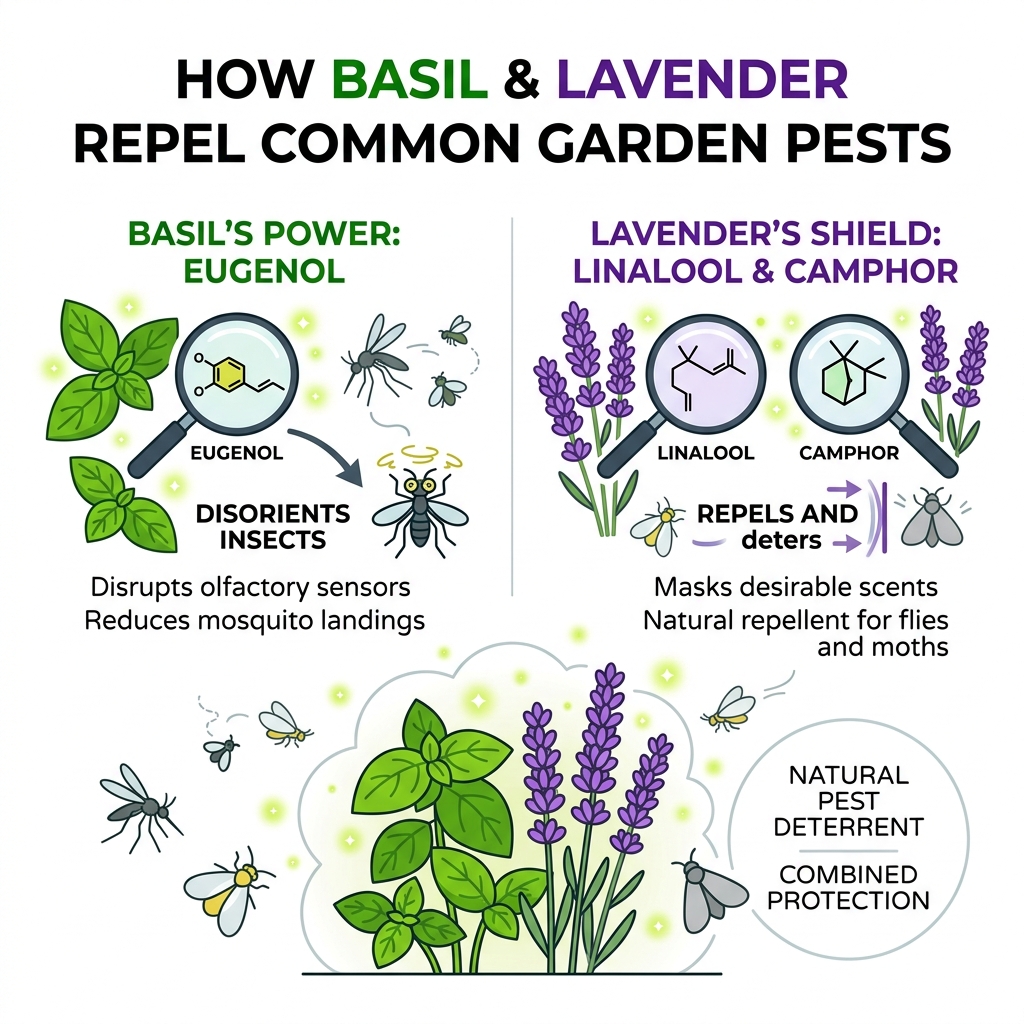
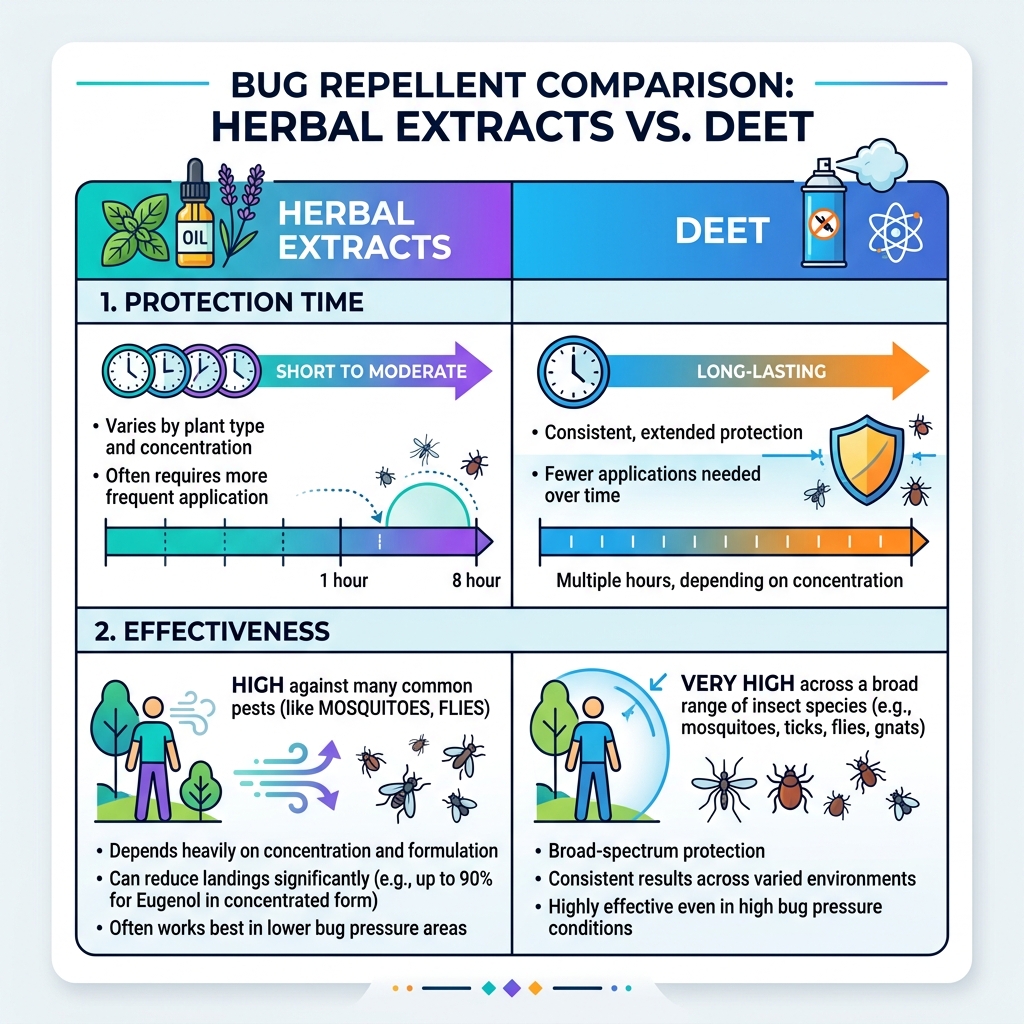
Basil and lavender aren’t just beautiful, aromatic herbs. They contain real chemical compounds — like eugenol, linalool, and camphor — that insects genuinely dislike. Research shows eugenol can reduce mosquito landings by up to 90% in concentrated form, and a 20% lavender essential oil solution can repel mosquitoes for up to 8 hours.
But there’s a catch most gardening blogs skip over: simply planting these herbs isn’t enough. The science matters here, and so does knowing how to actually use them.
This guide covers everything — from the compounds that make these herbs work, to DIY sprays, companion planting strategies, and honest limitations you should know before tossing your DEET.
The Science Behind Basil Lavender Bug Repellent
To understand why a basil lavender bug repellent works, we have to look at the chemistry of the plants. These herbs didn’t evolve their scents just to please our human noses; they developed “volatile organic compounds” as a defense mechanism against being eaten by insects.
Key Aromatic Compounds
Three heavy hitters do most of the work when it comes to repelling pests:
- Linalool: Found abundantly in lavender, this compound is a powerful terpene that affects the olfactory receptors of mosquitoes and flies.
- Eugenol: This is the “secret weapon” in basil. Research suggests that eugenol can reduce mosquito landings by up to 90% when applied in concentrated forms.
- Camphor: Present in many aromatic herbs, camphor provides that sharp, medicinal scent that many biting insects find intolerable.
Extracts vs. Whole Plants
There is a significant difference between a plant sitting in a pot and a concentrated oil. Scientific research on lavender’s effectiveness as a repellent shows that while the plant smells lovely, the concentration of oils released naturally into the air is often too low to clear a whole patio of mosquitoes.
However, when these oils are extracted or the leaves are bruised, the “aromatic defense” becomes much more potent. For instance, lavender oil diluted to 30% has shown 100% repellency against certain tick nymphs. Basil oil also exhibits impressive larvicidal activity, meaning it can actually kill mosquito larvae in standing water.
Top Insects Repelled by Aromatic Herbs
While we often focus on mosquitoes (the ultimate “mosquito buffet” guests), a basil lavender bug repellent approach targets a wide variety of unwanted visitors.
- Mosquitoes: Both herbs are superstars here, particularly varieties like Holy Basil or Lime Basil.
- Houseflies: Flies find the scent of lavender and basil disorienting. Placing these herbs near doorways can help keep them out of the kitchen.
- Ticks and Fleas: Lavender is particularly effective against these hitchhikers.
- Moths: Dried lavender has been used for centuries in closets to protect woolens from hungry larvae.
- Garden Pests: In the garden, basil helps with identifying the little black bugs eating your herbs and repelling them. It is specifically known to deter thrips and tomato hornworms.
- Aphids: While lavender attracts pollinators, its strong scent can help mask the “smell” of your vulnerable plants from sap-sucking aphids.
Effective Methods for Natural Pest Control
Knowing how to use basil as an insect repellent is the difference between being bitten and staying bite-free. We recommend a multi-pronged approach.
The Power of Crushed Leaves
The simplest method is “mechanical release.” By simply brushing against your basil or lavender plants, or better yet, crushing a few leaves in your hand and rubbing them on your skin, you release the concentrated oils directly where they are needed.
Homemade Herbal Bug Repellent Spray
Making your own spray is a fantastic way to utilize your garden harvest. You can find various versions of a homemade herbal bug repellent spray via HGTV, but the basic premise involves steeping fresh herbs.
Our Favorite Recipe:
- Chop 1 cup of fresh basil and lavender leaves.
- Pour 1 cup of boiling water over them and let steep for 3-4 hours.
- Strain the liquid into a spray bottle.
- Add 1 cup of witch hazel (which acts as an emulsifier and skin-soother).
- Store in the fridge and shake before use.
This is a great addition to your toolkit for DIY organic pesticides for home gardeners.
Practical Ways to Use Basil Lavender Bug Repellent Indoors and Out
- Windowsill Pots: Keeping basil indoors on a sunny kitchen windowsill serves a dual purpose: easy cooking access and a deterrent for flies entering through the window.
- Fan Integration: Place a pot of basil or lavender in front of an oscillating fan on your patio. The air current helps disperse the volatile oils across a larger area.
- Shredded Leaf Scattering: If you’re having an outdoor dinner, shred a handful of basil leaves and scatter them across the table or in small decorative bowls. The “bruised” leaves will release a much stronger scent than whole plants.
Companion Planting and Garden Strategies
In organic gardening, we use “push-pull” strategies. We “push” pests away with aromatic herbs and “pull” beneficial insects in.
Using a basil lavender bug repellent strategy in your garden beds creates a multi-sensory deterrent. Lavender’s tall purple spikes attract bees and butterflies, while its scent masks your vegetables from pests. Basil is a classic companion for tomatoes, as it is thought to repel the hornworms that can decimate a crop overnight.
For more ideas, check out our list of the 10 best herbs for pest control to save your garden. Combining these with other natural pest control methods for organic gardening ensures a balanced ecosystem.
Maximizing Potency: Growing Your Own Basil Lavender Bug Repellent
To ensure your plants are producing enough of those precious oils, they need to be healthy.
- Full Sun: Both basil and lavender require at least 6-8 hours of direct sunlight. Sunlight is the “fuel” the plant uses to produce essential oils.
- Well-Draining Soil: Lavender, in particular, hates “wet feet.” Use sandy or loamy soil.
- Pruning: Regularly pinching off the tops of your basil encourages bushy growth and prevents the plant from going to seed, which keeps the oil concentration high in the leaves.
- Soil pH: Lavender prefers slightly alkaline soil, while basil likes it more neutral.
For deeper dives into cultivation, see our organic herb gardening tips and our guide to easy to grow culinary herbs.
Safety, Myths, and Limitations of Herbal Repellents
We want to be honest: while we love natural solutions, they aren’t magic.
The “Passive Repellency” Myth: Simply having a single lavender plant in the corner of a 1-acre yard will not stop mosquitoes. You need clusters of plants and, ideally, you need to interact with them (crushing/brushing) to release the scent.
Safety Precautions:
- Phototoxicity: Some citrus-scented herbs can make your skin more sensitive to sunlight. Always patch-test a DIY spray.
- Methyl Eugenol: Basil oil contains methyl eugenol. While safe in small amounts, it’s a reason to use concentrated essential oils with respect and proper dilution.
- Reapplication: Unlike DEET, which can last all day, natural repellents usually need to be reapplied every 1-2 hours.
- Standing Water: No amount of basil will save you if you have buckets of stagnant water nearby. Always manage your environment first!
Frequently Asked Questions about Basil and Lavender Repellents
Does simply planting lavender stop mosquitoes from entering my yard?
Not entirely. While mosquitoes dislike the scent, a few plants won’t create an invisible “force field.” For better results, plant them in large clusters near where you sit, and occasionally ruffle the leaves to release the aroma.
Which basil variety is most effective for repelling bugs?
While Sweet Basil works well, Holy Basil (Tulsi) and Lime Basil are often cited in studies as having higher concentrations of repellent compounds like eugenol and limonene.
Is basil lavender bug repellent safe for use around pets?
Generally, yes. Basil and Lavender are considered non-toxic to dogs and cats in plant form. However, always consult your vet before using concentrated essential oil sprays directly on a pet’s fur, as their skin is much more sensitive than ours.
Conclusion
Embracing a basil lavender bug repellent strategy is about more than just avoiding bites; it’s about creating a sustainable, eco-friendly garden that works with nature rather than against it. At Ponto de Arte, we believe that protecting your aromatic treasures shouldn’t require harsh chemicals.
By combining healthy growing practices with smart DIY applications, you can enjoy your “summer buffet” without becoming the main course for the local mosquito population. For more specialized advice, explore our pest control for herb gardens or explore our full guide to aromatic spices and herbs to see what else you can add to your aromatic arsenal.
