
Why Bugs Love Your Kitchen Windowsill Basil (And What to Do About It)
Basil bugs kitchen windowsill is one of the most frustrating problems for home herb growers — and you’re far from alone in dealing with it.
Here’s the quick answer:
The most common bugs found on kitchen windowsill basil are:
- Aphids – tiny green or black soft-bodied insects on leaf undersides and new growth
- Whiteflies – small white winged insects that scatter when you touch the plant
- Spider mites – near-invisible pests that leave fine webbing and pale stippling on leaves
- Fungus gnats – tiny dark flies hovering around moist soil
To remove them safely:
- Rinse leaves and stems with a strong water spray
- Apply diluted insecticidal soap or neem oil to all leaf surfaces
- Let the top inch of soil dry out between waterings
- Place yellow sticky traps near the pot to catch flying adults
- Isolate the plant from other herbs on your windowsill immediately
One minute your basil smells amazing. The next, the leaves are curling, dotted with damage, or dropping tiny mystery green specks onto the windowsill. It can feel like your plant went from thriving to struggling overnight.
The truth is, kitchen windowsills create ideal conditions for pests. Warm indoor temperatures, limited airflow, and the moist soil that basil often sits in are exactly what insects like aphids and fungus gnats look for. And once one pest finds your plant, populations can build fast — fungus gnats, for example, can complete a full life cycle in as little as three to four weeks.
The good news? Most infestations are completely manageable with safe, organic methods that won’t make your leaves unsafe to eat.
This guide walks you through everything — identification, removal, and long-term prevention — so your windowsill basil can get back to being the fragrant, healthy herb it deserves to be.
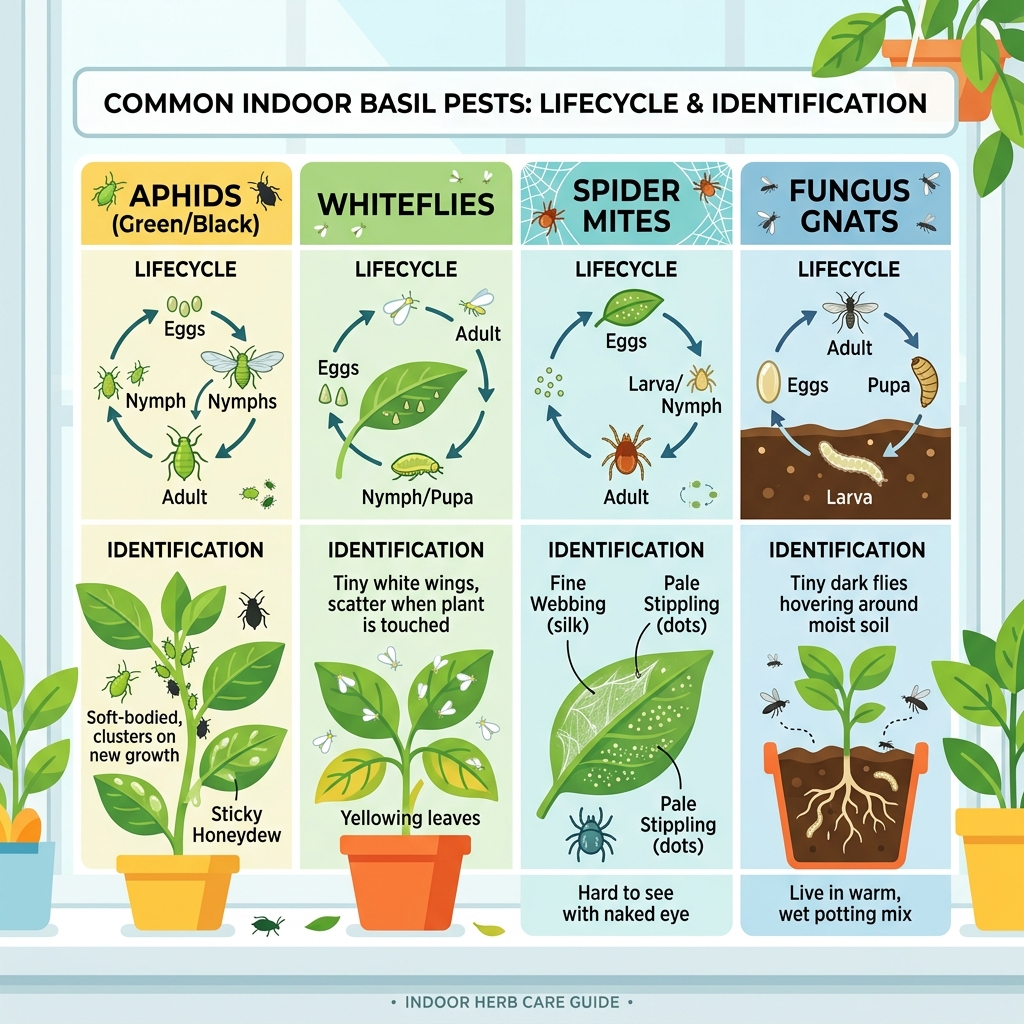
Identifying Common Basil Bugs on Your Kitchen Windowsill
When we notice our basil looking a bit “off,” the first step is playing detective. Indoor environments lack the natural predators (like ladybugs or lacewings) that keep outdoor pest populations in check. On a windowsill, a few stray bugs can quickly become a full-blown colony.
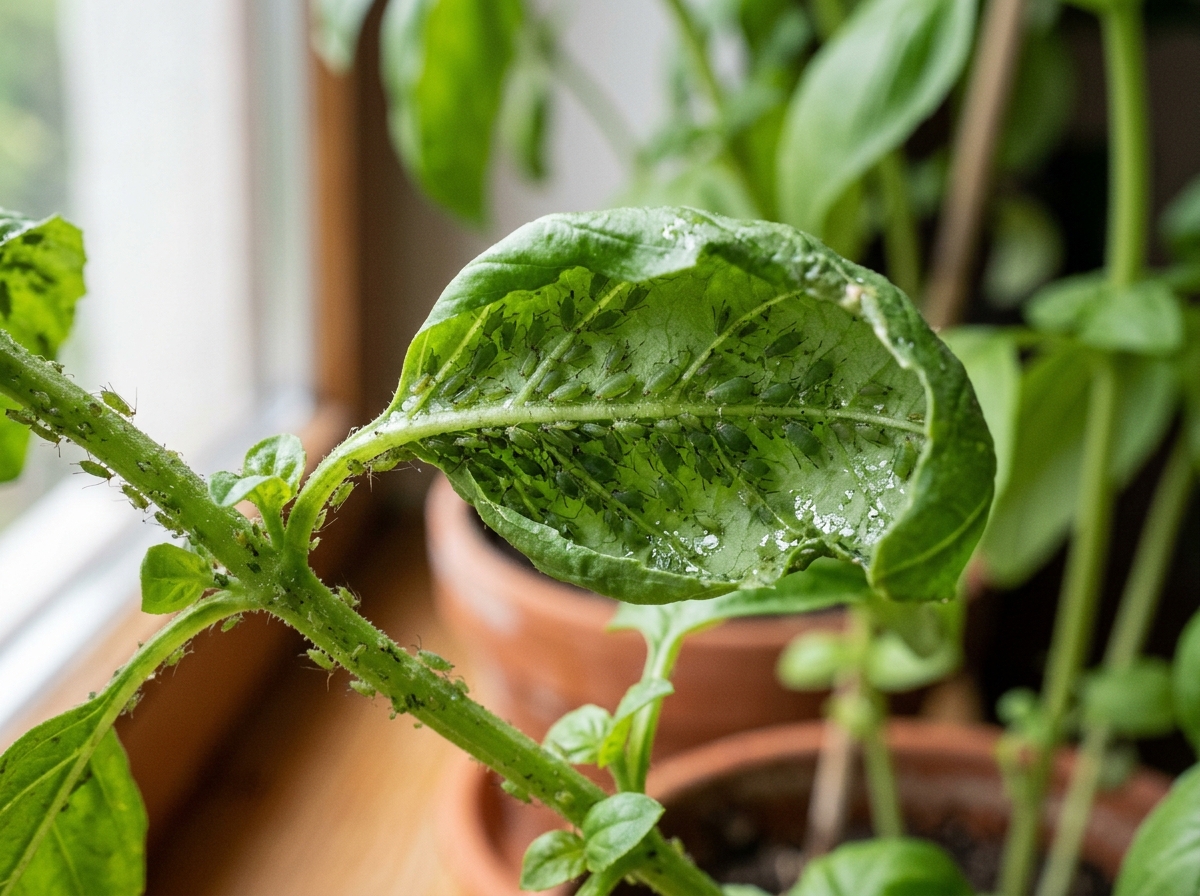
According to research on little bugs on my living basil plant, identification is half the battle. If you see tiny specks moving, don’t panic. Use a magnifying glass or take a high-resolution photo with your phone to zoom in. You are likely looking for one of the “Big Three” sap-suckers.
| Pest | Appearance | Key Signs | Damage Type |
|---|---|---|---|
| Aphids | Pear-shaped; green, black, or pink | Sticky “honeydew” residue; white cast-off skins | Curled, yellowing, or distorted new leaves |
| Spider Mites | Tiny reddish or tan dots (hard to see) | Fine, silky webbing between stems/leaves | Pale stippling (dots) on leaf surfaces |
| Whiteflies | Tiny white moth-like insects | They fly up in a cloud when the plant is shaken | Yellowing leaves and stunted growth |
It is vital to identify the little black bugs eating your herbs early. Spider mites, for instance, are particularly devastating; severe infestations can reduce basil yield by up to 53%. If you see fine webbing, you need to act immediately to save the plant.
Spotting Aphids and Mystery Green Dots
Have you ever looked at your windowsill and wondered why there are green dots on the windowsill by your basil plant? Those dots are often the first warning sign of an aphid infestation. They are usually “frass” (insect droppings) or occasionally the bugs themselves that have fallen off the leaves.
We’ve found that aphids on basil indoors are a real buzzkill because they target the most delicious part of the plant: the tender new growth. These pests use needle-like mouthparts to suck the life out of the stems. If you don’t stop the sap-suckers, you’ll notice the leaves curling inward and becoming sticky to the touch. This stickiness is “honeydew,” a sugary waste that can eventually lead to black sooty mold.
Recognizing Whiteflies and Fungus Gnats
If you brush against your plant and a cloud of tiny white “dust” takes flight, you’re dealing with whiteflies. These are related to aphids and are prolific breeders; a single female can lay up to 400 eggs. For more details on why this happens, check out why does my basil have whiteflies.
On the other hand, if the bugs are dark and hovering near the soil rather than the leaves, they are likely fungus gnats. These pests thrive in the moist, organic-rich soil basil loves. While the adults are just a nuisance, their larvae live in the soil and munch on delicate basil roots. Understanding why does my basil have fungus gnats usually comes down to one thing: overwatering. If the soil stays constantly soggy, the gnats will complete their life cycle in as little as 21 days, leading to a never-ending cycle of flies in your kitchen.
How to Safely Remove Basil Bugs on a Kitchen Windowsill
The biggest concern for any kitchen gardener is safety. We want the bugs gone, but we still want to put that basil in our pesto! The key is using food-safe, mechanical, and organic interventions.
When you discover how to get rid of insects on basil while leaving the leaves safe to eat, the first step is always physical removal. Take your plant to the sink and use a steady stream of lukewarm water to spray the undersides of every leaf. This “water blast” knocks off aphids and spider mites, which are often too weak to climb back up.
After the bath, practice strict pest control for herb gardens by isolating the infested plant. Move it to a different room, away from your other houseplants. Pests like thrips and whiteflies can fly or crawl to nearby pots, turning one sick plant into a windowsill-wide epidemic. We recommend a “quarantine” period of at least two weeks while you treat the plant with natural pest control methods.
Organic Remedies for Basil Bugs on a Kitchen Windowsill
If water alone doesn’t do the trick, it’s time to raid the pantry or the garden shed for organic reinforcements. We advocate for diy organic pesticides because they break down quickly and are non-toxic to humans.
- Neem Oil: This is a gardener’s best friend. It disrupts the hormonal systems of pests so they stop feeding and breeding. Mix 1 teaspoon of neem oil with a half-teaspoon of mild dish soap in a quart of warm water.
- Insecticidal Soap: You can buy this or make a natural pest control for beginners version using 1 teaspoon of liquid castile soap per quart of water. Spray it directly on the bugs; it works by breaking down their outer shells.
- Diatomaceous Earth (DE): For soil-based pests like fungus gnats, a dusting of food-grade DE on the soil surface acts like microscopic shards of glass, dehydrating larvae.
- The Drowning Technique: For severe cases, some gardeners submerge the entire pot in a bucket of water for 1-2 hours. This “drowns the bastards” (as some forum users put it) without hurting the basil, provided you let the soil dry out thoroughly afterward.
For more beginner-friendly tips, see our guide on natural pest control for beginners 2.
Cleaning Leaves for Safe Culinary Use
Even after the bugs are gone, you might be hesitant to eat the leaves. Don’t worry — insects aren’t toxic, and with a proper wash, your basil is perfectly safe.
When growing basil indoors, especially after treatment, we suggest a double-wash method. First, submerge the harvested leaves in a bowl of cool water with a splash of white vinegar. This helps loosen any remaining “honeydew” or insect eggs. Swish them gently, then rinse under cold running tap water.
Always inspect the leaves during harvest. If a leaf is heavily stippled by spider mites or covered in black mold, it’s best to compost that specific leaf and keep the healthy ones. For more on maintaining your indoor harvest, read about growing basil indoors 2.
Preventing Future Infestations in Your Indoor Herb Garden
An ounce of prevention is worth a pound of pesto! Most basil bugs kitchen windowsill issues start because the plant is stressed. A healthy, vigorous plant has its own chemical defenses to ward off attackers.
Start with the basics: organic soil for herbs. Avoid using “garden soil” from outside, which often contains dormant pest eggs. Instead, use a sterilized, well-draining potting mix. Air circulation is also critical. If your pots are crammed together on a kitchen windowsill herb garden, humidity builds up, creating a playground for whiteflies. Space your pots out or use a small clip-on fan to keep the air moving.
Optimal Lighting and Watering to Deter Basil Bugs on a Kitchen Windowsill
Basil is a sun-worshipper. If it doesn’t get at least 6-8 hours of strong light, it becomes “leggy” and weak — an easy target for pests. While a south-facing window is best, winter light is often insufficient. We recommend supplementing with a small LED grow light to keep your growing basil indoors 3 project strong year-round.
Watering is where most people go wrong. To prevent fungus gnats:
- Bottom Water: Set the pot in a saucer of water for 20 minutes, then discard the excess. This keeps the top layer of soil dry, where gnats like to lay eggs.
- The Finger Test: Never water on a schedule. Stick your finger an inch into the soil; if it feels damp, wait.
- Sand Barrier: Adding a half-inch layer of coarse sand to the top of the soil prevents gnats from reaching the organic matter they need to survive.
You can also experiment with the 10 best herbs for pest control to see if companion planting helps your specific indoor setup.
Frequently Asked Questions about Basil Pests
Why are there small green dots on my windowsill?
These are almost certainly signs of aphids. They are either the insects themselves that have fallen or “frass” (waste). If you see these, immediately check the undersides of your basil leaves. It’s an early warning sign that a colony is establishing itself. Clean the windowsill with a mild vinegar solution to remove any sticky residue that might attract other pests like ants.
Can I eat basil leaves after they have had bugs?
Yes! Insects like aphids, whiteflies, and spider mites are not poisonous to humans. While the “yuck factor” is real, a thorough wash in a vinegar-water solution followed by a clear rinse makes them perfectly safe for cooking. If the leaves are severely distorted or have black mold, the flavor might be bitter, so it’s better to discard those specific parts.
Should I throw away an infested basil plant?
Not necessarily. Most basil plants are incredibly resilient. If you catch the problem early, a good rinse and a round of neem oil will usually save it. However, if the plant is 50% covered in webbing (spider mites) or the leaves are almost entirely yellow, it might be better to discard it to protect your other plants. If you do discard it, bag it up and take it straight to the outside bin — don’t leave it in your kitchen trash!
Conclusion
Managing basil bugs kitchen windowsill doesn’t require harsh chemicals or a degree in entomology. By keeping your plants healthy with proper light, careful watering, and regular inspections, you can enjoy fresh, aromatic basil all year long. At Pontodearte, we specialize in helping you protect your aromatic herb gardens with sustainable, organic solutions.
Don’t let a few uninvited guests ruin your indoor garden. With the right tools and a little diligence, you can keep your kitchen windowsill pest-free and your pesto plates full. More info about urban gardening is always available to help you grow with confidence!
