
Why Your Herb Garden Needs Natural Bug Protection
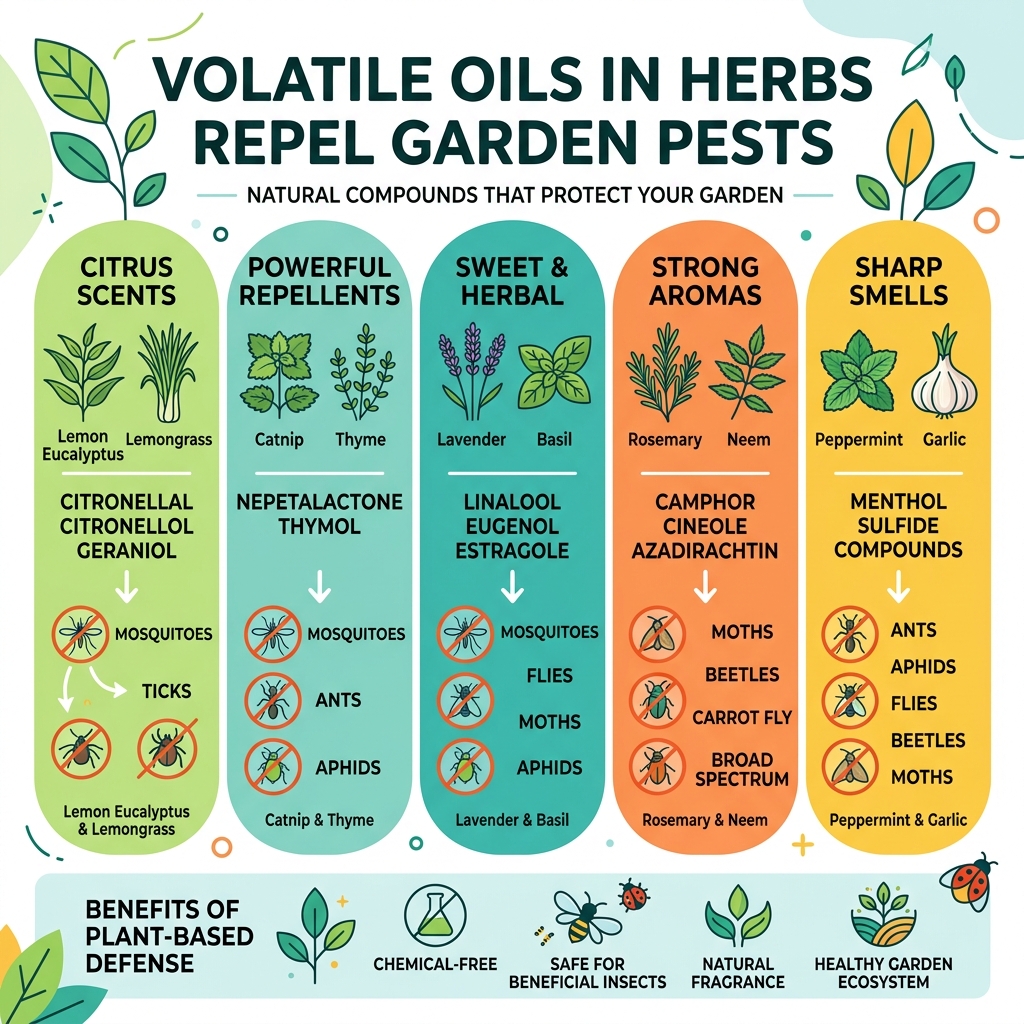
Herbs for bug repellent are one of the most effective, chemical-free ways to protect your garden and yourself from pests. Here are the best options, backed by science:
| Herb | Key Compound | Main Bugs Repelled |
|---|---|---|
| Lemon Eucalyptus | Citronellal | Mosquitoes, ticks |
| Citronella / Lemongrass | Citronellol, Geraniol | Mosquitoes |
| Catnip | Nepetalactone | Mosquitoes, ants, aphids |
| Thyme | Thymol | Mosquitoes, ticks |
| Lavender | Linalool | Mosquitoes, flies, moths |
| Basil | Eugenol, Estragole | Mosquitoes, flies, aphids |
| Rosemary | Camphor, Cineole | Moths, beetles, carrot fly |
| Neem | Azadirachtin | Broad spectrum |
| Peppermint | Menthol | Ants, aphids, flies |
| Garlic | Sulfide compounds | Aphids, beetles, moths |
You spend time growing a beautiful herb garden. The last thing you want is bugs destroying it — or forcing you to reach for a bottle of harsh chemicals.
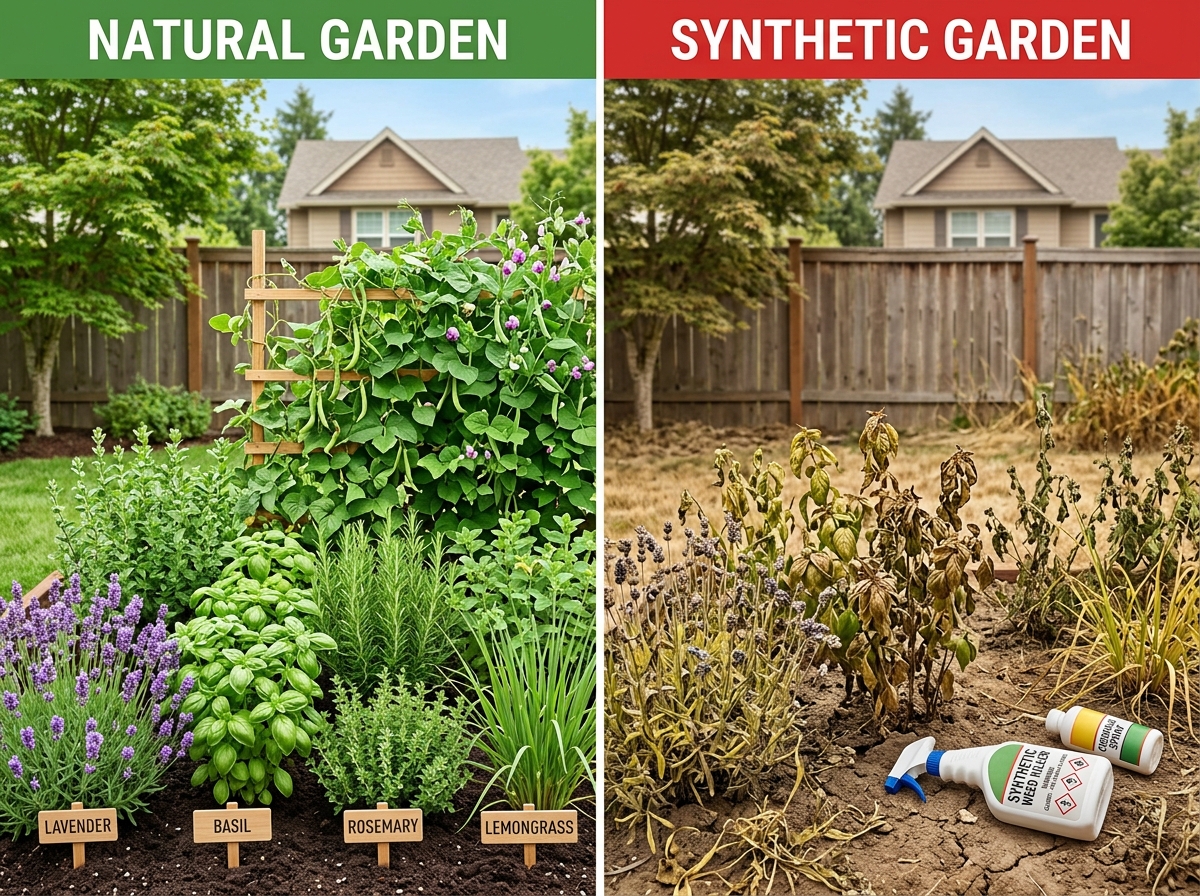
Here’s the problem: most gardeners feel stuck choosing between two bad options. Let the bugs take over, or spray synthetic repellents that could harm your plants, your soil, and your family.
But there’s a better way.
Many herbs produce powerful volatile oils — natural chemical compounds that evolved specifically to drive insects away. These same oils that make your garden smell incredible are deeply unpleasant to mosquitoes, aphids, beetles, and more.
The science backs this up. Lemongrass, for example, has been shown to be up to 95% effective at repelling mosquitoes. Catnip outperformed DEET in a study at Iowa State University. Even common culinary herbs like thyme and basil have measurable, proven repellent effects.
This guide will show you exactly which herbs work, how to use them in your garden, and how to turn them into simple DIY sprays and oils — no chemicals required.
Why Choose Herbs for Bug Repellent Over Synthetic Chemicals?
When we step into our gardens, we want to breathe in the fresh scent of damp earth and blooming lavender, not a cloud of synthetic chemicals. However, for decades, conventional wisdom has pushed products like DEET and Picaridin as the only “real” way to stay bite-free. At Ponto de Arte, we believe in a more harmonious approach.
Concerns with Synthetic Chemical Repellents
The most common active ingredient in store-bought sprays is DEET (N,N-Diethyl-meta-toluamide). While the EPA generally considers it safe when used as directed, many of us feel uneasy about its intensity. Research by pharmacologist Dr. Abou Donia involving rats showed that heavy doses of DEET could lead to neuron death in brain regions controlling muscle coordination and memory.
Furthermore, our skin is our largest organ. It absorbs much of what we put on it, distributing those substances into our circulatory system. If a chemical is strong enough to melt plastic or damage synthetic fabrics (as DEET can), we should naturally question what it does to our bodies over years of use.
Environmental Impact and Safety
Synthetic repellents don’t just stay on your skin; they wash off into our waterways and can linger in the soil. Picaridin, a newer alternative modeled after the piperine found in black pepper, is often marketed as “practically non-toxic” to skin, yet we still lack long-term data on its cumulative environmental effects.
In contrast, using herbs for bug repellent works with nature. These plants have spent millions of years evolving defense mechanisms—like toxic or unpalatable chemicals and pheromones—to protect themselves. When we use these botanical defenders, we are simply borrowing nature’s own technology.
Essential Herbs for Bug Repellent and Personal Protection
If you are looking for the “heavy hitters” of the botanical world, a few specific plants stand out for their scientifically validated power. These are the foundation of any 10-best-herbs-for-pest-control-to-save-your-garden strategy.
Lemon Eucalyptus (Corymbia citriodora) This is the gold standard for natural protection. Its essential oil contains high levels of citronellal (up to 85%). In fact, Lemon Eucalyptus essential oil is the only plant-based repellent recognized by the CDC as being comparable in effectiveness to DEET for repelling mosquitoes.
Catnip (Nepeta cataria) Don’t let the name fool you; this isn’t just for feline friends. A famous study at Iowa State University found that nepetalactone, the essential oil in catnip, was ten times more effective at repelling mosquitoes than DEET. It also works wonders against ants, aphids, and cockroaches.
Neem (Azadirachta indica) A staple in Ayurveda for millennia, Neem is a “tree of protection.” Its active compound, azadirachtin, doesn’t just repel bugs; it disrupts their growth and prevents them from molting. Studies show Neem-based repellents can provide protection against mosquitoes for up to 3 hours, making it a powerful tool for short outdoor sessions.
Culinary Herbs for Bug Repellent and Garden Health
One of the best parts of organic gardening is that your “pest control” can also be your dinner! Many of the herbs we use to season our food are actually secret weapons in the fight against identifying-the-little-black-bugs-eating-your-herbs.
- Basil: This kitchen favorite is toxic to mosquito larvae and confuses adult mosquitoes with its strong scent. It is particularly effective when planted near tomatoes to repel hornworms.
- Rosemary: Containing camphor and cineole, rosemary is excellent for repelling moths and beetles. We love tossing a few sprigs onto the BBQ or fire pit to create a bug-repelling smoke.
- Peppermint: The high menthol content in mint is a major deterrent for ants and spiders. However, be careful—mint is an aggressive spreader! We always recommend growing it in containers to keep it from taking over your entire yard.
- Thyme: This hardy herb contains thymol. Research has shown that a 5% thyme oil solution can be as effective as 20% DEET for repelling ticks on clothing.
By integrating these into your garden, you can stop-the-sap-suckers-a-guide-to-aphid-free-herbs while keeping your spice rack full.
The Most Effective Herbs for Bug Repellent in Your Garden
Creating a “shield” around your patio or deck requires a bit of strategic planning. You want to choose plants that release their scent easily and thrive in the areas where you spend the most time.
Lavender (Lavandula) Lavender is the “Swiss Army Knife” of herbs. Its fragrance comes from linalool, which is believed to actually hinder a mosquito’s ability to smell. Historically, lavender was even tucked into seat cushions to keep pests away. It’s a perennial that loves the sun and well-drained soil, making it perfect for garden borders.
Citronella Grass and Lemongrass (Cymbopogon) There is a common misconception in garden centers: the “Citronella Plant” (which is actually a scented geranium) is often sold as a mosquito repellent, but it isn’t very effective. For real results, you want Citronella Grass or Lemongrass. These contain high concentrations of geraniol and citronellol. Lemongrass has been shown to be up to 95% effective in repelling mosquitoes in some studies.
Sage (Salvia officinalis) Sage is a fantastic deterrent for cabbage moths and carrot flies. Like rosemary, it is highly effective when burned. If you’re having a summer evening gathering, tossing some dried sage into your fire pit can help create a “no-fly zone” for pests.
For more detailed strategies on setting up your space, check out our guide on natural-pest-control-methods-for-organic-gardening.
Strategic Garden Use: Companion Planting and Natural Barriers
Simply putting a plant in the ground isn’t always enough. To get the most out of your herbs for bug repellent, you need to understand how to “activate” them.
The Power of Crushing and Brushing
Most herbs hold their repellent oils deep inside their leaves. To be effective, those oils must be released. You can do this by:
- Strategic Placement: Plant herbs like Lemon Verbena or Mint along walkways where your legs will brush against them, releasing the scent.
- Active Release: Gently crush a few leaves of Lemon Balm or Basil and rub them on your skin for a quick, temporary repellent effect.
- Smoke Barriers: Burning dried herbs like Thyme or Sage can deter up to 90% of insects for nearly 90 minutes.
Trap Crops and Companion Planting
Sometimes the best defense is a good distraction. Nasturtiums act as a “trap crop,” attracting aphids away from your precious herbs. Similarly, planting Marigolds (which contain pyrethrin) near your garden entrance can create a chemical barrier that many bugs refuse to cross.
If you’re just getting started with these methods, our natural-pest-control-for-beginners guide offers a step-by-step approach to building your first aromatic defense system.
DIY Recipes: How to Make Your Own Herbal Bug Sprays
If you want protection that moves with you, a DIY spray is the answer. Making your own allows you to control the ingredients and avoid the synthetic additives found in commercial “natural” brands.
The Witch Hazel Base (Quick & Easy)
This is a great everyday spray that smells fresh and isn’t greasy.
- 1 cup Witch Hazel (acts as a carrier and skin calmer)
- 1 cup Water (boiled and cooled)
- 30-50 drops of Essential Oils (Choose a mix of Lemon Eucalyptus, Citronella, and Lavender)
The Herbal Infusion (No Essential Oils)
If you prefer using fresh herbs from your garden, try an infusion.
- Roughly chop a handful of fresh Rosemary, Peppermint, and Catnip.
- Add them to a glass jar and cover with Witch Hazel or high-proof alcohol (vodka).
- Let it sit in a dark place for at least two weeks, shaking every few days.
- Strain the liquid into a dark amber glass bottle.
Pro Tip: Always use glass or stainless steel bottles. Essential oils can actually degrade plastic over time. For more recipe ideas, see our page on diy-organic-pesticides-for-home-gardeners.
Frequently Asked Questions about Herbal Bug Repellents
How long do homemade natural bug sprays last?
Because they lack synthetic preservatives, DIY sprays have a shorter shelf life. Sprays made with water and witch hazel typically last about 2 weeks if kept in the refrigerator. Alcohol-based tinctures can last much longer—several months—because the alcohol acts as a preservative. Always store your mixtures in dark glass bottles away from direct sunlight to prevent the volatile oils from breaking down.
Are natural bug repellents safe for children and pets?
Generally, yes, but caution is key. Always perform a patch test on a small area of skin first. For children under two, we recommend spraying the repellent on their clothing rather than directly on their skin. Some herbs, like Floss Flower, are toxic if ingested, so keep them out of reach of curious pets. Stick to pet-safe options like Rosemary, Sage, and Lemon Balm around your furry friends.
How often should I reapply herbal bug repellents?
This is the most important rule: reapply every 90 minutes to 2 hours. Unlike DEET, which can last 8 hours, natural volatile oils evaporate much faster. If you are sweating or swimming, you may need to reapply even more frequently. We call this the “90-minute rule” to ensure you stay protected.
Conclusion
At Ponto de Arte, we are passionate about helping you protect your slice of paradise. Whether you are trying to pest-control-for-herb-gardens or just want to enjoy a sunset without being eaten alive, herbs for bug repellent offer a sustainable, aromatic, and effective solution.
By choosing plant-based protection, you aren’t just repelling bugs—you’re inviting a healthier, more vibrant ecosystem into your backyard. Ready to dive deeper into chemical-free gardening? Explore More Organic Gardening Tips on our blog and start growing your own natural defense today!
