
The Best Indoor Plants to Keep Your Home Bug-Free
Plants that keep bugs away indoors are a simple, chemical-free way to protect your home — especially your herb garden — from common pests like mosquitoes, flies, ants, and cockroaches.
Here are the top plants that repel bugs indoors:
| Plant | Bugs It Repels |
|---|---|
| Lavender | Moths, fleas, beetles, mosquitoes |
| Sweet Basil | Houseflies, mosquitoes |
| Chrysanthemums | Roaches, ants, bed bugs, silverfish |
| Peppermint | Ants, spiders, aphids |
| Catnip | Cockroaches, mosquitoes |
| Rosemary | Gnats, midges, mosquitoes |
| Citronella Geranium | Mosquitoes, flying insects |
| Marigolds | Whiteflies, mosquitoes |
| Venus Flytrap | Fruit flies, fungus gnats |
| Lemon Balm | Flying insects, mosquitoes |
There’s nothing more frustrating than watching pests damage the herbs you’ve carefully grown — or ruin the beautiful aromas that make your indoor garden special.
The good news? Certain plants do double duty. They look great, smell amazing, and act as natural bouncers for your home.
These plants work through scent, oils, and even physical trapping — no harsh sprays needed. Some, like catnip, contain compounds that are nearly as effective as chemical repellents. Others, like the Venus flytrap, simply eat the problem.
This guide covers the 10 best bug-repelling houseplants, how to use them, and where to place them for maximum effect.
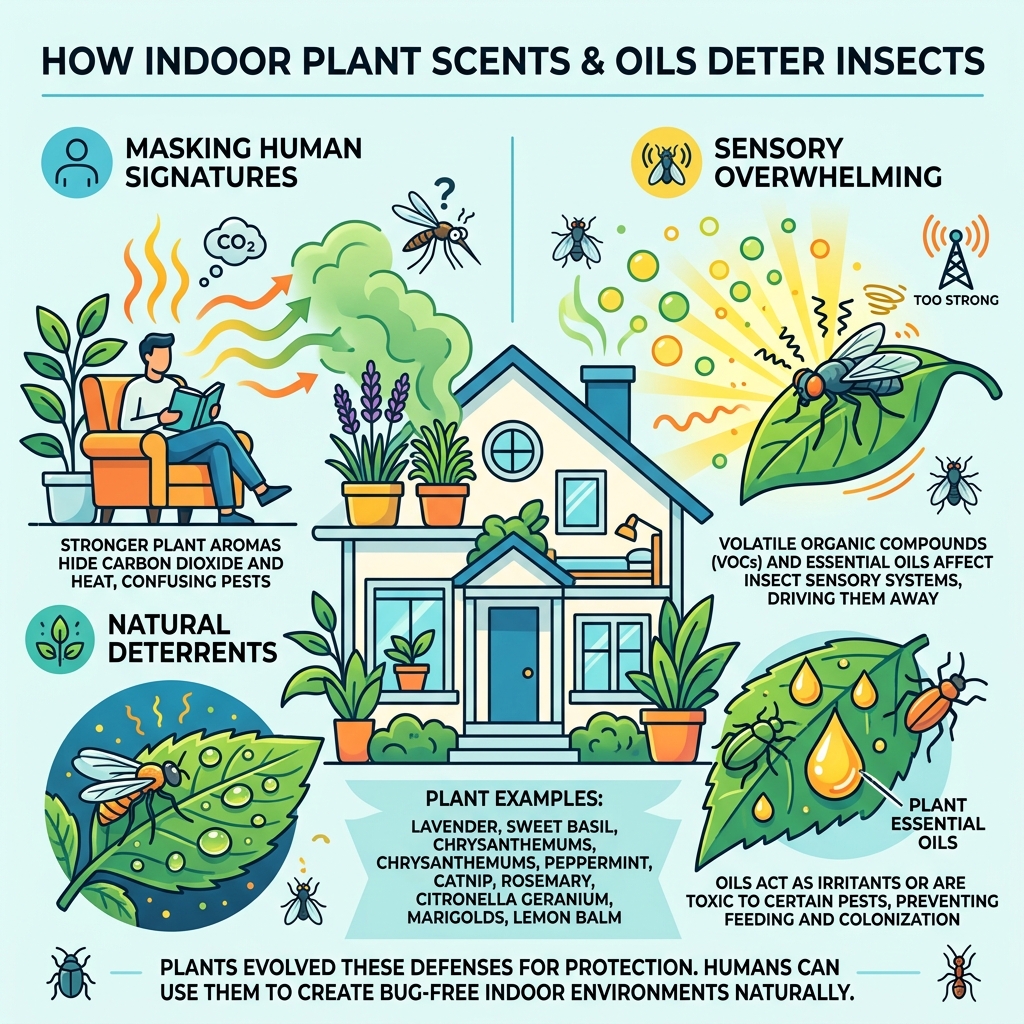
How Plants That Keep Bugs Away Indoors Actually Work
Have you ever wondered why a mosquito ignores a fragrant lavender bush but zeroes in on your arm? It all comes down to chemistry. Plants have evolved complex defense mechanisms to protect themselves from being eaten, and we can hijack those defenses to keep our homes pest-free.
Most plants that keep bugs away indoors rely on essential oils and Volatile Organic Compounds (VOCs). These are the scents we find pleasant—like the zing of lemon or the earthiness of rosemary—but to an insect, they are overwhelming or even toxic. For example, many insects rely on their sense of smell to find food or mates. A strong-smelling plant can act as a “masking agent,” hiding the carbon dioxide and heat signatures that humans and pets emit.
Some plants go a step further with specific chemical warfare:
- Nepetalactone: Found in catnip, this compound is a powerhouse. Scientific research on catnip and insect chemical receptors shows that it triggers a specific receptor in insects that causes sensations of pain and itchiness. It’s why roaches and mosquitoes beat a hasty retreat.
- Pyrethrin: This is a natural neurotoxin found in chrysanthemums. It’s so effective that it’s a primary ingredient in many commercial organic pesticides.
- Active Trapping: Plants like the Venus flytrap don’t just repel; they provide biological control by physically ensnaring and digesting insects to supplement their nutrient intake.
Understanding these mechanisms helps us create a “green shield” around our living spaces. If you’re interested in taking your natural defense further, you can even learn about diy-organic-pesticides-for-home-gardeners to supplement your botanical bouncers.
Top 10 Recommended Bug-Repelling Houseplants
Choosing the right greenery involves balancing pest-fighting power with the needs of your home. Some plants crave the sun, while others are toxic to curious kittens. We’ve rounded up the best options to help you decide.

1. Lavender (Lavandula)
Lavender is perhaps the most beloved of all aromatic plants. While we use it to drift off to sleep, it has the opposite effect on moths, fleas, and beetles. The secret lies in linalool, a compound that many insects find absolutely repulsive.
To use lavender as one of your plants that keep bugs away indoors, place it in the sunniest window you have. It requires at least 6 to 8 hours of direct light to thrive and produce those potent oils. If you don’t have a green thumb yet, don’t worry—this is a great natural-pest-control-for-beginners option. You can even snip the purple stems to create bouquets or sachets for your closets to ward off clothes moths. If you’re looking for a head start, you can find livelavander plants that are ready to go to work.
2. Sweet Basil
Basil isn’t just for pesto; it’s a tactical weapon against houseflies and mosquitoes. Unlike many other herbs where you have to crush the leaves to release the scent, basil emits a powerful aroma just by sitting in the sun.
We highly recommend keeping basil on a kitchen windowsill. It provides pest-control-for-herb-gardens by deterring flies that are attracted to food scraps. Basil loves “wet feet” compared to other herbs, so keep the soil moist and ensure it gets plenty of direct sunlight. Ruffling the leaves as you walk by will help intensify its bug-repelling vapors.
3. Chrysanthemums (Mums)
If you want a plant with a serious “hit list,” look no further. Chrysanthemum’s hit list includes roaches, ants, Japanese beetles, ticks, silverfish, and even bed bugs.
Mums contain pyrethrum, which is used in many natural insect repellents. However, a word of caution: these are decorative powerhouses but can be toxic to pets if ingested. Keep them on high counters or in areas where your furry friends can’t reach them. They prefer bright, indirect light and consistent watering to keep their blooms vibrant.
4. Peppermint and Mint Varieties
Mint is the ultimate multi-tasker. Its high concentration of menthol is a natural deterrent for spiders, ants, and even mice. Spiders, in particular, taste through their legs, and walking over minty surfaces is a sensory nightmare for them.
When using mint as part of your natural-pest-control-methods-for-organic-gardening strategy, always keep it in a pot. Mint is notoriously invasive and will take over your other herbs if given the chance. It enjoys partial shade to full sun and requires well-draining soil to prevent root rot.
5. Catnip
Your cat might experience pure euphoria around this plant, but cockroaches and mosquitoes feel the exact opposite. Research has shown that the essential oil in catnip, nepetalactone, can be nearly as effective at repelling mosquitoes as DEET.
You can grow a four-pack of catnip plants and place them in areas where you’ve noticed roach activity. For an extra boost, you can simmer catnip leaves in water to create a homemade bug spray. Just be prepared for your cat to become your garden’s most enthusiastic (and perhaps distracted) security guard.
6. Rosemary
Rosemary is a hardy, woody herb that acts as a natural healer and soother for humans but a nightmare for gnats and midges. Its intense fragrance is highly effective at masking the scents that draw insects indoors.
Rosemary is incredibly drought-tolerant, making it perfect for those of us who occasionally forget to water. It needs very high light, so a south-facing window is ideal. You can even burn dried rosemary leaves like incense to create a bug-repelling smoke during summer evenings.
7. Citronella Geranium (Mosquito Plant)
Often sold as the “Mosquito Plant,” the Pelargonium citrosum is a hybrid that carries a heavy lemon scent. While it doesn’t release enough oil on its own to clear a whole room, it is excellent at masking odors when placed strategically.
We suggest keeping potted citronellas near entryways. To activate the repellent properties, you need to “agitate” or bruise the leaves to release the oils. It’s a beautiful, leafy plant that thrives in bright light and adds a fresh, clean scent to your home.
8. Marigolds
Marigolds are famous in outdoor vegetable gardens for protecting “prized tomatoes,” but they work just as well indoors. They emit a distinct, pungent odor caused by limonene that sends whiteflies and midges scurrying.
You can easily start these from marigold seeds for home cultivation. They are “gnat-fighting beasts” that add a splash of orange or yellow to your decor. Just ensure they get plenty of sunshine to keep their blooms—and their smell—strong.
9. Venus Flytrap
The Dionaea muscipula is the only plant on our list that takes an active approach. Native to nitrogen-poor wetlands, it evolved to “eat” bugs like fruit flies and fungus gnats to get the nutrients it needs.
Venus flytraps are fascinating to watch, but they have specific needs. They require distilled water (tap water minerals can kill them) and plenty of bright, indirect light. They are perfect for placing near fruit bowls where tiny gnats tend to congregate.
10. Lemon Balm
A member of the mint family, Melissa officinalis contains high levels of citronellal. Its leaves have a distinctive lemon scent that keeps flying insects at bay.
Like its cousin peppermint, lemon balm can spread quickly, so keep it contained in a pot. It’s a very hardy plant that can survive in various light conditions. To get the full benefit, agitate the foliage frequently to release that heavenly, bug-hating aroma.
Strategic Placement and Care for Your Green Shield
Simply buying the plants isn’t enough; you have to put them where the “enemy” enters. Think of your plants as a perimeter defense system.
Best Locations for Plants That Keep Bugs Away Indoors
- Kitchen Windowsills: This is the frontline. Basil, mint, and Venus flytraps are perfect here to deter flies and ants attracted to food.
- Doorways and Entryways: Place rosemary or citronella geraniums here to intercept mosquitoes and gnats as they try to hitch a ride inside.
- Near Fruit Bowls: A small Venus flytrap or a pot of marigolds can help manage the fruit fly population.
- Patios and Balconies: Creating a barrier of lavender and catnip on your balcony can prevent pests from even reaching your doors.
Maintenance Tips for Plants That Keep Bugs Away Indoors
To keep your botanical bouncers effective, they need to stay healthy. A stressed plant produces fewer essential oils, which means less protection for you.
- Light is Key: Most bug-repelling herbs need at least 6 hours of sun. If your home is dark, consider supplemental LED grow lights.
- Agitate the Leaves: For plants like rosemary, lemon balm, and citronella, the scent is locked inside the leaves. Give them a gentle “fluff” or rub a leaf whenever you walk by.
- Proper Drainage: Most of these plants (except basil and Venus flytraps) hate soggy soil. Use pots with drainage holes and a high-quality potting mix.
- Cleaning: Dust on leaves can block sunlight and reduce oil production. Wipe large leaves down with a damp cloth occasionally.
- Monitoring: Check regularly for signs of distress. If you’re new to this, check out our guide on natural-pest-control-for-beginners-2 for more tips.
Frequently Asked Questions about Plants That Keep Bugs Away Indoors
Can these plants eliminate an existing infestation?
In all honesty, plants that keep bugs away indoors are best used as preventives. While a Venus flytrap will eat a few flies and a peppermint plant will make ants think twice, they cannot replace professional intervention if you have a full-blown infestation. They are “biological controls” that help reduce populations and discourage new arrivals, but they have limitations. If bugs are overrunning your place, it’s time to call in the experts.
Which bug-repelling plants are safe for cats and dogs?
Safety is a top priority for us. While many pest-resistant plants use toxic sap to deter bugs, there are pet-friendly options. Bromeliads and Spider plants are excellent non-toxic choices. Spider plants are particularly great because they absorb chemicals like formaldehyde and xylene from the air while being safe for nibbling pets. Always check the ASPCA guidelines if you are unsure about a specific variety.
How do I maximize the scent of my pest-deterring herbs?
The more “stress” (in a controlled way) a plant feels, the more oil it often produces. Ensuring they have adequate sunlight is the most important factor for oil production. Additionally, physically bruising a leaf or agitating the foliage releases those volatile compounds into the air immediately. This is why placing them in high-traffic areas where people (or pets) brush against them is a brilliant strategy.
Conclusion
At Ponto de Arte, we believe that your home should be a sanctuary, not a playground for pests. By integrating plants that keep bugs away indoors, you aren’t just decorating; you’re building a holistic, aromatic defense system. Our specialized focus on protecting aromatic herb gardens ensures that your culinary treasures stay safe from invaders naturally.
Whether you are looking for urban-gardening solutions or need specialized pest management for your indoor greenery, we are here to help you grow a healthier, bug-free home. Embrace the power of nature and let your plants do the dirty work!
