
Why Every Herb Gardener Needs a Cilantro Pest Prevention Guide
A cilantro pest prevention guide covers everything you need to protect your plants from the most common threats. Here’s a quick overview:
Most common cilantro pests and how to stop them:
| Pest | Key Sign | Quick Fix |
|---|---|---|
| Aphids | Yellowing leaves, sticky residue | Blast with water, use insecticidal soap |
| Spider mites | Fine webbing, pale speckled leaves | Increase humidity, neem oil |
| Whiteflies | White insects fly when disturbed | Yellow sticky traps, insecticidal soap |
| Cutworms | Stems cut at soil level | Paper collar around seedling base |
| Slugs | Holes in leaves, slime trails | Diatomaceous earth, beer traps |
| Root-knot nematodes | Wilting, root galls | Soil solarization, resistant varieties |
| Leafhoppers | Spindly yellow plants | Neem oil, insecticidal soap |
Cilantro is one of the most rewarding herbs to grow at home. Its bright, citrusy aroma and bold flavor make it a kitchen staple. But it comes with a catch.
Despite its naturally strong scent — which does repel some insects — cilantro is still vulnerable to a surprising number of pests. Aphids, cutworms, whiteflies, and even soil-borne invaders like root-knot nematodes can quietly devastate a healthy plant before you notice anything is wrong.
The good news? Most pest problems are completely preventable with the right approach. Early detection, smart growing conditions, and a few organic tricks go a long way. You don’t need harsh chemicals. You just need a plan.
This guide walks you through everything — from identifying the first signs of trouble to building natural defenses that keep pests away for good.
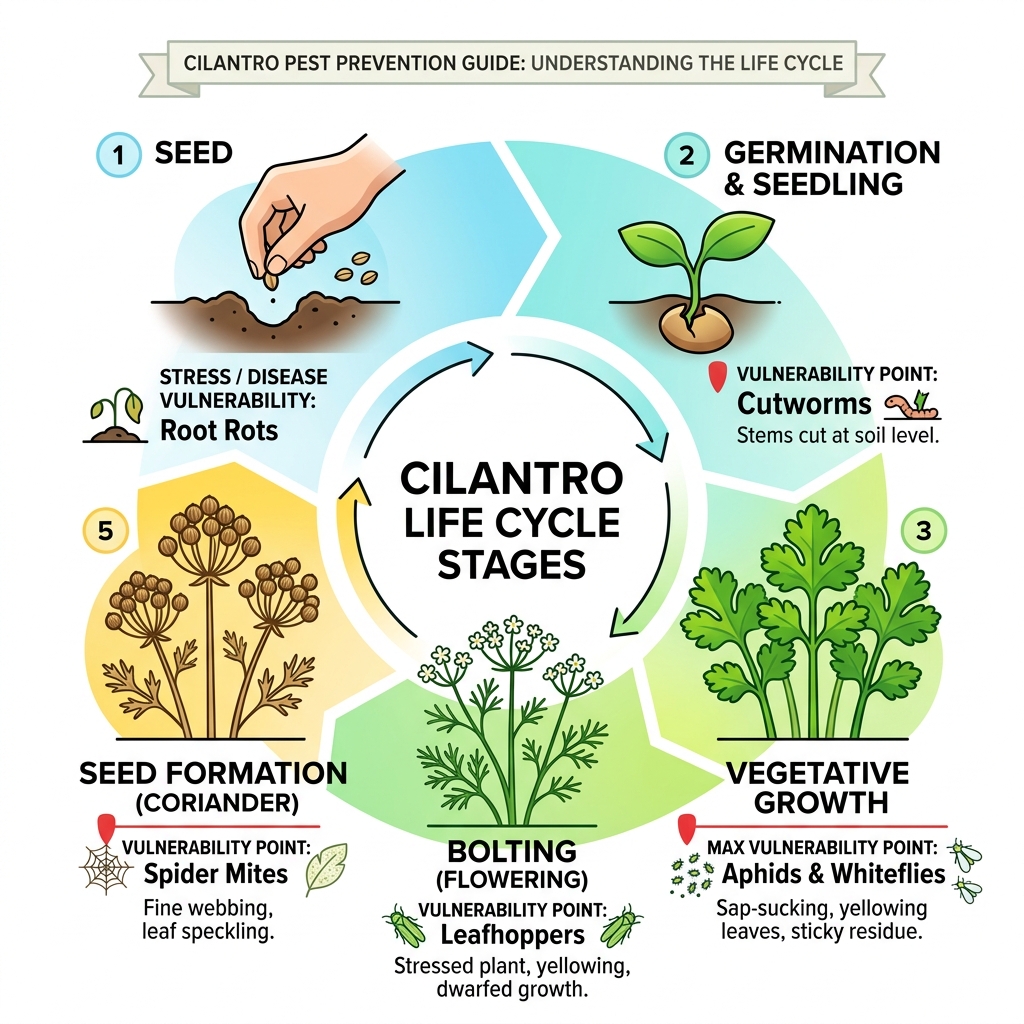
The Ultimate Cilantro Pest Prevention Guide
To truly master a cilantro pest prevention guide, we must first understand that a healthy plant is its own best defense. At Ponto de Arte, we believe that successful pest management starts long before the first bug appears. It begins with the environment we create.
Cilantro (Coriandrum sativum) is a cool-season herb that thrives in temperatures between 50°F and 70°F. When the weather gets too hot, the plant undergoes “bolting”—the process of flowering and setting seed. Bolting stresses the plant, making it far more attractive to opportunistic pests.
Foundation of Prevention: Soil and Space
The first rule of thumb is to ensure excellent soil drainage. Cilantro does not like “wet feet.” Overly damp soil is a breeding ground for fungal issues like damping off and attracts pests like fungus gnats. We recommend incorporating 2-4 inches of well-composted organic matter into your garden beds to improve structure and drainage.
Proper spacing is equally vital. We suggest thinning your seedlings to 6-8 inches apart. This ensures adequate air circulation, which reduces the humidity around the leaves—a key factor in preventing powdery mildew, which can affect up to 100% of foliage in overcrowded conditions. For more on the basics, check out our natural pest control for beginners guide.
Garden Hygiene and Rotation
Maintaining a clean garden is non-negotiable. We should always remove plant debris and weeds, especially wild relatives like Queen Anne’s Lace, which can harbor the same diseases as cilantro. Furthermore, practicing a three-year crop rotation is essential. Never plant cilantro in the same spot where you recently grew carrots, parsley, or celery, as they share common enemies. For professional agricultural standards, the Cilantro and Parsley Pest Management Guidelines offer deep insights into these cycles.

Identifying Sap-Suckers in Your Cilantro Pest Prevention Guide
The most frequent uninvited guests in the cilantro patch are sap-suckers. These tiny insects pierce the plant’s tissue and drink its lifeblood, leading to stunted growth and distorted leaves.
1. Aphids: These are perhaps the most common cilantro pests. They appear as small green, black, or peach-colored bumps, usually clustered on the undersides of leaves or new growth. As they feed, they excrete a sticky substance called “honeydew,” which often leads to the growth of black sooty mold. If you’re struggling with these, our guide to aphid-free herbs is a must-read.
2. Spider Mites: These minuscule pests are hard to see with the naked eye, but their damage is obvious. Look for fine, silvery webbing and pale “stippling” (tiny dots) on the leaves. They love hot, dry conditions. To deter them, we can simply increase the humidity around our plants with a light misting.
3. Whiteflies: If you brush against your cilantro and a cloud of tiny white “moths” erupts, you have whiteflies. Like aphids, they suck sap and weaken the plant’s vigor. If you are growing indoors, these can be a real headache, similar to how aphids on basil indoors can ruin a kitchen garden.
Soil-Borne and Leaf-Eating Invaders
While sap-suckers attack from the outside, other pests work from the ground up or chew through the foliage with alarming speed.
- Cutworms: These are “sneaky” caterpillars that hide in the soil during the day and emerge at night to chew through the stems of young seedlings at the soil line. One morning your cilantro is fine; the next, it’s lying on the ground like a felled tree.
- Armyworms: These larvae cause significant foliage loss by chewing large, irregular holes in the leaves. They can be handpicked if you catch them early enough.
- Root-Knot Nematodes: These microscopic worms live in the soil and cause galls (swelling) on the roots that can reach up to 3.3 cm in diameter. This prevents the plant from taking up water, leading to wilting even when the soil is moist. Soil solarization is an effective way to reduce their populations.
- Leafhoppers and Aster’s Yellow: Leafhoppers are small, wedge-shaped insects that jump when disturbed. While their feeding damage is minor, they are the primary vectors for Aster’s Yellow Disease. This disease causes flowers to turn yellow and plants to grow tall, spindly, and sterile. For help identifying these, see our resource on identifying the little black bugs eating your herbs.
For a scientific breakdown of these symptoms, the Coriander Diseases and Pests database is an excellent reference.
Organic Solutions and Natural Defenses
At Ponto de Arte, we prioritize the health of your family and the environment. This means reaching for biological and organic solutions before considering anything synthetic. Using organic methods ensures your cilantro remains safe to eat and supports a healthy garden ecosystem.
The Power of Beneficial Insects
Nature has its own pest control department. By attracting “good bugs,” we can keep the “bad bugs” in check.
- Ladybugs and Lacewings: These are the ultimate aphid predators. A single ladybug can eat thousands of aphids in its lifetime.
- Parasitic Wasps: Don’t worry, these don’t sting humans! They lay their eggs inside pests like aphids or caterpillars, killing them from the inside out.
- Predatory Mites: These are excellent for controlling spider mite outbreaks.
To learn how to foster this environment, refer to the Organic Pest Control for Cilantro: Native Plant Guide and our tips on natural pest control methods for organic gardening.
Companion Planting for Your Cilantro Pest Prevention Guide
One of the most effective strategies in any cilantro pest prevention guide is companion planting. By placing specific plants near our cilantro, we can confuse pests or attract their enemies.
- Marigolds and Nasturtiums: These act as “trap crops” or repellents. Marigolds are particularly famous for deterring nematodes and whiteflies.
- Dill and Basil: These herbs have strong scents that can mask the smell of cilantro, making it harder for pests to find. Dill also attracts predatory wasps.
- Tomatoes and Spinach: Cilantro actually improves the growth of these plants, while taller plants like tomatoes can provide much-needed afternoon shade to keep cilantro from bolting.
For a deeper dive into these relationships, check out the 10 best herbs for pest control and our general guide on pest control for herb gardens.
Homemade Sprays and Physical Barriers
Sometimes, nature needs a little nudge. If an infestation has already taken hold, we can use safe, homemade treatments.
1. Neem Oil: Derived from the neem tree, this oil disrupts the life cycle of pests, preventing them from feeding or maturing. It is effective against aphids, whiteflies, and spider mites. 2. Insecticidal Soap: You can make this by mixing 1 teaspoon of mild liquid dish soap (not detergent) with a quart of water. It works by breaking down the protective outer shell of soft-bodied insects. 3. Garlic-Chili Spray: Steep crushed garlic and chili powder in water overnight. This pungent mixture acts as a powerful repellent for many chewing insects. We have several diy organic pesticides for home gardeners you can try.
Physical Barriers:
- Row Covers: A fine mesh or floating row cover can physically block flying insects from laying eggs on your cilantro.
- Paper Collars: To stop cutworms, wrap a small strip of cardboard or a paper cup around the base of the seedling, burying it about an inch into the soil.
- Diatomaceous Earth (DE): Sprinkle food-grade DE around the base of your plants. This powdery substance is made of fossilized algae and acts like tiny shards of glass to soft-bodied pests like slugs.
Managing Diseases and Larger Garden Pests
Pests aren’t always insects. Sometimes they are fungal pathogens or larger animals like rabbits.
Fungal and Bacterial Threats
- Bacterial Leaf Spot (Pseudomonas syringae): This causes yellowish, water-soaked spots on the leaves that eventually turn brown. It is often spread by overhead watering. To prevent it, always water at the base of the plant early in the morning so the leaves have time to dry. For more management tips, see Cilantro Leaf Spot Control Tips.
- Powdery Mildew: This looks like a dusting of white flour on the leaves. It thrives in high humidity. Improving air circulation by thinning plants is the best prevention.
- Damping Off: This fungal disease causes young seedlings to suddenly collapse and die. Using sterile potting soil and avoiding overwatering are the best ways to keep your “babies” safe.
Larger Garden Pests
Slugs and rabbits can devour a cilantro patch in a single night. Here is how we handle them:
| Deterrent | Target | How it Works |
|---|---|---|
| Iron Phosphate | Slugs/Snails | Organic bait that stops them from feeding. |
| Beer Traps | Slugs | A shallow dish of beer attracts and drowns them. |
| Wire Mesh | Rabbits | A fence at least 2 feet high keeps them out. |
| Copper Tape | Slugs | Gives them a tiny “shock” when they try to cross it. |
Rabbits are particularly fond of young cilantro. Beyond fencing, some gardeners find that spraying natural repellents made of peppermint or garlic can discourage them from snacking.
Frequently Asked Questions about Cilantro Pests
How do I stop aphids on indoor cilantro?
Indoor cilantro is prone to aphids because natural predators like ladybugs are missing. We recommend using a strong spray of water in the sink to knock them off physically. Afterward, apply an insecticidal soap or neem oil spray, making sure to hit the undersides of the leaves. Increasing the humidity with a pebble tray can also help, as aphids thrive in the dry air of heated homes. The Cilantro/Coriander in the Garden | USU guide offers great tips for indoor success.
Why is my cilantro turning yellow?
Yellowing leaves can be a sign of several things. If you see tiny bumps, it’s likely an aphid infestation. If the plant looks spindly and the yellowing is widespread, it could be leafhopper damage or Aster’s Yellow. However, it can also be a simple nutrient deficiency (usually nitrogen) or a sign of overwatering. Check the soil moisture first; if it’s soggy, let it dry out.
Can I use neem oil on cilantro I plan to eat?
Yes! Neem oil is considered organic and safe for use on edible crops. However, we recommend a “harvest interval” of at least 24 hours after spraying. Always wash your cilantro thoroughly under cold running water before eating to remove any oily residue or dead insects.
Conclusion
At Ponto de Arte, our goal is to help you enjoy a bountiful, chemical-free harvest. Successful pest management isn’t about total eradication; it’s about balance. By using this cilantro pest prevention guide, you are choosing a sustainable path that protects your plants, your family, and the beneficial insects that call your garden home.
The secret is early detection. Spend five minutes every week inspecting the undersides of your cilantro leaves. Catching a few aphids today prevents a disaster tomorrow. If you want to expand your gardening knowledge even further, check out more info about urban gardening on our blog. Happy growing!
