
Identifying Downy Mildew on Your Thyme Plants
Early detection is the secret weapon in any thyme downy mildew fix. Because this pathogen moves quickly when the weather is right, we recommend checking your herb garden daily. If you catch it early, you might only need to prune a few stems rather than losing the entire plant.
Identifying downy mildew can be tricky because it often mimics nutrient deficiencies or simple environmental stress at first. Look for these specific symptoms:
- Yellow Patches: The first sign is often irregular, pale green to yellow blotches on the upper surface of the leaves. These spots usually follow the leaf veins, giving them a somewhat angular appearance.
- Gray Fuzzy Growth: This is the “smoking gun.” If you flip a yellowing leaf over, you will likely see a fuzzy, downy growth. This mold-like substance is usually gray, but it can sometimes look slightly purplish or white depending on the specific strain and humidity levels.
- Leaf Distortion: As the infection progresses, the leaves may curl, twist, or become stunted.
- Systemic Wilting: Unlike a plant that just needs a drink of water, thyme with downy mildew will look “off” even after watering. The stems may eventually turn brown and die back.
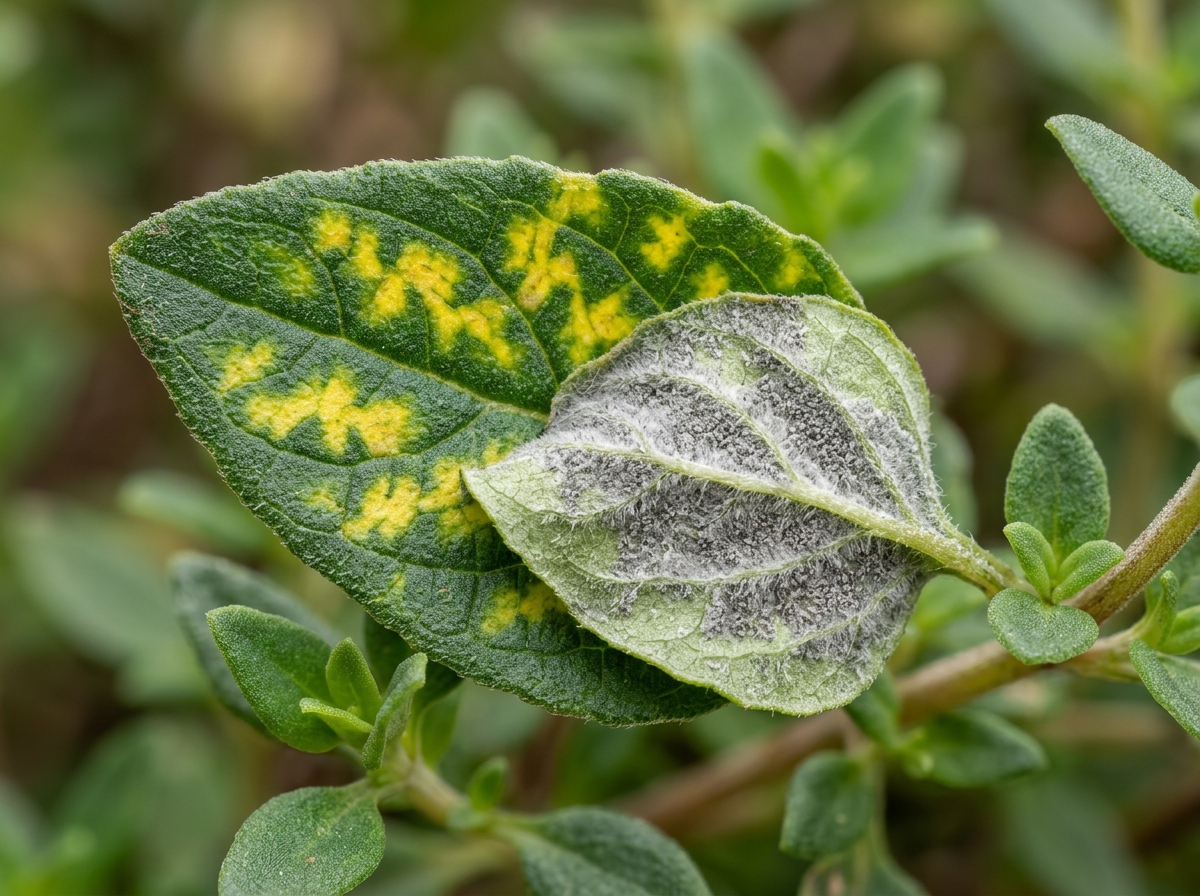
It is vital to distinguish this from its cousin, powdery mildew. While they sound similar, they require different management strategies. Use the table below to tell them apart:
| Feature | Downy Mildew | Powdery Mildew |
|---|---|---|
| Primary Location | Underside of leaves | Top surface of leaves |
| Appearance | Gray/purple fuzzy growth | White “talcum powder” dust |
| Conditions | Cool and very wet/humid | Warm and dry (with high humidity) |
| Pathogen Type | Oomycete (Water mold) | True Fungus |
| Leaf Color | Yellow/Pale spots on top | Usually stays green under the white dust |
By learning How to Spot, Treat, and Prevent Thyme Diseases, you can act before the spores have a chance to travel to your other aromatic herbs.
Environmental Triggers and Prevention Strategies
Preventing downy mildew is much easier than curing it. At Ponto de Arte, we focus on managing the environment to make it as inhospitable to water molds as possible. Downy mildew thrives when three conditions are met: cool temperatures (usually between 50°F and 70°F), high humidity, and—most importantly—prolonged leaf wetness.
The most effective thyme downy mildew fix is simply keeping the leaves dry. Spores need a film of water to germinate and infect the plant tissue.
- Spacing is Key: Never crowd your thyme. We recommend allowing at least 10 to 12 inches between plants. This ensures healthy air circulation, allowing the wind to dry out the foliage after a rain or heavy dew.
- Morning Irrigation: If you must water, do it early in the morning. This allows the sun to dry the leaves quickly. Avoid evening watering at all costs; wet leaves sitting in cool night air are an open invitation for infection.
- Drip Systems: The gold standard for herb gardens is drip irrigation. By delivering water directly to the soil at the base of the plant, you keep the foliage completely dry. For more details, check out our tips for watering herbs.
- Airflow Management: Don’t plant your thyme in “dead air” zones, such as right against a solid fence or in a low-lying corner of the garden where fog settles.
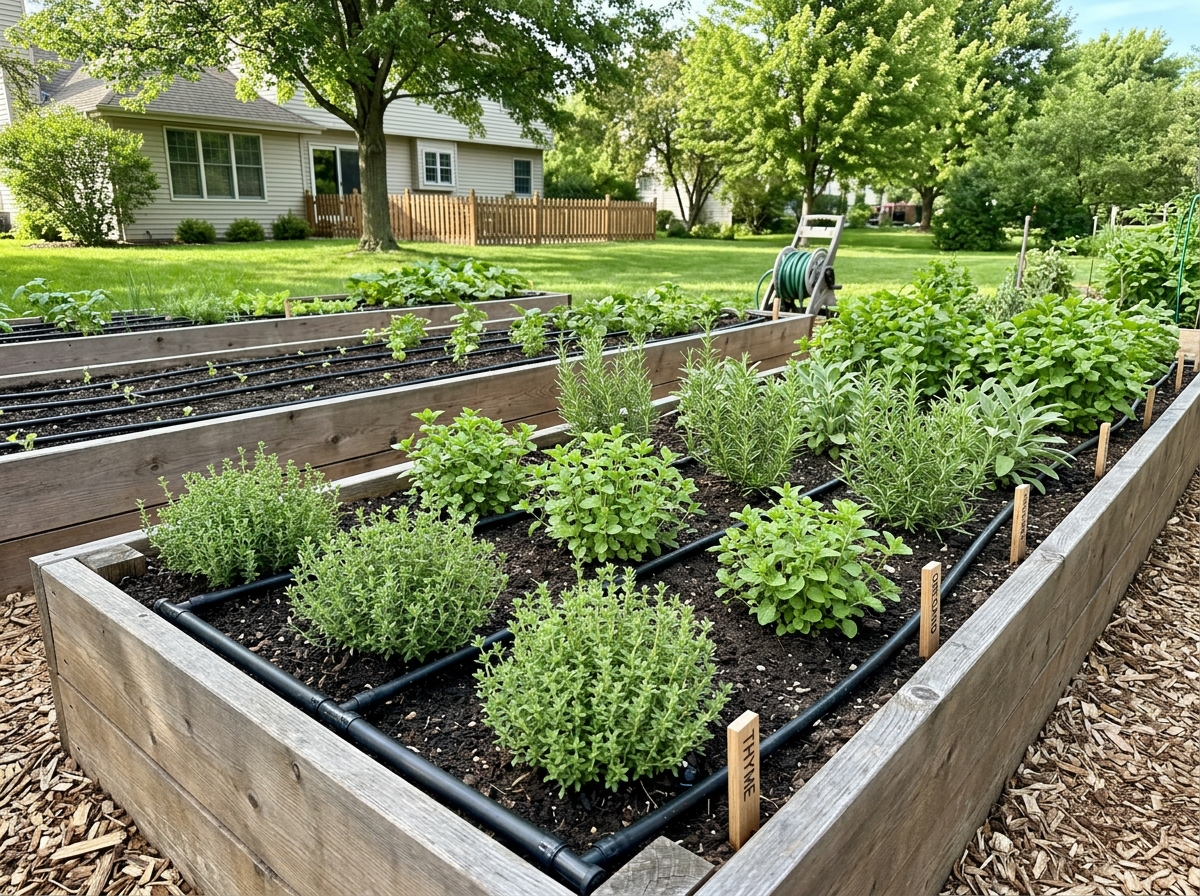
Cultural Practices for a Thyme Downy Mildew Fix
Beyond watering, your overall garden maintenance plays a huge role. Thyme is a Mediterranean herb; it loves “lean” conditions.
- Soil Drainage: Thyme hates “wet feet.” If your soil is heavy clay, the excess moisture around the roots increases the local humidity around the plant. Amend your soil with sand or perlite to ensure it drains rapidly. You can find more advice on this in our guide to organic-soil-for-herbs.
- Weed Control: Weeds don’t just steal nutrients; they block airflow and hold moisture close to your thyme. Keep the area around your herbs meticulously weeded.
- Mulching Techniques: Use a thin layer of gravel or coarse sand as mulch rather than wood chips. Wood chips hold moisture, while gravel helps reflect heat and keeps the lower leaves dry.
- Pruning for Density: If your thyme becomes a thick, matted carpet, prune it back. Thinning out the center of the plant allows air to move through the interior, preventing the stagnant, humid microclimate that downy mildew loves.
- Sunlight Exposure: Thyme needs full sun—at least 6 to 8 hours a day. Sunlight is a natural disinfectant and the best tool for drying leaves quickly.
For more general advice on keeping your garden resilient, see our effective-watering-tips-for-organic-plants.
Effective Treatments for a Thyme Downy Mildew Fix
If you find that fuzzy gray growth despite your best efforts, don’t panic. You need to act fast to prevent a total garden breakout. The first step is immediate isolation. If only one or two stems are affected, prune them off. If the whole plant is covered, it’s time to pull it out.
When pruning, downy mildew spores are incredibly small and light. They can hitch a ride on your hands or your shears. Always disinfect your tools with rubbing alcohol or a 10% bleach solution between every single cut.
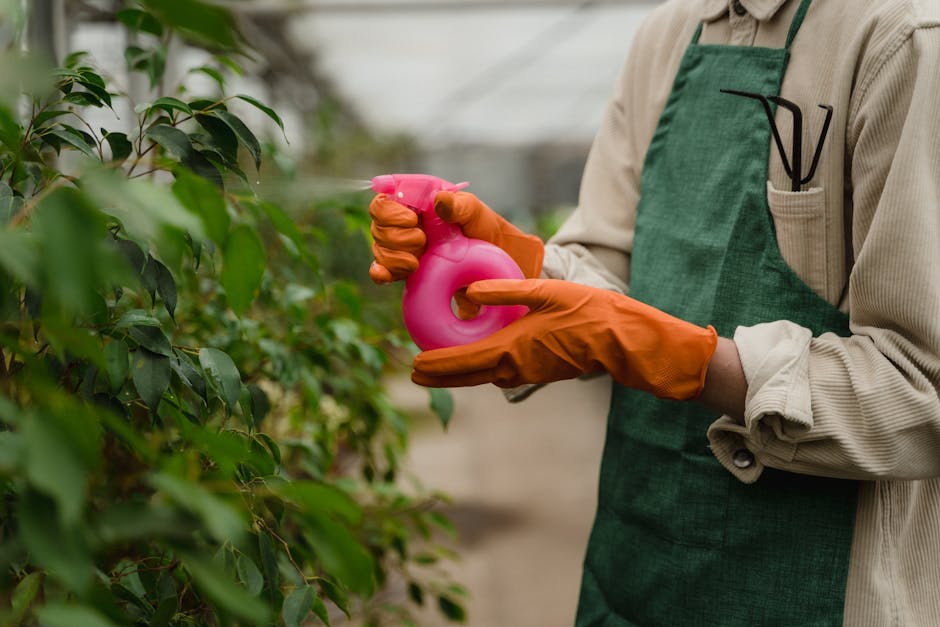
According to Downy mildews: Symptoms, Causes & Control, there are few “cures” once the disease is deep inside the plant tissue, but several treatments can stop the spread to healthy parts and neighboring plants.
Organic and Chemical Solutions
We always advocate for natural-pest-control-methods-for-organic-gardening first, especially for herbs you plan to eat.
- Potassium Bicarbonate: This is often more effective than standard baking soda for active infections. It raises the pH on the leaf surface, making it impossible for the water mold to survive. Mix 1 tablespoon with a half-teaspoon of liquid soap in a gallon of water.
- Neem Oil: While primarily used for pests, neem oil has antifungal properties that can help coat leaves and prevent spore germination.
- Baking Soda Spray: A classic home remedy involves mixing one tablespoon of baking soda, 1/2 teaspoon of mild dish soap, and 2 1/2 tablespoons of olive oil in a gallon of water. This works best as a preventative rather than a cure.
- Jojoba Oil: Some research suggests that emulsified jojoba oil can be highly effective at suppressing mildew growth on various plant species.
- Copper Fungicides: If organic home remedies aren’t cutting it, copper-based sprays are the heavy hitters. They are generally accepted in organic gardening but should be used sparingly, as copper can build up in the soil over time.
- Biological Controls: Products containing Bacillus subtilis are becoming popular. These are beneficial bacteria that literally eat the pathogens or compete with them for space on the leaf.
- Mancozeb: For non-organic gardeners facing a catastrophic loss, chemical fungicides like Mancozeb can be used, though we recommend this only as a last resort for ornamental thyme, as it has strict harvest intervals for culinary use.
For a deeper dive into protecting your aromatic plants, see our specific guide on pest-control-for-herb-gardens.
Long-Term Management and Safe Disposal
One of the most dangerous things you can do with infected thyme is to toss it into your backyard compost pile. Most home compost heaps don’t get hot enough to kill the resting spores (oospores) of downy mildew.
As we mentioned earlier, these spores can survive in the soil for up to five years. If you compost them, you are simply packaging the disease to be spread all over your garden next season.
Safe Disposal Methods:
- Burning: If your local ordinances allow it, burning the infected material is the only way to be 100% sure the spores are destroyed.
- Deep Burial: Dig a hole at least 50cm (about 20 inches) deep in an area where you don’t plan to grow herbs. Bury the plants there.
- Trash: Seal the infected plants in a plastic bag and put them in the household trash.
After removing an infected plant, you must practice crop rotation. Do not plant thyme, mint, or other related herbs in that same spot for at least three to five years. Instead, plant something that isn’t a host for that specific strain of mildew.
You should also consider soil solarization. This involves covering the affected soil with clear plastic during the hottest months of the summer to “cook” the spores in the top few inches of soil. For more on maintaining long-term herb health, read our tips on growing-thyme-and-oregano.
Selecting Resistant Varieties as a Thyme Downy Mildew Fix
If you live in a particularly humid or rainy climate, your best thyme downy mildew fix might be starting over with better genetics. While no thyme is 100% immune, some cultivars are much more resistant than others.
When browsing seed catalogs, look for terms like “high vigor” or “disease resistant.” Generally, upright varieties of Thymus vulgaris (Common Thyme) tend to have better airflow than the low-growing, creeping varieties like Thymus praecox, which can act like a sponge for ground moisture.
Always source your seeds or starts from reputable nurseries that certify their stock is disease-free. Inspect any new plant transplant thoroughly before bringing it home; look for that tell-tale gray fuzz on the underside of leaves. For more on starting with healthy plants, see our organic-care-tips-for-healthy-plants and organic-care-tips-for-healthy-plants-2.
Frequently Asked Questions about Thyme Downy Mildew
Can I compost thyme plants infected with downy mildew?
No! We cannot stress this enough. Downy mildew produces resilient oospores that can survive for years. Standard home composting will not kill them, and you will likely re-infect your garden when you spread the finished compost.
How do I tell the difference between downy and powdery mildew?
Downy mildew usually appears as yellow spots on top of the leaf with gray/purple fuzzy growth underneath. Powdery mildew looks like someone spilled white flour or talcum powder on the top of the leaves. Downy mildew loves wet, cool weather, while powdery mildew often thrives in warm, humid (but not necessarily rainy) conditions.
What is the fastest way to stop downy mildew from spreading?
The fastest way is to remove and destroy infected tissue immediately, then improve the airflow around the remaining plants. Switching to a bottom-watering method and applying a potassium bicarbonate spray can help protect the healthy parts of the plant from airborne spores.
Conclusion
At Ponto de Arte, we know how much love and effort goes into an aromatic herb garden. Seeing your thyme succumb to a “slimy mess” is heartbreaking, but it doesn’t have to be the end of your herb-growing journey.
By focusing on a proactive thyme downy mildew fix—proper spacing, dry leaves, and early organic intervention—you can keep your garden thriving. The goal of Integrated Pest Management is not just to kill the “bad guys,” but to create a healthy ecosystem where your plants have the strength to resist disease naturally.
Keep your shears clean, your soil drained, and your leaves dry. Your future roasted potatoes and herbal teas will thank you!
Ready to expand your herb knowledge? Explore our guide to aromatic spices to learn more about keeping your garden fragrant and productive.
