
Identifying Common Pests in Your Herb Garden
Before we can master how to keep bugs off herbs naturally, we have to know exactly who the “uninvited guests” are. In our experience at Pontodearte, identifying the specific pest is 90% of the battle. If you don’t know what’s eating your basil, you won’t know whether to reach for the neem oil or the copper tape.
Pest attacks are a massive global issue, destroying up to 40% of crops annually. In a small herb garden, a single infestation can wipe out your harvest in days. Here are the usual suspects we see most often:
- Aphids: Often called “plant lice,” these tiny green, black, or yellow vampires cluster on tender new growth. They pierce plant tissue and multiply at a terrifying rate—a single aphid can produce up to 80 offspring weekly.
- Spider Mites: If you notice fine webbing on the undersides of your oregano or mint leaves, you likely have spider mites. They thrive in dry conditions and cause “stippling” (tiny yellow dots) on leaves.
- Whiteflies: These look like tiny white moths. When you shake your herb plant, they fly up in a cloud. They leave behind a sticky residue called “honeydew,” which often leads to black sooty mold.
- Slugs and Snails: These nighttime marauders leave slimy trails and large, ragged holes in your herb leaves. They love damp, shady corners.
- Cabbage Worms: These bright green caterpillars blend in perfectly with your parsley or cilantro. They have voracious appetites and can defoliate a small plant overnight.
- Fungus Gnats: Often found in indoor herb gardens with overwatered soil, these tiny black flies don’t just annoy you; their larvae can munch on delicate herb roots.
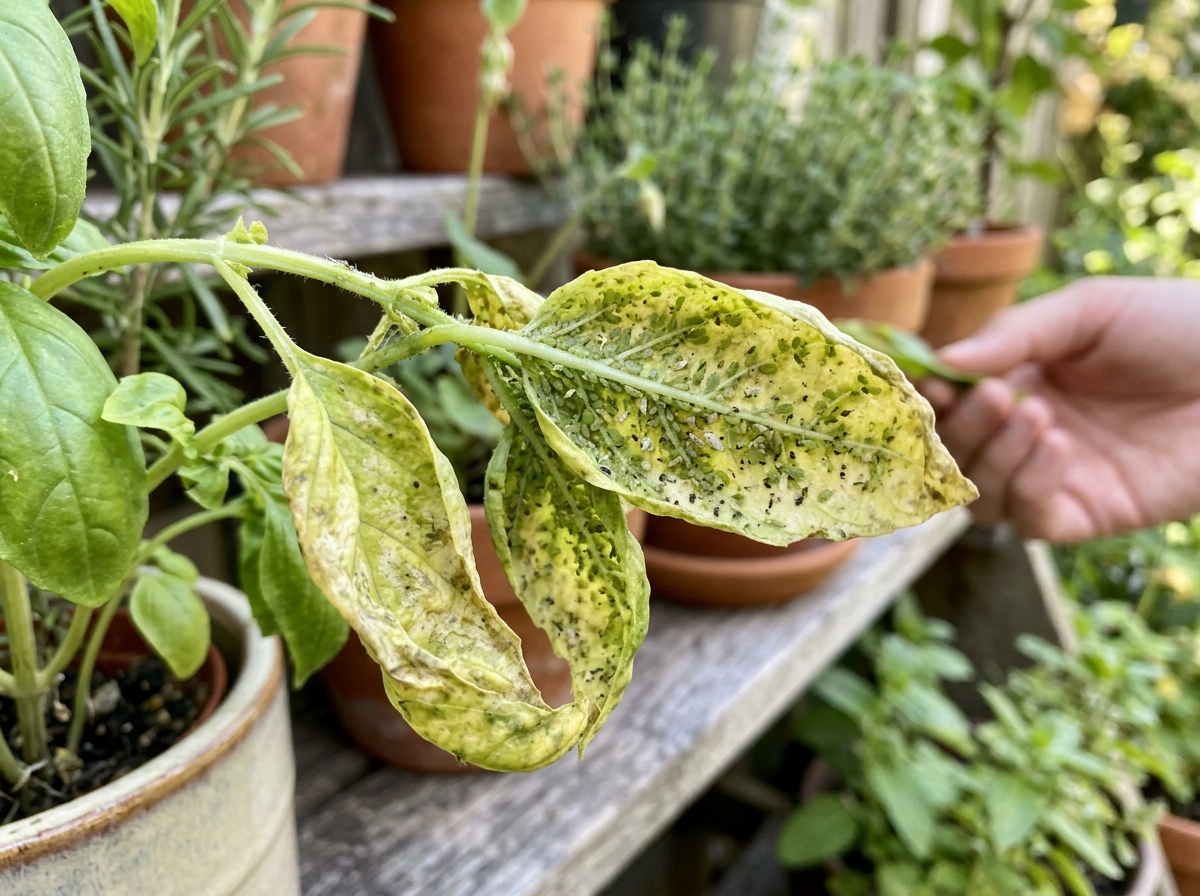
Early detection is vital. We recommend checking the undersides of leaves during your morning coffee round. Catching a few aphids early is much easier than dealing with a full-blown colony. For more detailed identification tips, check out our guide on pest control for herb gardens.
How to Keep Bugs Off Herbs Naturally Using Companion Planting
One of the most elegant ways to protect your garden is through companion planting. This isn’t just garden folklore; it’s a strategic way to use the plants’ own chemical defenses to protect their neighbors. Many herbs are naturally “bumpy” for bugs because they emit strong scents that confuse or repel them.
By mixing different species, you create a “polyculture” that is much harder for pests to navigate than a single row of one herb. Here is a quick reference table for some of our favorite repellent pairings:
| Repellent Herb | Target Pests Repelled | Best Neighbors |
|---|---|---|
| Chives | Aphids, Japanese Beetles, Carrot Flies | Roses, Lettuce, Strawberries |
| Rosemary | Cabbage Moths, Carrot Rust Flies, Bean Beetles | Carrots, Cabbages, Beans |
| Basil | Mosquitoes, Flies, Tomato Hornworms | Tomatoes, Peppers |
| Marigolds | Nematodes, Whiteflies, Squash Bugs | Almost anything! |
| Sage | Cabbage Moths, Flea Beetles, Slugs | Cabbage, Carrots, Rosemary |
| Oregano | Cabbage Worms, Aphids | Kale, Broccoli, Beans |
| Thyme | Whiteflies, Cabbage Loopers | Cabbage, Eggplant, Potatoes |
Using research on herbs that repel bugs, we’ve found that strategic placement is key. For example, planting chives around the border of a bed can act as a “scent fence.” If you’re just starting out, our natural pest control for beginners guide can help you map out your first bed.
The Science Behind Why Aromatic Herbs Deter Insects
Why does a sprig of rosemary bother a bug? It comes down to chemistry. Aromatic herbs produce volatile organic compounds (VOCs) like terpenes, linalool, citronellal, and camphor.
To an insect, these scents are overwhelming. They disrupt the insect’s sensory receptors, making it impossible for them to “smell” their favorite food plant nearby. This is known as scent masking. In fact, studies show that garden-planted herbs can reduce mosquito landing rates by 30-50% simply by confusing their navigation systems. For more on the chemistry of your garden, see our organic herb gardening tips.
Best Companion Pairings to Keep Bugs Off Herbs Naturally
To get the most out of your garden, try these high-performance pairings:
- Chives and Roses: Research shows that planting chives near roses can create a 60% reduction in aphid infestations. The sulfur compounds in the chives are a natural deterrent.
- Rosemary and Carrots: In field trials, this duo has been shown to reduce carrot rust fly damage by 72%. The woody scent of rosemary masks the carrot’s smell from the fly.
- Marigolds and Tomatoes: Marigolds release a compound called pyrethrum from their roots and flowers. This is a natural insecticide that targets root-knot nematodes and repels whiteflies.
- Trap Cropping: Sometimes, we plant a “sacrificial” herb. For example, planting nasturtiums can draw aphids away from your prized basil. Once the nasturtiums are covered in bugs, you can remove them, taking the pests with them.
For a deeper dive into these strategies, read this companion gardening guide.
Homemade Sprays and Organic Solutions for Edible Herbs
When prevention isn’t enough and you see bugs moving in, it’s time for a natural intervention. Because we eat our herbs, we never use synthetic toxins. Instead, we rely on kitchen staples and botanical oils.
Before you spray your whole garden, always perform a patch test. Spray a single leaf and wait 24 hours to ensure the plant doesn’t suffer from “foliar burn,” especially with oil-based sprays. Also, avoid spraying during the heat of the day; the best time is early morning or late evening.
Here are the heavy hitters in our natural arsenal:
- Neem Oil: Extracted from the seeds of the neem tree, this is a versatile “must-have.” It disrupts the life cycle of pests like aphids, whiteflies, and mites. Mix 1-2 teaspoons of pure neem oil with a liter of water and a drop of dish soap.
- Garlic Spray: Garlic is a powerful repellent. Its sulfur compounds are toxic to many soft-bodied insects but safe for us.
- Insecticidal Soap: This works by breaking down the outer shell of soft-bodied insects, causing them to dehydrate. You can find effective insecticidal soap methods that use simple, non-toxic ingredients.
- Peppermint Tea Bags: Believe it or not, used peppermint tea bags can repel ants and spiders. Place them around the base of your pots for a quick fix.
- Essential Oils: Cedar, peppermint, and rosemary oils are great for a quick aromatic boost.
For more recipes, visit our guide on DIY organic pesticides for home gardeners.
How to Keep Bugs Off Herbs Naturally with DIY Sprays
Making your own spray is easy and cost-effective. Here is our “Go-To” recipe for a broad-spectrum organic spray:
The Pontodearte “Bug-Off” Infusion:
- Crush 3-4 cloves of fresh garlic.
- Mix with 1 teaspoon of cayenne pepper (to deter chewing insects).
- Steep in a quart of hot water overnight.
- Strain the mixture and add 1 teaspoon of liquid Castile soap (this helps the spray stick to the leaves).
- Pour into a spray bottle and apply every 3-5 days until the pests are gone.
This spray is excellent for easy to grow culinary herbs like basil and mint, which tend to attract aphids.
Physical Barriers and Cultural Prevention Strategies
Sometimes the best way to keep bugs off herbs naturally is to simply get in their way. Physical barriers are highly effective and require zero chemicals.
- Diatomaceous Earth (DE): This is a powder made from fossilized algae. To us, it feels like flour; to a bug with an exoskeleton (like a slug or beetle), it’s like walking over broken glass. It dehydrates them on contact. Sprinkle food-grade DE around the base of your herbs. Learn more about organic gardening methods for diatomaceous earth.
- Row Covers: These lightweight fabrics allow light and water in but keep flying pests like cabbage moths and whiteflies out. They are perfect for young, vulnerable seedlings.
- Copper Tape: If slugs are your main enemy, wrap copper tape around the rims of your pots. It creates a tiny (and harmless to us) electric reaction that slugs hate to cross.
Cultural Prevention is about making your garden a place where pests don’t want to live.
- Soil Health: Healthy plants have stronger immune systems. Use organic soil for herbs and amend with compost regularly.
- Watering: Fungal infections cause 85% of herb diseases. Avoid watering the leaves; instead, water at the soil level. Check out our tips for watering herbs for more details.
- Airflow and Pruning: Don’t let your herbs become a jungle. Pruning creates airflow, which prevents the humid microclimates that spider mites and fungi love.
- Crop Rotation: Don’t plant the same herb in the same spot every year. This prevents soil-borne pests from building up a “home base.”
Encouraging Beneficial Predators for Long-Term Control
The ultimate goal of a natural herb garden is to reach a state of “ecosystem balance.” This means you don’t do all the work—you hire a tiny army of beneficial insects to do it for you!
The most famous of these is the Ladybug. A single ladybug can consume up to 5,000 aphids in its lifetime, eating about 50-60 a day. Other heroes include:
- Lacewings: Their larvae are nicknamed “aphid lions” for their ferocious appetite.
- Praying Mantises: These are the apex predators of the garden, eating everything from beetles to caterpillars.
- Parasitic Wasps: Don’t worry, they don’t sting humans! They lay eggs inside pests like hornworms, stopping them in their tracks.
- Hoverflies: Often mistaken for tiny bees, their larvae are huge fans of eating aphids.

Using Beneficial Insects to Keep Bugs Off Herbs Naturally
To get these helpers to move in, you need to provide them with a home. This is the core of maintaining a healthy ecosystem.
- Plant Nectar Sources: Adult ladybugs and lacewings need pollen and nectar. Plant dill, fennel, yarrow, and alyssum. These “dual-action” herbs repel bad bugs while attracting the good ones.
- Provide Shelter: “Insect hotels” or even just a small pile of leaves in a quiet corner can give these predators a place to hide and reproduce.
- Stop the Chemicals: Even organic sprays can sometimes harm beneficial bugs. Use sprays only as a last resort and target only the infested plants.
- Buy Them: If your garden is currently a pest-filled desert, you can actually buy ladybugs or lacewing eggs online to jumpstart your population.
For more on biological controls, see our natural pest control methods for organic gardening.
Frequently Asked Questions about Natural Herb Pest Control
Can these natural methods be used on indoor potted herbs?
Absolutely! In fact, indoor herbs are often more susceptible to pests like spider mites and fungus gnats because they lack natural predators. Potted basil and mint on a windowsill can stay pest-free for 6-8 weeks if you keep the humidity up (spider mites hate moisture) and use a light application of neem oil. Just make sure your pots have good drainage to avoid fungus gnats.
What are the most common mistakes to avoid with natural sprays?
The biggest mistake is over-application. Even “natural” sprays like vinegar or strong soaps can damage delicate herb leaves if used too often. Another mistake is spraying in direct sunlight, which can act like a magnifying glass and burn your plants. Finally, skipping the patch test is a gamble—different herbs have different tolerances!
How often should I inspect my herbs for pest activity?
We recommend a quick visual check at least once a week. Look at the new growth and under the leaves. If you are currently dealing with an infestation and using DIY sprays, you should inspect them daily to see if the treatment is working and to reapply if necessary (usually every 3 days).
Conclusion
At Pontodearte, we believe that a thriving herb garden is one that works in harmony with nature. Learning how to keep bugs off herbs naturally isn’t about total eradication—it’s about management and balance. A healthy garden can easily tolerate a 5-10% pest presence without any loss in flavor or harvest.
By combining companion planting, physical barriers, and the help of beneficial insects, you create a sustainable, chemical-free sanctuary. You’ll get to enjoy fresh, aromatic herbs that are safe for your kitchen and better for the planet.
Ready to grow your own pest-resistant paradise? Start your natural herb garden journey with us today and see the difference that organic, integrated pest management can make. Happy gardening!
