
Why Mosquitoes Are Ruining Your Patio (And What Plants Can Fix It)
The best mosquito repellent plants for patio spaces are:
- Catmint – Most potent; contains nepetalactone, up to 10x more effective than DEET in lab studies
- Citronella Grass – The classic choice; releases citronellal to mask human scent signatures
- Lavender – Beautiful and functional; linalool disrupts mosquito senses
- Rosemary – Hardy, fragrant, doubles as a culinary herb
- Basil – Easy to grow; masks CO2 and body heat that attract mosquitoes
- Marigolds – Bright blooms with pyrethrum, a compound used in commercial repellents
- Peppermint – Strong scent, grows well in containers
- Floss Flower – Contains coumarin, widely used in commercial mosquito repellents
You step outside for a quiet evening on the patio. Within minutes, the buzzing starts. Sound familiar?
Mosquitoes don’t just ruin the mood. They transmit serious diseases — including West Nile virus, Zika, dengue, and even heartworm in dogs. Controlling them around your home matters more than most people realize.
The good news? Nature already built the solution. Many common herbs and flowering plants produce natural oils that mosquitoes genuinely hate. These same plants also protect your herb garden from other pests — and they smell incredible.
The catch is that most of these plants don’t work on autopilot. Simply placing a pot on your patio won’t create an invisible bug shield. Their oils need to be released — through crushing, brushing, or strategic placement — to make a real difference.
This guide walks you through exactly which plants to choose, how to use them effectively, and how to keep them thriving all season long in containers.

Top Mosquito Repellent Plants for Patio Containers
Choosing the right mosquito repellent plants for patio use involves more than just picking pretty flowers. We look for plants with high concentrations of specific essential oils that interfere with a mosquito’s ability to find its “prey” (that’s you!).
Catmint (Nepeta)
If you want the heavyweight champion of natural repellents, look no further than catmint. Research from Iowa State University found that nepetalactone, the essential oil in catnip and catmint, is ten times more effective than DEET, the chemical used in most commercial bug sprays. While it drives cats into a frenzy, it sends mosquitoes packing. These plants can reach three to five feet in height, making them great for larger patio pots.
Citronella Grass (Cymbopogon nardus)
This is the “true” citronella. It’s a tall, clumping grass that can grow 2 to 3 feet tall and wide. It works by releasing citronellal, a compound that masks the carbon dioxide and lactic acid scents that draw mosquitoes to humans. Be careful not to confuse this with the “Mosquito Plant” (a scented geranium), which smells like citronella but isn’t as effective at repelling.
Lavender
We love lavender for its calming aroma, but mosquitoes find it decidedly unpleasant. The efficacy of linalool, a primary compound in lavender, has been shown to confuse mosquito receptors. For patio containers, we recommend Lavandula angustifolia ‘Thumbelina Leigh’, a compact 6-12 inch variety that blooms profusely.
Marigolds
Marigolds are a patio staple for a reason. They contain pyrethrum, a compound found in many organic insecticides. They are effective against more than just mosquitoes; they also deter aphids, thrips, whiteflies, and squash bugs. Varieties like ‘Bon Bon Bright Yellow’ stay a manageable 12 inches high, perfect for table-top pots.
Rosemary and Basil
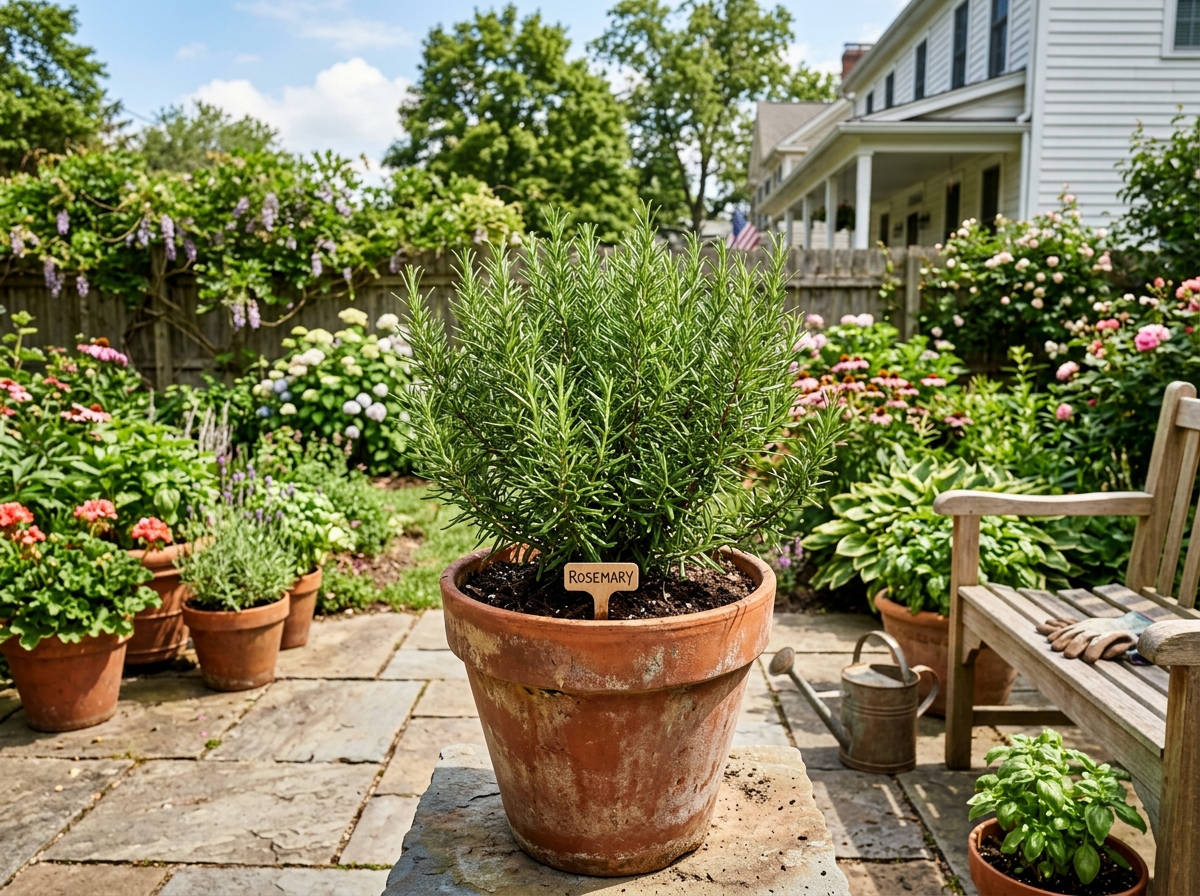
At Ponto de Arte, we specialize in pest-control for herb gardens, and these two are our favorites. Rosemary can reach up to three feet in height and its woody scent is a natural deterrent. Basil, on the other hand, is a mosquito’s worst nightmare because it masks the CO2 we exhale.
Floss Flower (Ageratum)
This low-growing beauty, such as Ageratum ‘Artist Blue’, contains coumarin. This chemical is widely used in commercial mosquito repellents. It adds a lovely blue-purple pop to your container arrangements while working hard to keep the buzz away.
Comparison Table: Top 5 Patio Repellents
| Plant | Scent Profile | Max Height | Key Compound |
|---|---|---|---|
| Catmint | Grassy/Minty | 3-5 Feet | Nepetalactone |
| Citronella Grass | Heavy Citrus | 3 Feet | Citronellal |
| Lavender | Floral/Herbal | 1-2 Feet | Linalool |
| Marigolds | Pungent/Musky | 1-6 Feet | Pyrethrum |
| Rosemary | Woody/Pine | 3 Feet | Cineole |
Strategic Placement and Activation Techniques
Having the plants is only half the battle. To truly enjoy a bite-free evening, we need to talk about strategy. Think of your plants as a living “scent barrier.”
Strategic Placement of Mosquito Repellent Plants for Patio Comfort
We recommend placing your mosquito repellent plants for patio areas in high-traffic zones. If you have a favorite outdoor sofa or a dining table, surround that area with containers.
- Seating Perimeters: Line the edges of your deck or patio with pots.
- Entry Points: Place marigolds or basil near doorways to prevent mosquitoes from hitching a ride inside.
- Grouping: Don’t just place one plant. Grouping different species together creates a more complex and effective scent “cloud.”
- Airflow: Consider the wind direction. Place your most fragrant plants upwind so the breeze carries the repellent oils toward your seating area.
For more on setting up your first defensive garden, check out our guide on natural-pest-control-for-beginners.
Activating Natural Oils Through Interaction
Most plants don’t just “leak” enough oil to stop a hungry mosquito. You have to help them!
- Brushing Past: Place plants like rosemary and lavender along walkways where your legs will naturally brush against them, releasing the scent.
- Manual Release: Before sitting down, give your basil or lemon balm a gentle shake or rub the leaves between your fingers.
- Skin Application: Some people find success rubbing the leaves vigorously on their skin. However, always test a small patch first to ensure you aren’t allergic to the concentrated oils.
Cultivation and Care for Potted Repellents
Growing mosquito repellent plants for patio living is incredibly rewarding, but container gardening has its own set of rules. You can’t just “set it and forget it” like an in-ground garden.
Best Practices for Growing Mosquito Repellent Plants for Patio Success
Most of these repellent powerhouses share similar needs:
- Sunlight: Most need at least 6 hours of full sunlight daily. Citronella, specifically, thrives with 6-8 hours of direct light.
- Watering: The “75% Dry Rule” is your best friend. Only water when the top few inches of soil feel dry. Overwatering leads to root rot, crown rot, and edema.
- Soil: Use a high-quality organic potting mix. We suggest avoiding standard garden soil in pots as it’s too heavy and doesn’t drain well.
- Feeding: Use a balanced, water-soluble fertilizer biweekly to keep the foliage lush and the oils potent.
- Pruning: Regularly pinch back herbs like basil and mint. This encourages bushier growth and provides more leaves for scent release.
If you’re looking to keep things strictly organic, we have a great resource on diy-organic-pesticides-for-home-gardeners to help you manage other garden pests without chemicals.
Overwintering and Seasonal Maintenance
Many of these plants, like Citronella (hardy in USDA Zones 9-11), are tender perennials. If you live in a colder climate, they won’t survive the frost.
- Indoor Transition: Bring your pots inside before the temperature drops below 40°F. They will need a very bright window or supplemental grow lights.
- Propagation: Sometimes it’s easier to take cuttings in late summer rather than moving a massive pot. Cuttings of citronella typically root in 5 to 8 weeks.
- Dormancy: Reduce watering during the winter months as the plants’ growth slows down.
For a deeper dive into specific winter care, you might find this Citronella care guide or this Martha Stewart guide helpful.
Holistic Natural Mosquito Control Methods
While plants are a fantastic defense, they work best as part of a larger team. To truly master the “mosquito-free patio,” we need to look at the environment as a whole.
- Eliminate Standing Water: This is the most important step. Mosquitoes can lay hundreds of eggs in a tiny spoonful of stagnant water. Check your pot saucers, gutters, and birdbaths weekly.
- Use Wind to Your Advantage: Mosquitoes are notoriously weak fliers. Setting up an oscillating fan on your patio can disrupt their flight patterns and disperse the CO2 you exhale, making it much harder for them to find you.
- Trim Long Grasses: Mosquitoes love to hide in tall, shady grass during the heat of the day. Keeping the perimeter of your patio trimmed reduces their “waiting rooms.”
- Natural Barriers: Combine your plants with other methods like natural-weed-control-methods-for-your-organic-garden to keep the area clean and less inviting to pests.
For a comprehensive look at chemical-free yard management, see our tips on natural-pest-control-methods-for-organic-gardening.
Frequently Asked Questions about Patio Mosquito Control
Are these plants toxic to pets?
This is a vital question for any pet owner. Unfortunately, some of the most effective repellents are not pet-friendly.
- Citronella: Toxic to dogs and cats. Ingestion can cause digestive upset and skin irritation.
- Floss Flower (Ageratum): Contains coumarin, which is toxic if ingested.
- Pennyroyal: Extremely toxic; use with caution.
Always check a list of pet-friendly mosquito repellants before finalizing your patio layout.
Why is it important to control mosquitoes around my home?
Beyond the itchy welts, mosquitoes are a health hazard. They are the primary vectors for diseases like West Nile, Zika, and various types of encephalitis. For our furry friends, they are the sole cause of heartworm. Reducing the population on your patio isn’t just about comfort; it’s about safety.
Do these plants work passively or do I need to crush them?
While some plants like bee balm may offer a small amount of passive protection, most mosquito repellent plants for patio use require “activation.” The oils are stored inside the leaves. By brushing against them, pruning them, or crushing a few leaves, you release the volatile organic compounds (VOCs) that actually repel the insects.
Conclusion
Creating a sanctuary on your patio shouldn’t involve a cloud of chemical spray. By selecting the right mosquito repellent plants for patio living—like catmint, lavender, and rosemary—and placing them strategically, you can reclaim your outdoor space naturally.
At Ponto de Arte, we believe that your aromatic herb garden deserves the best protection. By using these natural methods, you aren’t just repelling mosquitoes; you’re building a healthier, more vibrant ecosystem right outside your door.
Ready to take your patio garden to the next level? Explore our Urban Gardening Solutions for more expert tips on growing a lush, pest-free paradise!
