
Why Natural Pesticides for Vegetables Are Worth Knowing About
Natural pesticides for vegetables are one of the most effective ways to protect your crops without harming your family, your soil, or the beneficial insects your garden depends on.
Here are the top options, fast:
| Natural Pesticide | Best For | How to Use |
|---|---|---|
| Neem oil | Aphids, whiteflies, mealybugs, mites | Mix 1-2 tbsp per gallon of water, spray in the evening |
| Spinosad | Caterpillars, thrips, beetles | Dilute per label, rotate weekly with neem |
| Bacillus thuringiensis (BT) | Caterpillars, cabbage worms | Apply to leaves where larvae feed |
| Pyrethrin | Flying insects, beetles | Spray in the evening, rotate with other products |
| Garlic-pepper spray | Aphids, beetles, mammals | Blend, strain, dilute, spray weekly |
| Insecticidal soap | Aphids, thrips, spider mites | 1 tbsp mild soap per quart of water |
| Diatomaceous earth | Slugs, ants, crawling pests | Dust around plant base |
Pests are part of gardening. There’s no escaping them. But the moment you spot chewed leaves or sticky residue on your herbs, your first instinct doesn’t have to be reaching for a chemical spray.
As one organic farmer put it when a customer found a caterpillar in their corn: “Honey, if the caterpillars don’t want to eat it, it ain’t no good.” The presence of pests often means your garden is healthy and your produce is genuinely desirable.
That said, letting pests run unchecked isn’t the answer either — especially when you’ve put real love into growing your herbs and vegetables.
The good news? Nature has already built most of the tools you need. From neem oil to marigolds to a jar of old beer, the most effective natural pesticides for vegetables are often simple, affordable, and safe for your plants, your food, and the pollinators your garden relies on.
Bees, butterflies, and other pollinators support 80% of flowering plant reproduction — including many of your vegetables. Any pest control approach worth using has to protect them, not destroy them.
This guide covers everything: ready-made organic products, DIY sprays you can make at home, physical barriers, companion planting, and the prevention habits that make the biggest difference long-term.

The Best Natural Pesticides for Vegetables: The Proactive Rotation
When we talk about natural pesticides for vegetables, many gardeners make the mistake of waiting until they see a massive infestation before acting. In the organic world, being reactive usually means you’ve already lost the battle. The secret used by successful organic farmers is a proactive, weekly rotation routine.
By rotating different types of organic controls, you prevent pests from building up a resistance to any single method. We recommend a core group of four heavy hitters:
- Neem Oil: Derived from the neem tree, this is a cornerstone of organic gardening. It works by disrupting the hormonal systems of over 200 common pests, including Japanese beetles, aphids, and mealybugs. It makes it difficult for them to feed and reproduce.
- Spinosad: This is a natural substance derived from soil bacteria. It targets the nervous system of pests like thrips and leafminers, leading to paralysis.
- Bacillus thuringiensis (BT): Often called “BT,” this naturally occurring soil bacterium produces a toxin that is lethal specifically to insect larvae (caterpillars). It breaks down their gut lining, causing them to stop eating within hours.
- Pyrethrin: Extracted from chrysanthemum flowers, pyrethrin provides a quick “knockdown” effect for flying insects and beetles by attacking their nervous systems.
The Weekly Rotation Routine
To keep your vegetable garden pristine, establish a “spray day” once a week. Here is a proven routine:
- Week 1: Mix Neem Oil with Spinosad.
- Week 2: Mix Neem Oil with BT.
- Week 3: Mix Neem Oil with Pyrethrin.
Notice that Neem Oil is the constant. Because it is so versatile, using it every week provides a steady baseline of protection.
Evening Application Timing
The most important rule for applying natural pesticides for vegetables is to spray in the late evening. Why? First, spraying during the heat of the day can cause “leaf burn” as the oils intensify the sun’s rays. Second, and most importantly, it protects our pollinators. Bees and butterflies are active during the day; by spraying at dusk, the solution has time to dry before the “good guys” return the next morning.
For more detailed strategies, check out our guide on natural-pest-control-methods-for-organic-gardening.
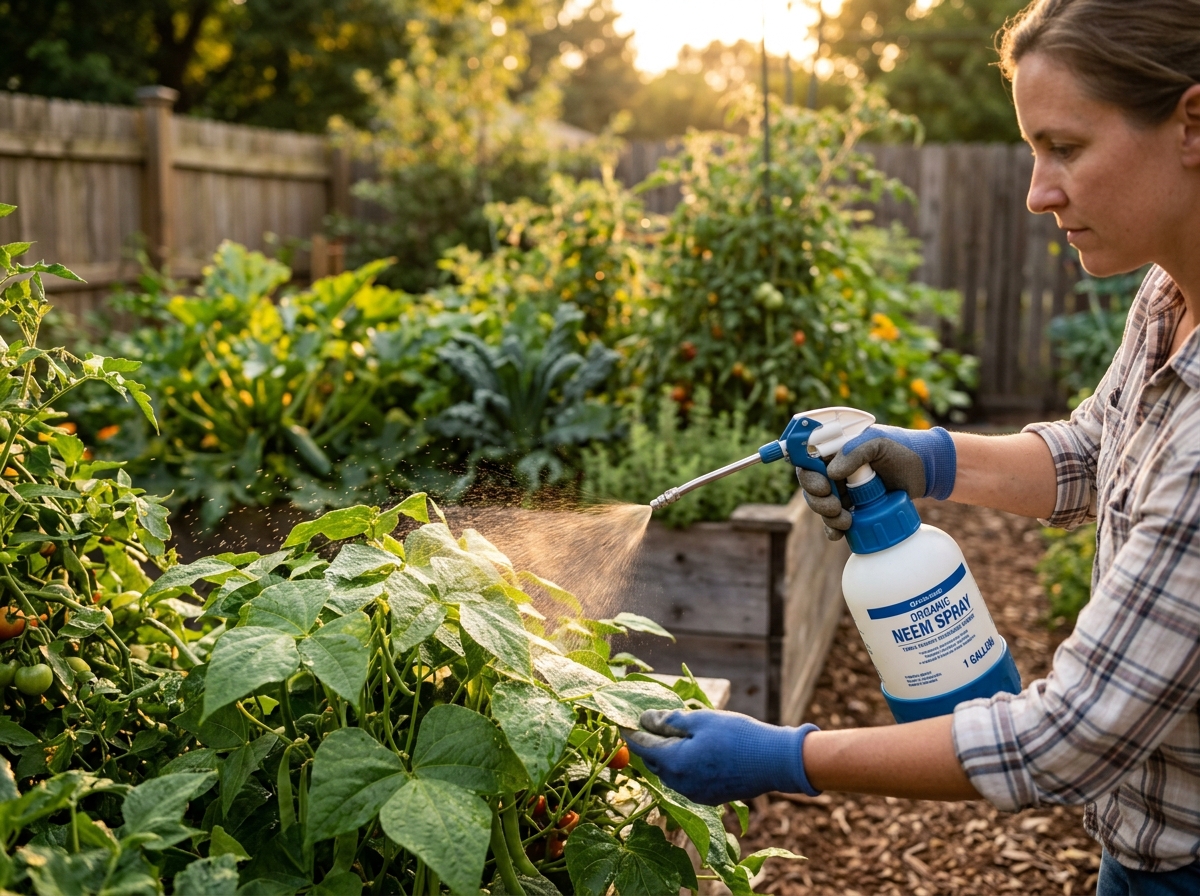
Effective Homemade Natural Pesticides for Vegetables
If you prefer a DIY approach, your kitchen is likely stocked with ingredients that pests absolutely loathe. Homemade sprays are fantastic for targeted treatments on delicate herbs or small vegetable patches.
- Garlic-Pepper Spray: This creates a potent sensory barrier. Blend 4 cloves of garlic with 2 hot peppers (like habaneros or jalapeños) and 2 cups of water. Let it steep overnight, strain it, and add a tablespoon of liquid soap. It effectively deters aphids and cabbage worms.
- Castile Soap Solution: A simple soap spray works by breaking down the protective outer shell of soft-bodied insects, causing them to dehydrate. Mix 1 tablespoon of pure Castile soap with 1 quart of water.
- Tomato Leaf Alkaloids: Believe it or not, tomato leaves contain alkaloids that are fatal to aphids and mites. Soak 2 cups of chopped fresh tomato leaves in 1 quart of water overnight. Strain and spray! (Note: Don’t use this on other nightshades like peppers to avoid spreading tobacco mosaic virus).
- Essential Oil Mixtures: Oils like peppermint, rosemary, and thyme are powerful repellents. Mix 10-15 drops of rosemary or thyme oil with a quart of water and a teaspoon of mild liquid soap.
| Feature | Soap Spray | Neem Oil |
|---|---|---|
| Mechanism | Contact (dehydration) | Systemic (hormonal disruption) |
| Residual Effect | None (must hit the bug) | Lasts 7-14 days |
| Best For | Aphids, Mites, Thrips | Beetles, Whiteflies, Scale |
| Safety | Very High | High (Avoid flowers) |
Learn more about crafting these solutions in our article on diy-organic-pesticides-for-home-gardeners.
Targeted Natural Pesticides for Vegetables and Common Pests
Different pests require different tactics. Here is how to handle the “Big Five” of the vegetable patch:
- Aphids: These tiny sap-suckers can be blasted off with a strong stream of water or treated with insecticidal soap. Ladybugs are their natural nemesis—one ladybug can consume up to 5,000 aphids in its lifetime!
- Caterpillars: Whether it’s the cabbage looper or the tomato hornworm, BT (Bacillus thuringiensis) is your best bet. It targets them specifically without harming other insects.
- Slugs: Slugs are attracted to the yeast in beer. Sink a tuna can into the ground so the rim is level with the soil and fill it with beer. The slugs crawl in and drown. If you don’t have beer, citrus peels left on the ground overnight will attract them for easy collection in the morning.
- Spider Mites: These thrive in hot, dry conditions. Regular misting with water and applications of neem oil or rosemary oil sprays will keep them at bay.
- Whiteflies: These are notoriously difficult. Yellow sticky traps help monitor them, but garlic oil spray is an excellent repellent.
Research on interplanting zucchini with marigolds for pest resistance from Iowa State University has shown that simply growing marigolds alongside your squash can significantly reduce the presence of squash bugs and cucumber beetles.
Beyond Sprays: Physical Barriers and Biological Allies
Sometimes the best natural pesticides for vegetables aren’t sprays at all—they are physical obstacles or living predators.
Physical Barriers
- Row Covers: Made of lightweight fabric, row covers are like an “invisibility cloak” for your plants. They block cabbage moths and aphids from ever reaching your greens. Just remember to lift them during the day for flowering plants so bees can pollinate!
- Mesh Screens: Fine mesh screens are perfect for protecting root crops from carrot flies.
- Fruit Protection Bags: If you have prize tomatoes or grapes, you can slip small organza bags over the fruit clusters to protect them from birds and large insects.
- Diatomaceous Earth: This powder is made of fossilized algae. To us, it feels like flour, but to a slug or ant, it’s like crawling over broken glass. Sprinkle diatomaceous earth around the base of your plants.
- Copper Tape: Slugs receive a tiny electric-like shock when they touch copper. Wrapping copper tape around your planters is a great way to keep them out.
Biological Allies
Your garden is an ecosystem. Instead of trying to kill everything, try inviting the “good guys” to do the work for you.
- Ladybugs: They are aphid-eating machines.
- Lacewings: Their larvae, known as “aphid lions,” prey on thrips, mites, and small caterpillars.
- Predatory Wasps: These tiny wasps lay eggs inside caterpillars like the tomato hornworm. If you see a hornworm covered in white “cocoons,” leave it alone! The wasps are already winning.
Providing a habitat like an insect hotel can help keep these allies in your garden year-round. For more on this, see our specialized guide on pest-control-for-herb-gardens.
Proactive Prevention: Soil Health and Companion Planting
The most resilient gardens are those where the plants are so healthy they can fight off pests on their own. This starts with the soil.
Soil Health and Composting
Healthy soil is full of beneficial microorganisms that help plants produce defensive compounds.
- Hot Composting: Creating a compost pile that reaches 140°F kills off pest eggs and weed seeds while creating “black gold” for your plants.
- Amendments: Adding bone meal for calcium or worm castings introduces microbes that boost plant immunity.
The Power of Companion Planting
Companion planting uses the natural scents and properties of plants to protect their neighbors.
- Marigolds: These release alpha-terthienyl from their roots, which kills harmful nematodes in the soil. They also produce limonene, which masks the scent of tomatoes to confuse whiteflies.
- Nasturtiums: These act as “trap crops.” Aphids love them even more than they love your vegetables. By planting nasturtiums on the edge of your garden, you draw the pests away from your main harvest.
- Basil: Planting basil near tomatoes doesn’t just improve the flavor; it also deters flies and mosquitoes.
- Blue Hubbard Squash: This is a “magnet” for squash bugs. If you plant it as a border, the bugs will swarm the blue hubbard squash, leaving your zucchini and pumpkins alone.
Crop Rotation
Never plant the same family of vegetables in the same spot two years in a row. Pests like to overwinter in the soil. If you plant tomatoes (Nightshades) where you had peppers (also Nightshades) last year, the pests are already waiting for their breakfast. A four-year rotation plan—moving between brassicas, legumes, nightshades, and root crops—is ideal.
If you’re just starting out, check out natural-pest-control-for-beginners.
Frequently Asked Questions about Natural Pest Control
Can you eat produce treated with natural pesticides?
Yes! One of the biggest advantages of using natural pesticides for vegetables is that they generally don’t leave harmful synthetic residues. In fact, scientific research on how organic “wounds” improve produce nutrients from Texas A&M University found that plants “attacked” by a few pests actually produce more antioxidants and nutrients as part of their natural defense system.
Harvest Safety Guidelines:
- Rinsing: Always rinse your produce thoroughly with water before eating, regardless of what you sprayed.
- Pre-Harvest Interval (PHI): Some products, like Neem oil, may have a recommended waiting period of 1-3 days before harvest to ensure the taste isn’t affected. Check the label of any commercial organic product.
How do you test homemade sprays for plant safety?
Not all plants react the same way to DIY concoctions. A spray that’s fine for a sturdy kale leaf might wither a delicate basil plant.
- Phytotoxicity Testing: Spray a small, inconspicuous area of the plant first.
- Wait 24-48 Hours: Check for signs of “leaf burn” (yellowing or browning).
- Dilution is Key: If you see damage, increase the water in your recipe to dilute the active ingredients.
- Avoid Direct Sunlight: Never spray an oil-based mixture (like neem or garlic oil) while the sun is hitting the leaves.
What are the most common mistakes with organic pest control?
- Being Reactive: Waiting for a “bug-pocalypse” before spraying. Organic methods are best for prevention.
- Over-Fertilization: Using too much nitrogen creates “lush, tender growth” that acts like a dinner bell for aphids.
- Ignoring the “Good Guys”: Using broad-spectrum organic sprays (like Pyrethrin) too often can kill ladybugs and bees just as easily as pests.
- Spraying in the Morning: This exposes the plant to sun-scald and endangers pollinators.
For a deeper dive into these common pitfalls, visit natural-pest-control-for-beginners-2.
Conclusion
At Ponto de Arte, we believe that your garden should be a sanctuary, not a chemical battleground. Our specialized focus is on protecting aromatic herb gardens, where the purity of the leaf is everything. By using natural pesticides for vegetables, you aren’t just killing bugs—you are fostering a sustainable ecosystem.
Integrated Pest Management (IPM) is about balance. It’s about building healthy soil, choosing the right companions, and using organic sprays as a targeted tool rather than a blunt instrument. Whether you are dealing with a stubborn slug or a swarm of aphids, nature usually has the answer.
Ready to grow a healthier, more vibrant garden? Start your journey into urban gardening and organic protection with us today. Happy gardening!
