
Why Your Vegetable Garden Needs Pest-Repelling Herbs
Herbs that keep bugs away from vegetable garden beds are one of the simplest and most effective tools in any organic gardener’s toolkit. Instead of reaching for chemical sprays, you can use fragrant plants to naturally deter pests — while also growing ingredients for your kitchen.
Here are the top herbs proven to repel common garden pests:
| Herb | Pests Repelled |
|---|---|
| Basil | Aphids, tomato hornworms, mosquitoes, whiteflies |
| Mint | Aphids, ants, flea beetles, cabbage moths |
| Rosemary | Cabbage moths, carrot flies, mosquitoes |
| Chives | Aphids, spider mites, Japanese beetles, slugs |
| Sage | Cabbage moths, flea beetles, whiteflies |
| Lavender | Mosquitoes, moths, flies, fleas |
| Catnip | Ants, aphids, flea beetles, squash bugs, mosquitoes |
| Garlic | Japanese beetles, aphids, root maggots, codling moths |
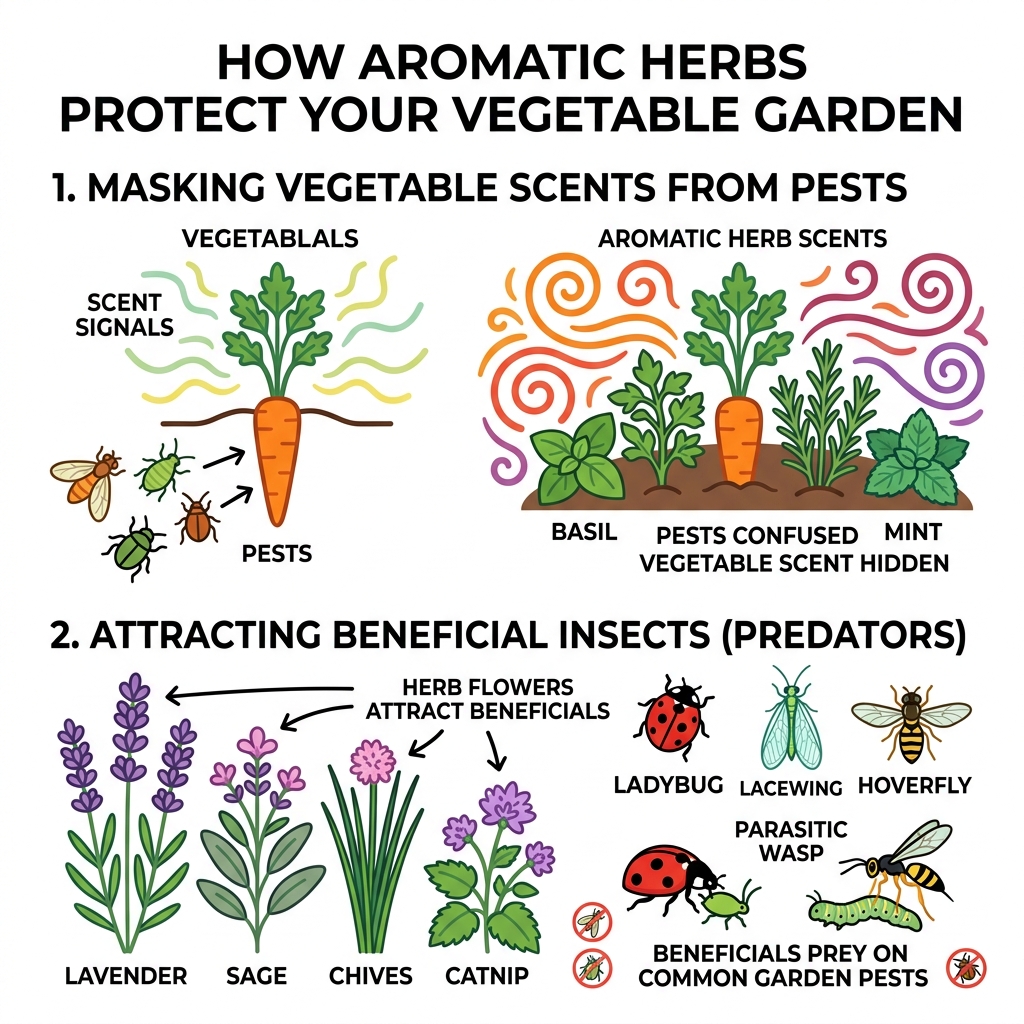
The secret is simple: aromatic herbs confuse insects’ sense of smell. Pests find their target plants by scent. When strong-smelling herbs grow nearby, they mask those scents — making your vegetables much harder for bugs to find.
Plants produce natural chemical compounds like limonene, camphor, and cineole that are toxic or deeply unpleasant to many insects. This isn’t folk wisdom — it’s biology.
The best part? Many of these herbs also attract beneficial insects like ladybugs, parasitic wasps, and hoverflies that eat the pests doing damage to your plants.
The Science of Scent: How Herbs Deter Pests
Have you ever wondered why a crushed mint leaf or a sprig of rosemary smells so powerful? Those scents come from essential oils stored in tiny glands on the plant’s surface. In the wild, these oils aren’t there for our culinary pleasure; they are a sophisticated defense system.

When we talk about herbs that keep bugs away from vegetable garden plots, we are really talking about chemical warfare. Many insects rely almost exclusively on their sense of smell to find “host plants” (the vegetables they want to eat). When we interplant pungent herbs, we create a “scent screen.” This process, often called scent masking, makes the vegetable practically invisible to the pest.
Several specific chemical compounds found in herbs are particularly effective:
- Cineole and Camphor: Found in sage and rosemary, these compounds can actually interfere with an insect’s nervous system or disrupt their sensory receptors.
- Limonene: This citrusy compound, found in basil and marigolds, is famous for masking the aroma of tomato plants, making them harder for whiteflies to locate.
- Nepetalactone: This is the active ingredient in catnip. Research has shown it to be incredibly effective at repelling mosquitoes and even cockroaches.
According to a scientific study on plant-based insect repellents, these botanical volatile oils are legitimate alternatives to synthetic chemicals. For those just starting out, understanding these interactions is a cornerstone of natural pest control for beginners. By choosing the right plants, we aren’t just gardening; we’re engineering a mini-ecosystem that protects itself.
Top Herbs That Keep Bugs Away from Vegetable Garden
If you’re ready to draft some “garden bodyguards,” these are the heavy hitters. Each of these herbs brings a unique set of skills to your vegetable beds.
Basil
Basil is a superstar in the garden. Beyond its status as the perfect pizza topping, it emits strong oils that repel flies and mosquitoes. Some studies even suggest that basil oil can kill mosquito eggs before they hatch. It’s also a champion at deterring the dreaded tomato hornworm.
Mint
Mint is perhaps the most famous aromatic repellent. Its high concentration of menthol and pulegone makes it a nightmare for aphids, ants, and flea beetles. However, because it is so aggressive, we always recommend specific pest control for herb gardens strategies, such as growing it in containers to prevent it from seizing control of the entire bed.
Rosemary and Sage
These woody perennials are the “old guard” of the garden. Rosemary is particularly effective against carrot rust flies and cabbage moths. Sage contains camphor and cineole, which interfere with the nervous systems of various pests. Interestingly, burning a few sage twigs in a campfire is a time-tested way to keep bugs away from your outdoor seating area!
Catnip
Don’t let the name fool you; while cats love it, bugs despise it. A scientific study on catnip’s chemical receptors confirmed that its active compound, nepetalactone, triggers a “pain” receptor in many insects. It’s a powerful deterrent for mosquitoes, squash bugs, and even Colorado potato beetles.
Best Herbs That Keep Bugs Away from Vegetable Garden for Tomatoes
If you grow tomatoes, you know the heartbreak of finding a giant green hornworm devouring your vines. To prevent this, we suggest a “triple threat” approach:
- Basil: Plant it right at the base of your tomatoes. It masks the tomato scent and may even improve the fruit’s flavor.
- Borage: This herb is a “confuser.” Its fuzzy texture and scent distract hornworms and cabbage worms. Plus, its beautiful blue flowers attract bees like crazy.
- Marigolds: While technically a flower, they are essential companions. Research on marigolds and whitefly confusion shows they release limonene, which acts like an “invisibility cloak” for your tomatoes against whiteflies.
Essential Herbs for Brassicas and Leafy Greens
Broccoli, kale, and cabbage are magnets for the “Small White” butterfly, whose larvae (cabbage worms) can strip a plant in days.
- Rosemary and Thyme: These herbs produce essential oils that disrupt the host-finding behavior of cabbage moths.
- Sage: Interplanting sage in your cabbage patch is a classic move to deter moths and flea beetles.
For a deeper dive into these specific relationships, check out your guide to companion planting for a thriving vegetable garden.
Strategic Companion Planting: Herb and Vegetable Pairings
Success in the garden isn’t just about what you plant, but where you plant it. This strategy is known as companion planting. By pairing vegetables with specific herbs that keep bugs away from vegetable garden rows, you create a synergistic environment where plants help each other grow.
| Vegetable | Best Herb Companion | Pests Targeted |
|---|---|---|
| Tomatoes | Basil, Borage, Marigolds | Hornworms, Aphids, Whiteflies |
| Carrots | Chives, Rosemary, Sage | Carrot Rust Fly, Aphids |
| Cabbage/Broccoli | Thyme, Sage, Rosemary, Dill | Cabbage Moths, Flea Beetles |
| Beans | Rosemary, Summer Savory | Bean Beetles, Aphids |
| Cucumbers | Catnip, Tansy, Radish | Cucumber Beetles, Squash Bugs |
| Asparagus | Parsley, Basil | Asparagus Beetles |
Using these pairings allows you to move away from synthetic sprays and toward natural pest control methods for organic gardening. For example, chives are often called “garden sentinels.” Their sulfurous compounds are incredibly off-putting to soft-bodied insects like aphids and mites. Planting them as a border around your carrots or lettuce creates a “no-fly zone” for many pests.
Attracting Allies: Herbs as Beneficial Insect Magnets and Trap Crops
In a healthy garden, not all bugs are bad. In fact, some of your best employees are insects! Many herbs serve a dual purpose: they repel the “bad guys” while providing a nectar-rich buffet for “good guys” like ladybugs, lacewings, and parasitic wasps.
The Power of Umbellifers
Herbs like Dill, Parsley, and Fennel belong to the Umbelliferae family. When they flower, they produce flat, umbrella-shaped clusters of tiny blossoms. These are the preferred landing pads for tiny predatory wasps. These wasps don’t sting humans, but they do lay their eggs inside pests like tomato hornworms and cabbage caterpillars.
Expert Tip: If you see a hornworm covered in tiny white cocoons, don’t kill it! Those are parasitic wasp larvae doing your work for you.
Using Trap Crops
Sometimes, the best defense is a good distraction. This is called “trap cropping.”
- Nasturtiums: These are often used to draw aphids away from your beans or broccoli. The aphids find the nasturtiums so delicious they ignore your vegetables.
- Dill: While it protects some plants, it actually attracts hornworms. By planting dill 8–12 feet away from your tomatoes, you can lure the worms to the dill and away from your precious fruit.
- Tansy: This herb is a powerhouse. It repels ants, beetles, and flies, but it is a massive draw for ladybugs and honeybees. You can find more info on tansy and beneficial insects to see if this golden-flowered herb is right for your space.
Cultivation Guide: Growing and Maintaining Your Pest-Repellent Garden
To get the most “repellent power” out of your herbs, they need to be healthy. Stressed plants produce fewer essential oils, which means they won’t be as effective at warding off bugs.
Growing Requirements
Most herbs that keep bugs away from vegetable garden plots share similar needs:
- Sunlight: Most culinary herbs need at least 6 to 8 hours of full sun. This sun exposure is what fuels the production of those aromatic oils.
- Soil: Herbs generally prefer well-drained soil. They don’t like “wet feet.” If your garden has heavy clay, consider growing your herbs in raised beds or pots.
- Hardiness: Check your USDA zone. Rosemary and sage are perennials in many areas, but basil and cilantro are usually grown as annuals.
For a comprehensive look at starting your own patch, our organic herb gardening tips provide a great roadmap.
Maintaining Herbs That Keep Bugs Away from Vegetable Garden
Maintenance is key to a functional garden.
- Pruning: Regularly harvesting your herbs encourages them to grow bushier and produce more foliage (and therefore more scent).
- Soil Fertility: Avoid high-nitrogen fertilizers. Too much nitrogen can lead to rapid growth with very little oil production, making the herb less effective as a repellent. Stick to compost or diy-organic-pesticides-for-home-gardeners that focus on overall plant health.
Precautions: Invasive and Toxic Herbs
Nature is powerful, and some herbs require a bit of caution:
- Mint Containment: We cannot stress this enough—plant mint in pots! Its runners will travel underground and take over your vegetable bed before you can say “mojito.”
- Tansy Toxicity: While great for repelling pests, tansy can be toxic to livestock and humans if ingested in large quantities. It’s also quite invasive in certain climates.
- Rue: Some people are sensitive to the oils in rue; it can cause skin irritation or “phototoxicity” (a rash when the skin is exposed to sun after touching the plant).
- Geraniums: Scented geraniums are wonderful for repelling mosquitoes and leafhoppers. You can find more info on geranium companion planting to learn how to use them safely.
Frequently Asked Questions about Garden Herbs
Which herbs are most effective against mosquitoes in the garden?
Basil, Lavender, Lemon Thyme, and Rosemary are the top choices. To maximize their effect, you can gently “bruise” or rub the leaves as you walk by to release the oils into the air. Catnip is also scientifically proven to be more effective than DEET in some laboratory settings!
Can mint be planted directly in the vegetable bed?
We highly recommend against it. Mint is an “aggressive spreader.” If you want the benefits of mint in your vegetable bed without the takeover, try burying a pot in the soil so the rim is just above the surface. This contains the roots while keeping the plant near your vegetables.
How do herbs attract beneficial insects while repelling pests?
It’s all about the biology of the insect. Pests are often deterred by the strong volatile oils (the “smell”). However, beneficial insects like bees and hoverflies are attracted to the flowers and the nectar they provide. By allowing a portion of your herbs to flower, you create a sanctuary for your garden’s protectors.
Conclusion
At Ponto de Arte, we believe that a garden should be a balanced, thriving ecosystem. By strategically using herbs that keep bugs away from vegetable garden beds, you are choosing a path that is safer for your family, better for the environment, and incredibly rewarding.
Our specialized focus on protecting aromatic herb gardens from pests has taught us that nature usually has the best answers. Whether you are interplanting basil with your tomatoes or using lavender to keep mosquitoes away from your patio, you are participating in a tradition of sustainable gardening that dates back centuries.
Ready to transform your green space? Explore more info about urban gardening services and let us help you grow a garden that is as functional as it is beautiful. Happy gardening!
