
When Your Herbs Aren’t Happy: A Quick Herb Garden Troubleshooting Guide
Herb garden troubleshooting comes down to a handful of root causes that show up again and again. Here’s a fast-reference breakdown:
| Problem | Most Likely Cause | Quick Fix |
|---|---|---|
| Yellowing leaves | Overwatering, poor drainage, pests | Check soil moisture; improve drainage |
| Leggy, spindly growth | Not enough light | Move to south-facing window or add grow light |
| Brown, crispy leaves | Underwatering or fungal disease | Water when top inch of soil is dry |
| Wilting despite wet soil | Root rot | Repot in fresh, well-draining mix |
| White powder on leaves | Powdery mildew | Improve airflow; prune affected leaves |
| Tiny bugs on leaves | Aphids, spider mites, or fungus gnats | Neem oil, insecticidal soap, or sticky traps |
| Slow or stunted growth | Low light, cold temps, or root-bound pot | More light, warmer spot, or repot |
You bought the basil. You watered it. You gave it a sunny-ish spot on the windowsill. And still — drooping leaves, yellow patches, or worse.
You’re not alone. Most indoor herbs struggle not because of neglect, but because of a mismatch. These plants evolved in bright, breezy Mediterranean climates. The average kitchen windowsill is a very different world.
The good news: nearly every common herb problem has a clear cause and a simple fix. Once you know what to look for, you can usually turn things around fast — before your basil (or rosemary, or mint) hits the point of no return.
This guide walks you through every major herb garden problem, from pests and root rot to light deficiency and fungal disease, with practical solutions that don’t rely on harsh chemicals.
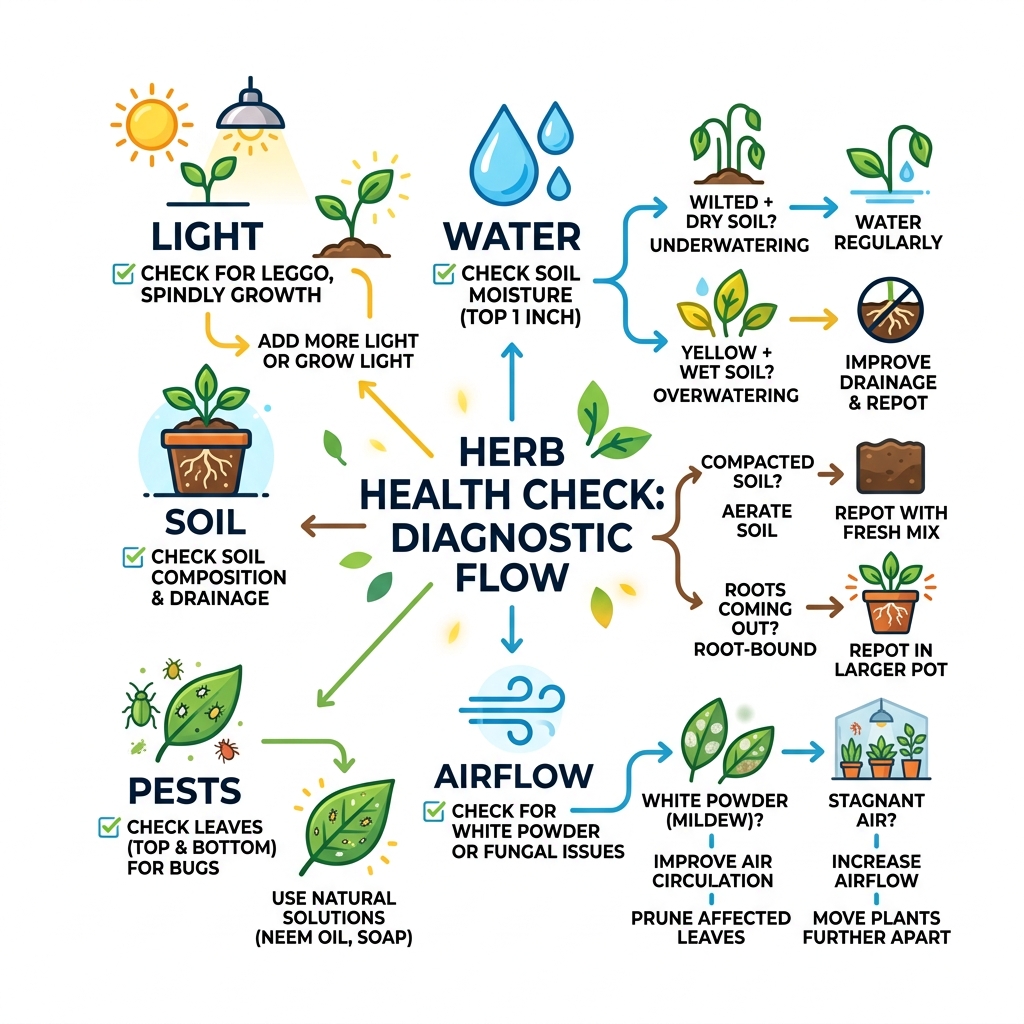
Identifying the Culprits: Herb Garden Troubleshooting for Beginners
When we see our herbs looking lackluster, our first instinct is often to “love” them more by adding more water. However, in herb garden troubleshooting, excessive attention is frequently the culprit. Identifying why your plants are struggling requires a bit of detective work.
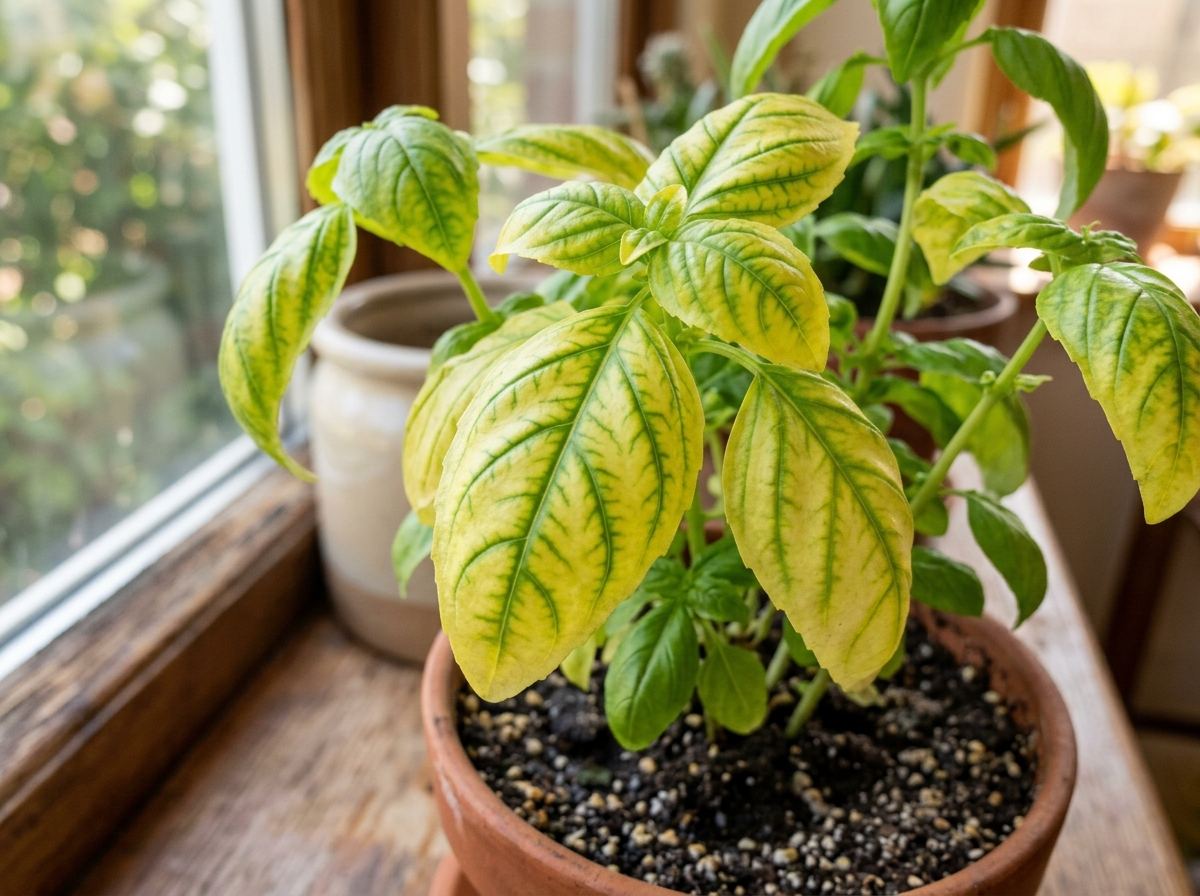
Yellow leaves are one of the most common “SOS” signals a plant can send. This condition, known as chlorosis, happens when the plant can’t produce enough chlorophyll. While it looks like a single problem, it can be caused by several factors:
- Nutrient Deficiency: If your soil is old or exhausted, your herbs might lack iron or manganese.
- Overwatering: This is the #1 killer of indoor herbs. Saturated soil pushes out oxygen, suffocating the roots and preventing them from taking up nutrients.
- Poor Drainage: If your pot doesn’t have holes, water pools at the bottom, leading to a “swamp” effect.
To keep your plants thriving, check out our organic care tips for healthy plants and follow these tips for watering herbs to avoid the “soggy feet” syndrome.
Why Are My Herbs Leggy and Spindly?
Have you ever noticed your herbs stretching desperately toward the glass, with long, weak stems and tiny, pale leaves? This is called etiolation. It’s a hormonal response where the plant produces auxin to stretch its cells in a frantic search for more light.
Indoor windows often filter out a significant portion of UV intensity, sometimes delivering only 20–30% of the light levels found outdoors. Most herbs need at least 6 to 8 hours of direct sunlight, but indoors, they often require 8–12 hours of bright light to stay compact. If your windowsill isn’t cutting it, supplemental grow lights are a game-changer.
The Difference Between Overwatering and Underwatering
It’s a common paradox: a plant can wilt because it’s thirsty, but it can also wilt because it’s drowning. Distinguishing between the two is vital for successful herb garden troubleshooting.
| Symptom | Overwatering (Root Rot) | Underwatering (Thirst) |
|---|---|---|
| Leaf Texture | Soft, mushy, or limp | Dry, crispy, or brittle |
| Leaf Color | Yellowing, starting from the bottom | Brown edges or overall pale color |
| Soil Feel | Damp or muddy | Bone dry and pulling away from pot edges |
| Root Appearance | Black, slimy, and smelly | Dry and wiry |
The “Finger Test” is your best friend here. Stick your finger two inches into the soil. If it feels moist, step away from the watering can. If it’s dry as a bone, give it a drink. If you suspect you’ve already overwatered, you might need the ultimate hydrogen peroxide root rot treatment to oxygenate the soil and kill off fungal pathogens.
Managing Pests and Fungal Diseases Indoors
Indoor herbs are like an all-you-can-eat buffet for certain insects. Because there are no natural predators (like ladybugs) inside your home, a small pest problem can explode into an infestation overnight.
We frequently see three main offenders in indoor gardens:
- Aphids: Tiny green or black “vampires” that suck sap and leave behind a sticky residue called honeydew.
- Spider Mites: Microscopic pests that thrive in dry indoor air, leaving fine webbing between leaves.
- Fungus Gnats: Small black flies that hover around the soil; their larvae eat organic matter (and sometimes roots) in overwatered soil.
For a deeper dive into protection, read our guide on pest control for herb gardens and learn how to stop the sap suckers. If you’re seeing mysterious nibbles, we can help you with identifying the little black bugs eating your herbs.
Natural Solutions for Herb Garden Troubleshooting Pests
We believe in keeping your kitchen garden organic. After all, you’re going to eat these herbs!
- Neem Oil: A natural derivative of the neem tree that disrupts the life cycle of many pests.
- Insecticidal Soap: Great for “washing” aphids off delicate leaves.
- Sticky Traps: Yellow traps are irresistible to adult fungus gnats and whiteflies.
aphids on basil indoors are a real buzzkill, so catch them early. You can find more natural pest control methods for organic gardening on our blog.
Stopping Powdery Mildew and Downy Mildew
Fungal diseases affect about 35% of herb gardens, especially when humidity is high and airflow is low. Powdery mildew looks like a dusting of flour on your leaves, while downy mildew often appears as yellow patches on top with grey fuzz underneath.
To prevent these, focus on the “Three Pillars of Airflow”:
- Spacing: Don’t let leaves touch.
- Circulation: Use a small oscillating fan to mimic a gentle breeze.
- Watering: Always water at the base of the plant, never over the leaves.
Some plants even act as guardians; check out the 10 best herbs for pest control to save your garden to see which varieties help keep the “bad guys” away.
Optimizing the Environment: Light, Soil, and Air
To stop herb garden troubleshooting from becoming a full-time job, you need to get the environment right from the start.
Light is the fuel for your herbs. While a south-facing window is the gold standard, it’s often not enough in winter. When using grow lights, look for the “blue spectrum” for leafy growth. Position lights about 6–12 inches above the plants for 12–14 hours a day.
The foundation of health is organic soil for herbs. Never use garden soil in a pot; it’s too heavy and can carry diseases. If you’re specifically growing basil indoors, remember it’s a “sun worshiper” and needs the warmest, brightest spot you have.
Choosing the Right Soil and Potting Mix
A good potting mix should be light and fluffy. We recommend mixes that include:
- Perlite: Those little white “lava rocks” that create air pockets.
- Coco Coir or Peat Moss: For moisture retention without sogginess.
- Drainage Holes: Non-negotiable! If your favorite pot doesn’t have a hole, use it as a decorative sleeve for a plastic nursery pot.
Terracotta is a fantastic choice for Mediterranean herbs like rosemary and thyme because the porous clay allows the soil to “breathe” and dry out faster.
Temperature and Humidity Control for Herb Garden Troubleshooting
Most herbs prefer temperatures between 60–75°F. However, basil is a “drama queen” — it suffers chilling injury if temperatures drop below 50°F. If you leave it against a cold windowpane in January, the leaves will turn black and collapse.
On the flip side, indoor air in winter is often too dry (below 20% humidity). You can boost local humidity by:
- Using pebble trays (saucers filled with stones and water).
- Grouping plants together to create a humid micro-environment.
- Keeping them away from heating vents.
This is especially important when growing rosemary at home or growing mint at home, as these plants appreciate a bit of atmospheric moisture.
Advanced Care: Pruning, Fertilizing, and Repotting
Once your herbs are healthy, you need to keep them that way. This involves “training” them to grow the way you want.
Pruning isn’t just about harvesting; it’s about biology. When you snip off the top of a stem (the apical meristem), the plant sends hormones to the side buds, telling them to grow. This results in a bushy, productive plant rather than one tall, lanky stalk.
Regular pruning can boost your harvest by up to 50%! This is vital for growing thyme and oregano to prevent them from becoming woody. For longer-lived plants, check out the ultimate guide to the rosemary growing season.
When and How to Fertilize Indoor Herbs
Indoor herbs have a limited amount of soil, so they eventually run out of “food.” We suggest a light application of organic liquid fertilizer once a month during the growing season.
Be careful with synthetic fertilizers, as they can cause salt buildup — a white, crusty layer on the soil surface that can burn roots. If you see this, “flush” the pot by running water through it until it flows freely out the bottom for several minutes. Our organic herb gardening tips cover more on natural feeding.
Successful Repotting and Propagation
If your herb is growing slowly despite having plenty of light and water, it might be root-bound. This means the roots have filled the pot and are circling the edges, gasping for space.
- Repotting: Move the plant to a pot 2 inches wider than the current one.
- Division: For herbs like mint or chives, you can literally cut the root ball in half and create two separate plants.
- Cuttings: Many herbs, like basil and mint, can be propagated by placing a stem in a glass of water until roots grow.
Managing these tasks is essential for maintaining an herb garden in small spaces.
Frequently Asked Questions about Herb Garden Troubleshooting
Why is my indoor basil turning black?
This is almost always cold damage. Basil is extremely sensitive to temperatures below 50°F. If it’s touching a cold window or sitting in a draft, the cells collapse and turn black. Move it to a warmer spot immediately!
How do I get rid of fungus gnats in my herb garden?
Fungus gnats love wet soil. First, let the soil dry out significantly. Then, use a soil drench containing Bacillus thuringiensis israelensis (Bti), a natural bacteria that kills gnat larvae without harming your plants or you. Yellow sticky traps will handle the flying adults.
Can I use garden soil for indoor potted herbs?
No. Garden soil is too dense for containers. It will compact over time, crushing the roots and preventing drainage. It also often contains weed seeds and soil-borne pathogens that thrive in the warm, indoor environment.
Conclusion
At Ponto de Arte, we know that there is nothing quite like the smell of fresh rosemary or the taste of home-grown basil. Herb garden troubleshooting doesn’t have to be a source of stress; think of it as a way to better understand the needs of your aromatic plants.
By balancing light, mastering the “finger test” for watering, and keeping a watchful eye for pests, you can enjoy a kitchen garden that thrives all year long. If you’re just starting out, we recommend checking out the best herbs for beginners and our list of easy-to-grow culinary herbs.
Ready to give your herbs the home they deserve? Get the best organic soil for your herbs and start your journey toward a lush, pest-free indoor garden today!
