
Why Indoor Herbs Are More Vulnerable to Pests Than You Think
Indoor herbs pest management is one of the most common challenges home gardeners face — and it’s easy to see why.
Here’s a quick overview of what you need to know:
Most common indoor herb pests and how to handle them:
| Pest | Quick Sign | First Step |
|---|---|---|
| Aphids | Sticky residue, clusters under leaves | Rinse with water, apply neem oil |
| Spider mites | Fine webbing, tiny moving dots | Increase humidity, spray neem oil |
| Fungus gnats | Tiny flies near soil | Let soil dry out, use Bti drench |
| Whiteflies | White bugs on leaf undersides | Strong water spray, yellow sticky traps |
| Scale insects | Honeydew, shell-like bumps on stems | Scrape off manually, prune infested stems |
| Mealybugs | White cottony clusters | Dab with alcohol-soaked cotton swab |
Your herbs look protected indoors. No wind. No rain. No outdoor predators.
But that’s exactly the problem.
Outdoors, ladybugs, parasitic wasps, and other beneficial insects keep pest populations in check naturally. Indoors, those natural enemies are gone. A single mealybug or spider mite that hitchhikes in on a new plant can multiply unchecked — fast. A mature female spider mite, for example, lays around five eggs every single day.
The indoor environment itself creates stress that makes herbs more vulnerable. Windows typically deliver only 20–30% of outdoor light levels. Winter heating can drop indoor humidity below 20%, while most herbs thrive between 40–60%. Stressed plants attract pests. It’s that simple.
The good news? Most pest problems are preventable — and even active infestations can be handled safely, without harsh chemicals, using methods that keep your herbs edible and your kitchen safe.
This guide brings together professional tips to help you build a solid pest management system for your indoor herb garden, from early identification to organic treatments to knowing when it’s time to simply start over.
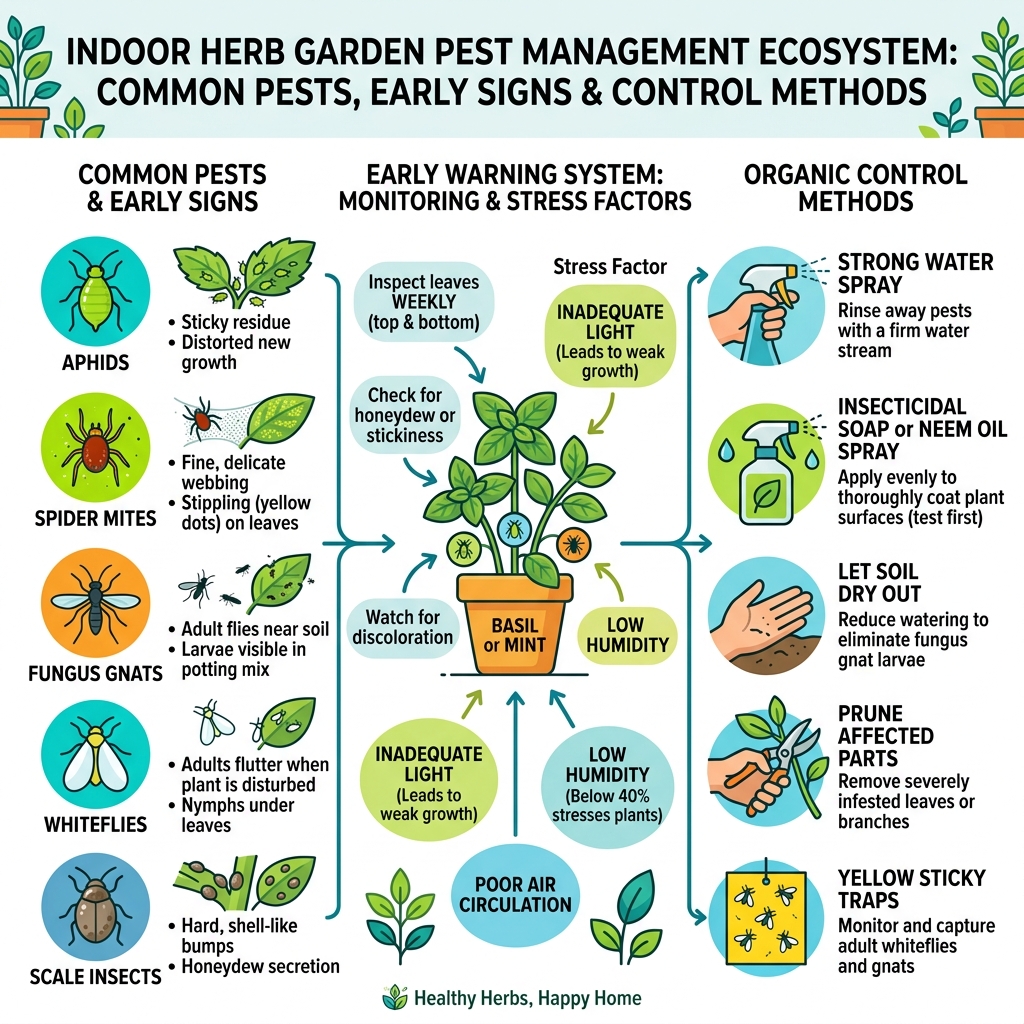
Identifying Common Pests and Early Warning Signs
To master indoor herbs pest management, we must first become detectives. Pests on indoor herbs are often master of disguise, hiding under leaves or blending into stems until their population explodes. Early detection is the difference between a quick rinse and losing your entire basil crop.
The Sap-Sucker Squad
Most indoor pests fall into the “sap-sucker” category. These insects pierce the plant’s tissue and drink the nutrient-rich fluids inside, weakening the herb over time.
- Aphids: These are tiny, pear-shaped insects that often cluster on succulent new growth. They can be green, black, or even pinkish. A telltale sign is “honeydew”—a sticky substance they excrete that makes leaves look shiny. For more details on these pests, see our guide on identifying the little black bugs eating your herbs.
- Spider Mites: If you notice fine, silky webbing between stems or tiny yellow “stippling” (dots) on leaves, you likely have spider mites. They thrive in the dry air of our homes during winter.
- Whiteflies: These look like tiny white moths. If you shake your plant and a cloud of white “dust” flies up, you’ve found them. They love the undersides of leaves, especially on parsley and basil.
- Scale Insects and Mealybugs: Scale looks like hard, shell-like bumps on stems, while mealybugs look like small tufts of white cotton. Both produce honeydew and can be very difficult to spot until the infestation is advanced.
Early Warning Signals
Don’t wait for the bugs to become visible. Watch for these symptoms:
- Yellowing or Speckled Leaves: This often indicates spider mite or aphid feeding.
- Sticky Residue: If your windowsill or the herb leaves feel tacky, sap-suckers are present.
- Distorted Growth: Curled or stunted leaves are a classic sign of aphid damage.
- Tiny Flies: If small black flies emerge from the soil when you water, you’re dealing with fungus gnats.
For a visual walkthrough of these symptoms, the Missouri Botanical Garden’s guide on herb problems indoors is an excellent resource for cross-referencing what you see on your plants.

Strategic Environmental Controls for Indoor Herbs Pest Management
We often think of pest control as “killing bugs,” but professional indoor herbs pest management starts with creating an environment where bugs hate to live. A healthy plant is its own best defense.
Solving the Light Deficit
Most culinary herbs are Mediterranean natives that crave 8 to 10 hours of intense sun. Inside, even a bright south-facing window often provides only 20–30% of the light found outdoors. When herbs don’t get enough light, they become “leggy” or spindly—a condition called etiolation. These weak stems have thinner cell walls, making them an easy meal for aphids.
To fix this, we recommend:
- Grow Lights: Use full-spectrum LED grow lights for 14–16 hours a day.
- Positioning: Keep lights 6–12 inches above the plants.
- Rotation: Turn your pots a quarter-turn every week to ensure all sides get equal exposure.
Managing Humidity and Airflow
Indoor humidity in winter can crash below 20%, which is a paradise for spider mites but a nightmare for your herbs. Most herbs prefer a 40–60% humidity range.
However, there is a catch: high humidity without airflow leads to fungal diseases like powdery mildew. We suggest using a small oscillating fan on a low setting. This mimics a natural breeze, which strengthens the plant stems and prevents the stagnant air that fungus gnats and whiteflies love.
Temperature and Specific Needs
Not all herbs want the same “room service.”
- Basil: The ultimate drama queen. It suffers chilling injury if temperatures drop below 50°F. Keep it away from drafty winter windows.
- Rosemary: Needs excellent drainage and slightly alkaline soil. It often dies indoors from “wet feet” (root rot), which then attracts fungus gnats.
For a deeper dive into which herbs naturally resist pests better than others, check out our list of the 10 best herbs for pest control to save your garden.
Non-Chemical and Mechanical Removal Methods
If you find pests, don’t panic and reach for a spray bottle immediately. The safest indoor herbs pest management involves physical removal. Since these are plants you intend to eat, mechanical methods are your best first line of defense.
The “Water Blast” Technique
For aphids, spider mites, and whiteflies, a strong stream of water is incredibly effective. Take your herb to the sink and use the sprayer to wash the undersides of the leaves thoroughly. This dislodges the pests and washes away the sticky honeydew.
Manual Removal and Pruning
For larger or more stubborn pests:
- Cotton Swabs: Dip a swab in rubbing alcohol and dab it directly onto mealybugs or scale insects. The alcohol dissolves their protective coating and kills them instantly.
- Pruning: If one stem is heavily infested with scale or aphids, sometimes it’s best to simply snip it off and dispose of it. This prevents the “home base” from spreading to the rest of the plant.
- Sticky Traps: Yellow sticky cards are excellent for catching adult fungus gnats and whiteflies, breaking their life cycle.
The Power of the Quarantine
The most common way pests enter your home is on a new plant. Whenever you bring a new herb home from the nursery or transition an outdoor pot inside, keep it in a separate room for at least three weeks. Inspect it weekly before introducing it to your main herb collection.
For more on these organic techniques, see our guide on natural pest control methods for organic gardening. You can also find great step-by-step removal tips from Bloomscape’s herb pest guide.
Safe Application of Organic Pesticides on Edible Herbs
When mechanical methods aren’t enough, we turn to organic sprays. However, because we are dealing with edible plants, we must be extra cautious. You don’t want to season your pasta with rosemary and pesticide residue.
The Organic Toolkit
- Neem Oil: A natural derivative of the neem tree, it disrupts the hormonal systems of insects so they stop feeding and breeding. It is effective against almost all common indoor pests.
- Insecticidal Soap: These are specially formulated fatty acids that break down the outer shells of soft-bodied insects like aphids.
- Garlic Spray: A fantastic DIY repellent. You can puree 15 cloves of garlic in a liter of water, strain it, and spray. It’s great for repelling pests (and vampires, as the joke goes!).
- Bti (Bacillus thuringiensis israelensis): This is a naturally occurring bacteria used as a soil drench to kill fungus gnat larvae without harming the plant or humans.
If you are interested in making your own solutions, we have a comprehensive resource on DIY organic pesticides for home gardeners.
Effective Indoor Herbs Pest Management Using Organic Sprays
To use these safely and effectively:
- Test First: Always spray a single leaf and wait 24 hours to ensure the plant doesn’t have a “burn” reaction.
- Timing: Apply sprays in the evening or when grow lights are off to prevent the wet leaves from magnifying the light and scorching.
- Complete Coverage: Pests hide. You must spray the undersides of leaves and the crevices where leaves meet the stems.
- Wash Before Eating: Even organic sprays can affect the flavor of your herbs. Always wash your harvest thoroughly under cold water before cooking.
For beginners, we recommend starting with our natural pest control for beginners guide to ensure you’re applying these treatments correctly.
Long-term Monitoring for Indoor Herbs Pest Management
Pest management isn’t a “one and done” task. Because many organic treatments only kill adult insects, you must reapply every 5–7 days for at least three cycles to catch new hatchlings. Consistent weekly inspections are the hallmark of a professional-grade pest control system for herb gardens.
When to Treat vs. When to Toss: Managing Severe Infestations
One of the hardest lessons in indoor herbs pest management is knowing when to give up. Sometimes, the kindest thing you can do for your garden is to throw a plant away.
Signs It’s Time to Say Goodbye
- Viral Infections: If your herb has strange mosaic patterns, yellow streaking, or extreme leaf distortion that doesn’t respond to pest treatment, it may have a virus. There is no cure, and it will spread to your other plants.
- Severe Root Rot: If the soil smells like rotting eggs and the plant is wilting even though the soil is wet, the roots are likely gone.
- The “50% Rule”: If more than 50% of the foliage is covered in pests or damage, the energy required to save the plant often outweighs the cost of a new $5 pot of herbs.
Starting over from seed is often the safest way to ensure a pest-free environment. Nursery-bought plants are a “medium risk” for pests, while “rescuing” a plant from the outdoor garden is the highest risk. If you are struggling with recurring issues, City Cultivator’s guide on common indoor herb problems offers great advice on diagnosing when a problem is environmental versus pest-related.
Frequently Asked Questions about Indoor Herb Pests
How do I get rid of aphids on basil?
Basil is particularly prone to aphids because of its soft, delicious leaves. The best method is to isolate the plant immediately, give it a vigorous wash in the sink, and then apply an insecticidal soap or neem oil spray. Be sure to check the very tips of the new growth, as that’s where they love to hide. For a deeper dive into this specific “buzzkill,” check out our article: Aphids on basil indoors are a real buzzkill.
Are indoor herb pests harmful to humans?
Most common indoor pests like aphids, fungus gnats, and spider mites are completely harmless to humans. They are interested in plant sap, not you! However, their excrement (honeydew) can encourage the growth of “sooty mold,” which you definitely don’t want to eat. Always wash your herbs before use.
Can I use garden soil for my indoor herbs?
We strongly advise against this. Garden soil is too heavy for containers and often contains dormant pest eggs (like fungus gnats or root aphids) and weed seeds. Always use a high-quality, sterile potting mix. To be extra safe, some gardeners even pre-moisten their potting mix with boiling water to kill any potential hitchhikers before planting.
Conclusion
At Ponto de Arte, we believe that a kitchen full of fresh, aromatic herbs is one of life’s greatest simple pleasures. While indoor herbs pest management requires a bit of vigilance, it shouldn’t feel like a chore. By focusing on the “Big Three”—adequate light, proper airflow, and regular inspection—you can stop most infestations before they even start.
The goal isn’t just to kill bugs; it’s to foster a sustainable, healthy ecosystem right on your windowsill. If you’re ready to start your journey or need to refresh your setup, explore our professional tips for maintaining a Kitchen Windowsill Herb Garden. Happy, pest-free gardening!
