
Why Kitchen Mint Bug Spray Belongs in Every Herb Gardener’s Arsenal
Kitchen mint bug spray is one of the simplest, safest ways to protect your herb garden from common pests — without reaching for harsh chemicals.
Here are the best herb-safe mint bug sprays to consider:
| Option | Best For | Key Ingredient |
|---|---|---|
| DIY peppermint oil spray | Budget-friendly, customizable | 100% pure peppermint essential oil |
| Mighty Mint 15oz spray | Ready-to-use, proven results | Peppermint oil concentrate |
| Garlic-mint homemade spray | Garden plants, stronger pests | Garlic + mint + cayenne |
| Mighty Mint gallon spray | Large kitchens or gardens | Peppermint oil, bulk size |
If you grow basil, thyme, or other kitchen herbs, you already know the frustration. One week your plants look lush. The next, something has been preceding them overnight.
The good news? Pests hate mint. The strong menthol compounds in peppermint oil overwhelm the scent receptors insects rely on to find food and navigate. Ants, gnats, spiders, flies — they tend to avoid areas where mint is present.
And unlike chemical sprays, a properly diluted mint bug spray won’t contaminate the herbs you’re about to toss into your pasta.
Whether you want a quick DIY recipe or a trusted commercial product, this guide covers everything you need to find the right fit for your garden and kitchen.
What is Kitchen Mint Bug Spray and How Does it Work?
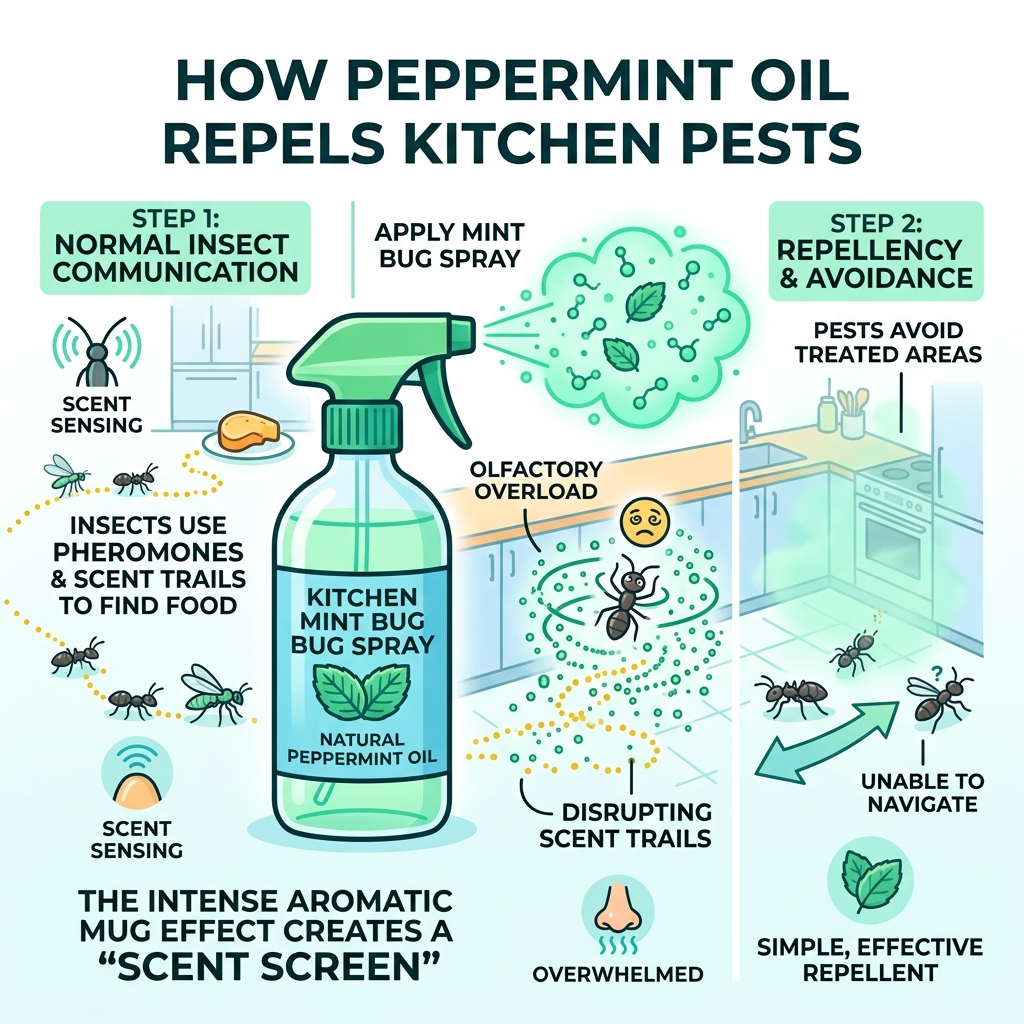
At its core, kitchen mint bug spray is a solution that leverages the high concentration of menthol found in peppermint plants (Mentha piperita). While we find the scent of mint refreshing and clean, for many insects, it is an olfactory nightmare.
Most common household and garden pests, such as ants, spiders, and gnats, rely heavily on their sense of smell to navigate, find food, and communicate through pheromone trails. The intense aromatic effect of peppermint oil creates a “scent screen” that disrupts these signals. Imagine trying to find a single candle in a room filled with thick, peppermint-scented fog—that is what an ant experiences when it encounters a treated surface.
However, it isn’t just about the smell. Lab studies suggest that peppermint oil can also have a direct impact on insect biology. When a small insect receives a direct hit of concentrated oil, the compounds can interfere with the insect’s nervous system or physical functions. While it is primarily used as a repellent to keep bugs away from your precious basil, it can raise mortality rates in certain situations through direct exposure.
Common pests deterred by mint spray include:
- Ants: It erases the scent trails they use to lead their colony to your sugar jar.
- Spiders: They dislike the strong sensation on their sensitive legs and usually relocate.
- Fungus Gnats: Often found in the moist soil of herb gardens, these are highly sensitive to menthol.
- Roaches and Flies: The spray makes kitchen surfaces unattractive for foraging.
How to Make the Ultimate DIY Kitchen Mint Bug Spray
Making your own kitchen mint bug spray is surprisingly simple and allows you to control exactly what goes into your home environment. This is especially important for those of us focused on natural pest control for beginners, where the goal is safety and simplicity.

The Standard Peppermint Recipe
To create a highly effective peppermint oil gnat spray, you only need three basic ingredients:
- 1 Cup of Water: Distilled or filtered water is best to avoid mineral buildup in your spray bottle.
- 10-15 Drops of 100% Pure Peppermint Essential Oil: Ensure you are using Mentha piperita and not a synthetic fragrance oil.
- 1 Teaspoon of Mild Dish Soap: This acts as an emulsifier. Since oil and water don’t mix, the soap breaks the surface tension, allowing the oil to disperse evenly so every spray is effective.
Step-by-Step Instructions:
- Pour the water into a clean spray bottle.
- Add the dish soap first, then the peppermint oil.
- Shake vigorously for about 30-60 seconds before every use.
Boosting Your Spray for the Garden
If you are dealing with tougher garden pests like aphids or beetles on your herbs, you can create a “triple threat” spray. We often recommend adding garlic and cayenne to the mix for outdoor use. Garlic contains sulfur compounds that bugs find repulsive, while cayenne provides a physical deterrent that causes a burning sensation for any insect brave enough to take a bite of your leaves.
For those looking for pest control for herb gardens, you can also experiment with adding other essential oils like eucalyptus or tea tree, which offer complementary repellent properties.
Proper Application and Safety in Food Prep Areas
Knowing where and how to spray is just as important as the recipe itself. In the kitchen, focus on “entry points” and “high-traffic zones” for bugs. This includes windowsills, door frames, baseboards, and the dark corners under the sink where moisture tends to accumulate.
Application Best Practices
- Countertops and Cabinets: You can lightly mist these areas, but always wipe down food preparation surfaces before cooking. While peppermint oil is natural, you probably don’t want your sandwich tasting like a candy cane!
- Herb Gardens: When treating indoor herbs, spray the soil and the undersides of leaves. This is where many pests like to hide or lay eggs.
- Frequency: Peppermint oil is volatile, meaning it evaporates quickly. For an active infestation, we recommend spraying every 3-4 days. For prevention, once a week is usually sufficient.
Safety Considerations: Pets and Children
We are often asked about pet safety. While peppermint oil is a natural plant extract, it is very concentrated.
- Cats and Dogs: Cats, in particular, are very sensitive to essential oils because their livers cannot process certain compounds. Always keep pets out of the room while you are spraying and until the spray has completely dried. Never apply the spray directly to a pet’s fur or skin.
- Storage: Store your kitchen mint bug spray in a cool, dark place (like a kitchen cabinet) to preserve the potency of the oils. It typically stays effective for about a month.
Comparing Homemade vs. Commercial Mint Sprays
Should you mix it yourself or buy a bottle? Both have their merits. Commercial products like Mighty Mint are popular for a reason—they are expertly formulated for shelf stability and high concentration.
| Feature | DIY Kitchen Mint Spray | Commercial (e.g., Mighty Mint) |
|---|---|---|
| Cost | Very low (approx. $2 per batch) | Moderate ($15 – $35) |
| Convenience | Requires mixing and shaking | Ready-to-use |
| Concentration | Customizable | High/Professional grade |
| Longevity | Potency fades after 3-4 weeks | Shelf-stable for months/years |
| Ingredients | 100% transparent | May include proprietary additives |
If you are a hobbyist who enjoys growing mint at home, making your own spray feels like a natural extension of your gardening. However, if you are facing a large-scale invasion or need something that stays potent in a gallon-sized sprayer for a large outdoor herb plot, a commercial concentrate might be the more practical choice.
Real user testimonials often highlight that while DIY sprays are fantastic for “peace of mind” and light maintenance, commercial sprays often provide a slightly longer residual effect due to their specialized surfactants.
Frequently Asked Questions about Kitchen Mint Bug Spray
What are common mistakes when using kitchen mint bug spray?
The most common mistake is forgetting to shake the bottle. Because oil naturally floats on water, if you don’t shake it, you might just be spraying plain water on your plants while the oil sits at the top.
Another issue is “leaf burn.” If you spray your herbs in the middle of a hot, sunny day, the oil can act like a magnifying glass for the sun, scorching the leaves. Always spray in the early morning or evening. Also, avoid using hard tap water if possible, as the minerals can sometimes interfere with the emulsification of the soap and oil.
Is kitchen mint bug spray safe for all household surfaces?
Generally, yes, but use caution on porous surfaces. Highly concentrated oils can occasionally stain unsealed wood or certain types of light-colored granite if left to pool. We always recommend a “patch test”—spray a small, inconspicuous area first and wait 24 hours to see if any discoloration occurs. Because it is a “kitchen” spray, it is designed to be safer around food than traditional pesticides, but it is still not intended for ingestion.
How long does the effectiveness of kitchen mint bug spray last?
Because peppermint oil is volatile, the scent—which is the primary repellent—will begin to fade within a few hours to a couple of days depending on airflow and humidity. In a breezy kitchen with the windows open, you will need to reapply more often. In the soil of a potted herb, the scent may linger a bit longer. For consistent protection, reapplication is the key to success.
Conclusion
Maintaining a pest-free kitchen and a thriving herb garden doesn’t require a cabinet full of toxins. By using a kitchen mint bug spray, you are choosing a solution that is effective, aromatic, and respectful of the environment.
The best pest control starts with hygiene. Keep your counters dry, seal your dry goods, and don’t let water sit in your plant saucers. When combined with the power of peppermint, these simple steps will keep the bugs at bay. At Pontodearte, we are dedicated to helping you grow the most beautiful, healthy herbs possible. For more specialized advice, check out our urban gardening services to take your green space to the next level!
