
Why So Many Gardeners Are Choosing to Grow Rosemary Inside
Growing rosemary inside is not only possible — it’s one of the most rewarding things you can do for your kitchen and your home.
Here’s the quick answer for getting started:
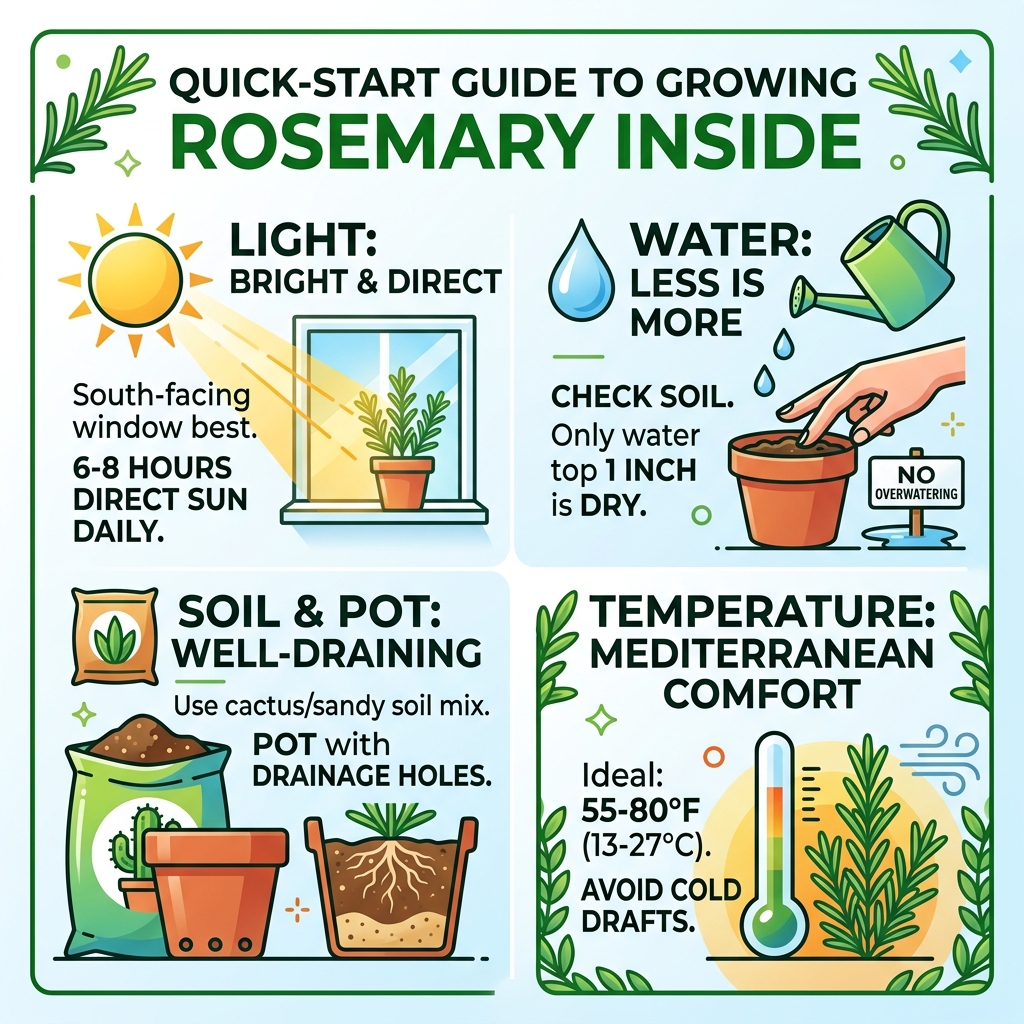
- Light: Place in a south-facing window with 6-8 hours of direct sun daily
- Pot: Use a terracotta pot (at least 8-12 inches deep) with drainage holes
- Soil: Use a sandy, well-draining mix like cactus potting soil
- Water: Only when the top inch of soil feels dry
- Temperature: Keep between 55-80°F and away from cold drafts
- Fertilize: Monthly during spring and summer with a balanced liquid fertilizer
Rosemary is a Mediterranean herb. It loves sun, warmth, and dry roots. Indoors, it stays fresh and harvestable year-round — no more buying wilted sprigs from the store.
But here’s the thing most people don’t know: rosemary is one of the trickier herbs to keep alive inside. It doesn’t struggle from neglect as much as it does from too much care — especially overwatering. Many home gardeners have lost a healthy-looking plant without understanding why.
The good news? Once you understand what rosemary actually needs, it thrives indoors with very little fuss.
Can You Successfully Grow Rosemary Inside?
We often get asked if a woody Mediterranean shrub can really survive in a kitchen or living room. The answer is a resounding yes! While rosemary is a perennial nature-lover that can grow up to 6 feet tall in the wild, it adapts beautifully to container life. When you grow rosemary at home, you aren’t just growing a garnish; you’re inviting an air-purifying companion into your space.
According to The Secret to Growing Rosemary Indoors, the key is mimicking its native environment. In the rocky coastal regions of the Mediterranean, rosemary deals with salty air, intense sun, and soil that drains faster than a sieve. Indoors, this translates to a plant that provides a year-round harvest of aromatic foliage without the threat of a killing frost.
There are even specific varieties that make the transition easier. If you are tight on space, look for trailing varieties like ‘Blue Rain’ or ‘Huntington Carpet.’ These stay a bit more compact and look stunning spilling over the edge of a decorative pot. Whether you want a stately upright shrub or a cascading green waterfall, there is a rosemary for every windowsill.
Essential Requirements to Grow Rosemary Inside
To successfully grow rosemary inside, we have to think like a plant. Imagine a sunny hillside in Greece. It’s breezy, the air isn’t too “stuffy,” and the ground is never soggy. This is the “gold standard” for rosemary care.
Indoor environments can sometimes be the opposite: stagnant air, low light, and heavy potting soil. By focusing on air circulation, temperature control, and the right “home” (the pot), you can bypass the most common pitfalls. As noted in How to Grow and Care for Rosemary Indoors, rosemary is an “upside-down” plant—it actually likes to absorb some of its moisture through its leaves from the air, but it hates having “wet feet.” Exploring indoor herb garden ideas can help you find the perfect microclimate in your home to meet these needs.
Light Requirements for Indoor Rosemary
Light is the fuel that keeps rosemary’s oils fragrant and its needles green. To grow rosemary inside successfully, you need to provide at least 6 to 8 hours of direct sunlight daily.
A south-facing window is usually your best bet in the Northern Hemisphere. If your kitchen windowsill herb garden doesn’t get enough natural rays—especially during the gloomy winter months—don’t panic. Supplemental lighting is a game-changer.
Indoor rosemary often needs about 14 hours per day under artificial full-spectrum LED grow lights to maintain its vigor. We recommend rotating your pots a quarter-turn every week. This ensures that every side of the plant gets its fair share of “sun,” preventing that “leaning” look where the plant stretches desperately toward the glass.
Choosing the Right Pot and Soil
If there is one thing we want you to remember, it’s this: Terracotta is rosemary’s best friend.
Why? Terracotta is porous. It allows moisture to evaporate through the walls of the pot, which helps prevent the soil from staying too damp. When choosing your container, ensure it has ample drainage holes. A pot that is 8 to 12 inches deep is a great starting point, as rosemary can grow up to 48 inches tall indoors if it isn’t root-pruned.
For soil, skip the heavy, moisture-retaining “all-purpose” mixes. Rosemary thrives in sandy, well-draining soil with a pH between 6.0 and 7.0. A cactus or succulent potting mix is often the best herb for beginners because it already contains the perlite or sand needed for rapid drainage.
Daily Care: Watering, Humidity, and Feeding
Once your rosemary is settled in its sunny spot, the daily “maintenance” is actually quite light. In fact, most people who fail at growing rosemary inside do so because they are too attentive with the watering can.
Using organic herb gardening tips helps keep your plant healthy without harsh chemicals. It’s all about balance—keeping the plant hydrated enough to prevent the needles from shriveling, but dry enough to avoid the dreaded root rot.
How to Water Rosemary Grown Inside
The “finger test” is your most reliable tool. Stick your finger into the soil; if the top inch is dry, it’s time to water. When you do water, give it a deep soaking until water runs out of the drainage holes at the bottom. Then, and this is crucial, empty the saucer! Never let your rosemary sit in a pool of standing water.
While we often compare rosemary to growing basil indoors, their water needs are very different. Basil likes consistent moisture; rosemary prefers a “soak and dry” cycle. If you’re feeling fancy, you can mist the foliage every 10 days. This mimics the Mediterranean sea mist and helps the plant absorb moisture through its needles.
| Feature | Traditional Soil Watering | Hydroponic Nutrient Management |
|---|---|---|
| Frequency | When top 1″ of soil is dry | Constant circulation/Periodic refill |
| Nutrient Delivery | Slow-release or liquid fertilizer | Water-soluble minerals in solution |
| Risk Factor | High risk of root rot if overwatered | High risk of pump failure/clogging |
| Maintenance | Manual checking required | Change solution every 3 weeks |
Temperature and Humidity Needs
Rosemary is surprisingly hardy, but it prefers a “sweet spot” between 55°F and 80°F. During the winter, try to keep it away from the direct blast of a heater or a drafty doorway. Hot, dry air from vents can dry out the leaves faster than the roots can supply water.
To boost humidity without making the soil soggy, you can use a pebble tray. Simply fill a shallow tray with stones and water, then set your pot on top (ensuring the bottom of the pot isn’t touching the water). As the water evaporates, it creates a humid micro-climate around the leaves. This is one of the easiest ways to grow culinary herbs that might otherwise struggle in dry indoor air.
Propagation and Planting Methods
Starting rosemary from scratch is a lesson in patience. Did you know that rosemary seeds have a notoriously low germination rate of about 30%? They can take 15 to 25 days just to sprout and may not even look like a “plant” for several weeks.
If you are a beginner, we highly recommend starting with nursery transplants or stem cuttings. For those who want to try herbs for beginners, cuttings are much faster.
- Take a Cutting: Snip a 4-6 inch piece of new, green growth (avoid the woody stems).
- Strip Leaves: Remove the leaves from the bottom two inches.
- Rooting: You can dip the end in rooting hormone and place it in a well-draining mix, or simply pop it in a glass of water.
- Wait: In about 2-4 weeks, you should see roots appearing.
Troubleshooting Common Indoor Rosemary Problems
Even with the best care, you might run into a few “uninvited guests” or health issues. Because we specialize in protecting aromatic herb gardens from pests, we’ve seen it all.
- Powdery Mildew: This looks like a dusting of white flour on the leaves. It’s usually caused by poor air circulation and high humidity. To fix it, improve airflow with a small fan and ensure you aren’t crowding your plants.
- Root Rot: If the leaves turn yellow and the stems feel mushy, you’ve likely overwatered. You might need to repot in fresh, dry soil and trim away any black, slimy roots.
- Spider Mites and Aphids: These tiny pests love indoor plants. If you notice fine webbing or sticky residue, it’s time to act. Aphids on basil indoors are a common sight, but they can jump to your rosemary too! Use a gentle insecticidal soap or neem oil to keep them at bay.
For more persistent issues, checking our guides on growing-basil-indoors-2 can offer additional organic pest management strategies that apply to most indoor herbs.
Harvesting and Using Your Homegrown Rosemary
The best part of growing rosemary inside is the harvest! Rosemary is ready for its first light pruning once it reaches about 8-10 inches in height. It typically takes about 42 days to reach maturity from a seedling, and the flavor is best during the first 6-12 weeks of active growth.
When harvesting, always cut from the top. Use sharp shears to snip off the top 2-3 inches of a branch, but never take more than one-third of the plant at once. This “top-down” approach encourages the plant to branch out and become bushier rather than tall and leggy.
Fresh rosemary is incredible in roasted meats, but don’t stop there. You can dry the sprigs for later use, create infused oils, or even use them in herb-infused cocktails. If you enjoy growing basil indoors, you’ll find that rosemary makes a great companion to other Mediterranean favorites like sage and thyme. Check out the ultimate guide to the rosemary growing season for more tips on maximizing your yield.
Frequently Asked Questions about Growing Rosemary
Can I move my indoor rosemary plant outdoors seasonally?
Yes! In fact, your rosemary will love a “summer vacation” outside. However, you must “harden it off” gradually. Start by placing it in a shady spot outdoors for an hour or two, gradually increasing its exposure to sun and wind over 7 to 10 days. Bring it back inside before the first frost, or when temperatures consistently dip below 50°F. This transition is similar to how you might manage indoor vegetable gardens.
Why are the tips of my rosemary leaves turning brown?
Brown tips are usually a sign of stress. This could be due to “salt buildup” from tap water (try using filtered water), poor drainage leading to early root issues, or extremely low humidity. If the plant is “root bound” (roots circling the inside of the pot), it may struggle to take up enough water, leading to dried-out tips.
How big will rosemary grow when kept inside?
If left to its own devices in a large enough pot, rosemary can reach up to 48 inches tall. However, most indoor gardeners keep theirs much smaller through regular harvesting and “root pruning.” When you repot the plant, you can snip off about one-third of the outer roots to stunt its growth and keep it manageable for a windowsill.
Conclusion
At Ponto de Arte, we believe that everyone should have access to the fresh, soul-warming scent of rosemary, regardless of the size of their backyard. By following these steps to grow rosemary inside, you’re setting yourself up for culinary success and a greener home.
The secret is in the “less is more” approach to watering and the “more is more” approach to sunlight. If you run into any trouble with pests or need specialized protection for your aromatic herb garden, we are here to help.
Start your indoor herb garden today and enjoy the timeless beauty of homegrown rosemary!
