
Why Mosquitoes Love Your Shady Garden (And What to Plant Instead)
The best mosquito repelling plants for shade include catnip, lemon balm, mint, citronella grass, floss flower, bee balm, and allium. All of these tolerate low to partial light and actively deter mosquitoes through their natural scents and oils.
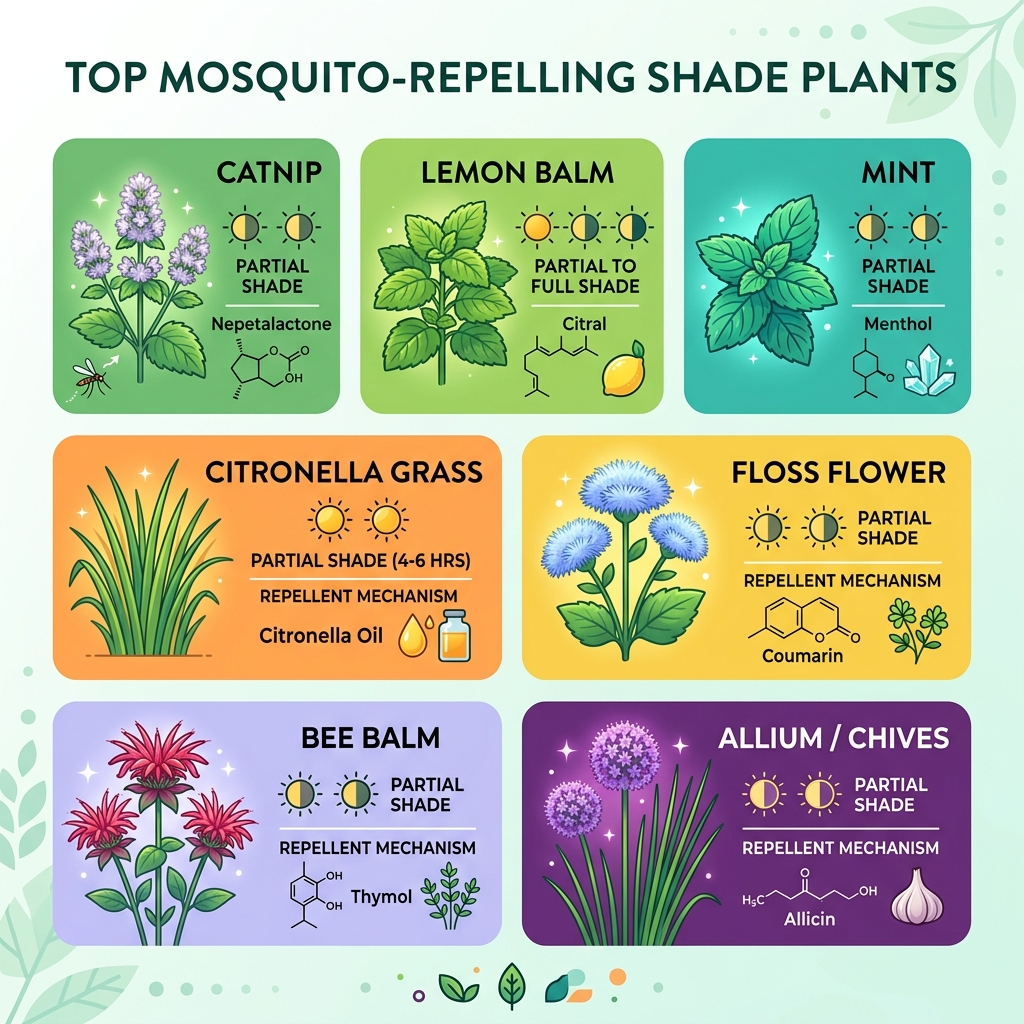
Quick answer — top shade-tolerant mosquito-repelling plants:
| Plant | Shade Tolerance | Key Repellent Compound |
|---|---|---|
| Catnip | Partial shade | Nepetalactone |
| Lemon Balm | Partial to full shade | Citral |
| Mint (Peppermint) | Partial shade | Menthol |
| Citronella Grass | Partial shade (4-6 hrs) | Citronella oil |
| Floss Flower | Partial shade | Coumarin |
| Bee Balm | Partial shade | Thymol |
| Allium / Chives | Partial shade | Allicin |
A warm summer evening in your garden sounds perfect — until the mosquitoes show up.
If your garden has shady spots, you’re dealing with a double problem. Mosquitoes are especially drawn to shaded areas because the low light, high humidity, and moist soil create ideal hiding conditions during the hottest parts of the day.
The good news? Several beautiful, fragrant plants actually thrive in those same shady conditions — and mosquitoes can’t stand them.
This guide walks you through the best shade-tolerant plants for keeping mosquitoes away, without harsh chemicals and without giving up your herb garden.
Why Shady Areas Attract Pests and How to Manage Them
We often think of mosquitoes as sun-loving summer pests, but they actually spend their “off-hours” hiding from the direct heat. Shady microclimates are essentially a mosquito’s version of a luxury spa. These areas remain consistently humid and moist, providing the perfect sanctuary when the sun is at its peak.
Low light levels also mean less evaporation, so the soil stays damp—a primary attractant for many garden pests. Furthermore, poor air circulation in dense, shaded corners allows carbon dioxide (the very thing that guides mosquitoes to us) to linger, making it easier for them to track their next meal.
To manage these areas, we recommend a two-pronged approach: habitat modification and strategic planting. By improving drainage and removing thick, low-growing groundcovers that trap moisture, you can make your shade garden much less hospitable to unwanted visitors. We also suggest thinning out overhanging branches to promote better air movement. When you combine these physical changes with natural pest control methods for organic gardening, you create a multi-layered defense system that keeps your outdoor space enjoyable.
Top Mosquito Repelling Plants for Shade
Finding the right mosquito repelling plants for shade requires balancing light needs with repellent potency. Not all “bug-repelling” plants are created equal—some need blazing sun to produce their oils, while others are perfectly happy in the dappled light of a woodland garden.
The Power of Catnip and Lemon Balm
If you want the “heavy hitters” of the shade world, look no further than Catnip (Nepeta cataria). Research from Iowa State University has shown that nepetalactone, the essential oil in catnip, is roughly ten times more effective than DEET at repelling mosquitoes. While it prefers some sun, it is surprisingly resilient in partial shade.
Lemon Balm (Melissa officinalis) is another superstar. It is incredibly shade-tolerant and contains high levels of citronellal. It grows vigorously (sometimes too vigorously!), making it a reliable choice for filling in those difficult, dim corners of the yard. For more tips on getting started, check out our guide on natural pest control for beginners.
Citronella Grass in Partial Shade
There is often confusion about Citronella Grass. While true Citronella Grass (Cymbopogon nardus) loves the sun, it can thrive in partial shade if it receives at least 4 to 6 hours of filtered light. It can reduce mosquito activity by up to 40% in its immediate vicinity. It adds a wonderful architectural element with its tall, arching blades, creating a tropical vibe even in cooler climates.
Fragrant Herbs as Mosquito Repelling Plants for Shade
At Ponto de Arte, we specialize in pest control for herb gardens, and we’ve found that many aromatic herbs are the ultimate “double agents”—they taste great in the kitchen and keep bugs away in the garden.
- Peppermint and Spearmint: These are the kings of the shade garden. Mints actually prefer a bit of relief from the afternoon sun. Peppermint, in particular, has a very strong scent that masks the odors mosquitoes use to find humans.
- Lemon Thyme: This low-growing herb is much more shade-tolerant than its cousin, English Thyme. It smells like a fresh lemon grove and is excellent for planting along shaded walkways where your feet might brush against it.
- Bee Balm (Monarda): Also known as Wild Bergamot, this plant produces thymol, a natural antiseptic and repellent. It handles partial shade well and rewards you with stunning, mop-top flowers.
Expert Tip: To get the most out of these herbs, you need to release their essential oils. Simply sitting in the garden isn’t always enough. We recommend occasionally bruising or crushing a few leaves as you sit nearby to “activate” the scent barrier.
Ornamental Mosquito Repelling Plants for Shade
You don’t have to sacrifice beauty for functionality. Several ornamental mosquito repelling plants for shade offer striking visual appeal while pulling double duty as pest deterrents.
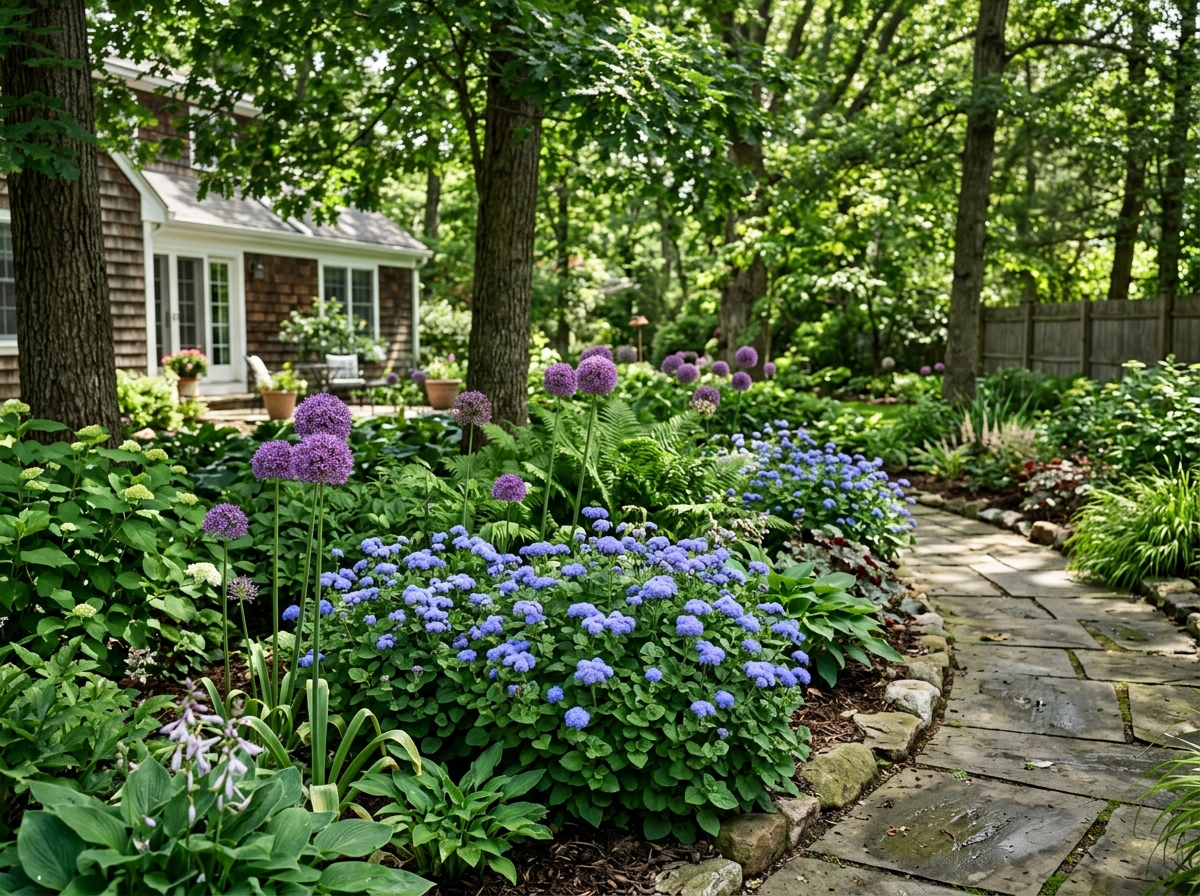
- Floss Flower (Ageratum): These charming, pom-pom-like blue flowers contain coumarin. Interestingly, coumarin is often used in commercial mosquito repellents. Ageratum is famous for its ability to repel adult mosquitoes and, in some studies, has been shown to kill 100% of mosquito larvae in nearby water.
- Allium (Chives and Garlic): The entire Allium family is unappealing to mosquitoes. Ornamental Alliums produce giant, globe-like purple flowers that look stunning in a shade border. Garlic, while often grown in sun, can handle partial shade in warmer climates.
- American Beautyberry: This native shrub is a hidden gem. It produces bright purple berries in the fall, but its leaves contain compounds like callicarpenal, which have been scientifically proven to repel mosquitoes and ticks.
- Lantana Camara: Known for its citrusy, pungent aroma, Lantana is often avoided by pests. While it loves sun, many varieties perform well in “bright shade” or morning sun locations.
How Shade-Loving Repellent Plants Work
Understanding the “why” behind these plants helps us position them better. Mosquitoes don’t just “dislike” these plants; the plants actually interfere with the mosquito’s biological hardware.
- Masking Scents: Mosquitoes find us by detecting the carbon dioxide we exhale and the lactic acid on our skin. Plants like Lemon Balm and Citronella release strong citrus scents that “cloud” the mosquito’s sensors, making it much harder for them to lock onto a target.
- Olfactory Interference: The nepetalactone in catnip and the menthol in mint trigger a chemical reaction in the mosquito’s sensory organs. It’s not just a bad smell to them; it’s physically irritating.
- Insecticidal Compounds: Plants like the Floss Flower produce coumarin, which is toxic to mosquitoes. This is a more aggressive form of defense that can actually reduce the local population over time.
Scientific research on Catnip vs DEET continues to highlight just how powerful these natural essential oils can be when concentrated. In the garden, having a high density of these plants creates a “fragrance zone” that mosquitoes would simply rather avoid.
Planting and Maintenance for Maximum Deterrence
To ensure your mosquito repelling plants for shade actually do their job, you need to keep them healthy and potent.
Container Gardening
Many of the best repellents, like Mint and Lemon Balm, are members of the mint family and can be incredibly invasive. We always recommend growing these in containers. This not only prevents them from taking over your entire yard but also allows you to move the “protection” exactly where you need it—like right next to your patio chair or on a shaded balcony.
Strategic Positioning
Position your plants in high-traffic areas. Place pots of basil or mint near doorways, seating areas, and walkways. Every time you pass by and brush against them, they release a fresh burst of repellent oils.
Care and Overwintering
- Soil Drainage: Most of these plants hate “wet feet.” Even in the shade, ensure your soil is well-draining. If you’re planting in pots, mix in some sand or perlite.
- Pruning: Regular pruning encourages the plant to produce more leaves and, consequently, more essential oils. Don’t be afraid to harvest your herbs!
- USDA Zones: Citronella and Lantana are typically perennials in zones 9-11 but must be treated as annuals or brought indoors in cooler climates. Catnip and Mint are much hardier and will usually return year after year in zones 3-9.
For those looking to create their own solutions, we have a guide on diy-organic-pesticides-for-home-gardeners that complements these planting strategies perfectly.
Safety Concerns and Pet Toxicity
While we love natural solutions, “natural” doesn’t always mean “safe for everyone.” It is vital to consider your furry friends and little ones when choosing your plants.
- Citronella: While great for repelling bugs, Citronella (the scented geranium variety) is toxic to dogs and cats. If ingested, it can cause digestive upset and skin irritation.
- Floss Flower (Ageratum): This plant is toxic if eaten. Keep it out of reach of pets and curious toddlers.
- Pennyroyal: Often cited as a powerful mosquito repellent, Pennyroyal is highly toxic to both humans and pets if ingested and can even cause issues through skin contact. We generally recommend avoiding it if you have a busy household.
- Mint: Generally safe, but excessive ingestion can cause upset stomachs in some pets.
Always check a list of pet-friendly mosquito repellants before finalizing your garden layout.
Supporting Strategies to Eliminate Mosquitoes
Plants are a fantastic tool, but they are most effective when part of a larger strategy. If you have a bucket of stagnant water five feet away, no amount of catnip will save you.
- Remove Standing Water: This is the golden rule. Mosquitoes can lay hundreds of eggs in a tiny spoonful of water. Check gutters, birdbaths (empty them every two days), and the saucers under your flower pots.
- Biological Controls: If you have a pond or a permanent water feature in the shade, use “Mosquito Dunks” containing Bti (Bacillus thuringiensis israelensis). This is a natural bacteria that kills mosquito larvae but is safe for fish, birds, and pets.
- Attract Natural Predators: Build a bat house! A single bat can eat thousands of mosquitoes in one night. Bird feeders can also attract species that snack on flying insects.
- Companion Planting: Use the “buddy system.” Plant your mosquito repellents alongside your vegetables to protect your harvest and yourself at the same time.
For more in-depth advice on keeping your garden balanced, see our article on natural-pest-control-for-beginners-2/.
Frequently Asked Questions about Mosquito Repelling Plants
Which shade plant is most effective against mosquitoes?
Based on scientific studies, Catnip is arguably the most potent due to its high concentration of nepetalactone. However, for sheer ease of growth and shade tolerance, Lemon Balm and Peppermint are excellent runners-up.
Can I grow mosquito-repelling plants in containers on a balcony?
Absolutely! In fact, we recommend it for invasive species like mint. Ensure your balcony gets at least a few hours of filtered light, and use pots that are at least 12 inches deep to allow for healthy root growth.
Do these plants work just by sitting in the garden?
They provide a mild deterrent just by growing, but they are significantly more effective if the leaves are occasionally ruffled or crushed. The scent needs to be in the air to mask your “human smell” effectively.
Conclusion
Creating a mosquito-free sanctuary in the shade is entirely possible with the right selection of mosquito repelling plants for shade. By combining the beauty of Floss Flowers, the potency of Catnip, and the culinary utility of Peppermint, you can reclaim your garden from these buzzing nuisances.
At Ponto de Arte, we are dedicated to helping you maintain a thriving, pest-free environment, with a specialized focus on protecting your precious aromatic herb gardens. Whether you are dealing with a small shaded balcony or a sprawling woodland yard, natural solutions are always within reach.
Start your pest-free urban garden today! and enjoy the peace and quiet of a bite-free summer.
