
Why Sage Plants Still Need Pest Protection (Despite Their Natural Defenses)
Sage plant pest remedies are something every herb gardener should know — even though sage is one of the most pest-resistant plants you can grow.
Here’s a quick overview of the most effective natural treatments:
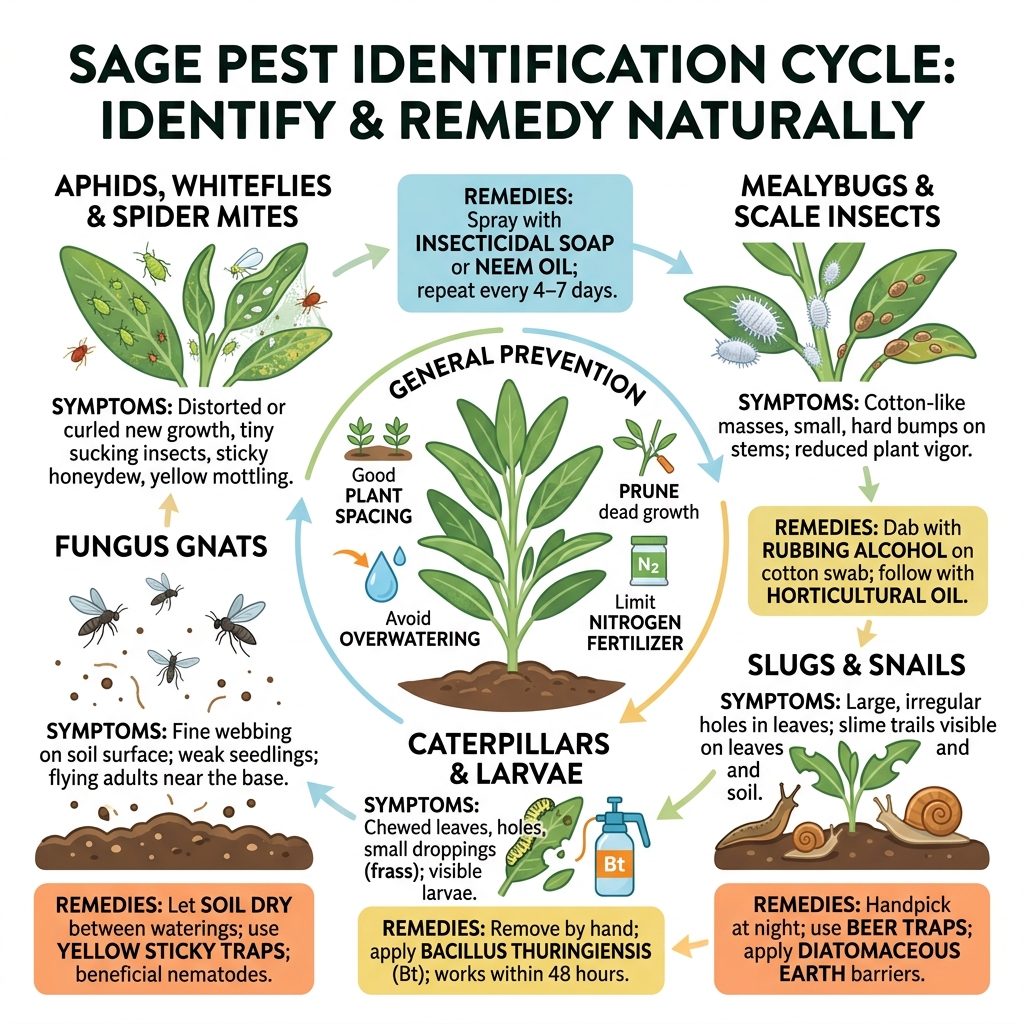
- Aphids, whiteflies, spider mites: Spray with insecticidal soap or neem oil; repeat every 4–7 days
- Mealybugs and scale insects: Dab with rubbing alcohol on a cotton swab; follow up with horticultural oil
- Slugs and snails: Handpick at night; use beer traps or diatomaceous earth barriers
- Caterpillars: Remove by hand or apply Bacillus thuringiensis (Bt); works within 48 hours
- Fungus gnats: Let soil dry between waterings; use yellow sticky traps and beneficial nematodes
- General prevention: Space plants well, prune dead growth, avoid overwatering and over-fertilizing
Sage (Salvia officinalis) has a secret weapon: its strong aromatic oils — including thujone and camphor — naturally confuse and repel many insects. That’s why most bugs give it a wide berth.
But most isn’t all.
Aphids, spider mites, slugs, and caterpillars can still move in — especially when a plant is stressed by poor watering, compacted soil, or too much nitrogen fertilizer. And once pests settle in, they can damage leaves, strip aromas, and spread to neighboring plants fast.
The good news? You don’t need harsh chemicals to fight back. Most sage pest problems respond well to simple, organic remedies you can make or find at home.
This guide walks you through exactly what to look for, what works, and how to stop infestations before they start — all without risking the flavor or safety of your edible sage.
Identifying Common Pests by Symptoms and Damage
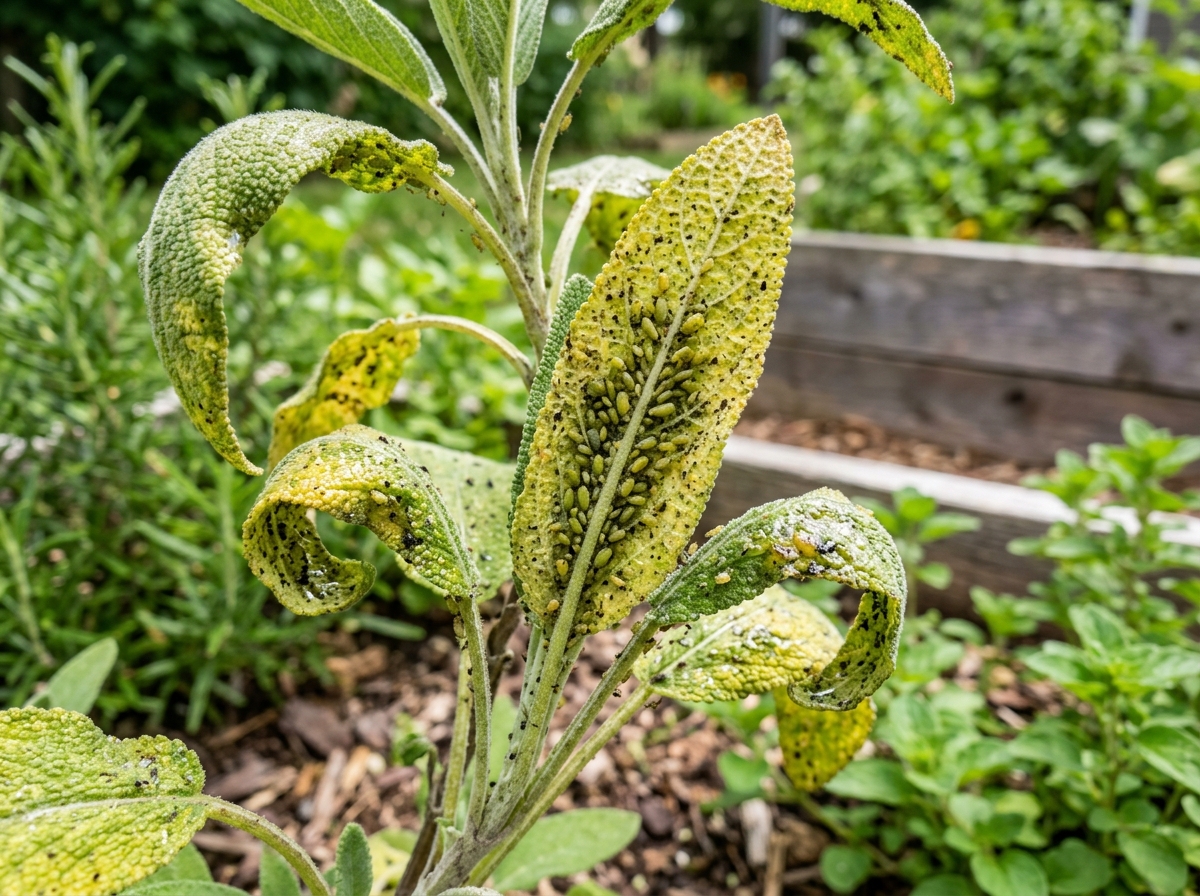
Before we can apply the right sage plant pest remedies, we have to play detective. Sage leaves are textured and slightly fuzzy, which can make spotting tiny invaders a bit tricky. However, the plant usually tells us exactly what’s wrong through its physical appearance.
If you notice your sage looking a bit “off,” start by checking the undersides of the leaves. This is the favorite hiding spot for most sap-sucking insects. You might see honeydew, a sticky residue excreted by pests like aphids and whiteflies. This sticky mess isn’t just gross; it often leads to black sooty mold, which blocks sunlight and weakens the plant further.
Other signs include silvery streaks (often a hallmark of thrips), stippling (tiny yellow or white dots caused by spider mites), or yellowing foliage. If you see large, jagged holes or find a trail of silvery slime on the soil or leaves, you’re likely dealing with slugs or snails. For those of us growing herbs indoors or in greenhouses, Identifying The Little Black Bugs Eating Your Herbs is the first step toward a healthy harvest. According to the experts at Sage Pests, early identification is the difference between a quick fix and a lost crop.
Distinguishing Between Sap-Suckers and Soil Pests
We find it helpful to group sage pests into two categories: the “sap-suckers” and the “soil-dwellers.”
Sap-Suckers:
- Aphids: Tiny, pear-shaped bugs (green, black, or yellow) that cluster on new growth.
- Mealybugs: These look like tiny bits of white cotton tucked into the leaf axils (where the leaf meets the stem).
- Scale Insects: Small, oval bumps that look like part of the plant but can be scraped off.
- Thrips: Slender, microscopic insects that leave those tell-tale silvery scars.
Soil Pests:
- Fungus Gnats: Small dark flies that hover near the soil; their larvae munch on tender roots.
- Root-Knot Nematodes: Microscopic worms that cause galls (swelling) on the roots, leading to a stunted, wilting plant.
- Weevils: These beetles often feed at night, leaving notches in the leaf edges, while their larvae damage the root system.
Understanding these differences is vital for Pest Control For Herb Gardens because a leaf spray won’t help if the problem is hiding in the dirt!
Recognizing Damage Patterns for Sage Plant Pest Remedies
Damage patterns are like a fingerprint. Leaf curling and distorted new growth usually point toward aphids or whiteflies. If you see fine, delicate webbing between stems, you can bet your bottom dollar on spider mites.
For those seeing damage but no bugs during the day, you might have nocturnal feeders. Slugs and certain caterpillars wait until the sun goes down to start their buffet. If you’re struggling with mysterious silver spots, check out Why Common Sage Has Thrips: Solutions & Prevention for a deeper dive into these specific symptoms.
Effective Sage Plant Pest Remedies and Organic Treatments
Once we’ve identified the culprit, it’s time to act. We always recommend starting with the least invasive method first.
| Treatment | Best For | How it Works |
|---|---|---|
| Neem Oil | Aphids, Mites, Whiteflies | Disrupts growth and feeding cycles |
| Insecticidal Soap | Soft-bodied insects | Dissolves the insect’s outer membrane |
| Horticultural Oil | Scale, Mealybugs | Smothers the insects and eggs |
| Rubbing Alcohol | Scale, Mealybugs | Dehydrates and kills on contact |
Using DIY Organic Pesticides For Home Gardeners ensures that your sage remains safe for your Sunday roast. For a comprehensive strategy, follow Stop The Sap Suckers A Guide To Aphid Free Herbs to keep your aromatic plants clean and healthy.
Homemade Sprays and Natural Soap Solutions
You don’t always need to run to the store for sage plant pest remedies. A very effective homemade spray can be mixed right in your kitchen.
The “Sage-Saver” Spray Recipe:
- Mix 1 tablespoon of baking soda.
- Add 1/2 teaspoon of mild dish detergent (avoid those with degreasers or bleach).
- Add 2.5 tablespoons of olive oil.
- Stir into 1 gallon of water.
Shake well and spray your sage weekly. The oil and soap help the mixture stick to the pests, while the baking soda acts as a mild fungicide. Pro tip: Always test a small leaf first to check for leaf burn, and avoid spraying in the heat of the midday sun. For more on these basics, see Natural Pest Control For Beginners.
Biological Controls and Beneficial Insects
Nature has its own pest control department. By inviting “good bugs” into your garden, you create a self-regulating ecosystem.
- Ladybugs and Lacewings: These are aphid-eating machines.
- Predatory Mites: These tiny heroes hunt down spider mites.
- Parasitic Wasps: Don’t worry, they don’t sting humans! They lay eggs inside pests like caterpillars.
- Bacillus thuringiensis (Bt): This is a naturally occurring bacterium. Caterpillars treated with Bt feed on the substance and die, usually within 48 hours.
Integrating these helpers is part of a smart garden plan. Check out the 10 Best Herbs For Pest Control To Save Your Garden to see which plants can help attract these beneficial allies.
Physical Removal and Trapping Strategies
Sometimes, the best sage plant pest remedy is simply getting your hands dirty. Physical removal is immediate and 100% organic.
For larger pests like caterpillars, handpicking is incredibly effective. Simply drop them into a bucket of soapy water. If you’re dealing with slugs, a beer trap (a shallow container buried at soil level and filled with beer) will attract and drown them. Slugs also love grapefruit halves; place them upside down near your sage at night, and in the morning, you’ll find the slugs huddled inside, ready to be relocated (or disposed of).
Barriers like copper tape (which gives slugs a tiny electric shock) or diatomaceous earth (DE) are great deterrents. DE, which is made of fossilized algae, works like tiny shards of glass to soft-bodied insects but is safe for us. It must stay dry to be effective. For more hands-on tips, read Natural Pest Control Methods For Organic Gardening and the Most Common Sage Plant Pests: Identification and Treatment Guide | Live to Plant.
Managing Slugs, Snails, and Caterpillars
Slugs and snails thrive in damp, debris-heavy environments. To keep them away from your sage, use abrasive barriers like crushed eggshells or coffee grounds around the base of the plant. These rough textures are uncomfortable for “slimy” pests to cross.
Nocturnal inspections with a flashlight are the best way to catch these guys in the act. If you see a caterpillar, look for “frass” (tiny black droppings) on the leaves — it’s a sure sign they are nearby. For a deeper look at these chewers, see What to Do About Pests that Can Harm Your Sage Plants – Food Gardening Network.
Trapping Flying Pests and Soil Dwellers
For whiteflies and fungus gnats, yellow sticky traps are your best friend. These pests are naturally attracted to the bright color and get stuck on the adhesive.
If the problem is in the soil, like gnat larvae or weevils, consider beneficial nematodes. These are microscopic worms you mix with water and pour onto the soil; they hunt down larvae without harming your plants. In extreme cases of soil pests, soil solarization (covering the soil with clear plastic in the summer to “cook” the pests) might be necessary. The Ultimate Guide to Managing Pests on Sage – Greg offers excellent advice on managing these hidden threats.
Cultural Practices to Prevent Infestations
A healthy plant is its own best defense. Most sage plant pest remedies are actually just good gardening habits.
Sage loves full sun and well-drained soil. If the soil stays too wet, you’re inviting fungus gnats and root rot. If you over-fertilize with nitrogen, you’ll get a flush of soft, succulent growth that aphids find delicious. Proper spacing ensures good air circulation, which prevents the humid microclimates that spider mites and whiteflies love. Following Organic Care Tips For Healthy Plants will keep your sage’s natural immune system strong.
Integrated Pest Management (IPM) for Sage
IPM is a fancy way of saying “don’t panic and spray everything.” It’s a step-by-step approach:
- Monitoring: Check your plants weekly.
- Thresholds: Decide how many bugs are “too many” (a couple of aphids can be squished by hand; a swarm needs a spray).
- Cultural Control: Fix the environment (watering, spacing).
- Biological Intervention: Bring in the ladybugs or Bt.
- Chemical Last Resort: Use organic soaps or oils only when other steps fail.
By following Organic Herb Gardening Tips, you can implement IPM effortlessly. For more official guidance, the Managing Pests in Gardens: Trees and Shrubs: Salvia—UC IPM resource is a goldmine of information.
Preventive Sage Plant Pest Remedies Through Hygiene
Garden “housekeeping” goes a long way.
- Debris Removal: Clear away fallen leaves and old mulch where slugs and earwigs hide.
- Weed Control: Weeds can act as “bridge” plants that bring pests into your herb bed.
- Tool Sterilization: Always clean your pruners with alcohol between plants to prevent spreading diseases or microscopic eggs.
- Companion Planting: Plant marigolds or rosemary nearby. Marigolds, in particular, are famous for deterring nematodes and other garden pests.
For more hygiene tips, check out Organic Care Tips For Healthy Plants.
Frequently Asked Questions about Sage Plant Pest Remedies
How does sage’s natural pest resistance work?
Sage produces powerful essential oils like thujone and camphor. These chemicals give sage its distinct scent, which is pleasant to us but acts as a natural repellent to many insects. Additionally, the fine hairs (trichomes) on the leaves make it difficult for some small insects to move and feed. Interestingly, while it repels many “bad” bugs, sage is a pollinator attraction, bringing in bees and butterflies that help the whole garden thrive.
Are chemical treatments safe for edible sage?
We generally advise against synthetic chemical pesticides for any herb you plan to eat. These chemicals can be systemic, meaning the plant absorbs them into its tissues, and they may have long harvest intervals (the time you must wait before it’s safe to eat). Stick to non-toxic alternatives like neem oil or insecticidal soap, which can often be washed off and used right up to the day of harvest. For more on safe usage, consult Sage | Diseases and Pests, Description, Uses, Propagation.
How often should I inspect my sage for pests?
We recommend weekly checks at a minimum. During the peak of summer or if you’ve had past infestations, a quick daily walk-through is even better. Focus on the leaf undersides and the base of the plant. Early detection is the most powerful tool in your gardening kit; it’s much easier to wash off ten aphids than to save a plant covered in a thousand.
Conclusion
At Ponto de Arte, we believe that your herb garden should be a source of joy and flavor, not stress. By using these natural sage plant pest remedies, you can protect your aromatic plants while keeping them safe for your family to eat. Whether you’re dealing with a few aphids or a stubborn slug problem, specialized pest solutions and a little bit of preventive care will keep your sage thriving for years to come. For more tips on growing your favorite herbs, explore our Category: Spices section. Happy gardening!
