
Why Beetle Protection Matters in Your Herb Garden
Herb garden beetle protection is best achieved by combining aromatic companion plants, physical barriers, and simple organic sprays — without needing harsh chemicals.
Here are the most effective methods at a glance:
- Plant repellent herbs like chives, garlic, marigolds, rosemary, and sage near vulnerable crops
- Use physical barriers such as floating row covers, copper tape, or diatomaceous earth
- Apply organic sprays like neem oil, garlic spray, or insecticidal soap
- Attract beneficial insects — ladybugs, parasitic wasps, and hoverflies that prey on beetles
- Practice good garden hygiene — remove debris, prune regularly, and inspect plants weekly
You’ve put real time into your herb garden. The smell of fresh rosemary, the sight of flowering chives, the satisfaction of snipping basil straight into your cooking. Then one morning you notice the leaves look wrong — chewed through, skeletonized, or stripped bare.
Beetles are often the culprit. Flea beetles, cucumber beetles, Japanese beetles, and even the metallic rosemary leaf beetle can move through an herb garden fast. And because you’re growing herbs you plan to eat, reaching for a bottle of chemical pesticide isn’t an appealing operation.
The good news? Nature already has answers. Many aromatic herbs naturally repel beetles through their scent compounds. And pairing the right plants together — a strategy called companion planting — can create a garden that largely defends itself.
This guide walks you through exactly how to do that.

Top 8 Herbs for Natural Herb Garden Beetle Protection
When we talk about herb garden beetle protection, we aren’t just talking about a fence; we’re talking about a biological shield. Some plants are so offensive to beetles that just having them in the vicinity can decrease infestation rates significantly. These “bodyguard” herbs use volatile organic compounds—essentially their scent—to confuse or repel pests.
If you are looking for a comprehensive list, check out our guide on the 10 best herbs for pest control to save your garden to see how these fit into a larger garden plan. Additionally, research from Earth’s Ally confirms that aromatic herbs like mint and sage are powerhouses for keeping bugs at bay.
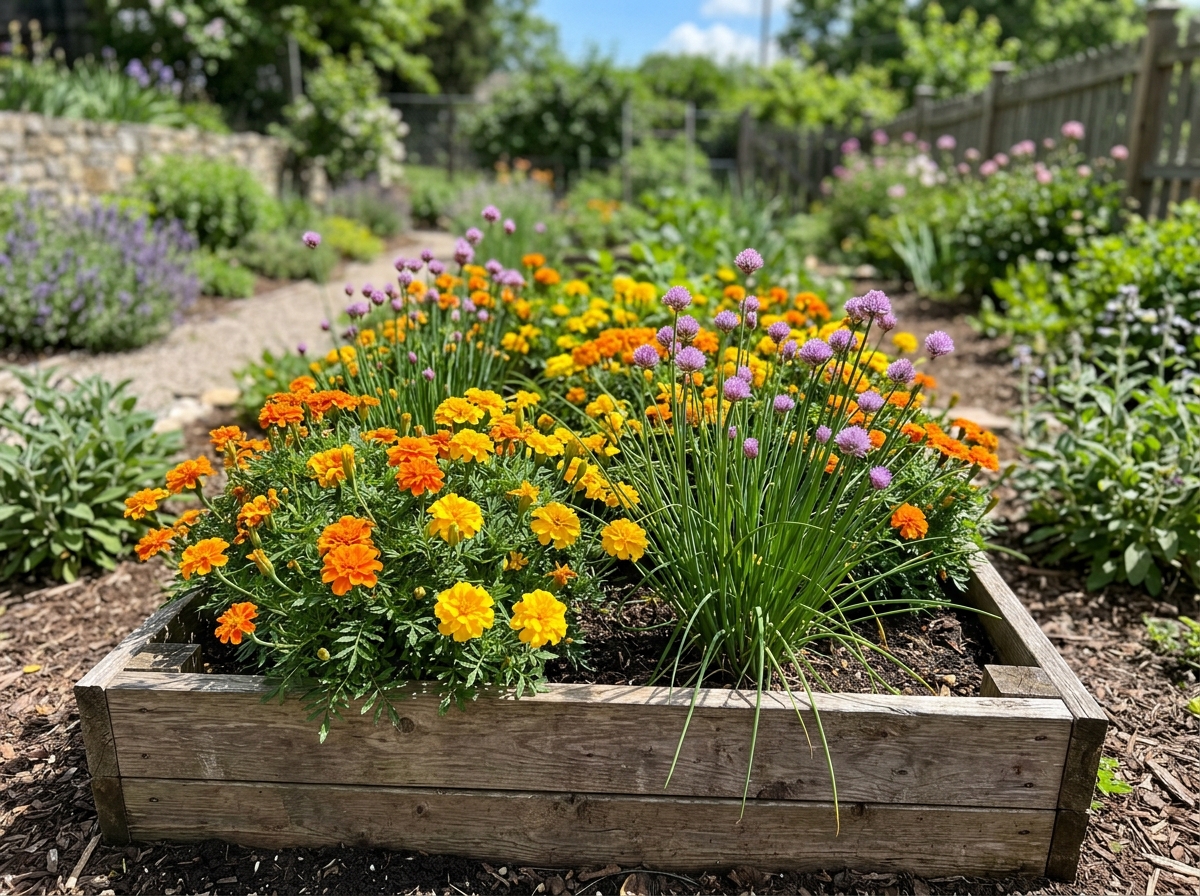
Using Chives for Herb Garden Beetle Protection
Chives are often called the “number one herb” for any garden. As members of the onion family (Allium), they emit a sulfurous scent that many beetles find revolting. They are particularly effective at masking the scent of “host” plants, making it harder for Japanese beetles and aphids to find their target.
Chive Companion Plants:
- Carrots: Repels carrot flies.
- Tomatoes: Deters aphids and improves health.
- Roses: Classic pairing to keep Japanese beetles away.
- Brassicas: Helps hide the scent of kale and broccoli from flea beetles.
The Power of Marigolds and Pyrethrum
While technically a flower often grown in herb gardens, marigolds are essential for herb garden beetle protection. They produce a compound called pyrethrum, which is a natural insecticide. Marigolds are famous for repelling Mexican bean beetles and nematodes.
The best part? While they repel the “bad guys,” they actually attract “good guys” like ladybugs and hoverflies. These beneficial insects act as a secondary defense, eating any small larvae that the scent didn’t scare off.
Sage, Rosemary, and Oregano: The Aromatic Heavyweights
These three perennial herbs are the backbone of a pest-resistant kitchen garden.
- Sage: Contains cineole and camphor, which disrupt the sensory receptors of many insects. It is a legendary protector of cabbage and carrots.
- Rosemary: Its needle-like leaves and strong oils repel carrot flies and bean beetles. We recommend using prostrate (trailing) varieties on the edges of beds to save space.
- Oregano: This herb acts as a living mulch. Its thick, pungent growth repels aphids and cabbage moths. Just be sure to prune it regularly so it doesn’t take over!
Strategic Companion Planting for Beetle Deterrence
In our experience at Pontodearte, the layout of your garden is just as important as the plants you choose. Simply putting one rosemary plant in a corner won’t save a 20-foot row of beans. You need to think about interplanting and borders.
For those just starting out, we have a detailed resource on natural pest control for beginners that covers the basics of ecosystem balance. As Treehugger points out, the goal is to create a “confused” environment for the pests.
Vulnerable Crops and Their Herb Bodyguards
Different beetles target different crops. If you know what you’re growing, you can pick the right “sentinel” herb to stand guard.
| Vulnerable Crop | Primary Beetle Threat | Herb Bodyguard |
|---|---|---|
| Cucumbers / Squash | Cucumber Beetles | Catnip, Radish, Marigold |
| Green Beans | Mexican Bean Beetles | Rosemary, Petunias, Garlic |
| Kale / Broccoli | Flea Beetles | Mint, Chives, Sage |
| Tomatoes | Japanese Beetles | Garlic, Basil, Chives |
| Potatoes | Colorado Potato Beetle | Tansy, Coriander, Sage |
Physical Barriers and Herb Garden Beetle Protection
Sometimes the beetles are just too persistent, or the infestation in your neighborhood is too high. In these cases, we combine herbs with physical barriers.
- Floating Row Covers: These are lightweight fabrics that let in light and water but keep beetles out. This is a top-tier strategy for netting your way to flea beetle freedom.
- Diatomaceous Earth (DE): This is a powder made from fossilized algae. To us, it looks like flour, but to a beetle, it’s like walking over broken glass. It dehydrates them on contact. Always use food-grade DE in your herb garden.
- Copper Tape: If you have a problem with snails or slugs alongside your beetles, a ring of copper tape around your pots or raised beds creates a tiny electric charge that deters them.
Organic Methods for Severe Beetle Infestations
If you walk outside and see a “beetle party” happening on your basil, don’t panic. There are several organic ways to intervene. According to GardenerBible, Japanese beetles can decimate a garden in days, so speed is key.
The “Handpicking” Technique
It sounds tedious, but for a home herb garden, handpicking is incredibly effective.
- Get a bucket of soapy water (dish soap works fine).
- Go out in the early morning when beetles are sluggish.
- Shake the branches or pick the beetles off and drop them in the water.
- Pro Tip: For Japanese beetles, do this daily. For the nocturnal Chinese rose beetle, you might need a headlamp and a nighttime stroll!
Managing the Rosemary Leaf Beetle
The Rosemary Leaf Beetle (Chrysolina americana) is a beautiful but destructive pest. It has metallic green and purple stripes and loves rosemary and lavender. While it rarely kills a mature plant, it can strip the foliage, leaving your herbs looking “leggy” and sad.
We recommend heavy pruning of infested areas. This removes the larvae and encourages the plant to put out fresh, healthy growth. Also, encourage local birds like robins and blackbirds; they find these beetles quite delicious.
DIY Organic Sprays for Herb Safety
When handpicking isn’t enough, you can mix up your own diy organic pesticides for home gardeners. These are safer for you to consume later than synthetic chemicals.
- Garlic Spray: Puree two cloves of garlic with a quart of water. Let it sit overnight, strain it, and spray your plants. The pungent smell lingers and keeps beetles from landing.
- Neem Oil: This is a classic in natural pest control methods for organic gardening. It disrupts the life cycle of the beetles so they can’t mature or reproduce.
- Essential Oil Spray: Ten drops of peppermint or eucalyptus oil in two cups of water can act as a quick repellent.
Maintaining a Pest-Resistant Kitchen Garden
Prevention is the best form of herb garden beetle protection. A stressed plant sends out “distress signals” (chemical cues) that actually attract beetles. A healthy plant is much harder for them to conquer.
Check out our tips on pest control for herb gardens to ensure your base conditions are right. If you see tiny spots and aren’t sure what they are, we can help with identifying the little black bugs eating your herbs.
Key Maintenance Tasks:
- Sunlight: Most herbs need at least 6 hours of direct sun. Shade-stressed herbs are beetle magnets.
- Drainage: Beetles often lay eggs in damp soil. Ensure your beds drain well.
- Air Circulation: Don’t overcrowd your plants. Good airflow prevents the fungal issues that weaken plants and invite pests.
- Water at the Base: Avoid getting the leaves wet in the evening, as this invites mold and certain types of beetles that thrive in humidity.
Avoiding Common Companion Planting Mistakes
- The Mint Takeover: Mint is great for repelling aphids and beetles, but it is invasive. Always plant it in a pot or a buried container to keep it from “eating” your garden.
- Over-Fertilizing: Too much nitrogen creates lush, soft growth that beetles love. Use organic compost instead of high-nitrogen synthetic fertilizers.
- Sanitation: At the end of the season, remove dead plant material. Many beetles, like the cucumber beetle, overwinter in garden debris.
Frequently Asked Questions about Herb Garden Beetle Protection
Which herbs are most effective against Japanese beetles?
Garlic, chives, and onions are the top choices because their strong scents mask the pheromones Japanese beetles use to call their friends to a “feast.” Tansy and Rue are also highly effective, though Rue should be handled with gloves as it can cause skin irritation for some people.
Can I safely consume herbs treated with organic sprays?
Yes, but timing is everything. If you use Neem oil or insecticidal soap, wait at least 24-48 hours before harvesting, and always wash your herbs thoroughly in cool water. If you use garlic or pepper sprays, the flavor might linger on the leaves—great for a spicy stir-fry, maybe not so great for a sweet mint tea!
How do I attract beneficial insects to control beetles?
Plant a variety of flowering herbs. Dill, fennel, and coriander (cilantro) produce umbrella-shaped flowers (umbels) that are the favorite landing pads for parasitic wasps and lacewings. These “good bugs” will lay eggs inside beetle larvae, controlling the population naturally.
Conclusion
At Pontodearte, we believe that your herb garden should be a place of peace and flavor, not a battlefield. By using herb garden beetle protection strategies like companion planting with chives and marigolds, maintaining healthy soil, and using gentle organic interventions, you can enjoy a bountiful harvest all season long.
A few holes in a leaf aren’t the end of the world—it’s a sign that your garden is a living, breathing ecosystem. But with these tools, you’ll ensure that you are the one eating the herbs, not the beetles.
For more advice on keeping your garden thriving, explore more organic gardening tips on our blog. Happy gardening!
