
Why Overwatering Kills Herbs Faster Than You Think
Overwatering signs in herbs are easy to miss — until your plant is already in serious trouble.
Here’s a quick summary of the most common warning signs to look for:
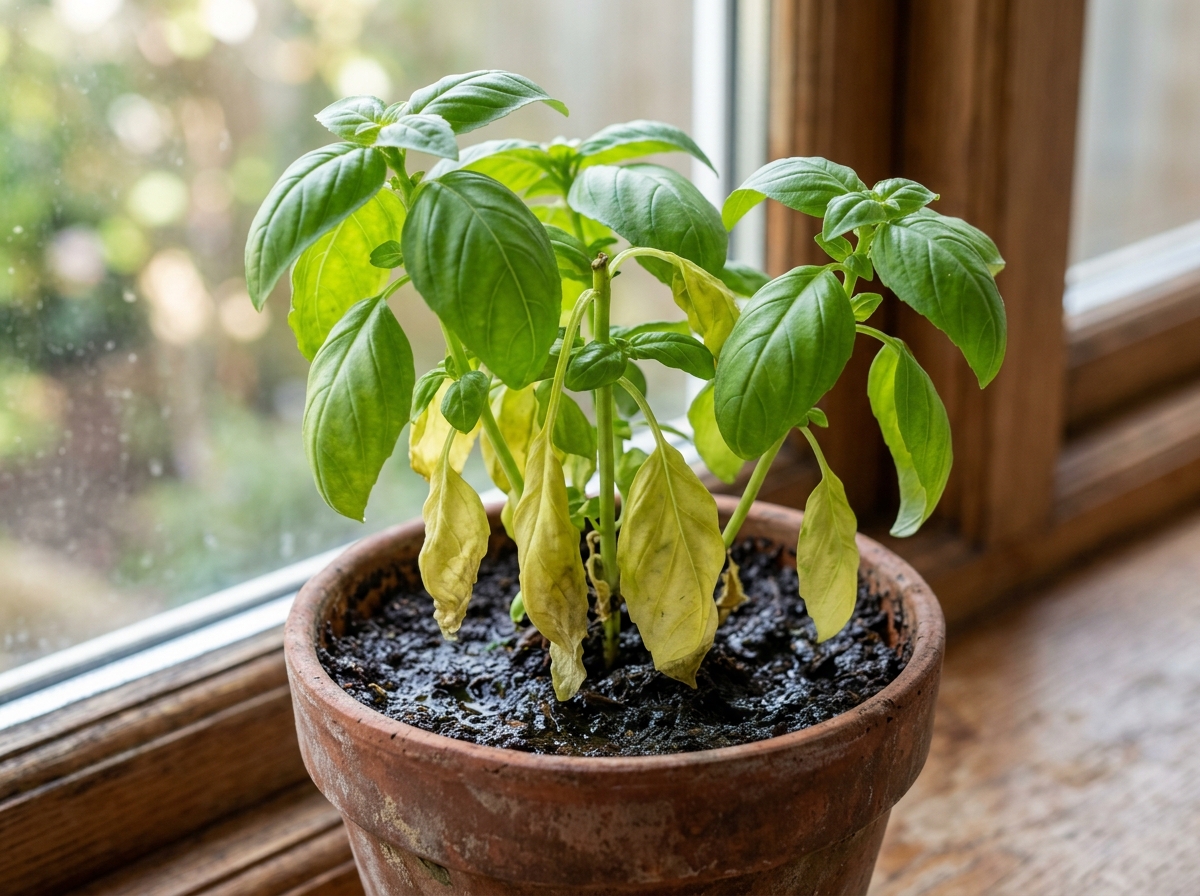
- Yellow leaves, especially starting at the base of the plant
- Wilting or drooping stems even though the soil feels wet
- Soft, mushy stems at the base (not firm and upright)
- Leaves dropping faster than normal
- Mold or algae growing on the soil surface
- Fungus gnats hovering around the pot
- A foul, musty smell coming from the soil
Overwatering is widely recognized as the leading cause of houseplant death. And herbs — many of which come from dry, sunny Mediterranean climates — are especially vulnerable.
Here’s the frustrating part: an overwatered herb can look just like an underwatered one. Both wilt. Both look sad. The difference is hidden in the soil and the roots — and by the time you see it on the leaves, damage may already be underway.
When roots sit in waterlogged soil for too long, they can’t absorb oxygen. Without oxygen, they begin to rot. And rotting roots can’t deliver water or nutrients to the plant — which means your herb slowly starves, even while drowning.
The good news? If you catch it early, most herbs can recover. Knowing what to look for makes all the difference.
Recognizing the Most Common Overwatering Signs in Herbs
When we talk about overwatering signs herbs exhibit, we have to look at the plant as a whole. It’s not just about one yellow leaf; it’s about a pattern of decline. Many of us at Ponto de Arte have seen herb lovers “kill with kindness,” thinking that a drooping leaf always means “more water.”
One of the most distinct 7 Signs of Overwatering Plants is yellowing foliage. Unlike the yellowing caused by a lack of nitrogen (which is often more uniform), overwatering usually causes the lower, older leaves to turn yellow first. As the roots struggle, they prioritize the newest growth, leaving the base of the plant looking sickly and pale.
Another strange symptom is edema. This happens when the plant absorbs more water than it can use or release through transpiration. The internal water pressure builds up until the plant’s cells literally burst, creating small blisters or wart-like lesions on the undersides of the leaves. If you see these “blisters,” it’s a definitive cry for help.
Furthermore, if your herb is dropping leaves rapidly—both old and new—while the soil is damp, you are likely overwatering. For more detailed guidance on maintaining the right balance, check out our Tips for watering herbs.
Below the Surface: Root Rot and Soil Odors
To truly understand what’s happening, we sometimes have to get our hands dirty. Healthy herb roots should be firm and usually white or light tan. When a plant is overwatered, the soil becomes an anaerobic (oxygen-free) environment. This allows harmful bacteria and fungi to thrive.
The result is root rot. You’ll notice the roots become mushy, dark brown or black, and they will literally fall apart when touched. This decay often produces a foul, musty smell—similar to rotting eggs or a swamp. If your pot smells “off,” it’s a major red flag.
According to the experts at Gardening Know How, this lack of oxygen is what ultimately “drowns” the plant. If you catch this early, you can sometimes treat the soil. We’ve found that The ultimate hydrogen peroxide root rot treatment can be a lifesaver, as the extra oxygen molecule in hydrogen peroxide helps kill anaerobic bacteria and re-oxygenate the root zone.
Checking Soil Moisture to Avoid Overwatering Signs in Herbs
Preventing overwatering signs herbs start with better monitoring. We always recommend the “knuckle rule” over a rigid calendar schedule. Simply stick your finger into the soil up to the second knuckle (about 2 inches deep). If the soil feels damp or sticky, walk away! If it’s bone dry, it’s time to water.
For those who want more precision, moisture meters are invaluable tools. They give you a reading of what’s happening at the bottom of the pot, where water often pools. Another trick we use is checking the “pot weight.” Pick up your potted herb right after a deep watering to feel how heavy it is. Then, check it again a few days later. You’ll eventually learn to tell if a plant needs water just by lifting it.
For more specialized advice on keeping your organic garden hydrated without overdoing it, see our Effective watering tips for organic plants.
Overwatering vs. Underwatering: How to Tell the Difference
This is the most common point of confusion for herb gardeners. Both overwatered and underwatered plants can wilt, but the texture of the plant tells the real story.
When a plant is underwatered, it is experiencing a physical lack of moisture. The leaves will feel dry, crisp, and brittle. The soil will often pull away from the edges of the pot, leaving a visible gap.
When a plant is overwatered, it may wilt because the roots are too damaged to transport water—a state known as “physiological drought.” However, the leaves will usually feel soft, limp, and mushy rather than crunchy.
| Feature | Overwatered Herbs | Underwatered Herbs |
|---|---|---|
| Leaf Texture | Soft, limp, mushy | Dry, crisp, brittle |
| Leaf Color | Yellowing (often starting at base) | Brown edges or tips |
| Soil Condition | Consistently wet, may have mold/algae | Bone dry, pulling away from pot edges |
| Root Health | Mushy, dark, smelly | Dry, shriveled, light-colored |
| Stems | May be squishy or unstable | Shriveled and thin |
As Rockledge Gardens points out, “reading the leaves” is an essential skill. If you see drooping but the soil is wet, do not add more water! You can find more strategies for managing your garden’s hydration in our guide on Efficient watering tips for your vegetable garden.
Identifying Overwatering Signs in Herbs by Variety
Not all herbs react the same way to excess moisture. Mediterranean herbs like thyme, rosemary, oregano, and sage are naturally adapted to rocky, dry soils and infrequent rainfall. They have “succulent-like” properties, meaning they store a bit of water in their leaves and stems. For these plants, soggy soil is a death sentence.
Thyme, for example, will show yellowing leaves at the very base of the woody stems when it’s getting too much water. Because it prefers to dry out between waterings, even a slightly heavy hand can lead to root rot. We dive deeper into these nuances in our Organic herb gardening tips.
According to Cultivated Earth, thyme is far more likely to die from a week of “wet feet” than a week of drought. If you are growing these varieties, error on the side of underwatering.
Specific Care for Potted Basil
Basil is the “diva” of the herb world. It loves sun and consistent moisture, but it hates being waterlogged. Overwatering signs herbs like basil show include a very specific yellowing of the bottom leaves. Because basil grows so fast, it requires a lot of oxygen at the root level to fuel that growth.
If your basil looks stunted or the stems feel squishy rather than firm and turgid, you likely have a drainage problem. Overwatered basil is also highly susceptible to downy mildew, which thrives in high-humidity, high-moisture environments.
For a deep dive into rescuing your favorite pesto-maker, refer to Seeds and Spades’ guide on overwatered basil. If you’re struggling with indoor setups, our article on Growing basil indoors offers great prevention tips.
How to Rescue and Prevent Waterlogged Herb Gardens
If you’ve realized your herbs are drowning, don’t panic! You can often save them if you act quickly.
- Stop Watering Immediately: This is the most obvious but hardest step for many. Let the soil dry out completely.
- Increase Airflow and Light: Move the pot to a breezier spot or a location with better light to help evaporate excess moisture.
- Inspect the Roots: Gently remove the plant from its pot. If you see black, mushy roots, use sterilized scissors to snip them away.
- Repot with Fresh Soil: Get rid of the old, soggy, bacteria-ridden soil. Clean the pot thoroughly with a mild bleach solution to kill pathogens, then repot using a high-quality, well-draining mix.
As suggested by Epic Gardening, the recovery process takes time. Don’t fertilize a recovering plant immediately, as its damaged roots can’t process the nutrients and might suffer from “fertilizer burn.” For more general wellness strategies, see our Organic care tips for healthy plants.
The Role of Pot Drainage and Soil Type
Prevention is always better than a cure. The two most important factors in preventing overwatering signs herbs are your choice of pot and your soil mix.
We highly recommend terracotta pots for most herbs. Terracotta is porous, meaning it “breathes” and allows moisture to escape through the walls of the pot, not just the drainage hole. Speaking of drainage holes—ensure they are never blocked.
Your soil should be light and airy. Standard potting soil is often too heavy and retains too much water for herbs. We suggest amending your mix with perlite, pumice, or coarse sand to improve aeration. You can find our favorite “recipes” for herb soil in our Organic soil for herbs guide and further Organic herb gardening tips 2.
Frequently Asked Questions about Herb Watering
Can overwatered potted herbs be saved?
Yes, but it depends on the extent of the root rot. If more than 50% of the root system is still white and firm, the plant has a high chance of recovery once repotted in fresh, dry soil. If the entire root system is mushy and the main stem has turned black (stem rot), it may be too late to save the parent plant, though you might be able to take a healthy cutting from the top to propagate a new one.
How often should I water common potted herbs?
There is no “one size fits all” answer, but a general rule is to water when the top inch of soil feels dry. Mediterranean herbs (thyme, rosemary) might need water every 5-7 days, while leafier herbs (basil, mint, parsley) might need it every 2-3 days. Always check the soil first!
What environmental factors contribute to overwatering indoors?
Low light is a major contributor; if a plant isn’t getting enough light, it can’t perform photosynthesis efficiently, which means it uses less water. High humidity and poor air circulation also slow down the rate at which water evaporates from the soil, leading to “hidden” overwatering.
Conclusion
At Ponto de Arte, we know that a healthy herb garden is a joy, providing fresh scents and flavors to your home. However, maintaining that health requires a delicate balance. By keeping a close eye on overwatering signs herbs display—like yellowing base leaves, mushy stems, and that tell-tale musty smell—you can intervene before it’s too late.
Overwatering doesn’t just hurt the roots; it also invites unwanted guests. Damp soil is the primary breeding ground for fungus gnats. These tiny pests are more than just a nuisance; their larvae can feed on the already weakened roots of your herbs. Our specialized focus at Ponto de Arte is protecting your aromatic herb gardens from these very pests, ensuring your garden remains a sanctuary, not a swamp.
For more advice on keeping your garden thriving naturally, explore our More organic gardening tips. Happy (and careful) watering!
