
Why White Powder on Your Rosemary Is a Problem You Can Fix Naturally
Rosemary powdery mildew baking soda treatment is one of the most effective natural solutions available — and it works fast. Here’s the quick answer:
Quick Fix: Baking Soda Spray for Rosemary Powdery Mildew
- Mix 3 tablespoons baking soda, 1 tablespoon vegetable oil, and a few drops of dish soap in 1 gallon of warm water
- Shake well and spray the entire plant — tops and undersides of leaves, plus the soil surface
- Apply once a week in the morning, repeating until the mildew clears
- Improve airflow and water at the base only to prevent it coming back
You love your rosemary. The smell, the flavor, the look of it growing in your garden or on your windowsill. Then one day you notice it: a dusty white coating creeping across the leaves.
That’s powdery mildew — and it’s the most common fungal disease to hit rosemary, especially when plants are moved indoors for winter.
The good news? It won’t kill your plant if you act quickly. And you almost certainly already have everything you need to treat it sitting in your kitchen cupboard.
This guide walks you through exactly how to wipe it out — naturally, safely, and without harsh chemicals — and how to keep it from coming back.

Understanding Rosemary Powdery Mildew and Its Causes
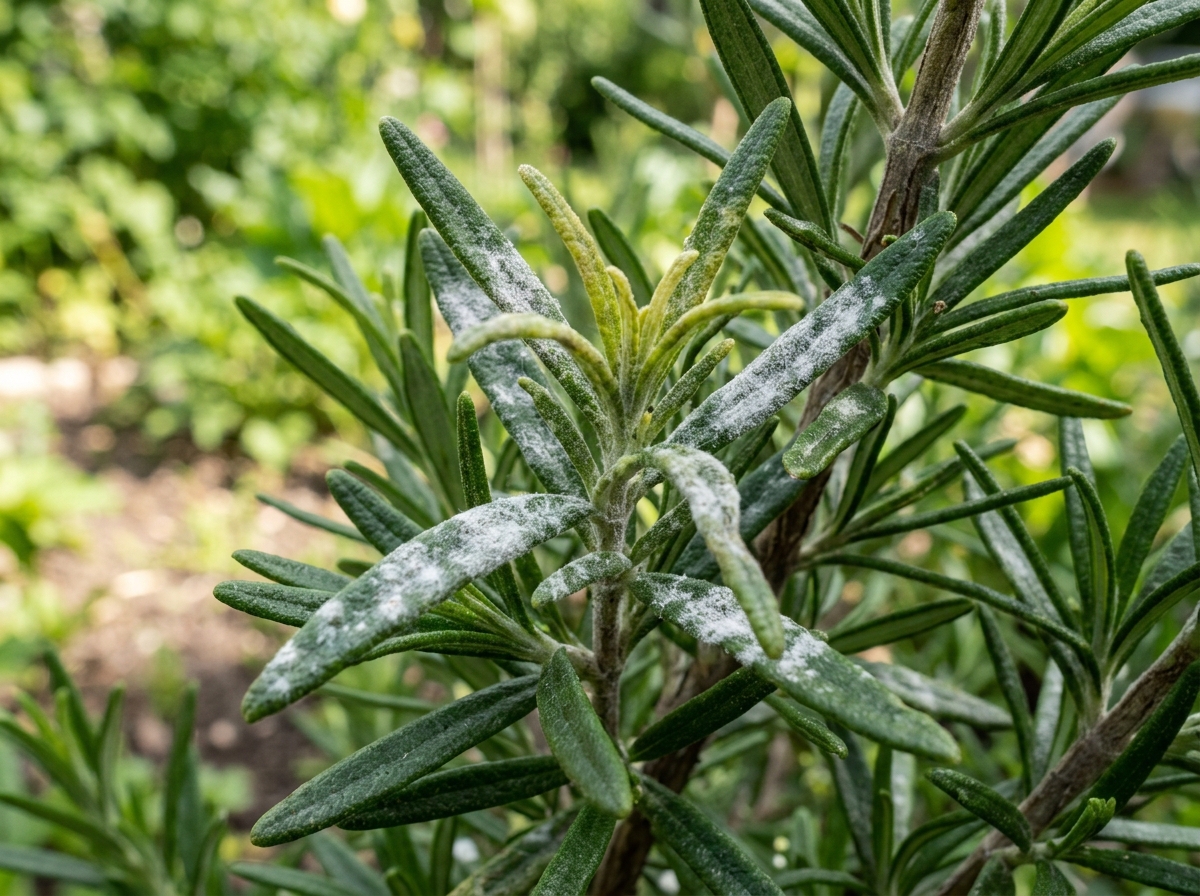
To defeat the enemy, we first have to understand it. Powdery mildew isn’t just one single fungus; it is actually caused by several different species of fungi that all produce similar symptoms. When it strikes your rosemary, it looks like someone accidentally knocked a container of powdered sugar or flour over your plant.
Unlike many other fungi that thrive in soaking wet conditions, powdery mildew is a bit of a rebel. It actually prefers dry leaf surfaces to germinate, though it requires high humidity in the air to spread its spores. This is why it is such a frequent guest on indoor rosemary plants during the winter months.
When you are growing rosemary at home, you might notice that your plant looks perfectly healthy one day and “dusty” the next. This white coating is more than just an eyesore. According to Powdery Mildew on a Rosemary Plant – Planters Place, the fungus acts like a physical barrier. It blocks the sun from reaching the leaf cells, which directly interferes with photosynthesis. This starves the plant of the energy it needs to grow, eventually leading to a weakened, stressed herb that loses its culinary punch.
Environmental Triggers for Fungal Growth
Why does this happen to your beautiful rosemary? We often see outbreaks when the environmental “Goldilocks zone” is met. This usually happens when temperatures sit between 60°F and 80°F. If you have warm days followed by cool, humid nights, you have created a paradise for fungal spores.
Indoor plants are particularly vulnerable. In the winter, our homes are often warm but have pockets of stagnant air. Without the natural wind of the outdoors to move spores along or dry out excess humidity, the fungus settles comfortably on your rosemary needles. We’ve found that poor air circulation is the number one culprit for indoor infestations. If your plant is tucked in a corner or crowded by other pots, it’s a sitting duck.
Furthermore, following the ultimate guide to the rosemary growing season helps you understand that rosemary is a Mediterranean native. It loves “lean” conditions—lots of sun and relatively dry air. When we bring it into a humid kitchen or a basement with low light, the plant’s natural defenses drop, making it easy for the mildew to take hold.
Symptoms on Leaves and Stems
Identifying the problem early is half the battle. At first, you might see tiny, silvery-white spots on the upper sides of the leaves. If left untreated, these spots expand and merge until the entire branch looks like it’s been dipped in white powder.
According to Rosemary Powdery Mildew: Effective Control and Prevention Strategies – Evergreen Seeds, you should look for these specific signs:
- White/Grey Powdery Coating: The most obvious symptom, appearing on leaves and stems.
- Twisted New Growth: Young leaves may emerge distorted or curled.
- Yellowing and Browning: As the fungus siphons nutrients, leaves will lose their green luster.
- Premature Leaf Drop: In severe cases, the plant will shed its needles to try and survive.
It is important to distinguish between actual mildew and simple dust or dried water spots. Mildew will feel slightly “fuzzy” or “greasy” to the touch and won’t just blow off like household dust.
The Science Behind Rosemary Powdery Mildew Baking Soda Treatments
You might be wondering: How can a simple kitchen staple like baking soda (sodium bicarbonate) take down a fungal infection? It sounds like an old wives’ tale, but there is real chemistry at play here.
Baking soda works by drastically altering the pH level on the surface of the rosemary leaves. Most fungi, including powdery mildew, require a slightly acidic environment to survive and reproduce. Baking soda is alkaline. When you spray a rosemary powdery mildew baking soda solution onto the plant, you are essentially turning the leaf into a “no-fly zone” for spores. The alkaline film makes the surface inhospitable, preventing the spores from germinating and stopping the spread of existing colonies.
Using these organic care tips for healthy plants is a great way to manage your garden without resorting to toxic chemicals that you wouldn’t want near your food.
Why Rosemary Powdery Mildew Baking Soda Sprays Work
The effectiveness of the spray isn’t just about the baking soda itself; it’s about the combination of ingredients. While the sodium bicarbonate changes the pH, the addition of oil (like vegetable or horticultural oil) and soap serves two purposes. First, the soap acts as a surfactant, breaking the surface tension of the water so the mixture spreads evenly across the waxy rosemary needles rather than just beadings off. Second, the oil helps the mixture stick to the plant longer and can actually smother existing fungal spores.
| Treatment Type | How it Works | Best For |
|---|---|---|
| Baking Soda | Raises pH to alkaline levels | Early stages & Prevention |
| Neem Oil | Disrupts fungal cells | Active infections & Pests |
| Milk (1:9 ratio) | Antiseptic properties/UV reaction | Prevention |
| Sulfur | Toxic to fungal spores | Severe outbreaks |
As noted in Bi-Carb of Soda: A Safe and Effective Fungicide for Powdery Mildew, this DIY approach is highly favored because it’s safe for bees, pets, and humans, provided you follow the right ratios.
Safety Precautions for Edible Herbs
Since rosemary is a culinary herb, safety is our top priority. While baking soda is technically edible, you don’t want to overdo it. High concentrations of sodium can cause “leaf scorch,” where the edges of the rosemary needles turn brown and brittle. This is why we always recommend a patch test before spraying the whole plant.
Another concern is the soil. If you spray your plant excessively and the runoff soaks into the dirt, it can eventually raise the soil pH. Rosemary likes slightly acidic to neutral soil, so a massive influx of alkaline baking soda can lead to nutrient lockout. To prevent this, we suggest refreshing the top layer of compost or soil after a heavy treatment cycle.
Always remember to follow organic care tips for healthy plants 2 by wearing gloves and perhaps a mask if you have respiratory sensitivities, as even natural sprays can be irritating if inhaled in a fine mist. And, of course, wash your rosemary thoroughly before using it in your Sunday roast!
Step-by-Step Guide: Applying Rosemary Powdery Mildew Baking Soda Spray
Ready to mix your potion? This is the exact method we use at Ponto de Arte to help our clients rescue their aromatic herb gardens.
Mixing and Testing the Solution
Precision matters. If the solution is too weak, the fungus will laugh at you. If it’s too strong, you might hurt the plant. According to the experts at How To Treat Powdery Mildew On Rosemary Leaves, the “Golden Recipe” is:
- 1 Gallon of Warm Water (warm water helps the soda dissolve better)
- 3 Tablespoons of Baking Soda
- 1 Tablespoon of Vegetable Oil (or horticultural oil)
- 1/2 Teaspoon of Liquid Dish Soap (ensure it does NOT contain bleach)
The Emulsification Process: Mix the oil and soap together first, then add them to the water and baking soda. Shake the container vigorously. You want the oil to be broken down into tiny droplets so it doesn’t just float on top.
The 24-Hour Patch Test: Before you go “Rambo” on the mildew, pick one small, inconspicuous branch. Spray it thoroughly and wait 24 hours. If the branch looks healthy the next day, you’re good to go. If it looks shriveled or burnt, dilute your mixture with more water. This is a vital step in natural pest control methods for organic gardening.
Proper Application Techniques
When you’re ready to spray, timing is everything. Never spray your rosemary in the heat of the midday sun, as the oil can act like a magnifying glass and fry the leaves.
- Morning is Best: Apply the spray in the early morning so the plant has all day to dry. Avoid evening applications, as leaving the plant wet overnight can actually encourage more fungal growth.
- Total Coverage: Powdery mildew loves to hide. You must coat the tops of the needles, the undersides, and the stems.
- Treat the Soil: Lightly mist the surface of the soil to kill any spores that have fallen off the plant.
- Frequency: Apply the spray once every 7 to 10 days. If it rains (for outdoor plants), you’ll need to reapply. Continue this until you see no new white spots for at least two weeks.
Using the basics of organic gardening for beginners will help you stay consistent with these applications, which is the secret to long-term success.
Cultural Practices to Prevent Fungal Recurrence
Treating the mildew is great, but preventing it from coming back is even better. We like to say that a healthy plant is its own best defense. If you create an environment where rosemary thrives, the fungus won’t stand a chance.
Air Circulation and Spacing
Rosemary needs to breathe! If your plants are packed together, humidity gets trapped between them.
- Outdoors: Space plants at least 2-3 feet apart.
- Indoors: Use a small oscillating fan to keep air moving around your herbs. You don’t need a windstorm; just a gentle breeze to prevent “dead air” pockets.
- Sunlight: Rosemary needs at least 6 to 8 hours of direct sun. If you’re growing indoors during winter, Growing Herbs suggests using LED grow lights to supplement the weak winter sun. UV rays are a natural disinfectant that kills fungal spores.
Following organic herb gardening tips ensures you are placing your plants in the best possible location for their specific needs.
Watering and Soil Management
How you water is just as important as how much you water.
- Water the Base: Never use overhead sprinklers or spray the leaves with a hose. Keep the foliage dry. Water directly at the soil line.
- Timing: Water in the morning. This allows any accidental splashes on the leaves to evaporate quickly.
- Soil Quality: Use well-draining soil. We recommend a mix that includes perlite or coarse sand. Rosemary hates “wet feet,” and soggy soil stresses the plant, making it more susceptible to disease.
- Fertilizer: Avoid high-nitrogen fertilizers. These encourage flush, succulent new growth which is the favorite food of powdery mildew. Stick to a balanced, low-nitrogen formula as suggested in organic herb gardening tips-2.
Managing Rosemary Powdery Mildew Baking Soda Residue
One confusing thing about using the rosemary powdery mildew baking soda method is that the spray itself can leave a white, chalky residue. Many gardeners see this and think the mildew is back!
How to tell the difference:
- Mildew: Looks “fluffy” or “web-like” and usually appears in circular spots.
- Residue: Looks like a flat, uniform white film or dried water spots. It won’t have the “texture” of a fungus.
If the residue bothers you, you can gently wipe the leaves with a damp cloth a few days after treatment. Also, baking soda can build up in pots. As part of organic vegetable gardening for beginners, we recommend flushing the soil with plain water once a month to wash away excess salts.
Natural Alternatives and When to Use Commercial Fungicides
If baking soda isn’t doing the trick, or if you want to rotate your treatments to prevent the fungus from becoming resistant, there are other organic options.
- Neem Oil: A fantastic multi-purpose tool. It kills the fungus and also deters pests like spider mites. Check out our guide on pest control for herb gardens for more on neem.
- Chamomile Tea: Believe it or not, a strong brew of chamomile tea has antifungal properties. Use 1/4 cup of dried flowers per cup of boiling water, let it cool, strain, and spray.
- Sulfur Sprays: This is the “heavy hitter” of organic fungicides. It’s very effective but can be smelly and shouldn’t be used in high temperatures (above 85°F).
- Trichoderma harzianum: This is a beneficial fungus that actually eats the “bad” fungi. It’s a great biological control mentioned in Powdery Mildew: Treatment and Control on Plants – The Spruce.
Transitioning Plants Indoors
Most rosemary powdery mildew issues start when we bring plants inside for the winter. To prevent a disaster:
- Acclimate Slowly: Don’t just move the plant from a cold garden to a hot living room. Give it a week in a garage or porch first.
- New Soil: Don’t bring garden soil inside; it’s full of spores and pests. Repot your rosemary into fresh, sterile indoor potting mix.
- Prune First: Give the plant a light trim to improve airflow before it comes inside.
- Sanitize: Always clean your shears with rubbing alcohol between plants.
According to the community discussion at What is the best treatment for powdery mildew on rosemary?, isolation is key. Keep your “new” indoor rosemary away from your existing houseplants for two weeks to make sure it isn’t carrying any hitchhikers.
Resistant Varieties and Severe Infections
Not all rosemary is created equal. If you live in a very humid climate, you might want to choose varieties that are naturally more resistant to fungal issues.
- Upright Varieties (like ‘Miss Jessopp’s Upright’ or ‘Tuscan Blue’) generally have better airflow than Prostrate (creeping) Varieties, which sit close to the damp ground.
If you have a severe infection where more than 50% of the plant is white and the stems are turning black, it might be time for a commercial copper fungicide. These are still considered organic in many circles but are much stronger. If that fails, it is often better to discard the plant (don’t compost it!) and start fresh to protect the rest of your garden.
Frequently Asked Questions about Rosemary Care
Can I still use rosemary leaves that have powdery mildew?
Technically, the fungus itself isn’t toxic to humans, but it tastes terrible—bitter and “moldy.” We don’t recommend eating leaves with an active infection. However, once you have treated the plant and the new growth is clean, that new growth is perfectly safe to eat!
How do I tell the difference between baking soda residue and new mildew?
Baking soda residue is usually a very thin, dull film that covers the whole leaf evenly. Powdery mildew starts as distinct, fuzzy white spots that look like they are “sitting on top” of the leaf. If you can’t tell, try rubbing it with your finger; mildew often smears, while dried residue stays put.
Is baking soda safe for all rosemary varieties?
Yes, it is generally safe for all varieties, including common rosemary (Rosmarinus officinalis), ‘Arp’, and ‘Prostratus’. However, the “needle” thickness can vary, so the 24-hour patch test is always a must to ensure you don’t burn the specific variety you are growing.
Conclusion
At Ponto de Arte, we believe that you shouldn’t have to choose between a pest-free garden and an organic one. Dealing with rosemary powdery mildew baking soda treatments is a rite of passage for many herb gardeners, but with the right recipe and a little bit of attention to airflow and sunlight, you can keep your rosemary thriving year-round.
The goal isn’t just to kill the fungus—it’s to build a healthier garden from the ground up. By using these natural methods, you’re protecting your family, your pets, and the environment.
Ready to take your herb garden to the next level? Explore more herb gardening solutions on our site and keep those aromatics growing strong!
