
What Are Those Tiny Black Bugs on Your Chives?
Tiny black bugs on chives are most commonly one of these four pests:
| Bug | Size | Key Sign |
|---|---|---|
| Black aphids | 1-2mm | Clusters on stems, sticky residue |
| Thrips | Up to 1mm | Silver streaks, black fecal dots |
| Flea beetles | 1-3mm | Small holes in leaves |
| Spider mites | <1mm | Fine webbing, speckled leaves |
Black aphids are by far the most common culprit on chives. They feed in dense clusters, suck sap from the plant, and can appear in the thousands seemingly overnight.
One frustrated gardener described it perfectly: “Aaaack!! What the heck has ravaged my chives in what seems like overnight?!!” — and that reaction is completely understandable. Aphids reproduce at an extraordinary rate, with females capable of producing hundreds of offspring without even mating.
If you grow chives in a pot or herb garden, spotting tiny dark specks clustered around stems or leaf bases is a red flag worth acting on fast. The good news? Most infestations are very treatable, especially when caught early.
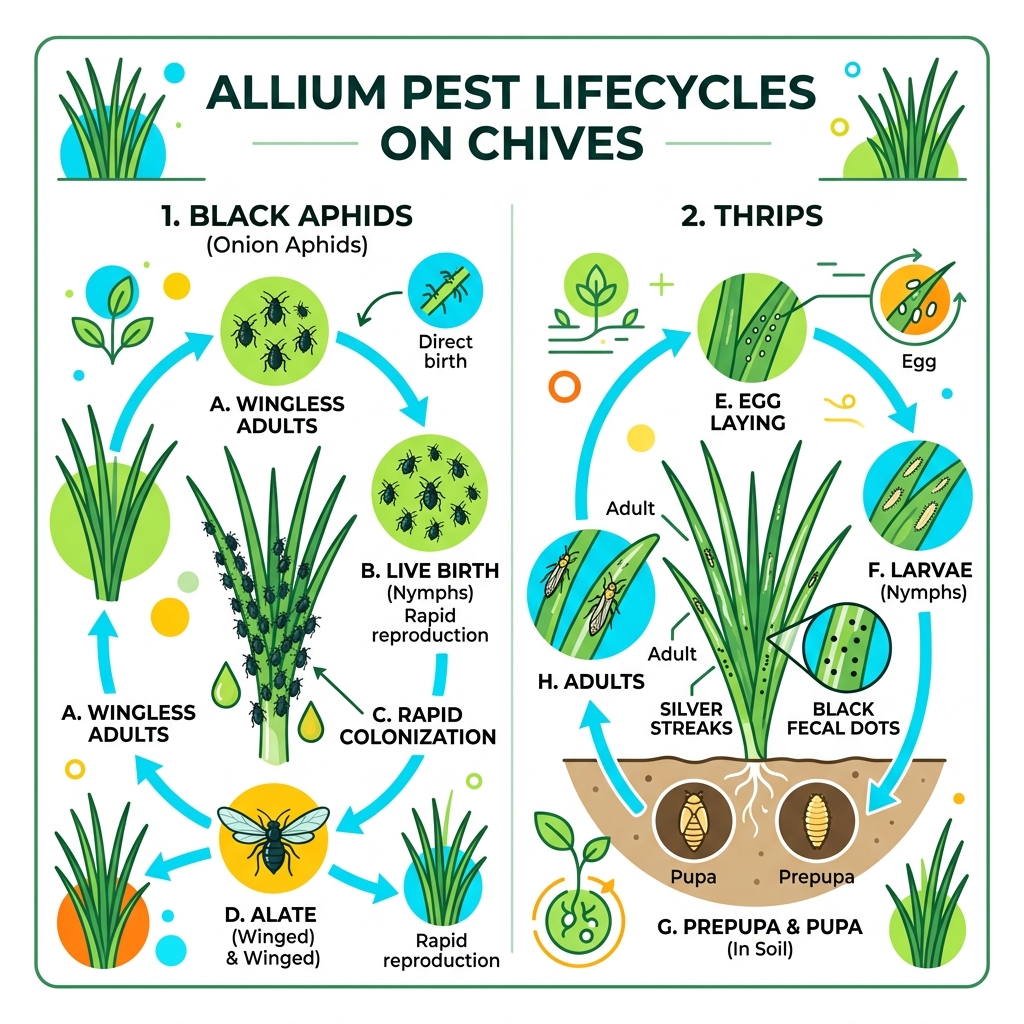
Identifying Tiny Black Bugs on Chives
When we see our vibrant green chives suddenly covered in dark specks, our first instinct is often panic. However, at Pontodearte, we believe that identification is half the battle. Not all tiny black bugs on chives are created equal, and knowing exactly who has invited themselves to dinner helps us choose the right strategy to shown them the door.
Black Aphids (Onion Aphids)
The most frequent uninvited guest is the black aphid (specifically Neotoxoptera formosana or the black bean aphid Aphis fabae). These insects are small, pear-shaped, and usually congregate in thick, stationary masses. They don’t just sit there; they are sap-sucking machines.
Aphids have a fascinating (and terrifying) reproduction method called parthenogenesis. This means the females give birth to live young without needing a male. This is why you can go from a clean plant to a “noir ensemble” of bugs in just 48 hours. They particularly love the tender, new growth and will often hide in the innermost leaf material where the stalks meet the bulb.
Thrips: The Tiny Lobsters
If the bugs look more like tiny, elongated slivers than round dots, you likely have thrips. Up close, these pests actually resemble tiny lobsters. There are about 6,000 species of thrips, and they are notoriously difficult to see because they are less than 1mm long.
Thrips don’t just suck sap; they rasp the leaf surface and drink the plant fluids. This causes a distinctive “silvering” of the chive stalks. Unlike aphids, thrips are quite mobile. Adult females can live up to 30 days and lay as many as 300 eggs, often inserting them directly into the plant tissue.
Flea Beetles and Spider Mites
Flea beetles are small, shiny black insects that jump like fleas when disturbed. Instead of sucking sap, they chew small, irregular holes in the leaves, giving them a “shothole” appearance.
Spider mites, on the other hand, are technically arachnids. While some appear black, they are often identified by the fine, silky webbing they leave between chive stalks. They thrive in hot, dry conditions and cause the leaves to look speckled or bronzed.

How to Spot Tiny Black Bugs on Chives Early
We always tell our fellow gardeners: your eyes are your best tool. Catching an infestation in the first few days can save you from having to take drastic measures later.
- Curled and Twisted Leaves: As aphids suck the life out of the plant, the chive stalks will often curl or twist unnaturally.
- Sticky Residue (Honeydew): Aphids excrete a sugary substance called honeydew. if your chives feel sticky to the touch, you have a problem.
- The Appearance of “Sooty Mold”: This is a fungus called sooty mold that grows on the honeydew. While the mold itself doesn’t eat the plant, it blocks sunlight, which stunts growth.
- Silver Streaks: This is the tell-tale sign of thrips. If your chives look like they’ve been lightly spray-painted with silver or grey, check for those tiny “lobster” bugs.
- Yellowing Foliage: General yellowing or a sickly appearance often indicates that the plant’s nutrients are being siphoned off by hundreds of tiny mouths.
Regularly checking the undersides of leaves and the base of the plant is essential. For more tips on keeping your garden healthy from the start, check out our guide on natural-pest-control-for-beginners/.
Effective Natural Remedies and Organic Controls
Once we’ve identified the tiny black bugs on chives, it’s time for action. Because chives are an edible herb, we want to avoid harsh synthetic chemicals. Luckily, nature provides several effective ways to fight back.
The Power of Water
The simplest, safest, and often most effective method for aphids is a strong blast of water. You can literally spray them off your plants with a garden hose. Aphids are relatively fragile and sluggish; once knocked off, they rarely find their way back up the plant. We recommend doing this early in the morning for 2-3 consecutive days to ensure you catch any stragglers.
Insecticidal Soaps and Neem Oil
For more stubborn infestations, organic sprays are our best friends.
- Insecticidal Soap: These work by breaking down the protective outer shell of soft-bodied insects like aphids and thrips, causing them to dehydrate. You can even make a gentle version at home using a mixture of Castile soap and water (roughly 5ml of soap per liter of water).
- Neem Oil: This is a botanical pesticide that disrupts the life cycle of pests. It prevents larvae from maturing and discourages feeding.
- Horticultural Oils: These work by suffocating the insects.
When using these, ensure you coat both the tops and the undersides of the leaves. For those who love a good DIY project, we have a complete list of diy-organic-pesticides-for-home-gardeners/ that are safe for your kitchen herbs.
Manual Removal
If you only see a few clusters, don’t be afraid to get your hands dirty! You can simply crush the aphids between your fingers. It’s strangely satisfying and 100% organic.
Safe Application for Edible Herbs
When treating herbs you plan to eat, timing is everything.
- Morning or Evening: Always apply treatments in the early morning or late evening. Applying oils or soaps in the heat of the midday sun can cause the leaves to “burn.”
- Rinse Before Eating: Even though these remedies are natural, always give your chives a good rinse before adding them to your baked potato.
- Consistency: Most natural treatments need to be reapplied every 7-10 days to catch new hatchlings.
Proper hydration also helps plants withstand pest stress. Check out our tips-for-watering-herbs/ to keep your chives in top fighting shape.
How to Handle Severe Infestations and Plant Recovery
Sometimes, despite our best efforts, we walk out to find the chives looking like a lost cause. If your plant is more “bug” than “herb,” it’s time for the “Nuclear Option”—which, in the gardening world, is actually quite gentle.
The “Cut Back” Method
Chives are incredibly vigorous perennials. If an infestation is overwhelming, the best move is to cut the entire plant back to about an inch above the soil level.
By removing the foliage, you remove the food source and the hiding spots for the bugs. Most of the time, the chives will grow back fresh, green, and pest-free within two to three weeks. Just make sure to provide plenty of moisture to encourage that new growth.
Proper Disposal
Do not put infested chive cuttings into your compost pile unless you are certain it reaches very high temperatures. Instead, place the infested plants and insects into a sealed plastic or paper bag and put them in the trash. This prevents the aphids or thrips from simply crawling onto your neighboring spinach or parsley.
Soil and Nutrient Balance
Severe infestations often happen when a plant is stressed. Avoid using too much high-nitrogen fertilizer, as this produces the soft, succulent growth that aphids find irresistible. We recommend using a balanced organic compost instead. For more advice on maintaining a resilient herb garden, see our organic-herb-gardening-tips/.
Are Tiny Black Bugs on Chives Safe to Eat?
The short answer is: Yes. Aphids and thrips do not bite or transmit diseases to humans. However, nobody wants extra “protein” in their chive butter.
- Cold Water Soak: Submerge harvested chives in a bowl of cold water with a splash of vinegar for 10 minutes. This usually causes any hidden bugs to float to the surface.
- Sooty Mold Removal: If there is black sooty mold on the stalks, you can usually wipe it off with a damp cloth. If it’s too heavy, it’s better to discard those specific stalks as they may taste bitter.
- Final Rinse: Always finish with a thorough rinse under running water.
Learn more about the best ways to handle your bounty in our guide to harvesting-herbs-at-home/.
Long-Term Prevention and Companion Planting
At Pontodearte, we prefer to play defense. Preventing tiny black bugs on chives is much easier than fighting them off once they’ve established a colony.
The Importance of Crop Rotation
If you’ve had a bad year with black aphids, don’t plant chives, onions, or garlic in that same spot next year. Black aphids have primary “overwintering” hosts (like the spindle tree) and secondary “summer” hosts (like your chives). Rotating your crops disrupts this cycle.
Enlist a Tiny Army (Beneficial Insects)
One of the best ways to control pests is to invite their natural enemies into your garden.
- Ladybugs: A single ladybug can eat up to 5,000 aphids in its lifetime.
- Lacewings: Often called “aphid lions,” their larvae are voracious predators of thrips and aphids.
- Parasitic Wasps: These tiny, harmless-to-human wasps lay eggs inside aphids, controlling the population from the inside out.
Companion Planting
You can attract these beneficial insects—and repel the bad ones—by planting specific neighbors near your chives:
- Marigolds: These are famous for repelling pests and attracting ladybugs.
- Dill: The flat flower heads are a favorite landing pad for lacewings and predatory wasps.
- Sweet Alyssum: This low-growing flower provides nectar for beneficial insects throughout the season.
- Calendula: Another great trap crop that draws aphids away from your herbs.
For a deeper dive into creating a balanced ecosystem, read our full article on pest-control-for-herb-gardens/.
Frequently Asked Questions about Chive Pests
Can I replant herbs in the same spot after an infestation?
We recommend waiting or rotating. If you must replant in the same spot, ensure you remove all dead plant debris and consider refreshing the top few inches of soil. If you are working with pots, sterilize the container with a mild bleach solution before adding organic-soil-for-herbs/.
Will these tiny black bugs spread to my other indoor herbs?
Yes, they can. Aphids and thrips are excellent hitchhikers. If you find bugs on your chives, immediately quarantine the plant away from your kitchen-windowsill-herb-garden/. Check your parsley, basil, and mint daily, as black aphids can feed on over 200 different plant species.
When is it time to completely discard an infested chive plant?
If the plant has stopped producing new growth, the roots feel mushy, or if you suspect it has contracted a virus (like the tomato spotted wilt virus spread by thrips), it’s time to say goodbye. Always bag and trash heavily infested plants rather than leaving them in the garden where the bugs can migrate.
Conclusion
Dealing with tiny black bugs on chives is a rite of passage for every herb gardener. Whether you’re facing a sudden “aphid explosion” or a sneaky thrips invasion, your chives are resilient. With a little water, some organic soap, and perhaps a few ladybug friends, you can get your garden back on track.
At Pontodearte, we are dedicated to helping you grow the most aromatic, healthy herbs possible. Don’t let a few tiny pests discourage you from the joy of harvesting your own fresh spices. For more tips on elevating your home garden, explore our guide to aromatic spices and herbs. Happy gardening!
