
Why Sage Aphid Ladybug Release Is the Smartest Fix for Your Herb Garden
Sage aphid ladybug release is one of the most effective, chemical-free ways to protect your sage plants from destructive aphid infestations.
Here’s the quick version of how to do it:
- Buy ladybugs (Hippodamia convergens) from a nursery or online supplier
- Store them in the refrigerator until you’re ready to release
- Mist your sage plants with water before releasing
- Release at dusk — place ladybugs at the base of infested plants
- Use enough — aim for roughly 2 ladybugs per square foot, or up to 1,500 for a heavily infested shrub
- Repeat every 1–2 weeks if aphids return
If you grow sage at home, you’ve probably noticed those clusters of tiny, soft-bodied insects curling your leaves and draining the life from your plants. Aphids are frustratingly common on sage — and they multiply fast.
The good news? Nature already has a solution.
Ladybugs are voracious predators. A single adult can eat up to 100 aphids per day. Over its lifetime, that adds up to around 5,000 aphids. Even their larvae get in on the action, consuming up to 400 aphids before they even reach adulthood.
But there’s a catch — and it’s a big one. Research shows that roughly 95% of released ladybugs fly away within 48 hours. That means how you release them matters just as much as how many you release.
This guide walks you through everything you need to know to make your ladybug release actually work.
Understanding the Sage Aphid Threat
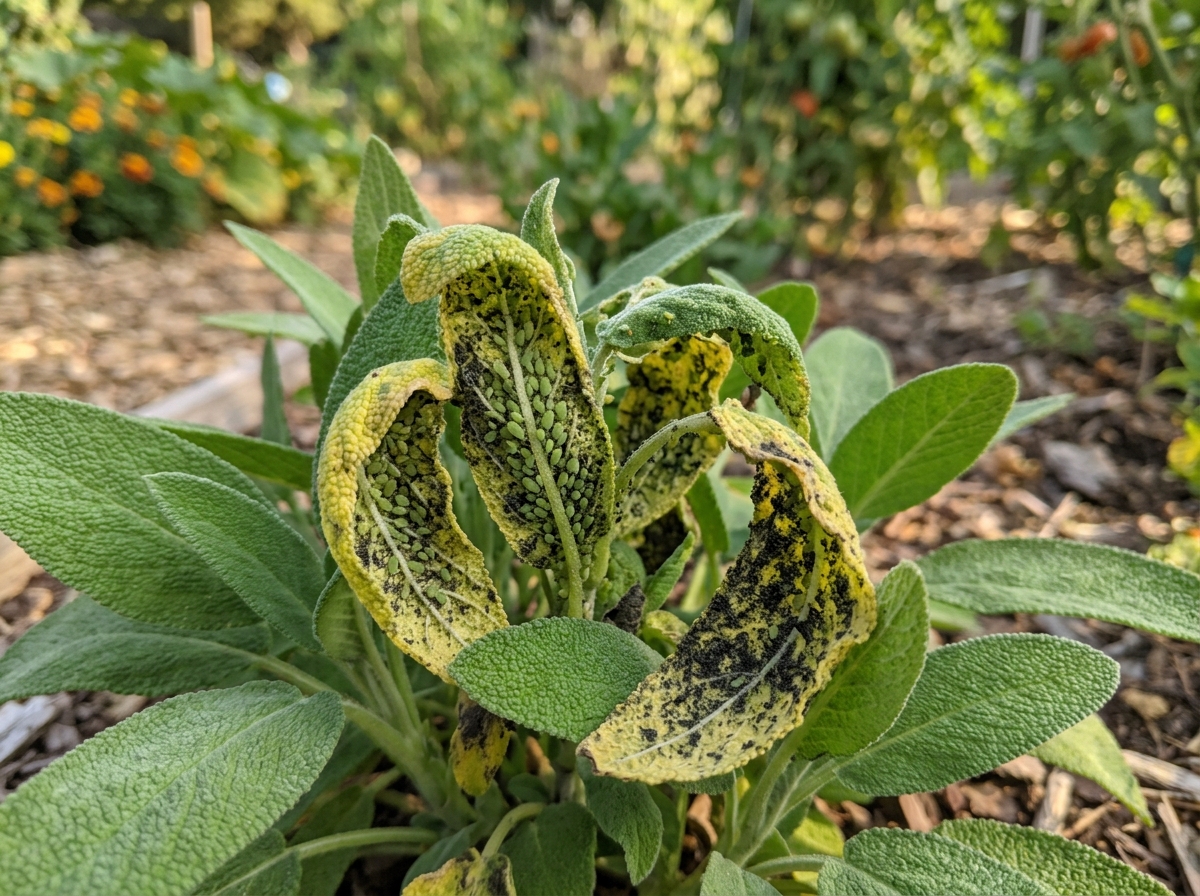
Sage is a hardy perennial, but even its tough, aromatic leaves aren’t immune to the relentless hunger of aphids. These sap-sucking pests, often found in shades of green, black, or grey, cluster on the undersides of leaves and on tender new growth. Because sage has such a dense, textured leaf surface, it can be hard to spot them until the damage is already done.
When aphids feed, they pierce the plant tissue to drink the nutrient-rich sap. This causes visible distress: leaf curling, yellowing, and stunted growth. But the damage doesn’t stop there. As they eat, aphids secrete a sticky, sugary substance called “honeydew.” This residue is a magnet for “sooty mold,” a black fungus that can cover your sage leaves, blocking sunlight and further weakening the plant.
If you aren’t sure what’s bugging your herbs, it’s worth identifying the little black bugs eating your herbs before you start your sage aphid ladybug release. Knowing your enemy is the first step toward a healthy harvest.
The Power of the Sage Aphid Ladybug Release
The hero of our story is the Hippodamia convergens, more commonly known as the convergent lady beetle. These are the most common ladybugs sold commercially, and for a good reason: they are built for aphid destruction.
While the adults are famous for their red shells and black spots, we want to draw your attention to their “teenage” phase. Ladybug larvae are often described as looking like tiny, black-and-orange “alligators.” Don’t let their slightly scary appearance fool you! These little “alligators” are even more voracious than the adults. While an adult consumes about 50–100 aphids a day, the larvae can devour up to 500 aphids during their development stage.
By performing a sage aphid ladybug release, you aren’t just putting adults on your plants; you are hopefully establishing a breeding population that will produce these high-efficiency larvae. For more on managing these pests naturally, check out our stop the sap-suckers: a guide to aphid-free herbs.
Why a Natural Predator Approach Works
At Ponto de Arte, we believe that the best way to manage a garden is to work with nature, not against it. Using ladybugs is a form of “biological intervention” or “inundative release.” Instead of reaching for a bottle of toxic chemicals that can harm bees, butterflies, and even your family, you are simply increasing the population of a natural predator.
Chemical pesticides are often “broad-spectrum,” meaning they kill the good bugs along with the bad. If you spray your sage with a harsh insecticide, you might kill the aphids, but you’ll also ensure that no ladybugs can survive there for weeks. This creates a vacuum where aphids—who reproduce much faster than predators—can return and take over without any opposition.
A natural approach maintains the ecosystem balance. Ladybugs are generalist predators, meaning they’ll also snack on other soft-bodied pests like thrips, whiteflies, and mites. However, lady bugs need special care to control aphids in the garden because they are highly mobile. They aren’t “set it and forget it” tools; they are living creatures that require the right conditions to stay and help. For those committed to a chemical-free lifestyle, we have gathered several natural pest control methods for organic gardening to complement your ladybug efforts.
Step-by-Step Guide to a Successful Sage Aphid Ladybug Release
Timing is everything. If you release ladybugs in the middle of a hot, sunny afternoon, they will immediately take flight to find shade and moisture, leaving your sage aphids untouched. Follow these steps to maximize your success rate.
- Check the Temperature: Wait for a day when the afternoon temperature is around 70°F. If it’s too cold, they’ll be sluggish; if it’s too hot, they’ll be stressed and more likely to fly away.
- Hydrate Your Plants: This is a crucial step that many gardeners skip. Use a spray bottle to mist your sage plants with a fine spray of water. Ladybugs are often dehydrated after shipping and storage. Providing a “drink” as soon as they arrive on the plant encourages them to stick around.
- Wait for Dusk: Release your ladybugs at sunset or even in the early evening. Ladybugs do not fly at night. By releasing them at dusk, you force them to settle down on your plants for at least 10–12 hours, increasing the chance they’ll find the aphid colonies and start feeding.
- Release at the Base: Don’t just dump them on top of the leaves. Gently place them at the base of the plant or in the crotches of the lower branches. Ladybugs naturally crawl upward to find food.
For more detailed scientific insights on why these steps work, the University of California provides excellent resources on releasing ladybugs in the garden.
Calculating Your Sage Aphid Ladybug Release Numbers
How many ladybugs do you actually need? This is where many people underestimate the requirement. Research suggests that for effective control in a landscape setting, you need a much higher density than what is usually recommended on the back of a store-bought container.
For a small herb garden, a general rule of thumb is 2 ladybugs per square foot. However, if you have a specific sage bush that is heavily infested, you may need to go much higher.
| Scenario | Recommended Release Rate | Frequency |
|---|---|---|
| Prevention | 2 beetles per square foot of garden | Every 3–4 weeks |
| Light Infestation | 10–20 beetles per plant | One-time release, monitor weekly |
| Heavy Infestation | 1,500 beetles per large shrub | 1–2 week intervals |
| Indoor Sage | 5–10 beetles per pot | Release and contain if possible |
In a professional nursery setting, researchers have used up to 2,300 beetles per square meter to achieve 93–100% control. While you might not need that many for a home garden, don’t be afraid to be generous with your sage aphid ladybug release. For more tailored advice, see our guide on pest control for herb gardens.
Best Practices for a Sage Aphid Ladybug Release
Before you even open the bag, you need to handle your ladybugs with care. They are living animals, and their health determines their appetite.
- Refrigeration is Key: If you aren’t releasing them immediately, keep them in the refrigerator (not the freezer!). This keeps them in a state of “diapause” or dormancy. They can stay healthy in a fridge for 3–4 weeks.
- Weekly Maintenance: If you are storing them for more than a few days, take the container out once a week, let it warm up slightly, and mist the mesh with a tiny bit of water (or a very dilute sugar-water mix) so they can hydrate.
- Avoid Insecticides: Even “organic” soaps and oils can be harmful if they are wet. If you have recently treated your sage with insecticidal soap, wait until it is completely dry and has had a day or two to settle before releasing ladybugs.
- Handle Gently: When releasing, don’t shake the container violently. Let them crawl out at their own pace onto the damp foliage.
If you are new to this, our natural pest control for beginners guide can help you navigate the learning curve.
Maximizing Retention and Success in Your Herb Garden
The biggest frustration with a sage aphid ladybug release is the “95% flight rule.” Scientists have observed that the vast majority of ladybugs will fly away within 48 hours, regardless of how many aphids are present. Some ladybugs have been tracked flying up to 74 miles in a single day!
To combat this, you need to make your garden a place they want to stay. Ladybugs don’t just eat aphids; the adults also need nectar and pollen to survive and reproduce. If your garden is a “biological desert” with only sage and no flowers, they’ll move on to a neighbor’s yard that offers a more diverse buffet.
Your guide to companion planting for a thriving vegetable garden explains how to layer your garden for maximum health. By choosing the 10 best herbs for pest control to save your garden, you create a permanent habitat for beneficial insects.
Creating a Ladybug-Friendly Habitat
To keep your ladybugs around long enough to lay eggs (which is the real secret to long-term control), plant “insectary” plants nearby. These are plants with small, shallow flowers that provide easy access to nectar.
- Dill and Fennel: These are favorites for ladybugs and lacewings.
- Yarrow: Its flat flower heads are like landing pads for beneficial insects.
- Cilantro/Coriander: Let a few of these go to bolt (flower), and you’ll see ladybugs flocking to them.
- Avoid Broad-Spectrum Pesticides: This cannot be overstressed. Even some “natural” sprays can be lethal to ladybugs.
By creating a diverse environment, you aren’t just performing a one-time sage aphid ladybug release; you are building a self-sustaining pest defense system. For more eco-friendly gardening strategies, check out our eco-friendly tips for organic gardening.
Frequently Asked Questions about Sage Aphids
How do I know if the ladybugs are working?
Success isn’t always immediate. You should monitor your sage plants daily after a release. Look for a decrease in the “shininess” of the leaves (less honeydew) and a reduction in the number of live aphids.
The real sign of success is seeing the “alligator” larvae a week or two later. If you see those crawling around, it means the adults stayed long enough to mate and lay eggs. This is the gold standard of organic care tips for healthy plants.
Can I release ladybugs indoors on my sage?
You can, but it’s a bit like inviting a thousand tiny roommates who don’t pay rent and love to hang out on your windowsills. Ladybugs are attracted to light, so in an indoor setting, they will often fly toward windows and away from your plants.
If you have aphids on basil indoors or on your indoor sage, you might be better off using a targeted approach. Some gardeners use mesh “tents” or bags to contain a few ladybugs on a single indoor plant for a few days to ensure they focus on the aphids before being released back outside.
What if the ladybugs fly away immediately?
Don’t panic—this is their natural instinct. To improve your odds, try “incremental releases.” Instead of releasing 1,500 ladybugs at once, release 500 every week for three weeks. This ensures a constant predatory presence.
Some experts also suggest “feeding” them a supplemental food like “wheast” (a mixture of whey and yeast) or a sugar-water mist to keep them energized while they hunt. If the ladybugs simply won’t stay, you might want to look into DIY organic pesticides for home gardeners as a temporary knockdown measure while you work on your garden’s biodiversity.
Conclusion
At Ponto de Arte, we are passionate about protecting your aromatic herb gardens. We know that a thriving sage plant is more than just a culinary ingredient; it’s a centerpiece of your garden’s health and aroma.
A sage aphid ladybug release is a beautiful, natural way to manage pests while keeping your herbs safe for consumption. By understanding the biology of the ladybug, timing your release correctly, and providing a hospitable environment, you can turn a frustrating aphid problem into a blooming, balanced ecosystem.
Pest management is a journey, not a destination. Using an Integrated Pest Management (IPM) approach—combining biological controls like ladybugs with smart gardening habits—is the best way to ensure a bountiful harvest year after year. For more inspiration on keeping your garden green, explore our organic herb gardening tips. Happy gardening, and may your ladybugs be hungry!
