
Why Indoor Herb Garden Pests Are More Common Than You Think
Indoor herb garden pests are a real problem — even for plants that never set foot outside.
Here’s the quick answer for dealing with them naturally:
- Identify the pest — aphids, spider mites, whiteflies, fungus gnats, mealybugs, scale, or thrips
- Isolate the affected plant immediately to stop spread
- Remove pests manually with a damp cloth, tweezers, or a water rinse
- Treat with a natural remedy — neem oil, insecticidal soap, or garlic spray
- Fix the environment — improve airflow, reduce humidity, and avoid overwatering
- Inspect regularly — at least once a week
You water your basil carefully. Your mint sits in a sunny window. Everything looks fine — until you spot tiny flies hovering over the soil, or strange sticky residue on the leaves.
It happens to almost every indoor gardener at some point.
The thing is, your home is actually ideal for pests. There are no natural predators inside. No rain to wash bugs away. No cold snaps to kill off eggs. And indoor heating can drop humidity below 20% in winter — while windows filter out up to 80% of outdoor light — putting your herbs under quiet, constant stress. Stressed plants attract pests fast.
The good news? Most indoor pest problems are easier to fix than outdoor ones. And you don’t need harsh chemicals to do it — especially on herbs you’re going to eat.
This guide walks you through exactly how to handle indoor herb garden pests the organic way, from identification to treatment to prevention.
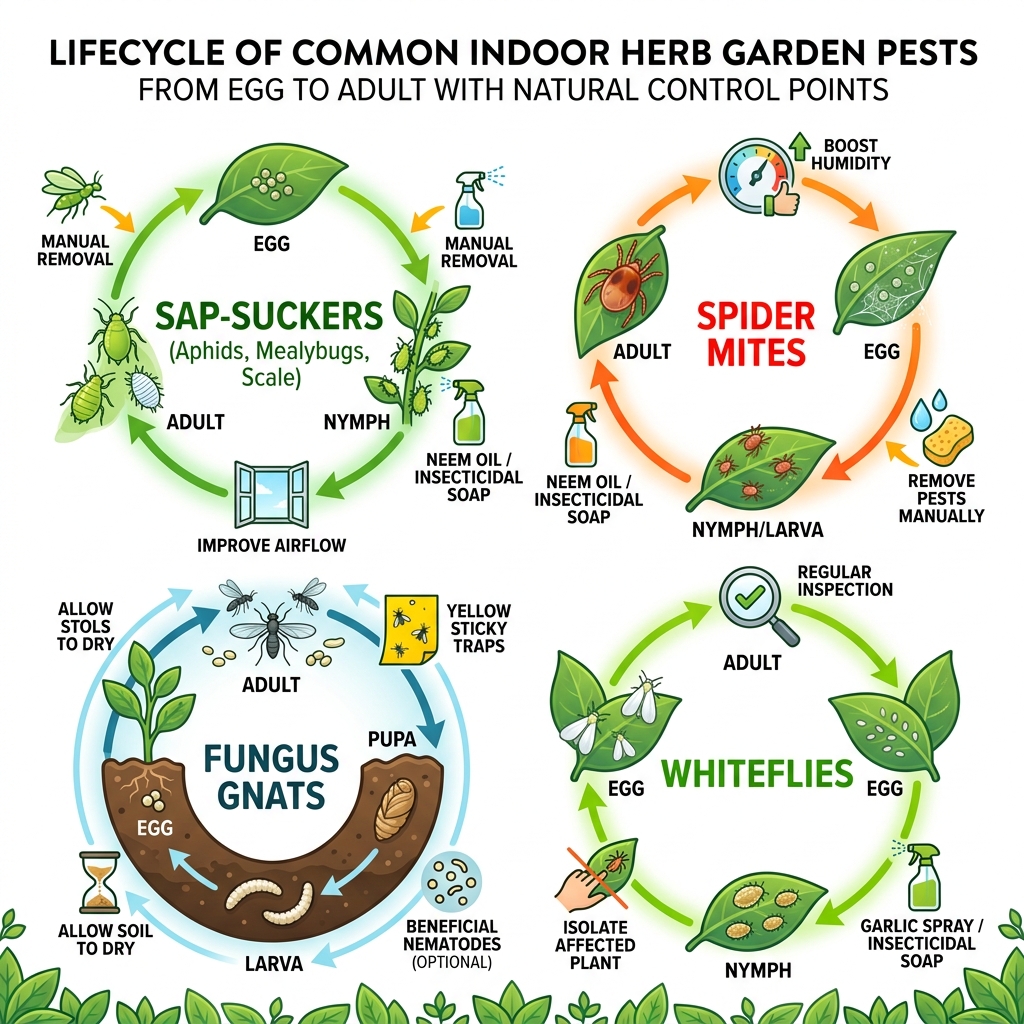
Identifying Common Indoor Herb Garden Pests
Before we can go to war, we need to know who we are fighting. Identifying the specific indoor herb garden pests on your windowsill is the first step toward a successful (and organic) rescue mission. Most of these bugs are tiny, so we recommend keeping a magnifying glass near your kitchen windowsill herb garden.
The “Sap-Suckers”
These are the most common culprits. They pierce the delicate leaves of your herbs and drink the nutrient-rich sap, leaving the plant weak and yellowed.
- Aphids: These look like small, pear-shaped bumps. They love tender new growth and often cluster on the undersides of leaves. If your basil leaves are curling and look “sad,” check for these guys. We’ve found that aphids on basil indoors are a real buzzkill, often causing stunted growth.
- Spider Mites: If you see tiny moving dots and fine, silky webbing between the stems, you have spider mites. They thrive in the hot, dry air of our homes.
- Whiteflies: These look like tiny white moths. If you brush against your plant and a cloud of white “dust” flies up, you’ve got an infestation. They also hide on the undersides of leaves.
- Mealybugs: These are easy to spot because they look like tiny bits of white cotton stuck to the stems or leaf joints. They are actually soft-bodied insects that produce a waxy coating for protection.
- Scale Insects: These look like small, brown or tan bumps on the stems. They don’t move much, so they are often mistaken for part of the plant. However, you can usually flick them off with a fingernail.
The “Soil Dwellers” and Others
- Fungus Gnats: These are the annoying little black flies that zip around your face while you’re drinking coffee. They don’t eat the leaves, but their larvae live in the soil and munch on your herb’s roots. They are a classic sign of overwatering. If you’re struggling with them, check out our guide on identifying the little black bugs eating your herbs.
- Thrips: These are very slender, tiny insects that leave silvery streaks or small black “fecal specks” on the leaves. They are notorious for spreading plant viruses.
Telltale Signs: Honeydew and Sooty Mold
Many sap-sucking pests excrete a sticky substance called honeydew. If the leaves of your rosemary or mint feel tacky to the touch, or if the windowsill underneath is shiny and sticky, you have a pest problem. This honeydew can eventually host sooty mold, a black fungus that looks like a layer of ash on the leaves. While the mold itself isn’t a pest, it blocks sunlight and indicates a serious insect issue. For a deeper dive into these symptoms, the Herb Problems Indoors guide is an excellent visual resource.

5 Natural Remedies for Edible Herbs
When we grow herbs, we do it because we want fresh, clean flavors for our cooking. The last thing we want to do is spray them with synthetic toxins. Luckily, nature provides plenty of ways to handle indoor herb garden pests safely.
1. The Power of Water Pressure
The simplest first line of defense is a strong stream of water. For sturdy herbs like rosemary or mint, take the plant to the sink and use the sprayer to wash away aphids and spider mites. This physical removal disrupts their life cycle and knocks them off their “feeding stations.”
2. Garlic Spray: The Vampire Repellent
Garlic is great for pasta, and it’s even better for repelling bugs (and vampires, though we haven’t tested that in our kitchen yet).
- The Recipe: Puree about 15 cloves of garlic with a liter of water. Let it sit overnight, strain it through cheesecloth, and put it in a spray bottle.
- Why it works: The pungent compounds in garlic are toxic to many small insects and act as a powerful deterrent. It’s one of the most popular diy-organic-pesticides-for-home-gardeners.
3. Neem Oil and Azadirachtin
Neem oil is derived from the seeds of the neem tree. Its active ingredient, azadirachtin, is a gardener’s best friend. It doesn’t just kill bugs on contact; it disrupts their hormones, preventing them from molting, growing, and laying eggs. It’s a fantastic tool for natural-pest-control-methods-for-organic-gardening.
4. Pure Liquid Soap (Not Dish Soap!)
We often see people recommend “dish soap,” but be careful! Many modern dish soaps are actually detergents designed to strip grease, which can damage the protective waxy coating on herb leaves. Instead, use a “pure” liquid soap (like Castile soap).
- The Mix: One tablespoon of pure liquid soap per quart of water.
- The Science: The fatty acids in the soap suffocate soft-bodied insects like aphids and whiteflies by blocking their breathing pores.
5. Rubbing Alcohol
For stubborn pests like mealybugs or scale, a cotton swab dipped in 70% isopropyl alcohol is the way to go. Simply dab the insect directly. The alcohol dissolves their protective coating and kills them instantly. This is a great “spot treatment” that doesn’t require spraying the whole plant.
Non-Toxic Solutions for Indoor Herb Garden Pests
If you’re just starting out, we recommend a “manual first” approach. Before reaching for sprays, try these natural-pest-control-for-beginners steps:
- Manual Removal: Use tweezers to pick off larger bugs or caterpillars.
- Damp Cloth: Wipe down leaves weekly to remove dust and early-stage pests.
- Tepid Water Rinse: A gentle bath can do wonders for a dusty, bug-prone plant.
Environmental Factors and Prevention Strategies
Preventing indoor herb garden pests is much easier than fighting them. Most infestations happen because the plant is stressed by its environment.
The Light and UV Struggle
Did you know that standard window glass filters out a massive portion of UV intensity? In fact, your indoor herbs might only be receiving 20–30% of the light levels they would get outdoors. This causes “etiolation”—where the plant becomes leggy and weak as it stretches for light. Weak stems have thinner “skin,” making it easier for pests to pierce them. If your herbs are struggling, consider moving them to a south-facing window or adding a full-spectrum LED grow light.
Humidity and Airflow
Our homes are often too dry for herbs but perfect for pests like spider mites. During winter, indoor humidity can crash below 20%, while most herbs prefer a comfortable 40–60%.
- The Pebble Tray Fix: Place your pots on a tray filled with pebbles and water. As the water evaporates, it creates a micro-climate of humidity around the leaves.
- The Fan Trick: Stagnant air is an invitation for whiteflies and fungus gnats. A small oscillating fan on a low setting can improve air circulation, making it harder for flying pests to land and lay eggs.
The Overwatering Trap
Overwatering is the #1 cause of indoor herb death and the primary reason for fungus gnat outbreaks. When soil stays soggy, roots begin to rot, releasing gases that attract gnats. Always check the soil moisture with your finger—if the top inch is still damp, put the watering can down! For more on this, read our guide on pest-control-for-herb-gardens.
Preventing Indoor Herb Garden Pests Naturally
We believe in a “proactive” rather than “reactive” garden. Use this table to plan your defense:
| Prevention Method | How it Helps | Best For… |
|---|---|---|
| Quarantine | Prevents spread from new plants | All new nursery purchases |
| Sticky Traps | Captures flying adults | Fungus gnats & Whiteflies |
| Sterilized Tools | Stops the transfer of eggs/disease | Pruning and harvesting |
| Weekly Inspection | Catches problems before they explode | Every herb in your garden |
For those new to the hobby, we have more tips in our guide on natural-pest-control-for-beginners-2.
Susceptibility: Which Herbs Are Most at Risk?
Not all herbs are created equal in the eyes of a hungry bug. Some are like a five-star buffet, while others are the equivalent of a “Keep Out” sign.
The “Pest Magnets”
- Basil: This is the “drama queen” of the herb world. It is highly susceptible to aphids, whiteflies, and even chilling injury if it gets below 50°F. If there is a bug in the room, it will find the basil first.
- Mint: While mint is an “overachiever” that grows like a weed, it is a favorite for spider mites and aphids. Because it grows so densely, pests can hide easily in the center of the plant.
The “Resilient Warriors”
- Rosemary and Thyme: These herbs have “tougher” leaf structures and high concentrations of aromatic oils that act as natural deterrents. Most bugs find the woody stems and needle-like leaves of rosemary too difficult to eat.
- Sage: The fuzzy texture of sage leaves is a natural physical barrier that many small insects find off-putting.
Pungent Deterrents
Many of the herbs we love for their scent—like lavender, oregano, and chives—actually evolved those scents to keep bugs away. Using 10-best-herbs-for-pest-control-to-save-your-garden is a smart way to interplant and protect your more sensitive greens.
When to Save or Discard Infested Plants
We know it’s hard to say goodbye to a plant you’ve raised from a seedling, but sometimes, the kindest thing you can do for your garden is to let one go.
Assessing the Damage
If more than 50% of the leaves are covered in pests, or if the plant has stopped growing entirely, it might be time to discard it. Heavily infested plants act as “pest reservoirs,” constantly sending out new generations of bugs to infect your healthy herbs.
The Root Rot Point of No Return
If your herb is wilting despite the soil being wet, check the roots. Healthy roots are white and firm; rotted roots are black, mushy, and smell like a swamp. If root rot has set in alongside a pest infestation, the plant’s immune system is likely too compromised to recover.
Safe Disposal
Never put a pest-infested plant in your indoor compost or near your other plants. Seal it in a plastic bag and put it in the outdoor trash. Then, thoroughly scrub the pot with hot, soapy water before using it again. Our guide on how to stop-the-sap-suckers-a-guide-to-aphid-free-herbs can help you decide if a plant is worth the fight.
Frequently Asked Questions about Indoor Herb Garden Pests
Are herbs safe to eat after a pest infestation?
Yes, generally they are! As long as you haven’t used toxic chemicals, you can simply wash the herbs thoroughly. We recommend a soak in cool water with a splash of vinegar to ensure any remaining bugs or “honeydew” are removed before you toss them into your pesto.
Why do indoor herbs get bugs if they never go outside?
Pests are resourceful. They can come in through window screens, on your clothes, or even in the soil of a new plant you bought at the grocery store. Because our homes are climate-controlled, these “hitchhikers” find a perfect, predator-free environment to multiply.
How often should I inspect my indoor herbs for pests?
We recommend a deep inspection at least once a week. Check the undersides of leaves, the “crooks” where the leaves meet the stems, and the surface of the soil. Early detection is the difference between a five-minute fix and a month-long battle.
Conclusion
At Ponto de Arte, we believe that your indoor herb garden should be a source of joy and fresh flavor, not a source of stress. Dealing with indoor herb garden pests is simply part of the journey of being a plant parent. By choosing organic methods like neem oil, garlic sprays, and proper environmental management, you can keep your kitchen herbs safe, edible, and thriving.
A healthy plant is its own best defense. Provide plenty of light, watch your watering, and keep the air moving. If you’re ready to expand your collection or need more specialized advice, we’re here to help you maintain a beautiful, pest-free harvest all year round.
Ready to get started? Start your own kitchen windowsill herb garden today and enjoy the taste of truly fresh, organic herbs!
