
Why Cilantro Bug Repellent Spray Belongs in Every Herb Garden
A cilantro bug repellent spray is a natural, food-safe pest deterrent made by steeping or blending fresh cilantro (and often other herbs) in water, then applying it directly to garden plants. Here’s a quick overview of what you need to know:
- What it repels: Aphids, spider mites, cabbage loopers, grasshoppers, and whiteflies
- How it works: Cilantro’s volatile oils and strong scent confuse and deter insects
- Safe for: Edible plants, beneficial insects, pets, and children
- How to use: Spray directly on plant surfaces, including the undersides of leaves
- How often: Every 7-10 days, and always after rain or heavy watering
If you grow herbs at home, you already know the frustration. One week your cilantro is lush and fragrant. The next, something has been quietly eating it from the bottom up.
Chemical sprays feel like overkill — and honestly, who wants synthetic pesticides on the herbs going into their salsa?
That’s where organic herb bug sprays come in. They use the pest-fighting power of plants themselves — no harsh chemicals, no risk to your harvest, and no harm to the bees and ladybugs doing good work in your garden.
Cilantro is especially interesting here. It’s not just a target for pests — it’s also a weapon against them. Its strong aromatic oils can help mask the scent of nearby plants, making it harder for insects to find their next meal.
We’ll walk you through the best organic herb-based sprays to protect your garden, including how to make your own at home.
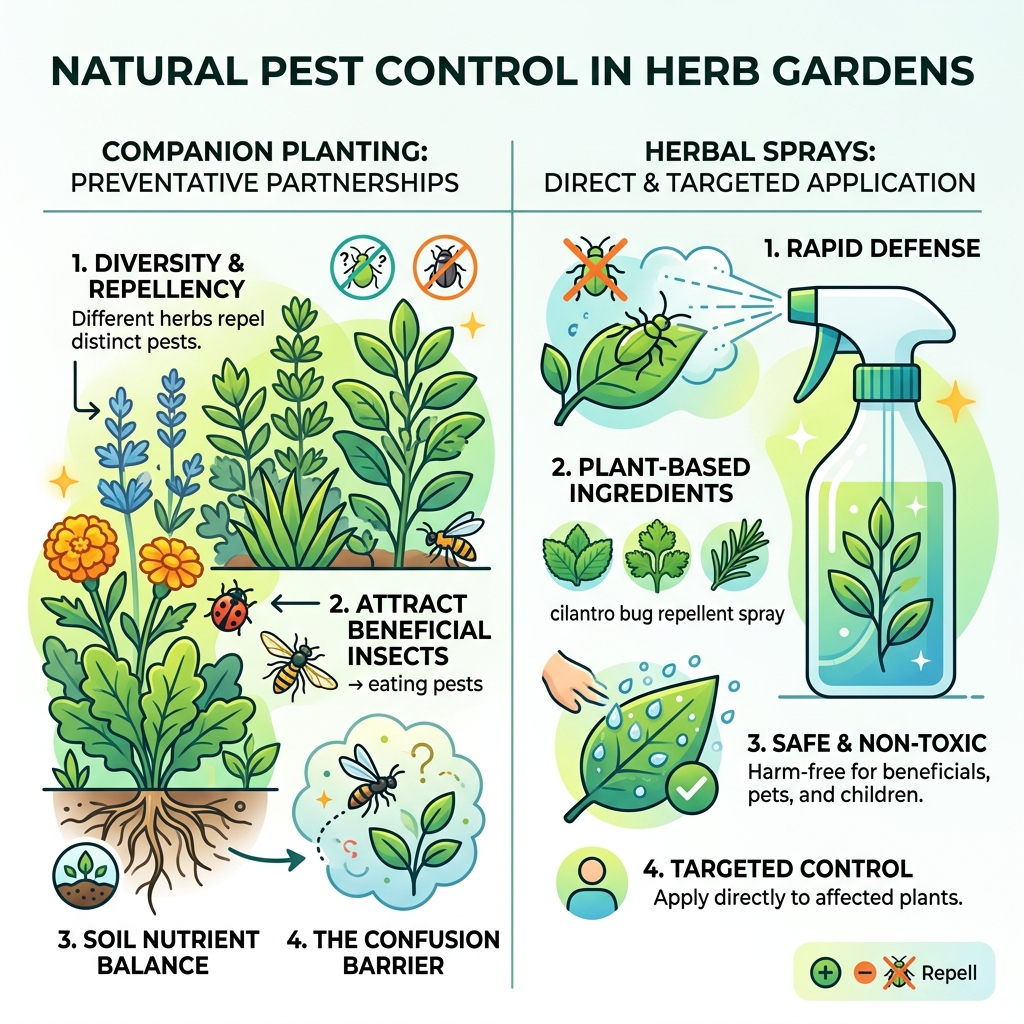
The Natural Properties of Herbal Pest Control
When we look at our herb gardens, we see ingredients for dinner. When a bug looks at them, it sees a chemical battlefield. Herbs like cilantro, rosemary, and mint have spent millions of years evolving “volatile oils” to keep themselves from being eaten. These aren’t just pleasant scents for humans; they are sophisticated defense mechanisms.
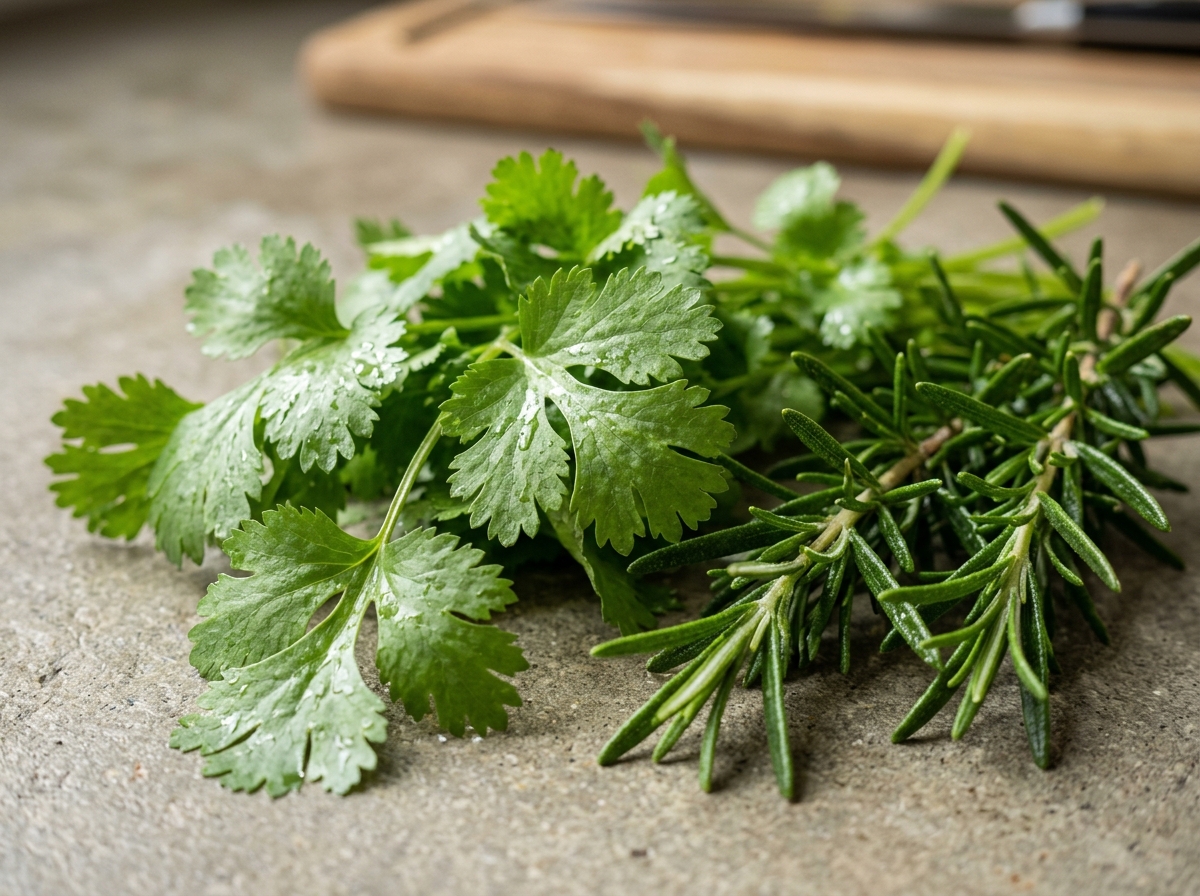
At the heart of a cilantro bug repellent spray are compounds like linalool and geraniol. These aromatic alcohols are highly effective at masking the scents that pests use to find their “host” plants. Many garden pests, like aphids and whiteflies, navigate primarily by smell. When we coat a plant in these herbal oils, we essentially create a “scent screen” that confuses the invaders.
Furthermore, many herbs contain sulfur compounds. If you’ve ever noticed the pungent kick of garlic or certain varieties of cilantro, you’re smelling nature’s warning sign. These compounds can create a burning sensation for soft-bodied insects or simply signal that the plant is “toxic” or unpalatable. For those just starting out, understanding these basics is key to natural pest control for beginners.
By utilizing the 10 best herbs for pest control to save your garden, we can create a polyculture of protection. While cilantro is excellent for repelling spider mites and aphids, rosemary is a powerhouse against cabbage moths. When combined, these plants offer a broad-spectrum defense that synthetic chemicals struggle to match without killing off the “good guys” like bees and ladybugs.
DIY Recipes: How to Make Your Own Herbal Solutions
Making your own cilantro bug repellent spray is surprisingly easy and can be done with items already in your kitchen. The goal is to extract the potent oils from the plant material and suspend them in a liquid that will stick to your garden leaves.
The most effective recipes often combine several “heavy hitters.” While cilantro provides the base, adding garlic cloves and cayenne pepper introduces a “heat” element that deters larger pests like grasshoppers. Peppermint oil can also be added to provide a cooling but irritating barrier for ants and spiders.
According to the DIY Garlic-Mint Spray for Garden Pest Control – Stewart Milne Homes, the secret ingredient is often a small amount of biodegradable soap. This acts as a surfactant, helping the water-based spray “stick” to the waxy surface of leaves rather than just beads of water rolling off. Always use distilled water if possible, as the minerals in tap water can sometimes interfere with the shelf life of your herbal concoction.
Benefits of Using a Cilantro Bug Repellent Spray
Why choose a cilantro bug repellent spray over a store-bought bottle? First and foremost is edible safety. Since you are using food-grade ingredients, you don’t have to worry about toxic residues on your basil or parsley. This is a primary concern for pest control for herb gardens, where the foliage is the part we consume.
Other benefits include:
- Non-toxic to humans and pets: You won’t need a hazmat suit to apply it.
- Cost-effective: You can often make a gallon of spray for the price of one bunch of cilantro and a head of garlic.
- Protects beneficial insects: Unlike broad-spectrum insecticides, these sprays generally repel “nasty” bugs while leaving bees and ladybugs alone, as they aren’t trying to eat your plants!
Step-by-Step DIY Cilantro Bug Repellent Spray
Ready to mix your first batch? Follow these steps to create a high-potency concentrate:
- Gather Ingredients: You will need 1 cup of fresh cilantro (leaves and stems), 4-5 garlic cloves, 1 tablespoon of cayenne pepper, and 2 cups of water.
- Process: Toss the cilantro and garlic into a food processor or blender. Add the water and pulse until the mixture is completely liquified and “juicy.”
- Steep: Pour the mixture into a jar and let it sit in the refrigerator overnight. This allows the oils to fully infuse into the water.
- Strain: Use a nut milk bag or several layers of cheesecloth to strain out the solids. This is crucial—otherwise, your spray bottle nozzle will clog instantly!
- Dilute: Mix your concentrate with more water. A common ratio is 1 part concentrate to 4 parts water.
- Add Soap: Stir in 2-3 drops of biodegradable liquid soap (like Castile soap).
- Store: Keep your spray in the fridge. As noted in Make Your Own Natural Pest Control Spray with Herbs – Garden Therapy, these natural mixtures usually have a shelf life of 1 to 2 weeks before they lose potency.
Application and Safety for Herb Gardens
Applying your cilantro bug repellent spray is just as important as how you make it. Timing is everything. We recommend spraying in the early morning or late evening. Why? Because spraying in the middle of a hot, sunny day can cause “leaf burn.” The water droplets act like tiny magnifying glasses, and the oils can heat up, damaging the delicate tissues of your herbs.
When you spray, don’t just hit the tops of the leaves. Most pests, especially aphids and spider mites, hide on the undersides of leaves to stay out of the sun and away from predators. You need to be thorough.
Application Frequency Table
| Pest Type | Application Frequency | Notes |
|---|---|---|
| Aphids | Every 2-3 days | High pressure spray helps dislodge them first. |
| Spider Mites | Every 3-4 days | Focus heavily on leaf undersides. |
| Cabbage Loopers | Weekly | Apply as a preventative before eggs hatch. |
| General Maintenance | Every 7-10 days | Use to keep the “scent barrier” strong. |
Safety is also a factor. Even though the ingredients are natural, cayenne pepper and garlic can be very irritating if they get in your eyes or on sensitive skin. We suggest wearing gloves when straining the mixture and being mindful of the wind direction when spraying your garden. If you have a heavy rain or use a sprinkler system, you must reapply the spray, as it is water-soluble and will wash away.
Frequently Asked Questions about Cilantro Bug Repellent Spray
What specific pests does cilantro repel?
Cilantro is particularly effective against soft-bodied insects. The volatile oils in a cilantro bug repellent spray are a nightmare for aphids and spider mites. It is also known to deter potato beetles and cabbage loopers. While it won’t necessarily “kill” larger pests like grasshoppers on contact, the addition of garlic and pepper to the spray creates a taste barrier that discourages them from taking a second bite of your precious herbs.
Is cilantro bug repellent safe for pets and children?
Yes! Because this spray is made from food-grade herbs and spices, it is significantly safer than synthetic alternatives. However, “natural” doesn’t mean “no reaction.” If a pet or child brushes against a freshly sprayed plant and then rubs their eyes, the cayenne pepper or garlic oils could cause stinging. Always supervise children in the garden and allow the spray to dry completely before letting pets roam near the treated plants.
How often should I apply the spray for best results?
For general maintenance, once a week is usually sufficient to keep the masking scent strong. However, if you are dealing with an active infestation of aphids, you may need to apply it every 2-3 days until the population collapses. Always reapply after a heavy dew or rainstorm. Consistency is the most important factor in natural pest management—it’s about making your garden an unattractive place for bugs to live, rather than a one-time “death strike.”
Conclusion
At Ponto de Arte, we believe that your herb garden should be a place of peace and delicious harvests, not a source of stress. Protecting aromatic herbs requires a specialized touch; you want to get rid of the pests without ruining the very flavors you’re trying to grow. By using a cilantro bug repellent spray, you are working with the garden ecosystem rather than against it.
Natural solutions take a bit more patience and consistency than chemical ones, but the reward is a healthier garden and a safer kitchen. If you’re looking to give your herbs the best possible start, don’t forget that healthy plants start from the ground up—check out our guide on organic soil for herbs to build a strong foundation for your pest-resistant garden. Happy growing!
