
Why Organic Basil Pest Solutions Actually Work (And What to Do Right Now)
Organic basil pest solutions are highly effective when you combine a few simple methods: regular inspection, organic sprays like neem oil or insecticidal soap, companion planting, and good garden hygiene.
Here’s a quick overview of the most effective approaches:
| Method | Effectiveness | Best For |
|---|---|---|
| Neem oil spray | 70-90% pest reduction | Aphids, whiteflies, spider mites |
| Insecticidal soap | 70-90% pest reduction | Soft-bodied insects |
| Row covers / barriers | 85-90% pest reduction | Most flying and crawling pests |
| Companion planting | 30-60% pest reduction | General pest deterrence |
| Beer traps + iron phosphate | 70-95% control | Slugs and snails |
| Regular sanitation | 30-50% reduction | All pest types |
You worked hard to grow that basil. You check on it, water it, give it the best spot in the garden. Then one morning you walk out and the leaves are full of holes.
It’s one of the most frustrating things a home gardener can experience.
Basil is a bit of a double-edged sword. Its rich aroma and soft, tender leaves are what make it so wonderful in the kitchen. But those same qualities make it irresistible to a surprising number of pests — from tiny aphids and spider mites to slugs that sneak in overnight.
The good news? You don’t need harsh chemicals to protect it. In fact, for a culinary herb you’re eating fresh, organic methods are clearly the smarter choice. And when used consistently, they work really well.
This guide walks you through everything — from identifying what’s eating your basil, to preventing infestations before they start, to treating active pest problems with safe, natural solutions.
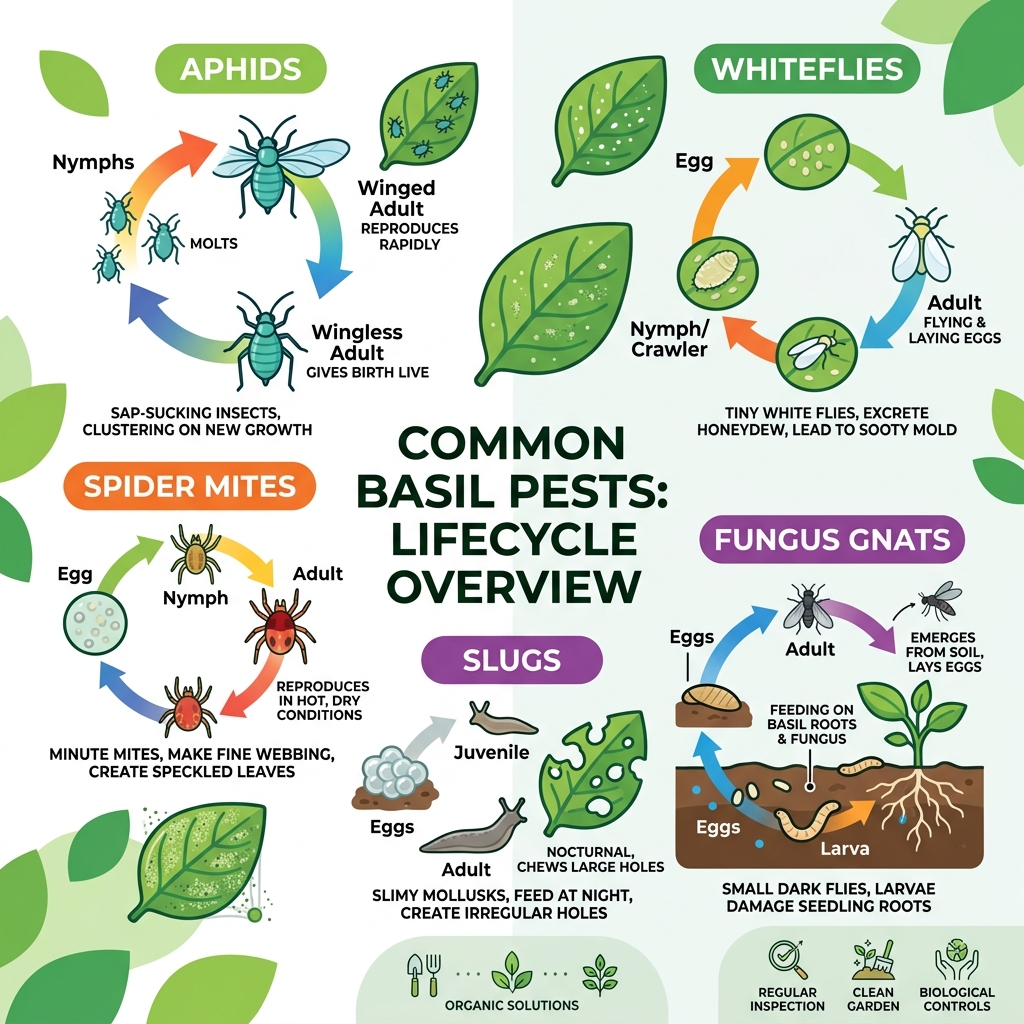
Identifying Common Basil Pests and Their Damage
Before we can deploy our organic basil pest solutions, we need to play detective. Not every hole in a leaf is caused by the same culprit. Identifying the specific pest is the first step toward effective treatment.
The Sap-Suckers: Aphids, Whiteflies, and Spider Mites
These tiny invaders don’t usually eat holes in the leaves; instead, they pierce the plant tissue and suck out the juices.
- Aphids: These are often found in clusters on the undersides of leaves or on new growth. You might notice leaves curling or turning yellow. They also excrete a sticky substance called “honeydew,” which can lead to black sooty mold. If you’re seeing mysterious dark spots, you might be Identifying the Little Black Bugs Eating Your Herbs.
- Whiteflies: If you brush your basil and a cloud of tiny white “gnats” flies up, you have whiteflies. They cause yellowing and can stunt the plant’s growth.
- Spider Mites: These are nearly invisible to the naked eye. Look for very fine webbing on the undersides of leaves and tiny yellow or white stippling (dots) on the leaf surface.
The Chewers: Japanese Beetles and Caterpillars
If your leaves look like lace or have large chunks missing, you have chewers.
- Japanese Beetles: These metallic green beetles love basil. They “skeletonize” leaves, eating everything but the veins. They usually appear in mid-summer (around June).
- Caterpillars: Various moth and butterfly larvae will munch on basil. You’ll often find their “frass” (tiny black droppings) on the leaves before you see the caterpillar itself.
The Night Raiders: Slugs and Snails
Slugs and snails are the primary reason gardeners wake up to find their basil decimated. They leave large, ragged holes and a tell-tale silvery slime trail. They prefer young, tender plants, so keep a close eye on your seedlings.
The Soil Dwellers: Fungus Gnats
If you see tiny black flies hovering over the soil, especially on indoor plants, those are fungus gnats. While the adults are just annoying, their larvae live in the soil and can munch on delicate basil roots if the soil stays too wet.
For a deeper dive into these culprits, check out this guide on Basil Pests: 11 To Watch For (Plus Prevention & Treatment).
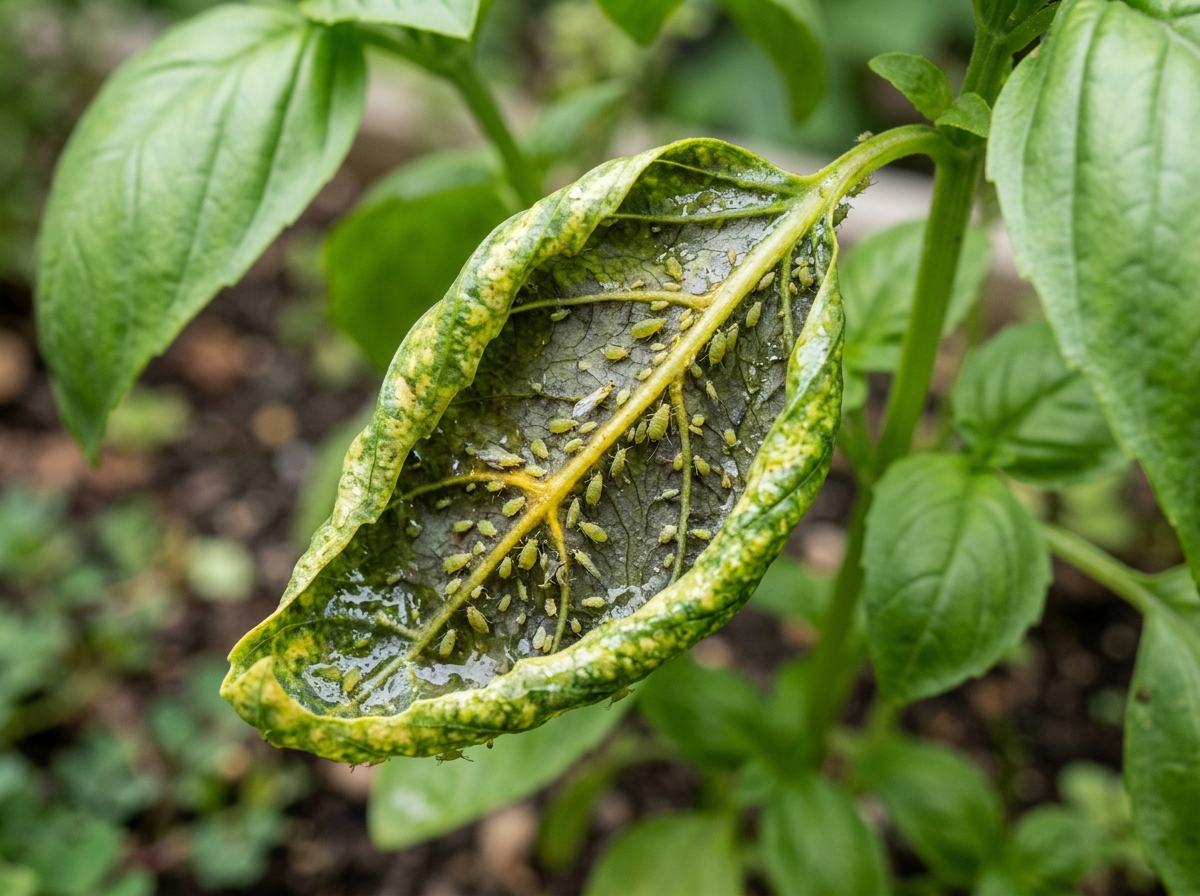
Fundamental Principles of Organic Basil Pest Solutions
At Ponto de Arte, we believe that the best organic basil pest solutions aren’t just about what you spray; they are about how you grow. We focus on a “layered defense” strategy.
1. Proactive vs. Reactive Management
Don’t wait until your basil is half-eaten to act. Research shows that being proactive can reduce pest pressure by 30% to 60%. This means checking your plants daily. A quick peek under the leaves while you’re drinking your morning coffee can save you a lot of heartache later.
2. Plant Vigor is Your Best Defense
Healthy plants are 40% to 60% more resistant to pests than stressed plants. Think of it like a human immune system; when your basil is strong, it can literally “fight off” minor pest attacks. This starts with understanding the Organic Care Tips for Healthy Plants.
3. Soil Health is Everything
Pests are often attracted to plants that are struggling due to nutrient deficiencies. Enriching your soil with high-quality compost or organic matter ensures your basil has the “fuel” it needs to grow tough, aromatic leaves that are less appealing to bugs. If you’re new to this, we recommend you Discover the Basics of Organic Gardening.
Cultural Practices and Prevention Strategies
“Cultural practices” is just a fancy gardening term for how you maintain your garden. These simple habits are the foundation of any successful pest management plan.
Air Circulation and Spacing
Crowded plants are a playground for pests and diseases. We recommend spacing your basil plants at least 12 to 16 inches apart. This allows air to flow freely, which dries out the foliage and makes it harder for pests like spider mites or fungus to take hold.
Sunlight and Temperature
Basil is a sun-lover. It needs at least 6 to 8 hours of direct sunlight every day. If it’s grown in the shade, it becomes “leggy” and weak—essentially a “kick me” sign for aphids. Also, basil is a warm-weather herb; it can be damaged if temperatures drop below 40°F.
Proper Watering Techniques
Never water your basil from above if you can help it. Wet leaves attract slugs and encourage fungal diseases. Instead, aim your watering can at the base of the plant. Watering early in the morning is best, as it allows any accidental splashes to dry before nightfall. For more specific advice, see these Managing Pests in Gardens: Herbs: Cultural Tips for Growing Basil.
Sanitation and Rotation
- Cleanliness: Remove fallen leaves and debris around your plants. This eliminates hiding spots for slugs and breeding grounds for beetles. Regular sanitation can reduce pest populations by 30% to 50%.
- Crop Rotation: Don’t plant your basil in the exact same spot every year. Moving it around helps break the life cycles of soil-borne pests like nematodes.
If you are Growing Basil Indoors, these practices are even more critical because the natural predators found outside aren’t there to help you.
Effective Organic Sprays and Natural Treatments
Sometimes, despite our best preventative efforts, pests find a way in. When that happens, we turn to safe, organic treatments.
Neem Oil: The Organic Powerhouse
Neem oil is derived from the seeds of the neem tree. It works by disrupting the hormonal systems of insects, making it difficult for them to feed or reproduce.
- How to use: Mix 1-2 tablespoons of neem oil with a teaspoon of mild dish soap (to help it mix) in a gallon of water. Spray both the tops and bottoms of leaves.
- Effectiveness: It can control 70% to 90% of soft-bodied pests.
Insecticidal Soaps
These are perfect for “knockdown” control of aphids and whiteflies. You can buy commercial versions or make your own using pure Castile soap.
- DIY Recipe: Mix 1 tablespoon of Castile soap per quart of water.
- Tip: Always test a small area of the plant first to ensure it doesn’t cause leaf burn.
Garlic and Chili Repellents
Pests hate strong smells. A garlic or pepper spray won’t necessarily kill the bugs, but it will make your basil taste terrible to them.
- Garlic Spray: Blend two whole bulbs of garlic with a little water, let it sit overnight, strain it, and dilute it into a gallon of water.
- Chili Spray: Use red pepper flakes or fresh chilies steeped in boiling water to create a spicy deterrent.
Pyrethrin and Spinosad
For more severe infestations, you might look at these naturally derived insecticides.
- Pyrethrin: Derived from chrysanthemums, it attacks the nervous system of insects. It can kill up to 90% of bugs on contact.
- Spinosad: A soil-dwelling bacterium that is highly effective against caterpillars and thrips.
For more recipes and application tips, check out our guide on DIY Organic Pesticides for Home Gardeners and Natural Pest Control Methods for Organic Gardening.
Biological Controls and Companion Planting
One of our favorite organic basil pest solutions is letting nature do the work for us. By creating a biodiverse garden, you invite “good bugs” to eat the “bad bugs.”
Encouraging Beneficial Insects
Ladybugs and lacewings are the lions of the garden. A single ladybug can eat up to 50 aphids a day! To attract them, plant flowers like fennel, dill, or yarrow nearby. Avoid broad-spectrum pesticides—even organic ones—during the day when these helpers are active.
Companion Planting for Basil
Certain plants act as natural bodyguards for your basil. Here is a quick reference table:
| Companion Plant | Pest It Repels | Why It Works |
|---|---|---|
| Marigolds | Nematodes, Whiteflies | Strong scent and root chemicals |
| Garlic/Chives | Aphids, Mites | Pungent aroma confuses pests |
| Nasturtiums | Aphids, Squash Bugs | Acts as a “trap crop” |
| Petunias | Leafhoppers, Aphids | Natural repellent properties |
For a full list of garden protectors, see the 10 Best Herbs for Pest Control to Save Your Garden and Your Guide to Companion Planting for a Thriving Vegetable Garden.
Targeted Organic Basil Pest Solutions for Sap-Suckers
Sap-sucking insects are particularly annoying because they can transmit diseases to your plants while they feed.
Aphids and Thrips
If you find aphids, the simplest first step is a strong blast of water from the hose. This physically knocks them off the plant. Since they are slow-moving, they often can’t find their way back. If they persist, follow up with a neem oil rotation. We’ve put together a specialized Stop the Sap Suckers: A Guide to Aphid-Free Herbs to help you win this battle.
Whiteflies
Whiteflies are attracted to the color yellow. Using yellow sticky traps placed at leaf level can significantly reduce the adult population. For indoor gardeners, Aphids on Basil Indoors Are a Real Buzzkill, so consider adding reflective mulch (like aluminum foil) around the base of the plant to confuse flying insects.
Organic Basil Pest Solutions for Slugs and Snails
Slugs are the “Darth Vaders” of the basil world—they strike in the dark and leave destruction in their wake.
Beer Traps
This is a classic for a reason. Slugs are attracted to the yeast in beer.
- Bury a shallow container (like a tuna can) so the rim is level with the soil.
- Fill it with cheap beer.
- The slugs crawl in and drown. Pro Tip: Place traps 2-3 feet away from your basil so you don’t attract more slugs directly to your plants!
Physical Barriers
- Copper Tape: Placing copper tape around the rim of your pots creates a tiny electric reaction that slugs refuse to cross.
- Diatomaceous Earth (DE): This powder is made from fossilized algae. To an insect, it’s like walking over broken glass. Sprinkle food-grade DE around the base of your plants. Note: It only works when dry, so reapply after rain.
- Crushed Eggshells: While less effective than DE, some gardeners find that a thick ring of sharp eggshells deters crawling pests.
Iron Phosphate
If the infestation is severe, look for organic slug bait containing iron phosphate. It is safe for pets and birds but highly effective at stopping slugs from feeding. Using a combination of these methods can achieve 70% to 95% control. For more help, see our specific advice on Pest Control for Herb Gardens.
Frequently Asked Questions about Basil Pests
How to get rid of insects on basil while leaving leaves safe to eat?
The best way is to use “mechanical” or food-safe methods. Physical removal (hand-picking or water sprays) is 100% safe. If you use neem oil or insecticidal soap, simply wash the leaves thoroughly before eating. Most organic sprays have a “pre-harvest interval” of 0-1 days, but we always recommend waiting 24 hours after spraying before you harvest for your pesto.
When should I use organic pest control methods for basil?
Ideally, you should use them preventatively. Apply neem oil or garlic spray every 7-10 days during the peak growing season. If you see an active infestation (more than a few bugs), increase treatment to every 3-5 days until the pests are gone.
Which companion plants effectively deter basil pests?
Marigolds are the gold standard for repelling whiteflies and nematodes. Alliums (like chives and garlic) are excellent for warding off aphids. If you have space, planting nasturtiums nearby can act as a “trap crop,” drawing aphids away from your precious basil.
Conclusion
Mastering organic basil pest solutions is about more than just killing bugs; it’s about fostering a balanced ecosystem in your garden. By focusing on soil health, proper spacing, and natural treatments, you can enjoy a massive harvest of fragrant, hole-free leaves all summer long.
At Ponto de Arte, we are dedicated to helping you protect your aromatic treasures. Whether you are just starting out or are a seasoned pro, a little bit of daily observation goes a long way.
Ready to dive deeper into sustainable gardening? Check out our Natural Pest Control for Beginners or browse more organic gardening tips to keep your entire herb garden thriving. Happy planting!
