
Why the Right Potting Mix for Herbs Makes or Breaks Your Garden
The best potting mix for herbs is loose, free-draining, and lightly nutritious — here’s a quick summary:
| Feature | What You Need |
|---|---|
| Drainage | Fast-draining, never waterlogged |
| Texture | Light and airy, not compacted |
| pH | 6.0 to 7.0 (acidic to neutral) |
| Nutrients | Moderate — too much burns roots |
| Key ingredients | Perlite, coir or peat, compost |
| Avoid | Heavy garden soil, moisture-control additives |
You’ve done everything right. You picked a sunny spot. You watered carefully. You even talked to your basil.
And then your herbs died anyway.
Sound familiar? You’re not alone. One of the most common reasons herbs fail — especially indoors — comes down to one thing: the wrong potting mix.
Herbs are not like most houseplants. Most of them come from the Mediterranean or other dry, rocky regions. Their roots hate sitting in wet, compacted soil. Put them in the wrong mix and they decline fast — sometimes within days.
The good news? Once you understand what herbs actually need from their soil, growing them becomes much more predictable. This guide breaks it all down clearly, so you can stop guessing and start growing.
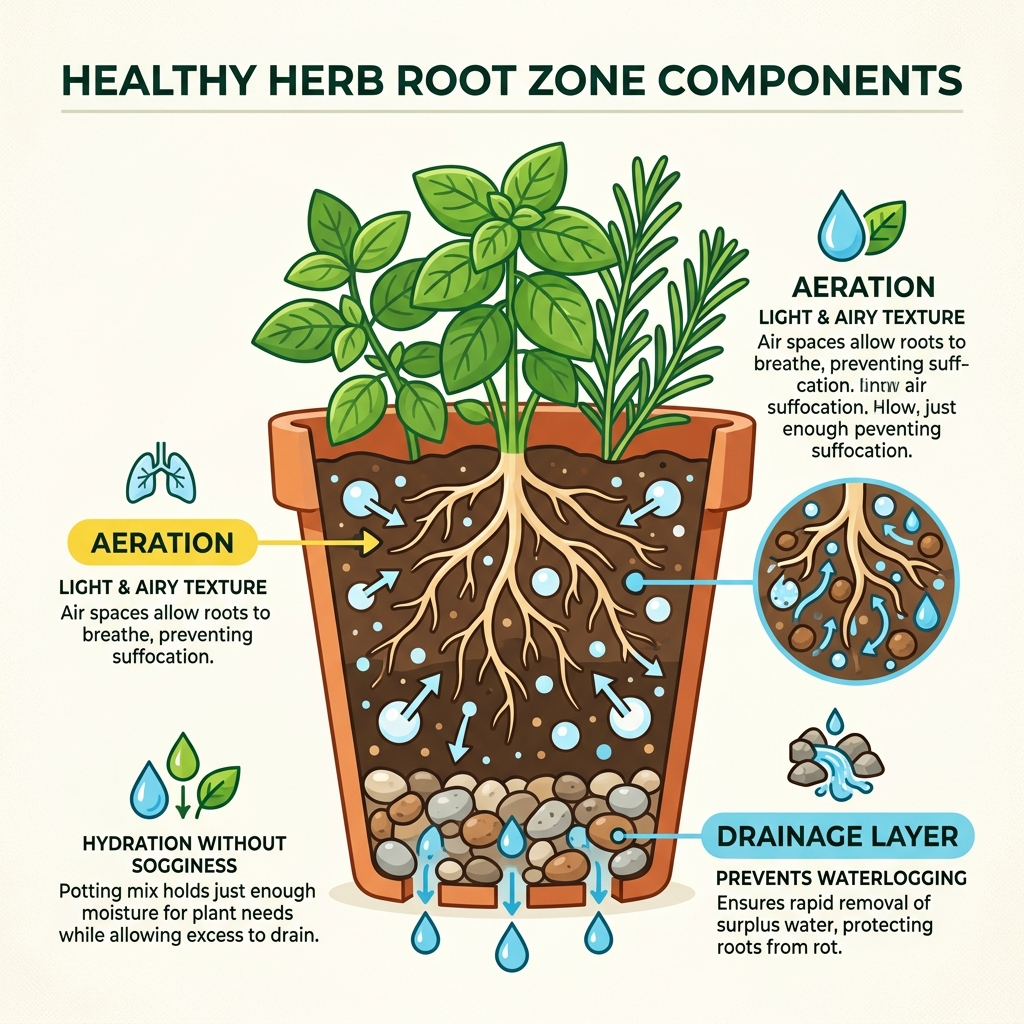
Essential Characteristics of the Best Potting Mix for Herbs
When we talk about the perfect potting mix for herbs, we aren’t just talking about “dirt in a bag.” In a container, the soil has to do a lot of heavy lifting. It needs to provide support, hold just enough water to keep the plant hydrated, and—most importantly—let the roots breathe.
Aeration and Drainage: The “Breathable” Factor
Most herbs, particularly rosemary, thyme, and oregano, are prone to “wet feet.” If the soil stays soggy, the roots literally suffocate and rot. A high-quality potting mix for herbs must be porous. This means it has plenty of tiny air pockets. When you water your herbs, the excess should run out of the bottom of the pot almost immediately. If the water sits on top of the soil like a puddle for more than a few seconds, your mix is too dense.
The pH Balance: Staying in the Sweet Spot
Herbs are a bit like Goldilocks when it comes to acidity. They don’t want it too sour (acidic) or too bitter (alkaline). Research shows the ideal pH range for most herbs is between 6.0 and 7.0. This slightly acidic to neutral range is where nutrients like nitrogen and phosphorus are most “available” to the plant. If the pH is off, your herb might be sitting in a pile of nutrients but unable to eat any of them. For more on setting up your space, check out our Indoor Herb Garden Ideas.
Moisture Retention vs. Waterlogging
This is the ultimate balancing act. You want a mix that holds moisture so you aren’t watering every twenty minutes, but you don’t want it to act like a sponge that never dries out. Ingredients like coconut coir or sphagnum peat moss help with retention, while perlite ensures the water doesn’t stick around too long. According to The Best Soil for Herbs—Grow a Fruitful Herb Garden, finding this balance is the secret to a fruitful harvest. We also recommend reading our Tips for Watering Herbs to master the art of the pour.
Key Ingredients to Look For (and What to Avoid)
Not all bags of soil are created equal. In fact, some “all-purpose” mixes are actually a death sentence for delicate herbs like cilantro or mint. Here is what we look for when we’re shopping for or mixing our own.
The Good Stuff: The Foundation of Growth
- Sphagnum Peat Moss or Coconut Coir: These provide the bulk of the mix. Peat is traditional, but coconut coir is a fantastic, more sustainable alternative that doesn’t become “hydrophobic” (hard to re-wet) when it dries out.
- Perlite: Those little white “Styrofoam-looking” bits. They are actually volcanic glass that has been heated until it pops like popcorn. They are essential for drainage.
- Vermiculite: Similar to perlite but holds a bit more water and nutrients. It’s great for moisture-loving herbs like basil.
- Dolomitic Lime: Often added to peat-based mixes to balance the natural acidity of the peat.
If you are just starting out, a specialized product like Indoor Herb Planters Soil can take the guesswork out of the equation. For those looking to dive deeper into the chemistry of their garden, our Preparation Tips for Organic Soil offer a great starting point.

What to Avoid: The Herb Killers
- Heavy Garden Soil: Never use soil from your backyard in a pot. It is too heavy, will compact into a brick, and often carries weed seeds and soil-borne diseases.
- Synthetic Moisture-Control Chemicals: Beware of mixes labeled “Moisture Control.” While they sound helpful, they often hold too much water for herbs, leading to root rot. Many gardeners have reported that Mediterranean herbs die within a week in these heavy, polymer-laden soils.
- Excessive Fertilizer: Some commercial mixes “feed for 9 months.” While this sounds great, the high salt content in these fertilizers can actually burn the tender roots of young herb seedlings.
Choosing an Organic Potting Mix for Herbs
If you are growing herbs for cooking, you likely want to keep things organic. An organic potting mix for herbs uses natural sources for nutrients rather than chemical salts.
- Worm Castings: Often called “black gold,” these provide a gentle, slow-release boost of nutrients and beneficial microbes.
- Compost: High-quality, sterilized compost adds organic matter and improves soil structure.
- Blood and Bone: These provide nitrogen and phosphorus for leafy growth and strong roots.
- Gypsum: Helps improve soil structure and provides calcium without changing the pH.
Products like PRO-MIX Organic Vegetable & Herb Mix are OMRI-listed, meaning they are certified for organic use. For more tips on keeping your kitchen garden natural, see our guide on Organic Soil for Herbs.
Indoor vs. Outdoor: Tailoring Your Herb Soil Mix
Where you grow your herbs changes what kind of soil they need. An herb sitting on a windy, scorching-hot balcony in July has very different needs than one sitting on a cool kitchen windowsill.
The Indoor Challenge: Low Evaporation
Indoors, there is less airflow and less intense sunlight. This means water stays in the soil much longer. If you use a heavy soil indoors, it may never dry out, leading to mold and fungus gnats. Indoor mixes need to be extra light and airy. If you’re setting up a Kitchen Windowsill Herb Garden, we suggest adding an extra handful of perlite to any commercial mix you buy.
The Outdoor Challenge: The Drying Sun
Outdoor containers, especially those made of porous materials like terracotta, dry out incredibly fast. You might need a mix with a bit more compost or coconut coir to help hold onto moisture during a heatwave. According to Growing Herbs in Outdoor Containers, grouping herbs with similar water needs in larger pots can also help regulate soil temperature and moisture.
| Requirement | Indoor Herbs | Outdoor Herbs |
|---|---|---|
| Drainage | Extremely High (to prevent rot) | Moderate to High |
| Moisture Retention | Low (soil stays wet longer) | High (sun/wind dry pots fast) |
| Sterilization | Mandatory (to avoid indoor pests) | Recommended but less critical |
| Fertilizer | Light, frequent liquid feeding | Slow-release granules work well |
Whether you are in a high-rise or a house with a yard, Container Gardening for City Homes provides excellent context for these environmental differences.
Preventing Pests in Your Potting Mix for Herbs
At Ponto de Arte, we specialize in protecting your aromatic treasures from unwanted guests. One of the biggest pests in herb gardening is the fungus gnat. These tiny black flies lay their eggs in moist soil, and their larvae munch on your herb’s roots.
To prevent them:
- Use Sterile Components: Avoid mixes with “forest products” or unsterilized bark, which are often breeding grounds for gnats.
- Ensure Proper Drainage: Gnats need consistently wet topsoil to survive. Use pots with plenty of drainage holes and let the top inch of soil dry out between waterings.
- Avoid Bark-Heavy Mixes: Bark holds moisture and decays, providing the perfect food for gnat larvae.
Healthy roots are your best defense. If your herbs are stressed by poor soil, they are much more susceptible to infestations. You can find more strategies in our article on Small Space Gardening in Urban Areas.
DIY Recipes: How to Make Your Own Herb Potting Soil
If you’re a “do-it-yourself” kind of gardener, mixing your own potting mix for herbs is incredibly rewarding. It’s often cheaper, and you know exactly what’s in it. No mystery chemicals here!
The Classic 2:1:1 Herb Mix
This is a foolproof recipe that works for almost any container herb:
- 2 Parts Coconut Coir or Peat Moss (The base)
- 1 Part Perlite (For drainage)
- 1 Part Sterilized Compost or Worm Castings (For nutrients)
The Mediterranean “Dry” Mix
For rosemary, lavender, and sage, we like to add a bit of coarse sand or rice hulls to the mix. This mimics the rocky, well-draining soil of their native homes.
- 1 Part Coconut Coir
- 1 Part Coarse Sand
- 1 Part Perlite
- 1/2 Part Compost
Peat-Free Sustainability
Many gardeners are moving away from peat moss because of the environmental impact of harvesting peat bogs. You can easily substitute coconut coir or even finely shredded leaf mold. If you have your own compost pile, you’re already halfway there! Check out Composting for the Organic Gardener for tips on making your own “black gold.”
For more detailed blending instructions, see our Preparation Tips for Organic Soil and our guide on Herb Garden in Small Spaces.
Frequently Asked Questions about Herb Soil
What is the ideal pH for a potting mix for herbs?
As mentioned, most herbs thrive in a pH of 6.0 to 7.0. If your soil is too acidic (common in peat-heavy mixes), you can add a small amount of garden lime to bring it up. If it’s too alkaline, adding organic matter like compost will naturally help lower it over time. For a deep dive into soil chemistry, read our Tips to Prepare Organic Soil.
Can I use standard garden soil in containers?
We strongly advise against it! Garden soil is far too dense. In the ground, gravity and earthworms help move water and air through the soil. In a pot, garden soil will pack down like wet cement, suffocating your herb’s roots. Plus, you’ll likely bring hitchhiking pests into your home. If you want to turn a small space into a green haven, stick to lightweight potting mixes as discussed in Indoor Gardening: Turning Small Spaces into Green Havens.
How often should I fertilize herbs in pots?
Herbs are generally not “heavy feeders.” If you use a mix with compost or worm castings, you might not need to fertilize for the first 4-6 weeks. After that, we recommend a half-strength liquid organic fertilizer every 2-3 weeks during the growing season. Over-fertilizing can actually lead to fast growth with less flavor, as the essential oils become diluted. For more harvesting and feeding secrets, check out our Organic Herb Gardening Tips.
Conclusion
Finding the right potting mix for herbs doesn’t have to be a guessing game. By focusing on drainage, aeration, and high-quality organic ingredients, you give your kitchen garden the foundation it needs to thrive. The goal is to mimic the natural environment of these plants—usually sunny, breezy, and well-drained.
At Ponto de Arte, we know that a healthy garden starts from the ground up. By choosing the right soil, you’re not just growing plants; you’re building an ecosystem that is naturally resistant to pests and disease. If you do run into trouble with gnats or other soil-borne pests, our specialized pest protection solutions are designed to keep your aromatic herbs safe and edible.
Ready to get your hands dirty? Find the best organic soil for herbs and start your journey toward a more flavorful kitchen today!
