
Why Caterpillars Are Destroying Your Bay Laurel (And How to Stop Them)
The bay leaf caterpillar killer you need depends on how bad the infestation is and whether you want to stay organic. Here’s a quick answer:
Top options to eliminate caterpillars on bay plants:
- Bacillus thuringiensis var. Kurstaki (Bt) – A naturally occurring soil bacterium. Caterpillars eat it, stop feeding immediately, and die within days. Safe for bees, birds, and earthworms.
- Spinosad (e.g., Monterey Garden Insect Spray) – Another organic-approved option. Broader spectrum than Bt. Also OMRI listed for organic gardens.
- Bay leaf fumigants – Research shows bay leaf volatile compounds can kill lepidopteran larvae directly. Best for enclosed spaces and stored goods.
- Integrated pest management (IPM) – Combine Bt or Spinosad with natural predators like lacewings and ladybugs for long-term control.
You worked hard to grow your bay laurel. The leaves smell incredible. Then one morning you notice rolled-up leaves, ragged edges, and tiny black droppings.
Caterpillars — specifically leafrollers — are common culprits on bay trees and other aromatic herbs. They hide inside curled leaves, making them hard to spot and even harder to treat.
The damage isn’t just cosmetic. A heavy infestation can defoliate an entire plant, stripping it of the fragrant leaves you grew it for in the first place.
The good news? There are proven, safe, organic solutions that work fast — without putting your herbs, your family, or your garden’s beneficial insects at risk.
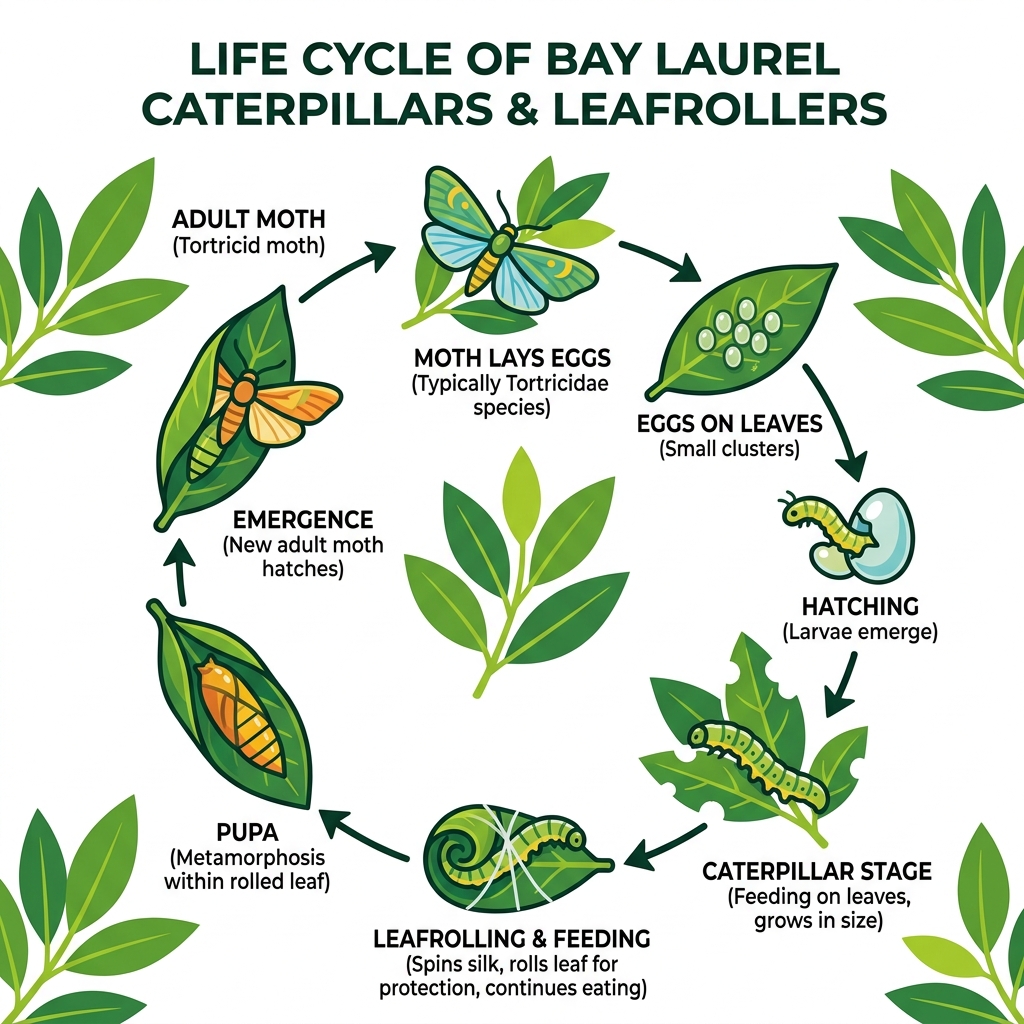
Identifying the Culprits: Leafrollers and Caterpillars on Bay Trees
Before we reach for the bay leaf caterpillar killer, we need to know exactly who we are fighting. On bay laurel (Laurus nobilis), the most common “invisible” enemy is the leafroller. These are the larval stages of various Tortricid moths. Unlike a large, obvious tomato hornworm, leafrollers are masters of disguise.
They earn their name by spinning silken threads that pull the edges of a bay leaf together, creating a protective tube. Inside this “bunker,” they munch away in safety, hidden from birds and many surface-applied sprays. If you see a leaf that looks like it’s been glued shut, you’ve found their home.
Beyond the rolled leaves, look for ragged leaf edges where the caterpillar has been feeding. In severe cases, you might see complete defoliation, where the plant is stripped of its greenery, leaving only the tough midribs behind. This is why pest-control-for-herb-gardens is so vital; herbs like bay are grown specifically for their foliage, so every bite a caterpillar takes is a loss for your kitchen.
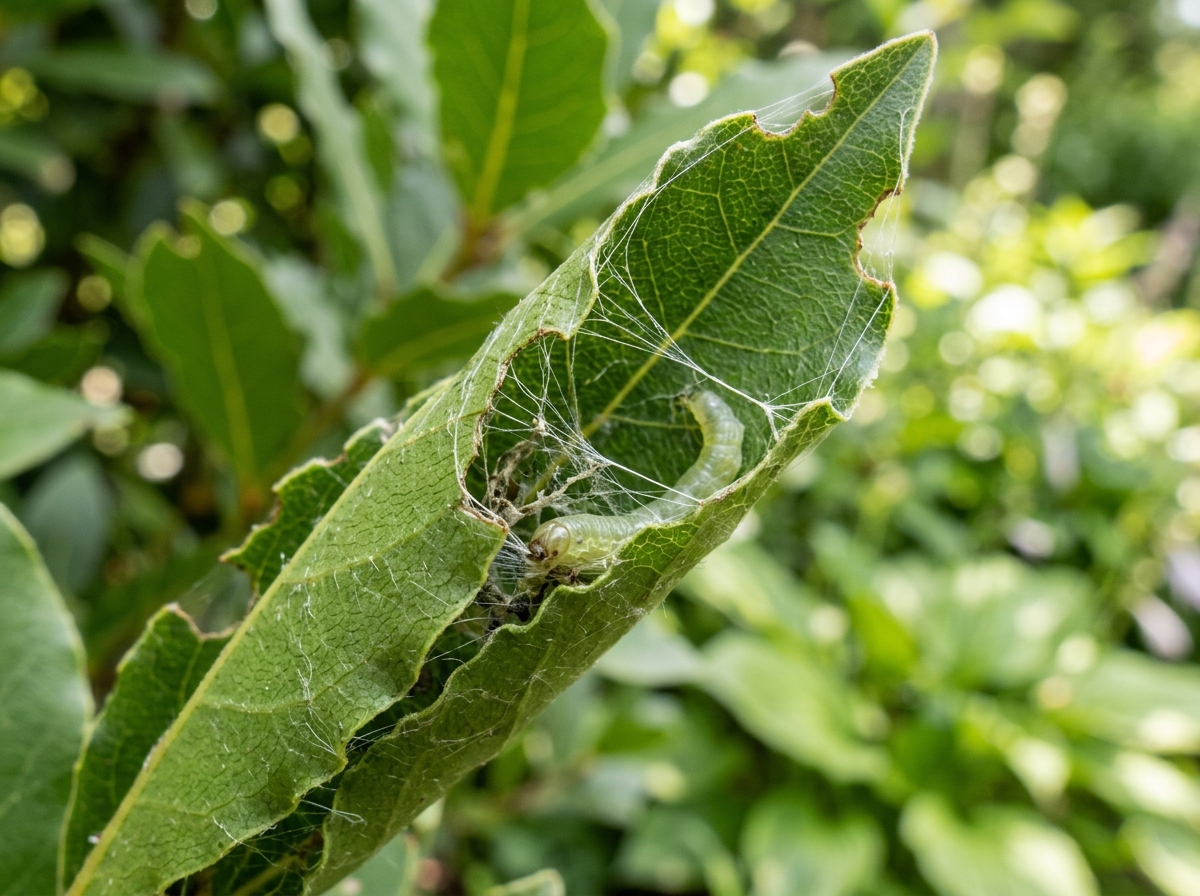
Common Signs of Infestation
If you suspect your bay tree is under attack, look for these four “red flags”:
- Rolled or Webbed Leaves: The most obvious sign. The caterpillar uses silk to create a shelter.
- Black Droppings (Frass): Small, grain-like black specks on the lower leaves or the ground beneath the plant. This is caterpillar waste.
- Skeletonized Foliage: Leaves that look like lace because the soft tissue has been eaten away, leaving only the veins.
- Larval Exit Holes: Tiny pinholes in the leaves or egg masses, indicating that the next generation has already hatched and started feeding.
The Best Bay Leaf Caterpillar Killer: How Bt and Spinosad Work
When it comes to reclaiming your herb garden, we recommend two primary biological heavy hitters: Bacillus thuringiensis (Bt) and Spinosad.
Bacillus thuringiensis var. Kurstaki (Btk) is a naturally occurring bacterium found in soil. It is a highly specific bay leaf caterpillar killer. When a caterpillar eats a leaf treated with Bt, the protein crystals in the bacteria activate in the insect’s highly alkaline digestive system. This causes immediate digestive paralysis. The caterpillar stops eating within minutes and dies of starvation or septicemia within 48 hours to a few days. Because it requires a specific gut pH to work, it is completely harmless to humans, pets, birds, and even honeybees.
Spinosad (found in products like Monterey Garden Insect Spray) is derived from a different soil bacterium. It works on the insect’s nervous system. While Bt only targets caterpillars, Spinosad has a broader reach, also controlling thrips, leafminers, and even some beetles. It is an excellent choice if your bay tree is facing multiple pest issues at once.
| Feature | Bacillus thuringiensis (Bt) | Spinosad |
|---|---|---|
| Target Pests | Specifically caterpillars/leafrollers | Caterpillars, thrips, beetles, leafminers |
| Speed of Action | Stops feeding immediately; death in 2-5 days | Death usually within 1-2 days |
| Safety Profile | Extremely safe for all beneficial insects | Safe for most; toxic to bees only if sprayed while active |
| Persistence | Breaks down quickly in sunlight (1-2 days) | Lasts slightly longer (up to 4 weeks) |
| Organic Status | Usually OMRI Listed | Usually OMRI Listed |
Choosing the Right Bay Leaf Caterpillar Killer for Organic Gardens
For those of us dedicated to natural-pest-control-methods-for-organic-gardening, the “OMRI Listed” seal is our gold standard. This certification ensures the product meets strict organic production standards.
Microbial insecticides like Bt are preferred because they are “surgical” in their approach. They don’t wipe out the “good bugs” like ladybugs or lacewings that help keep aphids in check. By choosing a targeted bay leaf caterpillar killer, you maintain the biological balance of your garden while protecting your harvest.
When to Apply Your Bay Leaf Caterpillar Killer for Maximum Efficacy
Timing is everything. If you spray too early (before eggs hatch) or too late (when caterpillars are large and protected in deep rolls), you won’t see the best results.
- Early Instars: Bt is most effective when caterpillars are small (under 1/2 inch).
- Evening Application: Both Bt and Spinosad break down in UV light. Applying in the late afternoon or evening gives the product all night to work before the sun degrades it.
- Petal Fall: For bay trees near fruit trees, the “petal fall” stage is a critical window to prevent larvae from moving onto young fruit.
- Weather Watch: If it rains within 24 hours of application, you’ll likely need to reapply. Check out our guide on diy-organic-pesticides-for-home-gardeners for more tips on making your sprays stick.
The Science of Bay Leaves: Can the Herb Itself Kill Caterpillars?
It sounds like a paradox: can the very plant being eaten actually be the bay leaf caterpillar killer? Science says yes.
Bay leaves (Laurus nobilis) are packed with essential oils like Eucalyptol (1,8-cineole), Cineole, Linalool, and Alpha-pinene. These compounds aren’t just there for our soups; they are the plant’s natural defense system. Research has shown that bay leaf volatile compounds can act as potent fumigants.
In a landmark study on Cadra cautella (the almond moth, a relative of garden leafrollers), bay leaf tablet fumigants achieved 100% mortality of eggs, larvae, and adults at concentrations as low as 3 ml per liter of air. The LC50 (lethal concentration for 50% of the population) for larvae was found to be 0.982 ml/l after 24 hours. The compounds disrupt the insect’s nervous system by inhibiting Acetylcholinesterase (AChE), leading to paralysis and death. You can read more about this in the Research on Bay Leaf Tablet Fumigants.
This is why many people consider bay-leaves-the-secret-weapon-in-your-pantry-and-closet/—the same oils that kill moth larvae in a lab can repel pests in your home.
Natural Repellency vs. Insecticidal Action
It’s important to distinguish between repelling and killing.
- Repellency: The strong aroma of bay leaves disrupts the sensory systems of many insects, masking food smells and making the area “smell” dangerous or unpalatable. This is great for prevention.
- Insecticidal Action: At high concentrations (like in essential oils or fumigant tablets), the compounds actually become toxic. While your garden bay tree clearly isn’t “killing” the leafrollers currently eating it, concentrated extracts of the plant are highly effective.
Step-by-Step Guide to Eliminating Pests on Aromatic Herbs
Ready to take action? Follow this step-by-step guide to applying a bay leaf caterpillar killer effectively and safely.
- Inspect and Hand-Pick: Start by manually removing any rolled leaves you see. Squishing the caterpillar inside the roll is the fastest way to reduce the population.
- Prepare Your Solution: If using a Bt concentrate (like Safer Brand Caterpillar Killer), mix according to the label—usually about 2-4 teaspoons per gallon of water.
- Thorough Coverage: Use a high-pressure or hose-end sprayer. You must coat the entire plant. Since caterpillars hide in rolls, the spray needs to penetrate those crevices.
- Target the Undersides: Most caterpillars hang out on the undersides of leaves to avoid the sun and predators. Make sure your nozzle is aimed upward.
- Observe Pre-Harvest Intervals (PHI): One of the best things about Bt is that it has a PHI of 0 days—you can technically spray and harvest the same day (though we recommend washing the leaves!). Spinosad usually has a 1-day PHI for herbs.
- Repeat: Bt is not a “one and done” solution. Reapply every 5-7 days while caterpillars are active to catch new hatchlings.
For more detailed advice for beginners, check out our natural-pest-control-for-beginners.
Integrated Pest Management (IPM) Strategies
At Ponto de Arte, we believe in a holistic approach. Don’t just rely on sprays; build an ecosystem that fights for you.
- Attract Natural Predators: Ladybugs, lacewings, and parasitic wasps (like Ichneumonid wasps) love to eat small caterpillars. Planting flowers like dill or yarrow nearby can attract these “garden police.”
- Encourage Birds: Many birds find leafrollers to be a delicious snack. A birdbath or feeder nearby can increase “patrols” around your bay tree.
- Sanitation: Remove old, unharvested fruit or dead leaves from the base of the tree, as these can be overwintering sites for larvae.
Frequently Asked Questions about Bay Leaf Caterpillar Killer
Is Bt safe to use on herbs I plan to eat?
Yes! Bacillus thuringiensis is one of the safest insecticides available. It targets a specific enzyme in the caterpillar’s gut that humans simply don’t have. It is used widely in organic commercial farming. Just give your bay leaves a quick rinse before adding them to your stew to remove any dried residue.
How often should I reapply caterpillar killer to my bay tree?
Because Bt and Spinosad are biological products, they break down in sunlight and wash away with rain. For an active infestation, reapply every 5 to 7 days. Once you no longer see new rolled leaves or fresh droppings, you can stop.
Can I use dried bay leaves to protect my garden from caterpillars?
Dried bay leaves are excellent for repelling pantry moths, weevils, and silverfish in your kitchen. However, in an open garden, the scent dissipates too quickly to stop an active caterpillar attack. For outdoor plants, a liquid bay leaf caterpillar killer like Bt is much more effective.
Conclusion
Protecting your bay laurel doesn’t have to involve harsh chemicals that ruin the very herbs you want to eat. By understanding the life cycle of the leafroller and using targeted, organic solutions like Bt and Spinosad, you can stop the crawl and save your harvest.
At Ponto de Arte, we are dedicated to helping you maintain a thriving, aromatic herb garden through sustainable and organic methods. Whether you are dealing with a single bay tree or a full kitchen garden, prevention and early intervention are your best tools.
Ready to learn more about keeping your urban oasis pest-free? More info about urban gardening solutions is just a click away. Happy gardening, and may your bay leaves always be whole and fragrant!
