
Identifying the Enemy: Signs of Aphids on Your Herbs
Before we can effectively get rid of aphids on herbs, we have to be sure of what we are looking at. Aphids are small, soft-bodied, pear-shaped insects. While many are green, they can also appear in shades of black, brown, yellow, or even a striking red. One of their most distinctive physical features is a pair of small tubes, called cornicles (or “tail pipes”), protruding from the rear of their abdomen.
Depending on the stage of their life cycle and the density of the colony, you might see both winged and wingless versions. Winged aphids typically appear when a colony becomes overcrowded, allowing them to fly off and infest your neighboring parsley or cilantro.
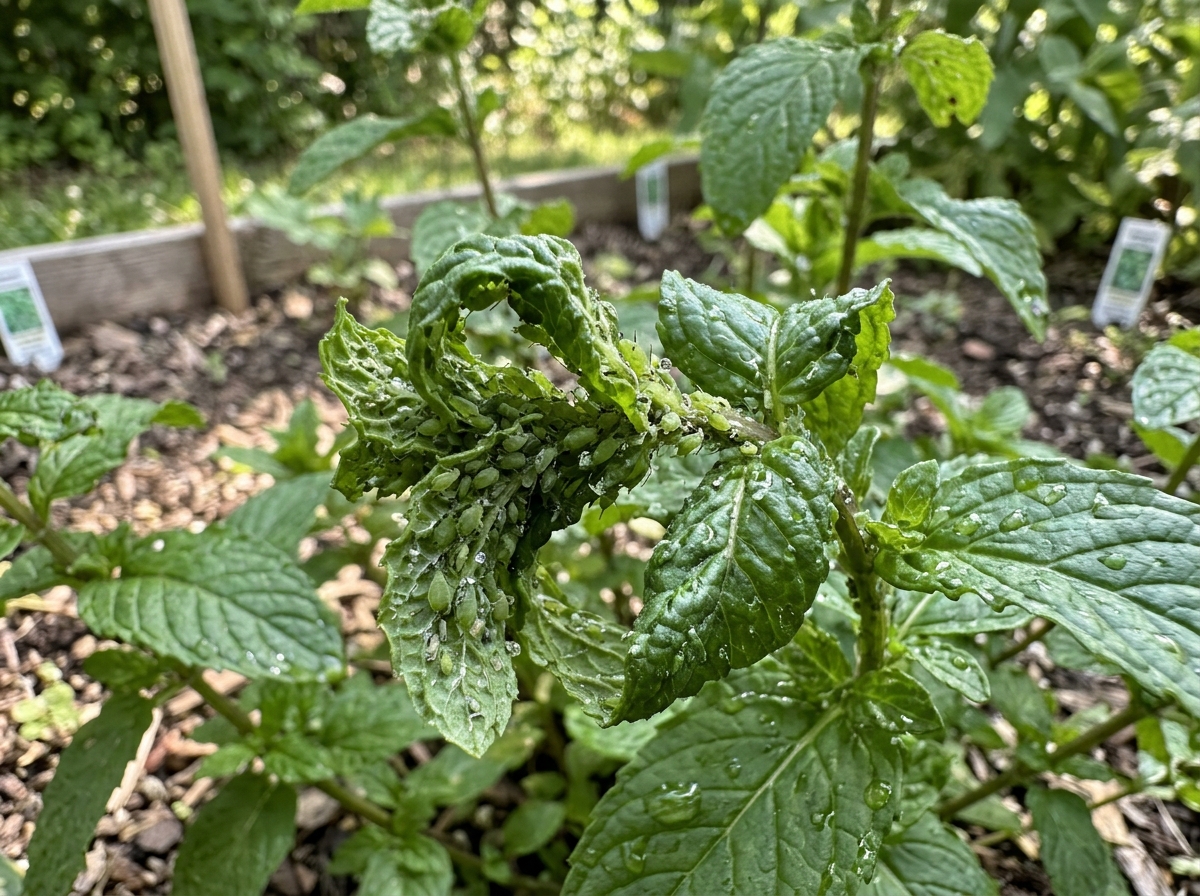
Because they are so small, you often notice the symptoms of their presence before you see the bugs themselves. Here is what to look for:
- Curled or Twisted Leaves: Aphids love tender new growth. As they suck the sap out of young leaves, the foliage often curls, puckers, or turns yellow.
- Sticky “Honeydew”: As aphids feed, they excrete a sugary, sticky substance known as honeydew. If your basil leaves feel like they’ve been sprayed with soda, you likely have an aphid problem.
- Sooty Mold: That sticky honeydew often plays host to a black fungus called sooty mold. While the mold itself doesn’t eat the plant, it can block sunlight and make your herbs look unappetizing.
- The Ant Parade: Ants and aphids have a fascinating, if annoying, relationship. Ants “farm” aphids for their honeydew, even going so far as to protect the aphids from natural predators like ladybugs. If you see a trail of ants heading up your rosemary bush, follow them—they are likely leading you to an aphid colony.
- Stunted Growth: Because aphids drain the plant’s energy, heavily infested herbs will stop growing or produce very small, weak leaves.
For a deeper dive into these pests, you can check out this Scientific identification and management of aphids. If you are just starting your gardening journey, we also have more info about natural pest control for beginners to help you set up a resilient garden.
How to Get Rid of Aphids on Herbs Naturally
When dealing with edible plants, we always prioritize food-safe remedies. You don’t want to trade a bug problem for a chemical residue problem. Most natural treatments for aphids work as “contact kills,” meaning the solution must physically touch the insect to work. Some, like neem oil, can have a mild systemic action where the plant absorbs the oil, making the sap distasteful or toxic to the bugs.

The following table compares the most common methods we recommend to get rid of aphids on herbs:
| Method | Speed of Action | Safety for Edibles | Best For |
|---|---|---|---|
| Water Blast | Immediate | 100% Safe | Sturdy herbs (Rosemary, Sage) |
| Soap Spray | Minutes | Very Safe | General infestations |
| Neem Oil | Days | Safe (Wait 24h to harvest) | Severe or recurring issues |
| Manual Removal | Immediate | 100% Safe | Small, early colonies |
For more DIY recipes, see our guide on more info about diy organic pesticides for home gardeners.
Using Water and Manual Removal to Get Rid of Aphids on Herbs
Sometimes the simplest solution is the best. If you catch the infestation early, you can often get rid of aphids on herbs without mixing a single spray.
The Strong Water Spray: Using a hose with a spray attachment, blast the aphids off the plants. Focus specifically on the undersides of the leaves, where they love to hide. Aphids are relatively weak; once knocked off, they rarely find their way back to the same plant. We recommend doing this in the morning so the plants have time to dry before nightfall, which helps prevent fungal diseases.
Manual Crushing and Pruning: If you see just a few aphids, you can simply crush them between your fingers (wear waterproof gloves if you’re squeamish!). If a particular stem is completely covered, it’s often better to prune it off entirely. Seal the infested clipping in a plastic bag and throw it in the trash. Always remember to disinfect your pruning tools with rubbing alcohol afterward to avoid spreading any lingering pests or viruses. You can find more info about natural pest control for beginners-2 here.
Homemade Sprays to Get Rid of Aphids on Herbs
If the water hose isn’t enough, it’s time to raid the kitchen cabinet.
- Insecticidal Soap Spray: This is the gold standard for natural control. Mix 1 tablespoon of a pure liquid soap, such as Dr. Bronner’s Pure Castile Liquid Soap, with about 2 quarts of water. Avoid detergents or soaps with degreasers, as these can strip the protective waxy coating off your herb leaves. Spray the solution directly onto the aphids. The soap suffocates them on contact. Rinse the leaves with fresh water after about an hour to prevent any leaf burn.
- Garlic Oil Spray: Aphids hate the smell and compounds in garlic. You can make a Garlic Oil Spray by soaking minced garlic in vegetable oil for 24 hours, then mixing it with water and a tiny bit of soap to help it stick.
- Neem Oil: Derived from the neem tree, Neem Oil is a powerful organic pesticide. It doesn’t just kill on contact; it also acts as a repellent and disrupts the aphids’ ability to grow and lay eggs.
- Essential Oils: You can create a fragrant deterrent by mixing 4-5 drops of peppermint, rosemary, or thyme essential oils with water in a spray bottle. This is particularly pleasant for use on kitchen herbs.
- Tomato Leaf Solution: Believe it or not, tomato leaves contain alkaloids that are toxic to aphids. Soak two cups of chopped tomato leaves in water overnight, strain the liquid, and use it as a spray. Note: Do not use this on nightshade plants like peppers or eggplants to avoid spreading viruses.
For more tips on keeping your herbs healthy, read our more info about organic herb gardening tips.
Biological Warfare: Enlisting Beneficial Insects and Predators
In a balanced ecosystem, you don’t need to do all the work. Nature has its own “clean-up crew” that finds aphids delicious.
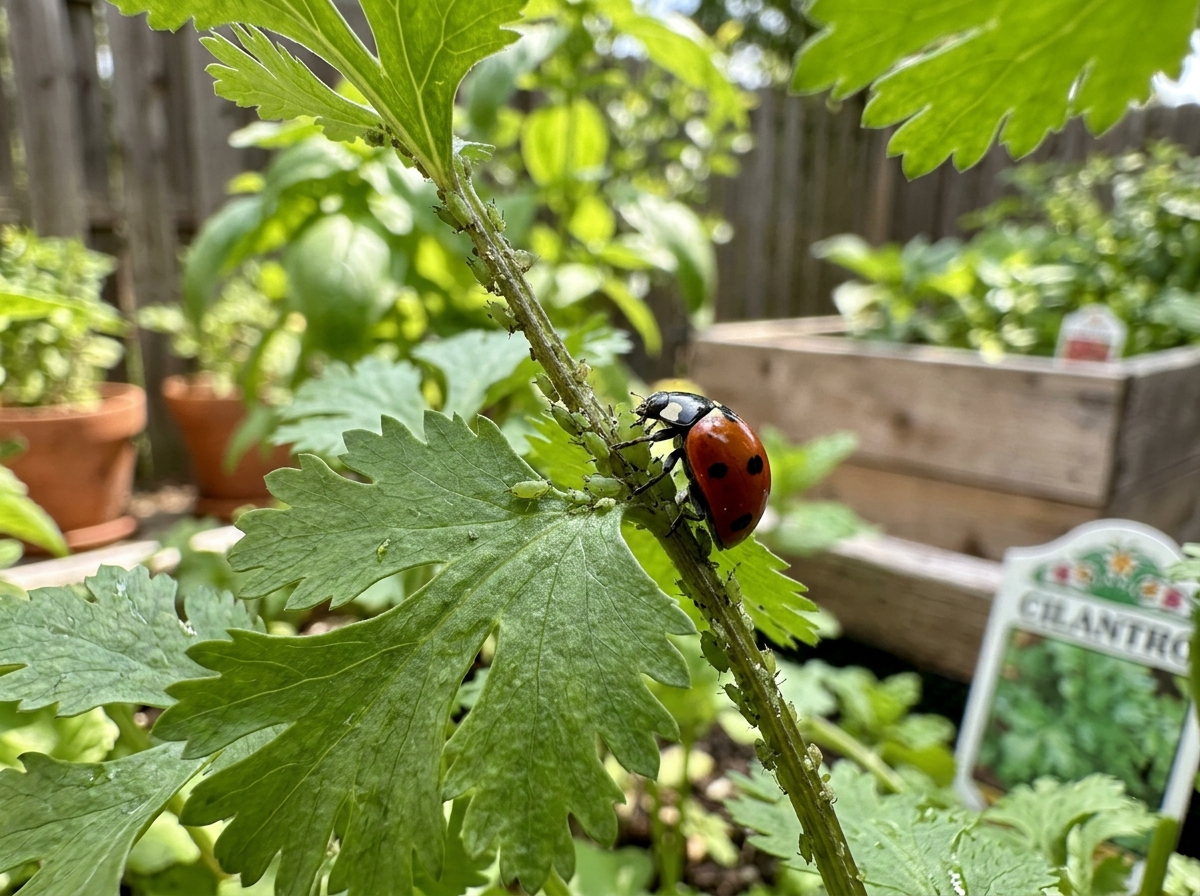
- Ladybugs: A single ladybug can eat up to 5,000 aphids in its lifetime. You can actually buy Live ladybugs to release in your garden. Pro tip: Release them at dusk and mist your plants with water first; this encourages them to stay and hydrate rather than flying away immediately.
- Green Lacewings: Often called “aphid lions” in their larval stage, these are even more voracious than ladybugs. You can purchase Green lacewing eggs and place them throughout your herb garden.
- Beneficial Nematodes: For aphids that attack the roots (common in some potted herbs), Beneficial nematodes can be added to the soil to hunt down pests beneath the surface.
- Hoverflies and Parasitic Wasps: These tiny garden residents are aphid-killing machines. You can attract them by planting “insectary plants” like alyssum, dill, and fennel.
- Birds: Small insect-eating birds like chickadees love an aphid snack. Installing a Bird Feeder or a Birdbath nearby will encourage these feathered friends to patrol your garden.
For the latest research on aphid-eating insects, scientists suggest that maintaining a diverse garden is the best way to keep these predators around long-term.
Long-Term Prevention and Companion Planting
The best way to get rid of aphids on herbs is to make sure they never want to visit in the first place.
Soil and Fertilizer Management: Aphids are attracted to the succulent, tender growth caused by high nitrogen levels. Avoid over-fertilizing with synthetic products. Instead, use slow-release organic fertilizers or compost. You can find more info about organic soil for herbs to help you build a balanced foundation.
Physical Deterrents:
- Diatomaceous Earth (DE): Sprinkle food-grade Diatomaceous Earth around the base of your plants. This powder is made of tiny fossilized algae that have razor-sharp edges (to a bug). It dehydrates aphids as they crawl over it.
- Reflective Mulch: Using silver or aluminum-colored mulch can confuse flying aphids, preventing them from landing on your herbs.
The Power of Companion Planting: Some plants act as natural bodyguards, while others act as “trap crops” to lure pests away.
- Repellent Plants: Plant these among your herbs to drive aphids away:
- Chives
- Garlic
- Onions
- Leeks
- Trap Crops: Plant these away from your main herb garden to give the aphids something else to eat:
- Nasturtiums (Aphids love these even more than basil!)
- Zinnias
- Cosmos
Frequently Asked Questions about Aphid Control
Is it safe to use natural remedies on herbs right before harvesting?
Yes, most of the remedies we’ve discussed are safe. However, common sense applies. If you use a soap spray, give the herbs a thorough rinse in the kitchen before eating them to avoid a “soapy” aftertaste. If you use neem oil, we recommend waiting at least 24 hours before harvesting. For more on this, see more info about organic herb gardening tips-2.
How often should treatments be repeated to ensure aphids are gone?
Aphids are “born pregnant” and can reproduce every few days. This means one survivor can restart the colony in a heartbeat. We recommend repeating your chosen treatment every 2-3 days for at least two weeks. This ensures you catch the new generations as they hatch.
Can ants worsen aphid problems in my herb garden?
Absolutely. Ants protect aphids from predators because they want the honeydew. If you have a persistent aphid problem, look for ant nests. Destroying the ant colony or using a sticky barrier at the base of your herb containers can stop the ants from protecting the “sap suckers,” allowing ladybugs and lacewings to do their job.
Conclusion
At Pontodearte, we understand that your herb garden is more than just a collection of plants—it’s your kitchen’s secret weapon and your personal apothecary. Our specialized focus on protecting aromatic herb gardens from pests means we prioritize methods that keep your harvest clean, organic, and flavorful.
By balancing your garden’s ecosystem, enlisting the help of “good bugs,” and using simple, food-safe sprays, you can get rid of aphids on herbs without sacrificing the quality of your plants. For more tailored advice, explore our guide on pest control for herb gardens or start your journey to an aphid-free herb garden today by browsing our latest urban gardening resources. Happy (and pest-free) growing!
