
Your Basil Looks Fine — Until It Doesn’t
Basil leaf miner control is something every herb gardener eventually needs to deal with. One day your plants look lush and green. A week later, you notice strange pale blotches or winding trails mapped across the leaves — and suddenly your prized basil looks like it’s been scribbled on from the inside.
Here’s a quick summary of the most effective ways to control basil leaf miners:
- Remove infested leaves immediately — pinch them off and dispose of them to kill larvae inside
- Install fine mesh row covers (0.8mm mesh) to block adult flies from reaching your plants
- Apply neem oil or spinosad as organic treatments targeting adults and newly hatched larvae
- Release or attract parasitic wasps (Diglyphus isaea) for biological control
- Use yellow sticky traps to catch adult flies before they lay eggs
- Practice crop rotation and garden sanitation to break the pest’s life cycle
Most home gardeners first mistake the damage for a fungal disease like leaf spot — the blotchy, discolored patches look deceptively similar. But look closely, and you’ll see the telltale signs: irregular pale mines, tiny tunnels, and sometimes even the larvae moving inside the leaf tissue.
The good news? You don’t need harsh chemicals. Organic and cultural methods work well, especially when you catch the problem early. Research shows that eco-friendly pest controls can reduce basil leaf miner infestations by over 40% compared to conventional approaches — and physical barriers like mesh netting can be 70–85% effective when used correctly.
This guide walks you through everything — from identifying the pest to eliminating it for good, without putting your herbs (or your dinner) at risk.

Identifying and Understanding the Basil Leaf Miner
Before we can master basil leaf miner control, we have to know exactly what we are fighting. In herbs, the primary culprits are often the larvae of small flies, specifically from the Liriomyza genus or the species Chromatomyia horticola. These aren’t your average houseflies; they are tiny, often black and yellow, and roughly 1/8 inch long.
The “miner” part of their name comes from the larvae’s behavior. After an adult female punctures the leaf to lay her eggs (leaving behind tiny, visible “stings” or puncture marks), the larvae hatch and begin eating their way through the middle layer of the leaf. They stay protected between the upper and lower epidermis, literally mining out the nutritious tissue.
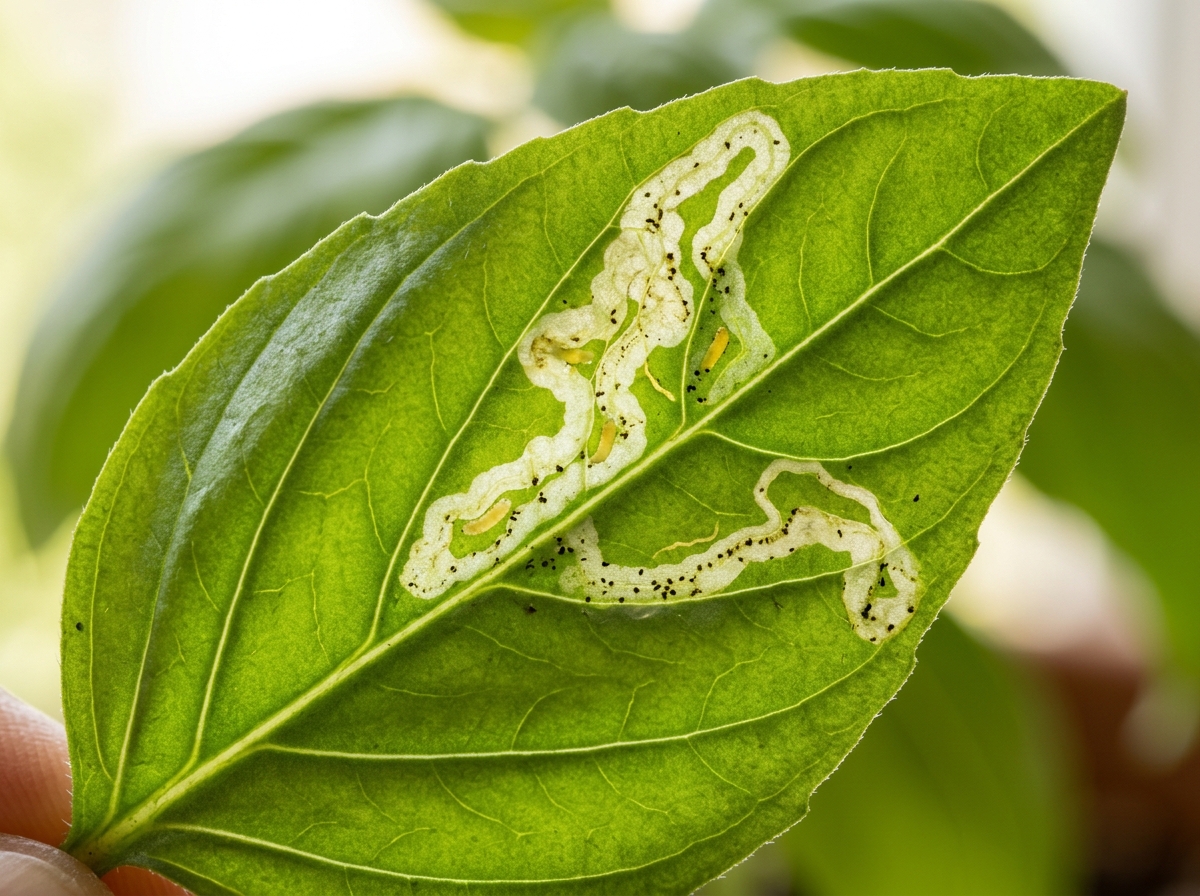
The “Blotch” vs. the “Serpentine” Mine
Not all leaf miners leave the same signature. Some create long, winding, “road map” style squiggles known as serpentine mines. However, on basil, we frequently see the Blotch Leafminer. These pests create irregular, beige, or whitish splotches that look like a community mine where several larvae have joined forces.
Avoiding the Misdiagnosis
It is incredibly common for gardeners to see these splotches and assume they have a fungal issue like leaf spot. According to Blotch Leafminer identification tips, the key difference is the texture. Fungal spots are usually dead tissue that feels thin and brittle. A leaf miner “blotch” often looks like the leaf has been separated, almost like a blister. If you hold the leaf up to the light, you can often see the dark specks of “frass” (insect waste) or even the tiny yellow larvae wiggling inside.
The Life Cycle and Why It Matters for Basil Leaf Miner Control
Understanding the rhythm of this pest is the secret to breaking its hold on your garden. The life cycle is remarkably fast, often completing in just two weeks during warm weather.
- Egg Laying: Females can lay around 250 eggs. They use their ovipositor to pierce the leaf, which also provides a meal of plant sap for the adult.
- Larval Mining: The eggs hatch in about 2 to 4 days. The larvae spend 2 to 3 weeks eating your basil from the inside out.
- Pupation: Once mature, the larvae cut a small slit in the leaf, drop to the ground, and burrow into the soil to pupate.
- Adult Emergence: About 9 to 15 days later, a new fly emerges from the soil, ready to start the process all over again.
Why does this matter? Because if you only treat the leaves, you miss the pupae waiting in the dirt. Effective pest control for herb gardens requires a multi-front war that addresses every stage of this cycle. In many regions, they even overwinter as larvae in the soil, meaning last year’s problem could easily become this year’s headache if you don’t practice good garden hygiene.
Cosmetic vs. Structural Damage to Basil
At first glance, leaf miner damage looks like a cosmetic “oopsie.” However, for a plant like basil where the foliage is the harvest, the impact is deep.
- Photosynthesis Reduction: As the larvae eat the green tissue, the plant’s ability to create energy drops. Heavy infestations can lead to stunted growth.
- Secondary Infections: Those tunnels act as open doors for bacteria and fungi.
- Flavor and Oil Loss: Research indicates that severe mining can reduce the essential oil content and aromatic quality of the basil.
- Leaf Mortality: If the mining is extensive enough, the leaf will wither, turn brown, and drop off prematurely.
Prevention Strategies for a Pest-Free Herb Garden
We always say that a gram of prevention is worth a kilo of cure. If you can stop the adult flies from ever touching your plants, you’ve won 90% of the battle.
Physical Barriers and Traps
The most effective way to prevent an infestation is to use fine mesh netting or floating row covers. For basil, a mesh size of 0.8mm is the gold standard. This is small enough to keep the tiny flies out while still letting in light and water. This is especially useful for high-value organic crops or your prized kitchen windowsill herbs.
If you are growing basil indoors, you aren’t automatically safe. Flies can hitch a ride on other plants or come through open windows. We recommend placing yellow sticky traps near your basil pots. These flies are naturally attracted to the color yellow; catching a few adults on a trap is an early warning system that tells you it’s time to inspect your leaves more closely.
Cultural Practices for Long-Term Basil Leaf Miner Control
Maintaining a healthy garden environment makes it much harder for pests to get a foothold. Here are our top natural pest control for beginners tips:
- Crop Rotation: Never plant basil in the same spot (or the same soil in a pot) where you had a leaf miner problem last year. Since they pupate in the soil, you’d be planting your basil right into a nursery of hungry flies.
- Weed Management: Many common weeds act as “host plants” for leaf miners. Keep your herb bed clear of surrounding weeds to reduce the local population.
- Post-Harvest Sanitation: Once the season is over, don’t just leave the old plants to rot. Pull them up and destroy them.
- Soil Solarization: If you’ve had a massive infestation, you can “cook” the pupae in the soil by covering the damp ground with clear plastic during the hottest weeks of summer.
Organic and Natural Methods for Basil Leaf Miner Control
If you already see those telltale squiggles, don’t panic. You can still save your pesto.
Manual Intervention
The simplest method is also one of the most effective: hand-picking. If you see a leaf with a mine, pinch it off and throw it in the trash (not the compost!). If the damage is minor and you don’t want to lose the whole leaf, you can try “the squeeze.” Locate the larva at the end of its tunnel and give it a gentle pinch to kill it without destroying the leaf.
If a specific pot is heavily infested, isolate it immediately. Leaf miners are mobile, and they will move to your tomatoes, peppers, or spinach if given the chance. For more DIY ideas, check out our guide on DIY organic pesticides for home gardeners.
Biological Control with Beneficial Insects
Nature has its own clean-up crew. Parasitoid wasps, specifically Diglyphus isaea and Dacnusa sibirica, are the natural enemies of leaf miners. These tiny wasps (harmless to humans!) lay their eggs inside or near the leaf miner larvae. When the wasp eggs hatch, they consume the leaf miner.
In some agricultural trials, biological controls reduced damage by 42% compared to chemical-only approaches. According to the UC IPM Leafminer Management Guidelines, if you see dead larvae inside the mines, it’s a sign that these “good guy” wasps are already at work. In such cases, you might not need to do anything at all! Avoid broad-spectrum pesticides, as these will kill your helpful wasps and actually cause a leaf miner explosion.
Homemade Sprays and Deterrents
If you want to take a more active approach, several kitchen staples can act as biochemical pesticides:
- Neem Oil: This is a classic for a reason. Neem oil (specifically the active ingredient azadirachtin) interferes with the insect’s hormones, making it impossible for larvae to mature or pupate. It is most effective when applied to the undersides of leaves where adults like to hide.
- Garlic and Cayenne Spray: Mixing two bulbs of garlic with a tablespoon of cayenne pepper and a liter of water creates a potent repellent. The capsaicin in the peppers acts as a natural deterrent, while the sulfur in the garlic makes the plant unappealing to egg-laying females.
- Vinegar Solution: A weak solution of vinegar and water can dehydrate soft-bodied insects, though use this sparingly as it can be tough on sensitive basil leaves.
Integrated Pest Management (IPM) and Treatment Thresholds
In professional gardening, we use a system called Integrated Pest Management (IPM). This means we don’t just reach for the strongest spray at the first sign of a bug. Instead, we use a tiered approach, starting with the least toxic methods.
| Control Method | Estimated Effectiveness | Sustainability Rating | Best For |
|---|---|---|---|
| Physical Barriers (Mesh) | 70–85% | Excellent | Prevention |
| Cultural (Rotation/Sanitation) | 60–75% | Excellent | Long-term control |
| Biological (Wasps) | 55–70% | High | Large gardens |
| Organic Sprays (Neem/Spinosad) | 50–70% | Moderate | Active infestations |
| Manual (Hand-picking) | High (if caught early) | Excellent | Small pots/Indoor |
We recommend setting a “treatment threshold.” For a home gardener, this might mean that if you see mines on more than 10-15% of your leaves, it’s time to move from hand-picking to an organic spray like Spinosad. Spinosad is a natural substance made by a soil bacterium that is highly effective against leaf miners while being relatively safe for the environment. You can learn more about these natural pest control methods for organic gardening to keep your harvest pure.
Frequently Asked Questions about Basil Leaf Miner Control
Can I eat basil leaves that have leaf miner tunnels?
Technically, yes. The tunnels are just empty spaces where the tissue was eaten, and the larvae themselves aren’t toxic. However, most people find it unappetizing. If the damage is minor, you can simply cut away the affected part. If the leaf is heavily mined, it’s better to discard it, as the flavor may be bitter and the leaf may harbor secondary bacteria.
How do I tell the difference between leaf miners and leaf spot fungus?
Look for the “flap.” Use a needle or your fingernail to see if you can peel back the top layer of the leaf splotch. If it peels back like a piece of skin to reveal a hollow space, it’s a leaf miner. If the spot is solid, dark, and the tissue is dead all the way through, it’s likely a fungal or bacterial leaf spot.
Does neem oil kill leaf miner larvae already inside the leaf?
Neem oil is partially systemic, meaning the plant absorbs some of it. While it is best at repelling adults and killing newly hatched larvae on the surface, azadirachtin can reach larvae inside the leaf. It won’t usually kill them instantly, but it prevents them from successfully turning into flies, which stops the next generation.
Conclusion
At Ponto de Arte, we understand that your herb garden is more than just a hobby — it’s the secret ingredient to your best meals. Achieving total basil leaf miner control doesn’t require a degree in entomology, just a bit of vigilance and a commitment to organic practices.
By visiting your garden daily, using physical barriers, and encouraging natural predators, you can keep your basil lush, aromatic, and tunnel-free. Early detection is your best weapon. The moment you see a squiggle, act! Your pesto will thank you.
Ready to level up your herb game? Protect your aromatic spices and herbs with our specialized guides and solutions designed specifically for the unique needs of herb enthusiasts. Happy gardening!
