
The Golden Rules of Harvesting Herbs for Beginners
When we first start harvesting herbs for beginners, it is tempting to give our plants a “buzz cut” because we are so excited to use them in the kitchen. However, the most important rule we follow is the one-third rule. This means you should never harvest more than one-third of any herb plant at a single time.
Why is this so critical? Leaves are the plant’s solar panels. They are essential for photosynthesis, which provides the energy the plant needs to grow. If you strip away too much foliage, you cause significant plant stress, which can stunt growth or even kill the herb entirely. By leaving at least two-thirds of the plant intact, you ensure it has enough energy to recover and stimulate rapid regrowth.
For established perennial herbs, some experts suggest you can take up to 75% of the current season’s growth if the plant is exceptionally healthy, but for those just starting out, sticking to the one-third limit is the safest path to success. tips for watering herbs and maintaining proper organic herb gardening tips will give your plants the strength they need to bounce back after a heavy harvest. For more detailed insights, you can also explore this Harvesting Fresh Herbs Guide: Pro Tips for Maximum Flavor & Yield.
When to Harvest Herbs for Beginners for Maximum Flavor
Timing is everything. If you want that professional chef-level flavor, you need to harvest when the plant’s essential oils are at their peak. These oils are what give herbs their distinct aroma and taste.
The optimal time of day is early morning, specifically after the morning dew has evaporated but before the heat of the midday sun begins to stress the plant. Once the sun gets high, those precious oils begin to dissipate or retreat into the stems to protect the plant from wilting.
Furthermore, you should aim to harvest most foliage herbs before they flower. Once a plant starts to bloom, its energy shifts from leaf production to seed production. This often results in the leaves becoming tough, bitter, or losing their aromatic potency. For a deeper dive into timing, check out these Herb Harvest Guidelines: Harvesting Herbs From The Garden.
Essential Tools for Harvesting Herbs for Beginners
You wouldn’t try to build a house with a spoon, and you shouldn’t harvest your garden with dull or dirty tools. Using the right equipment is a hallmark of best herbs for beginners success.
- Sharp Scissors or Kitchen Snips: Ideal for soft-stemmed herbs like basil, cilantro, and parsley.
- Pruning Shears (Secateurs): Necessary for woody perennials like rosemary or sage to ensure a clean cut without crushing the stem.
- Sterilization Kit: We always keep rubbing alcohol or a 10% bleach solution handy.
Cleaning your tools between different plants is vital for disease prevention. Dirty tools spread fungal and bacterial infections faster than gossip at a garden party! A quick wipe with rubbing alcohol ensures that a “clean cut” stays healthy, allowing the plant to seal the wound quickly and get back to growing.
Specific Techniques for Your Favorite Culinary Herbs
Not all herbs are created equal. To harvest like a pro, we need to distinguish between annuals (which live for one season) and perennials (which return year after year).
| Herb Type | Examples | Harvesting Method | Frequency |
|---|---|---|---|
| Annuals | Basil, Cilantro, Dill | Pinch tips or cut outer leaves | Every 1-2 weeks |
| Perennials | Rosemary, Thyme, Sage | Cut soft new growth above nodes | Weekly/As needed |
| Biennials | Parsley | Cut outer stems at the base | Every 2-3 weeks |
The goal for almost all herbs is to encourage bushy growth. By cutting just above a leaf node (the spot where new leaves emerge from the stem), you signal the plant to branch out into two new stems. This turns a single-stemmed “leggy” plant into a productive powerhouse.

Harvesting Leafy Annuals: Basil, Cilantro, and Parsley
Annuals are the “sprints” of the garden. They grow fast and want to go to seed (bolt) quickly.
- Basil: Never just pull off individual leaves. Instead, pinch the stem off just above a pair of leaves. This encourages the plant to grow two new branches from that point. To keep your growing basil indoors or outdoors productive, keep pinching those tips!
- Cilantro and Parsley: These grow in a clump. Harvest by cutting the outermost stems near the base of the plant. This allows the young, tender leaves in the center to continue developing. Since cilantro bolts very quickly (often in 45-60 days), we recommend successive planting every two weeks for a continuous supply. Learn more about maintaining these in our guide on growing basil indoors 2.
Harvesting Woody Perennials: Rosemary, Thyme, and Sage
Perennials are the “marathons.” They are hardier but require a gentler touch to prevent them from becoming overly woody and unproductive.
- Rosemary and Thyme: Focus on the soft, green, new growth at the tips. Avoid cutting into the old, brown, woody parts of the stem, as these sections often fail to regrow. A 45-degree cut just above a leaf junction helps water shed off the wound and prevents rot.
- Sage: Sage can be a bit slower to recover than mint, so be conservative. In late autumn, stop harvesting perennials about a month before the first frost to allow the plant to harden off for winter.
For more specific care, see our articles on growing mint at home, growing rosemary at home, and growing thyme and oregano.
How to Preserve and Store Your Bountiful Harvest
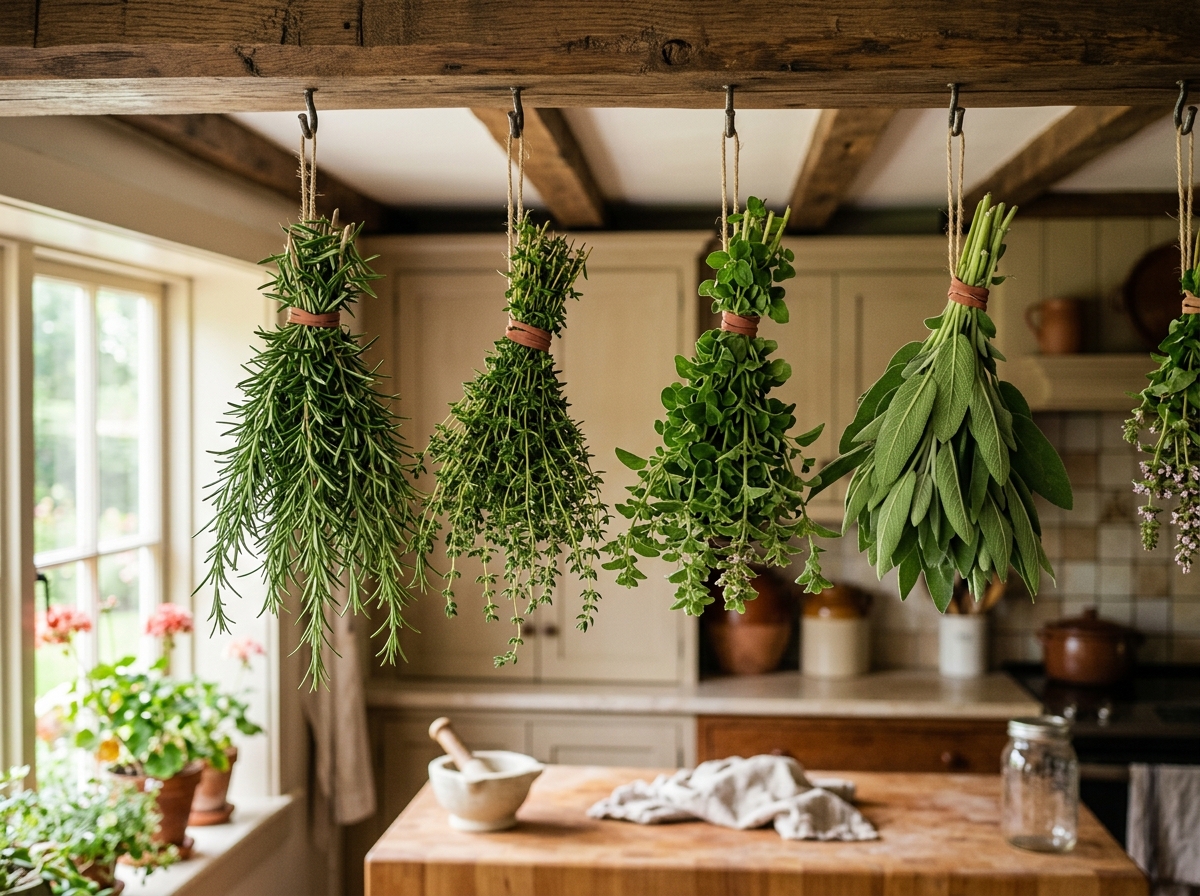
If you have a massive harvest, don’t let it wilt! There are several fantastic ways to save that flavor for the winter months.
- Air Drying: This is the easiest method. Bundle 10-15 stems together. We recommend using rubber bands instead of twine because as the stems dry and shrink, the rubber band will tighten, preventing the herbs from falling out. Hang them upside down in a warm, dry, airy place away from direct sunlight.
- Dehydrating: Use a dehydrator set between 95°F and 115°F. This preserves the color and potency better than an oven, which often “cooks” the herbs.
- Freezing (The Ice Cube Method): Chop fresh herbs like basil or cilantro, place them in ice cube trays, and cover with water or olive oil. Once frozen, pop them into a freezer bag. These are perfect for dropping directly into soups or sauces.
- Flash Freezing: Lay clean, dry leaves on a cookie sheet in a single layer. Freeze until solid, then transfer to a bag. This prevents them from clumping together.
Properly dried leaves and flowers can last 1-2 years, while roots can last up to 3 years! For more preservation tips, check out Harvesting and Preserving Herbs for the Home Gardener or our own guide on harvesting herbs at home.
Frequently Asked Questions about Harvesting Herbs
Can I harvest herbs after it rains?
It is best to wait. Wet foliage is prone to mold and spoilage during storage. Furthermore, rain can slightly dilute the concentration of essential oils on the leaf surface. If you must harvest, pat them very gently with a towel and ensure they have plenty of airflow to dry completely before you process them.
What should I do if my herbs start to flower?
Pinch those buds off immediately! Flowering changes the chemical composition of the leaves, often making them bitter (especially in basil and chives). By removing the flowers, you redirect energy back into leaf production. Of course, if you want to save seeds for next year, you can let a few plants go to flower at the very end of the season.
How often can I pick leaves from my plants?
Once established, most herbs can be harvested weekly. Perennials like mint are so vigorous they can almost be harvested daily during peak summer. Just remember the one-third rule—give the plant time to “recharge” its energy before you come back for seconds.
Conclusion
Mastering harvesting herbs for beginners is the final step in becoming a confident home cook and gardener. By following the one-third rule, timing your snips for the morning, and using clean tools, you ensure a kitchen full of flavor and a garden full of life.
At Ponto de Arte, we know that a healthy harvest starts with a healthy plant. Pests like aphids or spider mites can ruin your hard work just as you’re ready to pick. We specialize in protecting aromatic herb gardens with organic-minded pest management solutions so your herbs stay as delicious as nature intended.
Ready to grow even more? Check out our organic herb gardening tips 2 or learn more about organic herb gardening tips to keep your garden thriving year-round. Happy harvesting!
