
Why Spider Mites on Thyme Are a Bigger Problem Than You Think
Neem oil for herbs is one of the most effective, safe, and natural ways to protect your herb garden from pests like spider mites, aphids, and whiteflies — without harsh chemicals.
Quick answer: How to use neem oil on herbs
- Mix 1-2 teaspoons of cold-pressed neem oil + 1 teaspoon mild liquid soap in 1 gallon of warm water
- Shake well until the solution looks milky
- Spray on all leaf surfaces (top and bottom) in the early morning or at dusk
- Repeat every 7-14 days for active infestations, or every 2-3 weeks to prevent them
- Wait 24-72 hours after spraying before harvesting edible herbs
If you grow thyme — or any aromatic herb — you already know how fast things can go wrong. One week your plants look lush and fragrant. The next, the leaves are stippled, yellowing, and covered in tiny webs. That’s spider mites.
These tiny pests thrive in warm, dry conditions and can devastate a thyme plant before you even notice them. And once they take hold, they spread fast.
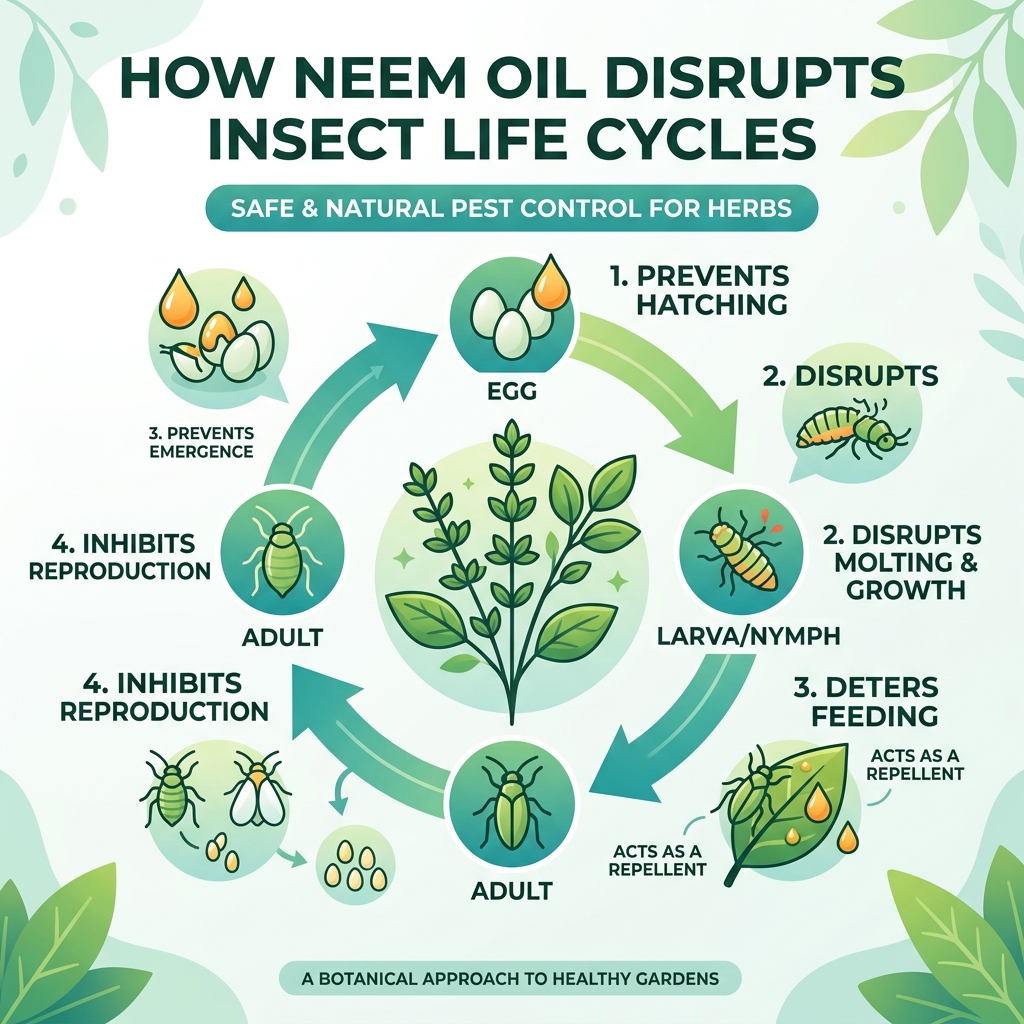
The good news? Neem oil — pressed from the seeds of the Azadirachta indica tree — has been used as a natural pest solution for thousands of years, with roots in Indian agriculture dating back as far as 2000-4000 BC. It works not by instantly killing insects, but by disrupting their ability to feed, grow, and reproduce. For herb gardeners who want results without chemical residues, that’s a powerful combination.
What is Neem Oil and Why is it the Best Choice for Herbs?
When we talk about neem oil for herbs, we are referring to a vegetable oil pressed from the fruits and seeds of the Azadirachta indica tree, native to the Indian subcontinent. In its pure, cold-pressed form, it is a thick, yellow-to-brown liquid that smells a bit like a mix of garlic and sulfur. While that might not sound appetizing, it is exactly what makes it a “superhero” for your garden.
For those of us focused on natural pest control methods for organic gardening, neem oil is the gold standard. Unlike synthetic pesticides that rely on “knockdown” poisons, neem oil is a complex botanical cocktail. It contains over 70 different compounds that have insecticidal or repellent properties.
According to Neem Oil for Plants: Your 2026 Organic Pest Guide, the highest quality versions are “cold-pressed.” This method ensures that the heat-sensitive active ingredients remain intact, providing the full-spectrum protection your herbs need.
The Science of Azadirachtin
The “secret sauce” in neem oil is a compound called azadirachtin. This is the most active component for pest control. It doesn’t just kill a bug on contact; it plays a long game. Azadirachtin is a hormone disruptor. When an insect like a spider mite or aphid ingests it, the compound interferes with their endocrine system, preventing them from molting, growing, or laying eggs.
Research shows that neem oil inhibits the feeding of roughly 170 insect species across four different orders. As noted in the Neem Oil for Houseplants: Safe & Effective Use Guide 2026 | KnowTheYard, it also acts as an antifeedant—essentially making the herb leaves taste so bitter that the pests would rather starve than take another bite.
Benefits for Aromatic Herb Gardens
Using neem oil for herbs offers benefits that go beyond simple pest removal. Because it is a natural oil, it can actually stimulate the plant’s own immune system. Some studies suggest that neem application encourages the production of antioxidants within the plant, leading to heartier growth.
For those of us following organic herb gardening tips, sustainability is key. Neem oil breaks down rapidly in the environment. On plant leaves, its half-life is only about 1 to 2.5 days, meaning it won’t linger in the soil or on your dinner plate for weeks on end. It’s a win for the gardener, the plant, and the planet.
Mastering the Mix: How to Use Neem Oil for Herbs Safely
One of the biggest mistakes we see gardeners make is using neem oil straight out of the bottle. Because it is an oil, it doesn’t naturally mix with water. If you just pour it into a sprayer, you’ll end up with a gloopy mess that clogs your nozzle and potentially burns your thyme leaves.

To make an effective neem oil for herbs spray, you must emulsify it. This involves using a mild soap (like castile soap) to break the oil into tiny droplets so it can stay suspended in water. This is a fundamental step in diy-organic-pesticides-for-home-gardeners.
A Simple Neem Oil for Herbs Spray Recipe
If you’re just starting out with natural pest control for beginners, keep your recipe simple and precise. Over-concentrating the mix can lead to phytotoxicity (leaf burn), especially on delicate herbs.
The “Golden Ratio” Recipe:
- 1 Gallon of Lukewarm Water: Warm water helps the oil mix better, especially since neem tends to solidify below 70°F.
- 1-2 Teaspoons of Pure Cold-Pressed Neem Oil: Start with 1 teaspoon if your herbs are young or sensitive.
- 1 Teaspoon of Mild Liquid Soap: This acts as the emulsifier. Avoid heavy detergents or degreasers.
Instructions:
- Mix the soap and warm water first.
- Slowly add the neem oil while stirring or shaking vigorously.
- The solution should turn a cloudy, milky white. If you see oil slicks floating on top, you need a little more soap or more shaking!
Application Frequency and Environmental Factors
Timing is everything. Because azadirachtin is sensitive to UV light, it degrades quickly under the midday sun. To get the most “bang for your buck,” apply your spray in the early morning or late evening.
According to How To Use Neem Oil On Herbs? Boosting Growth Naturally – GardenerBible, you should reapply every 7 to 14 days for active infestations. If you are just using it as a preventative measure, once every 21 days is usually sufficient. That heavy rain will wash the oil off, so if a storm rolls through, you’ll need to head back out and re-spray once the leaves are dry.
Targeted Pest Control: From Spider Mites to Aphids
While we’re focusing on thyme today, neem oil for herbs is a versatile weapon against a whole host of “sap-suckers.” These are the pests that pierce the plant’s cells and drink the life out of them.
If you’ve noticed sticky residue (honeydew) or curling leaves, you might be dealing with more than just spider mites. Our guide to stop the sap-suckers: a guide to aphid-free herbs highlights how these pests often work in tandem to weaken your garden.
Using Neem Oil for Herbs on Basil and Mint
Basil is notoriously sensitive to pests, particularly aphids. In a real-world trial, researchers found that applying a 0.5% neem solution to Genovese basil reduced aphid populations from 200 adults to just 30 in two weeks—an 85% reduction!
If you’re finding that aphids on basil indoors are a real buzzkill, neem oil is your best friend. It’s gentle enough for the soft leaves of basil and mint but tough enough to stop the pests from breeding. Just remember to spray the undersides of the leaves, as that’s where the “pest parties” usually happen.
Treating Fungal Diseases and Root Pests
Neem oil isn’t just an insecticide; it’s also a powerful fungicide. It can help prevent and treat common herb issues like:
- Powdery Mildew: That white, flour-like dust that appears on rosemary or sage.
- Leaf Spot: Fungal patches that can ruin a harvest.
You can even use it as a soil drench. By pouring the diluted mixture directly onto the soil, the plant roots absorb some of the compounds, making the entire plant “systemically” protected. This is particularly effective for identifying the little black bugs eating your herbs, such as fungus gnat larvae or root-knot nematodes.
Application Timing and Safety for Edible Herb Gardens
Safety is the number one question we get at Ponto de Arte. Since herbs are meant to be eaten, we have to be careful about what we put on them.
The most important rule is the 85°F Limit. Never spray neem oil when temperatures are above 85°F (29°C). The combination of oil and high heat can “cook” the leaves, leading to yellowing and death. This is a common pitfall mentioned in our pest control for herb gardens guides. Always aim for the “shoulder hours” of the day when the sun is low.
Is Neem Oil for Herbs Safe for Edible Harvests?
Yes, neem oil is generally recognized as safe for food crops, but there are precautions. Most experts recommend a Pre-Harvest Interval (PHI) of 24 to 72 hours. This gives the oil time to break down so you aren’t eating a “garlic-sulfur” flavored salad.
As discussed in the Is neem oil safe for herbs? – Facebook community, always wash your herbs thoroughly before use. A quick soak in cool water with a splash of vinegar can help remove any oily residue that might remain on the leaves.
Protecting Beneficial Insects and Soil Health
One of the reasons we love neem oil for herbs is that it is relatively “smart.” It primarily affects insects that actually eat the plant tissue. This means that if you spray at dusk when bees and butterflies are inactive, you are unlikely to harm them.
Beneficial insects like ladybugs and predatory mites are generally safe because they don’t chew on the leaves. Furthermore, neem oil is non-toxic to birds, mammals, and even earthworms. In fact, using neem can be part of a strategy for the 10 best herbs for pest control to save your garden, where you use natural sprays alongside companion planting.
Frequently Asked Questions about Neem Oil for Herbs
Can I use neem oil on indoor herbs?
Absolutely! In fact, indoor herb gardens are often more susceptible to pests like spider mites because they lack natural predators. However, because there is less airflow indoors, the smell of neem can linger. We recommend moving your plants to a sink or shower for the application. If you’re managing an herb garden in small spaces, just be sure to keep the plants out of direct “window sun” immediately after spraying to prevent leaf scorch.
Does neem oil affect the taste of my herbs?
If you spray your herbs and eat them ten minutes later, they will taste terrible—bitter and garlicky. However, if you follow the 24-72 hour waiting period and wash them well, the taste is unaffected. A fun tip: the “roasted seed” smell of the neem oil is actually a great cue. Once that smell has completely dissipated from the plant, it’s usually a sign that the oil has broken down and the herb is ready for the kitchen.
How long does a mixed neem solution last?
Potency drops off fast once neem oil is mixed with water. You should use your solution within 8 hours of mixing. After that, the azadirachtin begins to break down, and the oil may start to separate and go rancid. Always mix a fresh batch for each treatment. If your pure neem oil has solidified in the bottle, simply place it in a bowl of warm water for a few minutes to liquefy it again.
Conclusion
At Ponto de Arte, we believe that a thriving herb garden shouldn’t require a degree in chemistry or a shelf full of toxic sprays. Neem oil for herbs provides a bridge between ancient wisdom and modern organic gardening, giving you a powerful tool to fight back against spider mites, aphids, and fungus.
By mastering the mix, timing your applications correctly, and respecting the harvest window, you can enjoy lush, fragrant herbs all season long. Whether you’re growing thyme on a windowsill or basil in a backyard plot, neem oil is the sustainable choice for a healthier garden.
Ready to take your herb garden to the next level? More info about herb garden solutions is just a click away!
