
When Caterpillars Attack Your Herb Garden: What You Need to Know
To get rid of caterpillars on herbs, use one or more of these proven methods:
- Handpick caterpillars off plants and drop them into soapy water
- Spray Bacillus thuringiensis (Bt) in the evening — targets caterpillars only, safe for edible herbs
- Apply neem oil weekly to deter feeding and disrupt growth
- Use garlic-pepper spray as a homemade repellent
- Install fine mesh row covers to stop moths from laying eggs
- Remove egg masses from leaf undersides before they hatch
- Plant repellent companions like thyme, peppermint, or lavender nearby
You step outside to snip some fresh basil for dinner. Instead, you find the leaves riddled with holes — ragged edges, missing chunks, and tiny black droppings scattered across the soil.
Sound familiar?
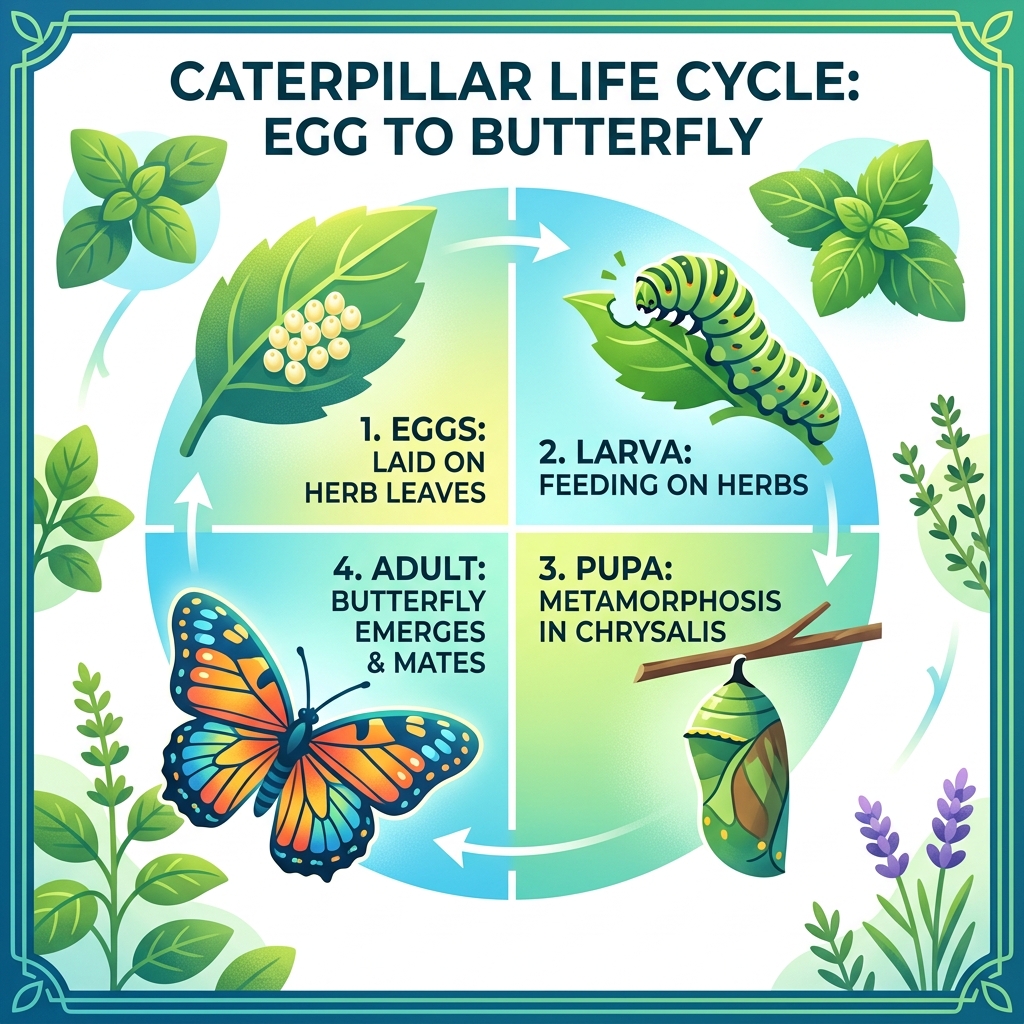
Caterpillars are the larval stage of butterflies and moths, and they are built to eat. They feed voraciously for two to three weeks, and a small infestation can turn a thriving herb garden into something resembling Swiss cheese almost overnight.
The good news: you don’t need harsh chemicals to fix it. Your herbs are edible, and keeping them safe and clean is completely achievable with the right approach.
This guide walks you through everything — from identifying the damage to removing caterpillars and stopping them from coming back.
Identifying the Culprits: Signs of Caterpillar Damage on Herbs
Before we can fight back, we need to know what we are looking for. Caterpillars are masters of disguise, often blending perfectly with the green stems and ribs of your favorite herbs. However, they almost always leave a trail of evidence behind.
The most obvious sign is the “Swiss cheese” effect. Unlike beetles that might make neat circular holes, caterpillars tend to create ragged edges and large, irregular chewed margins. In some cases, they can skeletonize foliage, leaving only the tough leaf veins behind.
Another tell-tale sign is frass. This is the technical term for caterpillar poop. It looks like tiny grains of black pepper or dark seeds scattered on the leaves or the soil beneath the plant. If you see frass but no caterpillar, look directly above that spot—the culprit is likely hiding on the underside of a leaf.
Some species, like webworms or tent caterpillars, create unsightly webbed nests. These silken structures protect them from predators while they feast. Many of these pests are nocturnal feeders, meaning they hide at the base of the plant or under dense foliage during the day and come out at night to wreak havoc.
It is also important to remember that some herbs are specifically chosen as host plants. For example, Dill, Fennel, and Parsley are the primary food sources for Black Swallowtail larvae. While they are technically “pests” to your harvest, they turn into beautiful pollinators. We often suggest relocating these specific larvae to a “sacrificial” patch of wild dill rather than destroying them.

Common Pests on Basil, Parsley, and Dill
When you are trying to get rid of caterpillars on herbs, it helps to know which ones you are dealing with. Here are the usual suspects we encounter:
- Cabbage Loopers: Small, pale green caterpillars that “arch” their backs as they move. They love basil and mint.
- Swallowtail Larvae: Striking green, black, and yellow striped caterpillars found almost exclusively on parsley, dill, and fennel.
- Tomato Hornworms: Massive green caterpillars with a “horn” on their rear. While they prefer tomatoes, they won’t hesitate to strip a sage or basil plant if food is scarce.
- Armyworms and Cutworms: These often hide in the soil during the day and “cut” through the stems of young herb seedlings at night.
- Inchworms: These move with a distinctive looping gait and can quickly defoliate tender herbs like cilantro.
For more detailed identification, you can check our guide on pest control for herb gardens.
How to Get Rid of Caterpillars on Herbs Naturally
When it comes to edible plants, safety is our top priority. We don’t want to spray anything on our herbs that we wouldn’t want on our dinner plates. Fortunately, natural methods are incredibly effective.
Manual removal is the most direct way to solve the problem. According to gardening data, daily handpicking can reduce caterpillar populations by 60-70% after just three days of consistent effort. It’s simple: grab a bucket of soapy water, put on some gloves if you’re squeamish, and start hunting.
| Method | Effectiveness | Speed of Results | Safety for Herbs |
|---|---|---|---|
| Manual Removal | High (60-70% reduction) | Immediate | 100% Safe |
| Organic Sprays (Bt) | Very High (85-95%) | 2-3 Days | Very Safe |
| Water Blasting | Moderate | Immediate | Safe (may bruise leaves) |
| Neem Oil | Moderate/Preventive | 3-7 Days | Safe (wash before eating) |
The best time for an inspection is early morning or late evening when the caterpillars are most active. Check the undersides of leaves and along the stems. If you find one, simply drop it into the soapy water to drown. If you have children, this can be a fun (and educational) garden chore!
For those who prefer a broader approach to garden health, exploring natural-pest-control-methods-for-organic-gardening can provide a more holistic strategy.
Using Bacillus thuringiensis (Bt) to Get Rid of Caterpillars on Herbs
If your infestation is too large for handpicking, Bacillus thuringiensis (Bt) is the “gold standard” for organic caterpillar control. Bt is a naturally occurring soil bacteria that, when eaten by a caterpillar, disrupts its digestive system. The caterpillar stops feeding almost immediately and dies within a few days.
University extension services report that Bt achieves 85-95% effectiveness when applied correctly. The best part? It is highly specific. It only affects caterpillars and is safe for humans, pets, birds, and even beneficial bees.
Pro-Tips for Applying Bt:
- Apply in the evening: Bt is sensitive to UV light and degrades quickly in direct sunlight. Spraying at dusk ensures the bacteria stays active on the leaves through the night while the caterpillars are feeding.
- Coat thoroughly: Since the caterpillar must eat the Bt, you need to spray both the tops and bottoms of the leaves.
- Reapply after rain: Water will wash the Bt away, so keep an eye on the weather forecast.
Homemade Sprays to Get Rid of Caterpillars on Herbs
If you prefer to use items already in your pantry, several homemade remedies can help you get rid of caterpillars on herbs.
- Neem Oil: This botanical extract from the neem tree doesn’t just kill on contact; it stunts the caterpillar’s ability to grow and mature. Mix it with a little water and a drop of dish soap.
- Garlic-Pepper Spray: Blend two bulbs of garlic and two hot peppers with a quart of water. Let it sit overnight, strain it, and spray. The pungent aroma and heat act as a powerful repellent.
- Horticultural Molasses (The Australian Method): Many Australian gardeners swear by a mixture of horticultural molasses and dish soap. The sugar confuses the caterpillar’s senses and benefits the soil microbes at the same time.
- Vinegar Solution: A diluted vinegar spray (one part vinegar to three parts water) can kill caterpillars on contact. However, be careful—vinegar is also a natural weed killer and can burn sensitive herb leaves if the mixture is too strong.
For more recipes, see our diy-organic-pesticides-for-home-gardeners.
Preventive Strategies for a Caterpillar-Free Herb Garden
The best way to manage caterpillars is to stop them from ever reaching your herbs. This starts with blocking the adult moths and butterflies from laying eggs.
Fine mesh row covers or insect barrier fabrics are incredibly practical for small herb beds. These lightweight covers allow 85% of light and water to pass through but act as a physical wall against pests. If the moth can’t land on your basil, she can’t leave her eggs there.
Garden hygiene is also vital. At the end of the season, clear away dead plant material where eggs might overwinter. During the growing season, make it a habit to look for egg masses on the undersides of leaves—they often look like tiny clusters of pearls or white dots. Squishing them now saves you from a dozen hungry “eating machines” later.
If you are new to these concepts, our guide on natural-pest-control-for-beginners is a great place to start.
Companion Planting and Natural Predators
Nature has its own pest control department; you just need to hire them! By encouraging biodiversity, you create a balanced ecosystem where caterpillars rarely become a plague.
- Repellent Scents: Plant herbs with strong scents like thyme, oregano, and peppermint near your more vulnerable plants (like parsley or basil). These scents can mask the “smell” of the host plants, confusing moths.
- Parasitic Wasps: These tiny, non-stinging wasps are a gardener’s best friend. They lay eggs inside caterpillars, and the larvae eat the pest from the inside out. You can attract them by planting “umbelliferous” flowers like yarrow, coriander, or Queen Anne’s Lace.
- Predatory Birds and Toads: Birds like chickadees and wrens can eat hundreds of caterpillars a day to feed their young. Installing a bird bath or a “toad house” (a ceramic pot turned on its side in a shady spot) can encourage these predators to move in.
Using natural-weed-control-methods-for-your-organic-garden also helps maintain the soil health that supports these beneficial visitors.
Frequently Asked Questions about Herb Caterpillars
Is it safe to eat herbs immediately after treating them for caterpillars?
This depends on the treatment. If you are handpicking, you can harvest and eat immediately (just wash the herbs first!). If you use Bt, it is generally considered safe to harvest within 24 hours, though we recommend a thorough rinsing to remove any bacterial residue. For neem oil or garlic-pepper sprays, we suggest waiting 2-3 days so the strong flavors don’t affect your cooking. Always wash your herbs in cool water before use. For more on safe gardening, visit natural-pest-control-for-beginners-2.
Why are caterpillars eating my sage when it is usually pest-resistant?
Sage is famous for its alkaloid-laden leaves, which usually make it unpalatable to insects. However, during population booms or extreme weather, competition for food becomes fierce, and caterpillars may target sage out of necessity. Interestingly, some research suggests caterpillars might eat alkaloid plants to “self-medicate” against internal parasites. If your sage is being attacked, it’s a sign that the local pest pressure is very high.
Can I use Diatomaceous Earth on edible herb leaves?
You should only use food-grade Diatomaceous Earth (DE). DE consists of tiny, fossilized aquatic organisms that are razor-sharp to insects but harmless to humans. While it is a great physical barrier when sprinkled on the soil, we don’t recommend dusting it heavily on the leaves of herbs you plan to eat soon. The powder is gritty and difficult to wash off completely. If you must use it on the leaves, be prepared to give them a very vigorous soak and rinse before they hit the frying pan.
Conclusion
At Ponto de Arte, we understand that your herb garden is more than just a collection of plants—it’s a source of fresh flavors and aromatic joy. Our specialized focus on protecting aromatic herbs means we prioritize solutions that keep your harvest organic, delicious, and safe.
By balancing active removal with long-term prevention and ecological support, you can maintain a beautiful garden that provides for both you and the local pollinators. A few holes in a leaf aren’t the end of the world, but with these tips, you’ll have the upper hand.
Start your journey toward a pest-free herb garden today and enjoy the peace of mind that comes with sustainable, natural gardening.
