
Why Controlling Pests in Oregano Is Worth Getting Right
Controlling pests in oregano is something every herb gardener will face sooner or later — and catching problems early makes all the difference.
Here’s a quick overview of the most effective methods:
| Pest | Quick Control Method |
|---|---|
| Aphids | Strong water spray or 50% rubbing alcohol solution |
| Spider mites | Neem oil (2%) spray weekly; predatory mites |
| Thrips | Reflective mulch; insecticidal soap |
| Four-lined plant bugs | Prune damaged tissue; debris cleanup |
| Cutworms | Diatomaceous earth; stem collars |
| Fungus gnats | Hydrogen peroxide soil drench (1:4 ratio) |
Oregano is a tough, aromatic herb. It tolerates drought, loves full sun, and can handle a lot. But even hardy plants have enemies.
Pests like aphids, spider mites, and four-lined plant bugs can quietly drain the plant’s essential oils — the very thing that gives oregano its bold flavor and aroma. One gardener described finding their oregano “totally obliterated” by four-lined plant bugs in a single season.
The good news? Most infestations are preventable. And when pests do show up, there are safe, organic solutions that won’t compromise your harvest.
This guide walks you through everything — from spotting the first signs of trouble, to natural sprays, companion planting, and knowing when (or whether) to reach for stronger options.
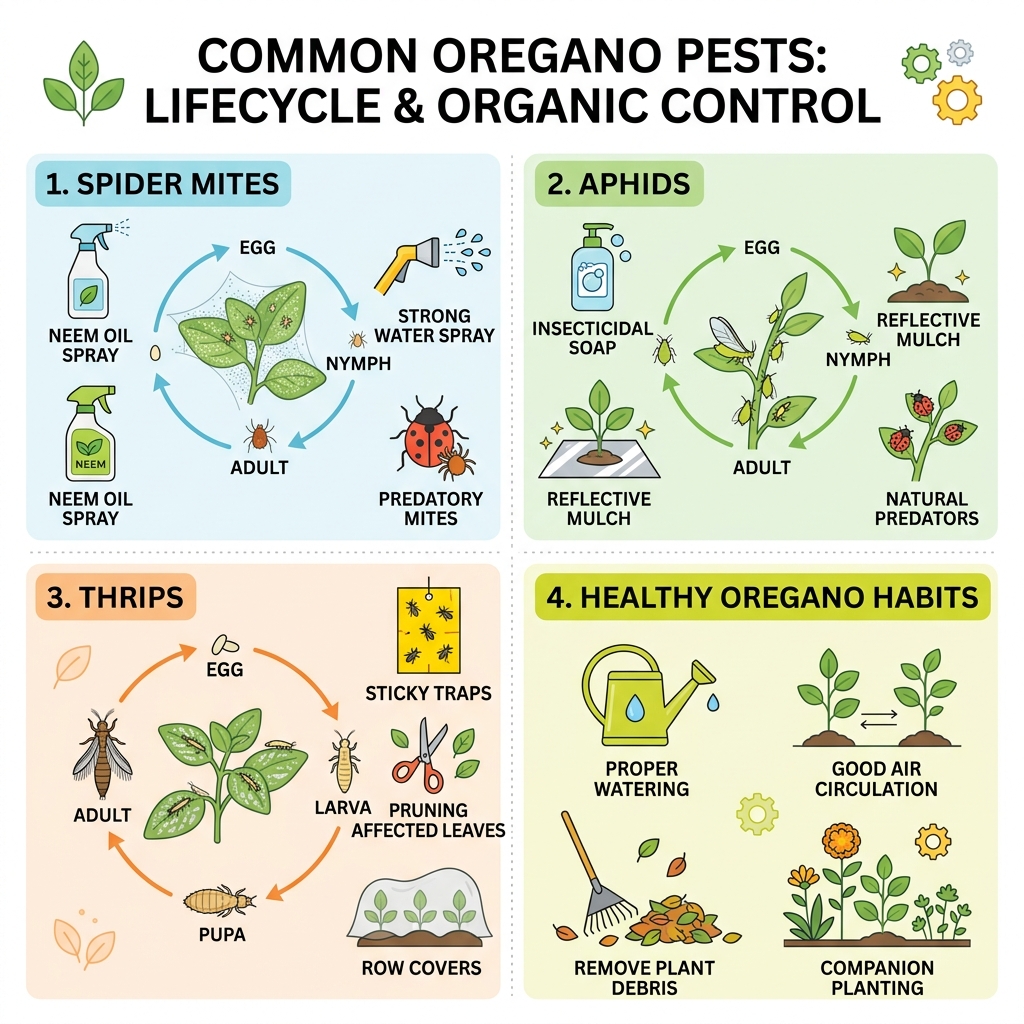
Identifying Common Pests and Symptoms on Oregano
To effectively manage your herb garden, you first need to know who the “uninvited guests” are. Oregano belongs to the Lamiaceae (mint) family, making it a target for several specific sap-sucking and leaf-munching invertebrates.
Aphids
These are perhaps the most frequent visitors. Aphids are tiny, pear-shaped insects that cluster on the tender new growth and the undersides of leaves. They come in various colors—green, black, or even pinkish. They don’t just sit there; they pierce the plant tissue to suck out the sap, which leads to curled, yellowed, or distorted leaves. If you see aphids on basil indoors, it is highly likely they will migrate to your oregano next.
Spider Mites
If your oregano leaves look like they’ve been dusted with silver or have tiny yellow “stippling” (small dots), you likely have spider mites. These microscopic arachnids thrive in hot, dry conditions. A tell-tale sign is the presence of delicate, fine webbing between the stems or under the leaves. You can find more details on identifying the little black bugs eating your herbs to distinguish them from other small pests.
Thrips
Thrips are slender, minute insects (about 1.5 mm long) that cause silvery-grey scarring on the leaves. They feed by puncturing the leaf surface and sucking up the contents, often leaving behind small black specks of excrement. According to Managing Pests in Gardens: Herbs: Oregano, thrips can be particularly troublesome in warmer climates.
Four-Lined Plant Bugs
These bugs are the “hit-and-run” artists of the garden. The adults are yellowish-green with four distinct black stripes down their backs. They inject a toxin into the leaf as they feed, which kills the surrounding cells. This results in small, round, brown sunken spots that can make the plant look like it has a disease. In severe cases, these spots coalesce, and the oregano looks “obliterated” or ragged.
Cutworms
Unlike the sap-suckers, cutworms are the “lumberjacks.” These dull-colored larvae hide in the soil during the day and come out at night to chew through the stems of young plants at the soil line. If you wake up to find a perfectly healthy oregano seedling lying on its side, severed at the base, a cutworm is the culprit.

Recognizing Signs of Infestation when controlling pests in oregano
Early detection is the secret sauce to controlling pests in oregano. If you wait until the plant is brown, it’s much harder to save. We recommend looking for these specific symptoms:
- Stippling and Yellowing: Tiny white or yellow dots on the leaf surface usually indicate mites or thrips.
- Honeydew and Sooty Mold: Aphids and scale insects excrete a sticky substance called honeydew. If your leaves feel tacky or develop a black, “sooty” fungus, you have a sap-sucker problem.
- Leaf Curling: When aphids attack the growing tips, the new leaves often pucker and curl tightly around the insects, protecting them from predators.
- Brown Patches: Large brown or translucent spots are often the result of four-lined plant bugs or leaf miners.
- Distorted Growth: If the stems look twisted or the leaves are abnormally small, the plant’s nutrient flow is being disrupted by pests.
To keep your garden healthy, we suggest following stop-the-sap-suckers-a-guide-to-aphid-free-herbs for a deeper dive into preventing these common issues.
Cultural Practices for controlling pests in oregano
The best way to manage pests is to ensure they never want to move in. Healthy, vigorous plants are naturally more resistant to infestations. Think of cultural practices as the “immune system” of your herb garden.
Prevention Through Proper Site Selection and Soil Preparation
Oregano is a Mediterranean native, and it thrives when we mimic those conditions. According to the UC IPM Cultural Tips for Growing Oregano, site selection is the first step in pest reduction.
- Full Sun: Oregano needs at least 4 to 6 hours of direct sunlight daily. Shady spots lead to “leggy” growth with weak cell walls, which are much easier for aphids to pierce.
- Well-Drained Soil: This is non-negotiable. Oregano hates “wet feet.” We recommend a gritty, sandy loam with a pH between 6.0 and 8.0. Damp soil surfaces encourage snails, slugs, and fungus gnats.
- Proper Spacing: Space your plants at least 18 inches apart. Good airflow is essential. When plants are crowded, humidity builds up, creating a playground for spider mites and fungal diseases like rust.
- Weed Management: Keep the area around your herbs clear. Weeds often act as “bridge hosts,” harboring pests like thrips and aphids before they jump onto your oregano.
- Pinching and Pruning: Regularly pinch off the growing tips (at about 15 cm or 6 inches in height) to encourage branching. This prevents the plant from becoming woody and improves air circulation. Also, be sure to pinch off flowers to keep the plant’s energy focused on leaf production and essential oils.
If you are new to herb gardening, our guide on natural-pest-control-for-beginners offers a great starting point for establishing these habits. Proper growing-thyme-and-oregano techniques ensure your herbs start strong from day one.
Organic and Natural Methods for Herb Protection
When controlling pests in oregano, we always advocate for organic methods first. Since oregano is a culinary herb, you want to avoid toxic residues that could end up in your Sunday sauce.
Neem Oil and Insecticidal Soaps
A 2% neem oil solution is a staple in the organic gardener’s toolkit. It works as an anti-feedant and disrupts the hormonal systems of pests like aphids, mites, and whiteflies. Apply it every week, ensuring you coat both the tops and bottoms of the leaves. Insecticidal soaps are also effective, as they suffocate soft-bodied insects on contact.
Rubbing Alcohol
For localized problems like scale or mealybugs, a solution of 50% rubbing alcohol and water can be sprayed directly on the insects. You can also use a cotton swab dipped in alcohol to dab away individual “bumps” (scale) or cottony clusters (mealybugs).
Jadam Natural Pesticide (JNP)
Inspired by Korean organic farming, JNP involves boiling herbal extracts to create a potent spray. You can make a “Mint-Oregano JNP” by simmering fresh mint and oregano leaves in water for 20-30 minutes. This extract harnesses the plants’ own aromatic compounds to deter invaders. When mixed with a small amount of liquid soap, it becomes a powerful foliar spray.
Homemade Sprays and Solutions for controlling pests in oregano
You don’t need a degree in chemistry to make effective pest controls. Here are a few recipes we find particularly effective:
- Herbal Tea Miticide: Mix cinnamon, cloves, garlic, and Italian seasoning in water. Let it steep, strain it, add a drop of dish soap, and spray every three days for two weeks to eradicate spider mites.
- Hydrogen Peroxide Drench: If you have fungus gnats hovering around your pots, mix 1 part hydrogen peroxide (3%) with 4 parts water. Use this to drench the soil. It kills the larvae on contact while releasing oxygen to the roots.
- Garlic and Chili Spray: A blend of pureed garlic and hot peppers strained into water creates a “keep away” sign for many chewing insects.
| Spray Type | Target Pests | Frequency |
|---|---|---|
| Neem Oil (2%) | Aphids, Mites, Scale | Weekly |
| Rubbing Alcohol (50%) | Mealybugs, Aphids | As needed |
| Hydrogen Peroxide (1:4) | Fungus Gnat Larvae | Once a week until gone |
| Soap & Water | Soft-bodied insects | Every 3-5 days |
For more DIY ideas, check out our resource on diy-organic-pesticides-for-home-gardeners or explore natural-pest-control-methods-for-organic-gardening. You can also find more Organic Pest Control for Oregano tips on PlantNative.org.
Biological Controls and Companion Planting Strategies
Nature has its own “security guards.” By inviting the right insects into your garden, you can let them do the work of controlling pests in oregano for you.
Using Predators to Deter Invaders
- Ladybugs and Lacewings: These are the “lions” of the herb garden. A single ladybug can eat thousands of aphids in its lifetime. You can attract them by planting nectar-rich flowers like dill or yarrow nearby.
- Predatory Mites (Phytoseiulus persimilis): If you have a persistent spider mite problem, these beneficial mites are highly effective. They hunt down and eat the damaging mites without harming your plants.
- Predatory Nematodes: For soil-dwelling pests like fungus gnat larvae, introducing Steinernema feltiae nematodes into the soil is a biological game-changer.
Companion Planting Strategies
Oregano itself is often used as a companion plant to protect other vegetables, but it also benefits from having friends nearby.
- Basil and Marigolds: These plants have strong scents that can confuse pests, making it harder for them to locate your oregano.
- Nasturtiums: Often used as a “trap crop,” nasturtiums are so attractive to aphids that the pests will flock to them, leaving your oregano alone.
- Reflective Mulch: Using silver-colored plastic or aluminum foil around the base of the plants can confuse flying pests like thrips and aphids, preventing them from landing.
Our guide on the 10-best-herbs-for-pest-control-to-save-your-garden explains how to build a defensive perimeter around your herbs. For more on biological diversity, see natural-pest-control-for-beginners-2.
Managing Severe Infestations and Chemical Precautions
Sometimes, despite our best efforts, a pest population explodes. This often happens during unusual weather patterns—like a sudden heatwave that triggers a spider mite boom.
Early Detection and Isolation
We recommend checking your oregano plants every week. Look at the undersides of the leaves and the joints of the stems. If you find an infested plant, isolate it immediately. If it’s in a pot, move it away from your other herbs. If it’s in the ground, consider netting-your-way-to-flea-beetle-freedom or using row covers to prevent the pests from spreading.
When to Prune or Discard
If a plant is “totally obliterated” or covered in sooty mold, pruning is your best bet. Cut back the damaged foliage—oregano is resilient and will often grow back with “perfect” new leaves. However, if the plant is severely stunted and the roots are compromised (such as with severe mint rust), it may be time to discard the plant to save the rest of your garden.
When to Use Chemical Pesticides on Edible Herbs
We generally advise against synthetic chemicals on herbs. However, if you must use them, follow these strict rules:
- Read the Label: Ensure the product is specifically labeled for use on edible herbs.
- Observe Harvest Intervals: This is the time you must wait between spraying and eating. Some chemicals require 14 days or more to dissipate.
- Targeted Application: Never “blanket spray.” Only treat the affected plants.
- Avoid Flowering Plants: Do not spray when the plant is in bloom to protect bees and other pollinators.
For more advice on handling tough situations, read pest-control-for-herb-gardens or the guide on Oregano Herbs: How To Prevent And Treat Common Oregano Disease Problems And Pests.
Frequently Asked Questions about Oregano Pests
How often should I check my oregano for pests?
You should perform a thorough inspection once a week. Focus on the undersides of leaves and the tender new growth at the tips. Early detection is the most important factor in controlling pests in oregano before they cause permanent damage.
Can I use hot water to treat oregano diseases?
Yes, specifically for mint rust. Research shows that immersing oregano roots in hot water at 44°C (111°F) for 10 minutes can kill the rust fungus without killing the plant. After the “bath,” cool the roots in room-temperature water before replanting.
What is the best way to get rid of spider mites naturally?
The most effective immediate action is a strong jet of water to physically knock them off the plant. Since they love dry air, regular misting can also deter them. For persistent cases, releasing predatory mites or applying a 2% neem oil spray weekly is the gold standard.
Conclusion
At Ponto de Arte, we believe that a thriving herb garden is one of life’s greatest pleasures. Controlling pests in oregano doesn’t have to be a battle of man vs. nature; it’s about working with nature to create a balanced ecosystem. By selecting the right site, practicing good garden hygiene, and using targeted organic treatments, you can ensure your oregano remains as flavorful and aromatic as the day you planted it.
Ready to expand your herbal knowledge? Check out more info about spice gardening to keep your garden growing strong!
