
Why Your Sage Has White Spots (And How to Fix It Fast)
Sage powdery mildew spray is the go-to solution when you notice white, chalky patches spreading across your herb garden’s most beloved plant. Here’s a quick-reference guide to the most effective options:
Quick answers for treating powdery mildew on sage:
| Treatment | Recipe | How Often |
|---|---|---|
| Baking soda spray | 1 tbsp baking soda + ½ tsp liquid soap + 1 gallon water | Daily for 2 weeks, then every other day |
| Potassium bicarbonate spray | 1 tbsp + ½ tsp liquid soap + 1 gallon water | Every 7-14 days |
| Milk spray | 1 part milk to 2-3 parts water | Weekly |
| Vinegar spray | 4 tbsp vinegar + 1 gallon water | Every 3 days until clear |
| Copper fungicide | Follow product label | After every rain |
If you grow sage at home, you’ve likely seen it: a dusty white coating creeping across the leaves, turning your fragrant, healthy herb into something you’d hesitate to toss into a recipe.
That’s powdery mildew — one of the most common fungal diseases in any garden.
The frustrating part? It tends to come back year after year, especially after stretches of rain or when humidity spikes. Powdery mildew thrives in conditions with warm days, cool nights, and high humidity. And sage, with its dense foliage, can be especially vulnerable when airflow is poor.
The good news: it’s rarely fatal, and it’s very treatable — especially when caught early. Most home gardeners can handle it with simple sprays made from ingredients already in their kitchen.
This guide walks you through exactly what to do, step by step.
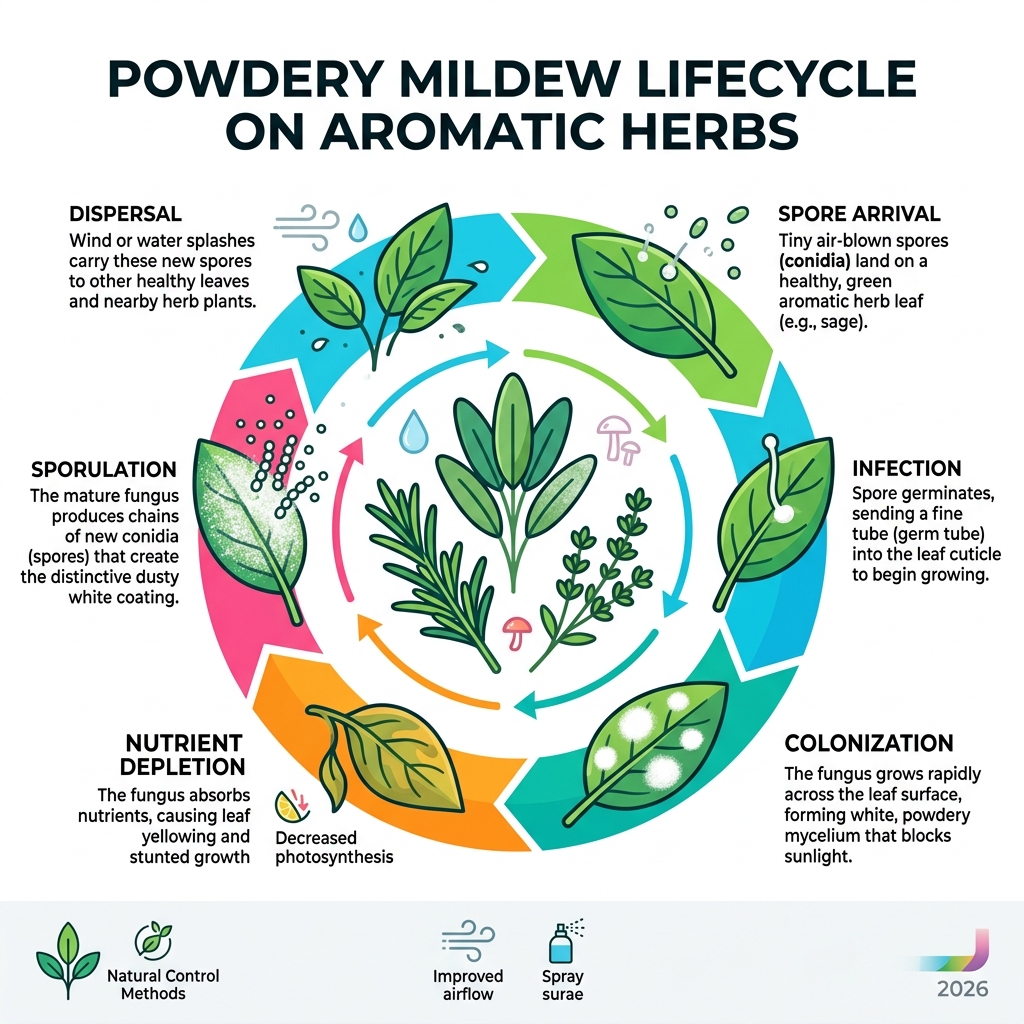
Understanding Powdery Mildew on Sage Plants
To defeat your enemy, you must first understand it. Powdery mildew isn’t just one single fungus; it is a group of related fungi that produce millions of tiny white spores. On sage, it typically starts as small, circular white powdery spots on sage leaves. If left unchecked, these spots expand into a thick carpet of white mycelium that looks like someone spilled flour over your herb garden.
The impact on your sage is more than just cosmetic. This fungal “blanket” blocks sunlight, leading to photosynthesis inhibition. When the plant can’t produce energy, you’ll see stunted growth and yellowing leaves. Perhaps most importantly for us foodies, a heavy infection causes flavor degradation. The fungus robs the plant of sugars, leaving your sage tasting bland or “off.”
Environmental Triggers
Why does it happen to your sage specifically? Fungi love a “Goldilocks” zone. They thrive when we have:
- High relative humidity at night (above 90%).
- Low relative humidity during the day.
- Temperatures between 70-80°F.
- Poor air circulation inside dense, bushy sage plants.
While many believe rain causes it, the spores actually spread best in warm, dry winds. However, high humidity and damp “micro-climates” around the leaves are what allow the spores to germinate. Following organic care tips for healthy plants is your first line of defense in managing these triggers.
Best Natural Sage Powdery Mildew Spray Recipes
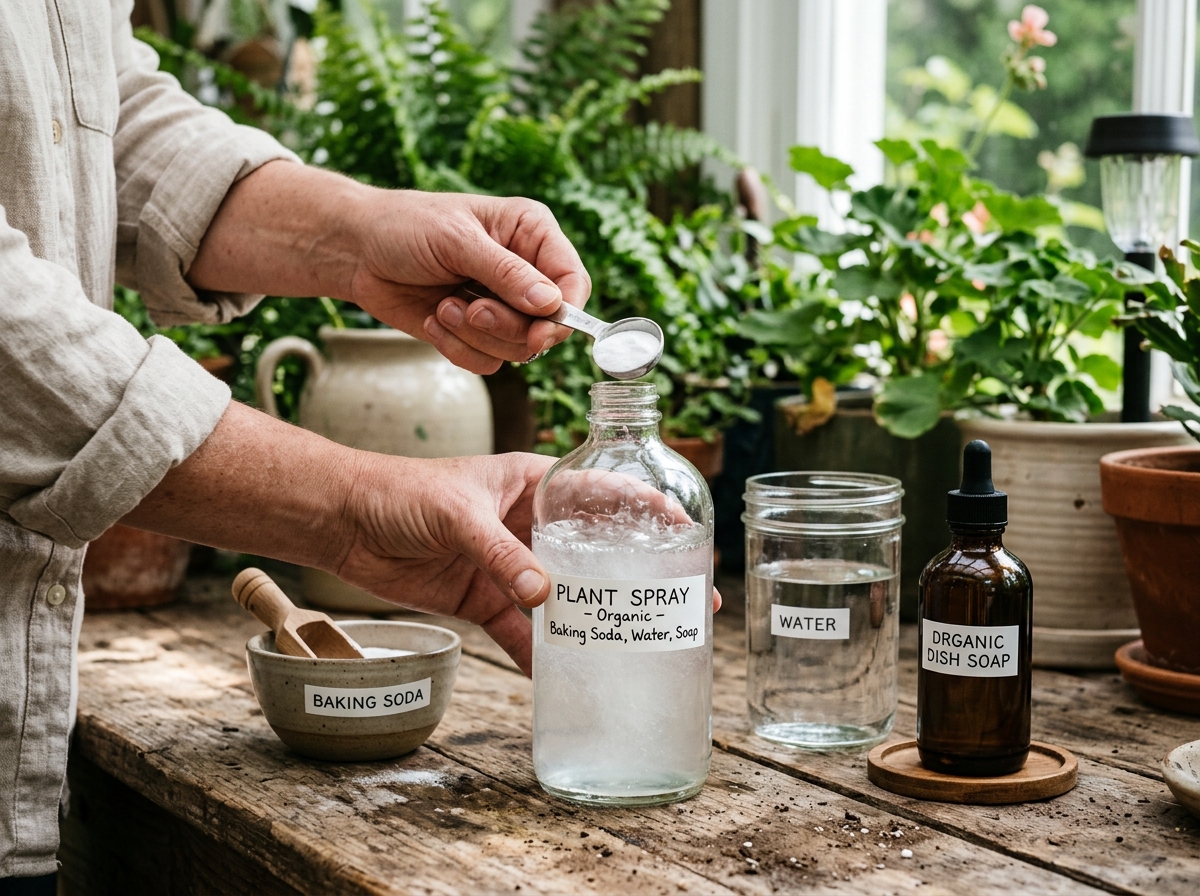
When we see those white spots, our first instinct is often to reach for a heavy-duty chemical. But since sage is an edible herb, we prefer a safer route. Homemade sprays are incredibly effective because they change the pH level on the leaf surface, making it a hostile environment for the fungus.
According to How to Control Powdery Mildew With a Homemade Spray, these solutions are best used as a preventative or at the very first sign of infection. If you are interested in more DIY options, check out our guide on DIY organic pesticides for home gardeners.
How to Mix a Baking Soda Sage Powdery Mildew Spray
Sodium bicarbonate (baking soda) is a classic remedy. It works by creating an alkaline environment that kills the fungus.
The Recipe:
- 1 Gallon of Water
- 1 Tablespoon of Baking Soda
- 1/2 Teaspoon of liquid non-detergent soap (like Castile soap)
The soap is crucial—it acts as a “surfactant,” helping the sage powdery mildew spray stick to the fuzzy, water-repellent leaves of the sage plant. We recommend testing this on one or two leaves first, as baking soda can occasionally cause “leaf burn” if the concentration is too high or if applied in direct, hot sun. This is one of the most popular natural pest control methods for organic gardening.
Using Milk as a Natural Sage Powdery Mildew Spray
It sounds like an old wives’ tale, but science backs this up. Milk contains a protein called casein which, when exposed to sunlight, produces a mild antiseptic effect that zaps the mildew.
The Ratio:
- 40% Milk (any kind, though skim is less smelly)
- 60% Water
According to the Powdery Mildew Treatment & Prevention (A How-To Guide), milk sprays might even boost the plant’s immune system. Spray this once a week on a sunny day to get the full “solar-activated” benefit.
Commercial Organic Treatments and Active Ingredients
Sometimes, a homemade mix isn’t enough for a severe outbreak. In these cases, we look for OMRI-listed (Organic Materials Review Institute) products. These are vetted for organic gardening safety.
| Active Ingredient | How it Works | Best For |
|---|---|---|
| Citric Acid | Kills on contact; disrupts cell walls | Heavy infections; 0-day harvest interval |
| Sulfur | Creates an acidic barrier | Prevention and early-stage control |
| Neem Oil | Fungicidal and insecticidal properties | Dual action for pests and mildew |
| Potassium Bicarbonate | High-speed spore killer | Faster acting than baking soda |
| Bacillus subtilis | Beneficial bacteria that “eats” the fungus | Long-term biological control |
For a deeper dive into managing your herb patch, see our advice on pest control for herb gardens and natural pest control for beginners.
Choosing the Right Commercial Sage Powdery Mildew Spray
When shopping, look for a 0-day Pre-Harvest Interval (PHI). This means you can spray the plant and theoretically harvest it the same day (after a good rinse, of course!). We also prioritize bee safety. Products like those based on citric acid or food-grade botanical oils are generally safer for our pollinator friends than older, harsher formulas. Using these helps you maintain the 10 best herbs for pest control to save your garden without harming the ecosystem.
How to Apply Sprays for Maximum Effectiveness
How you spray is just as important as what you spray. If you only coat the tops of the leaves, the mildew will simply hide underneath.
- Timing is Everything: Apply your sage powdery mildew spray in the early morning or late evening. Avoid the heat of the day (above 90°F), as the combination of spray and intense sun can scorch the leaves.
- Total Coverage: Spray until the liquid runs off the leaves. Ensure you hit the stems and the undersides of the foliage.
- Consistency: Fungicides are often better at preventing spread than curing existing spots. Reapply every 7–14 days.
- Weather Watch: If it rains, your protection has likely washed away. Reapply as soon as the leaves are dry.
Proper hydration also plays a role in plant resilience; see our tips for watering herbs to ensure your sage isn’t stressed before treatment.
Cultural Practices to Prevent Future Outbreaks
At Ponto de Arte, we believe the best offense is a good defense. You can reduce the need for any sage powdery mildew spray by changing the environment around your plants.
- Air Circulation: Don’t let your sage become a dense jungle. Prune back entire branches (not just the tips) to open up the center of the plant.
- Spacing: Keep at least 18-24 inches between plants to allow wind to move through.
- Sunlight: Sage loves full sun. Mildew loves the shade. Move potted sage to the sunniest spot possible.
- Sanitation: If you see an infected leaf, pluck it immediately. Do not compost it! Spores can survive in compost and return to haunt you next year.
- Tool Hygiene: Always clean your clippers with alcohol wipes after touching an infected plant.
For more professional secrets, browse our organic herb gardening tips.
Frequently Asked Questions about Sage Mildew
Can sage plants fully recover from a heavy infection?
Yes! Sage is a hardy perennial. While a heavy infection causes plant stress and slows down growth, the plant will usually bounce back once the fungus is controlled. If the infection is severe, we recommend a “hard prune”—cutting back the most affected areas to encourage fresh, healthy new growth. For other “back from the brink” plant issues, you might find the ultimate hydrogen peroxide root rot treatment useful.
Is it safe to eat sage after applying a mildew spray?
Generally, yes, provided you use organic ingredients and follow the “Pre-Harvest Interval.” If you use a homemade baking soda or milk spray, simply wash the leaves thoroughly in cool water before cooking. If you use a commercial copper fungicide, be extra diligent with rinsing, as copper can leave a metallic residue. Check our Category: Organic Tips for more on safe harvesting.
Why does my sage keep getting white spots after rain?
Rain creates the perfect “humidity spike.” While the rain itself doesn’t carry the mildew, the damp conditions that follow allow existing spores to activate. If you are in a humid climate (like Zone 9), you may need to be more aggressive with pruning for airflow. As discussed in Facebook gardening groups, overhead watering is a common culprit—always water at the base of the plant to keep the leaves dry.
Conclusion
Managing your herb garden is a journey of observation and care. While powdery mildew can be a persistent guest, it doesn’t have to be a permanent one. By combining a reliable sage powdery mildew spray with smart cultural practices like pruning and proper spacing, you can keep your sage vibrant, fragrant, and ready for the kitchen.
At Ponto de Arte, we are dedicated to helping you protect your aromatic treasures. Whether you’re a beginner or a seasoned gardener, preserving the health of your herbs is our top priority. For more guides on growing and protecting your favorite flavors, explore more: Spices.
