
When Root Rot Strikes: How Hydrogen Peroxide Can Save Your Plants
Hydrogen peroxide root rot treatment is one of the fastest, safest ways to stop root rot in its tracks — and it works for herb gardens, houseplants, and hydroponic setups alike.
Quick answer: How to treat root rot with hydrogen peroxide
- Remove the plant from its pot and trim all brown, mushy roots with sterilized scissors
- Mix the solution — 1 part 3% hydrogen peroxide to 4 parts water for regular use, or use 3% undiluted for severe cases (one-time only)
- Soak the roots for 10–30 minutes in the diluted solution, then rinse
- Repot into fresh, well-draining soil in a clean pot
- Water lightly with a diluted H₂O₂ solution and monitor for new white root growth
If you grow herbs at home, you know how disheartening it is to watch healthy, fragrant plants suddenly wilt and yellow — even when you think you’re doing everything right. More often than not, the real problem is happening underground, completely out of sight.
Root rot is sometimes called a “silent killer” for good reason. By the time your basil droops or your mint starts looking sad, the roots may already be soft, brown, and decaying. The culprits are usually fungi like Pythium or Phytophthora, which thrive in soggy, oxygen-starved soil.
The good news? Hydrogen peroxide (H₂O₂) offers a simple, chemical-free way to fight back. It kills the pathogens causing the rot while simultaneously releasing oxygen into the root zone — helping your surviving roots breathe and recover.
It’s not a magic fix. But used correctly, it can be the difference between losing a plant and saving it.
Understanding the “Silent Killer”: Symptoms and Causes of Root Rot
Before we grab the peroxide, we need to understand what we’re up against. Root rot isn’t just one disease; it’s a condition caused by a variety of water-loving pathogens. When soil stays too wet for too long, oxygen is squeezed out. This creates an “anaerobic” environment where harmful bacteria and fungi throw a party at your plant’s expense.
Common Pathogens Behind the Rot
Several microscopic “gremlins” are usually responsible:
- Pythium and Phytophthora: These are often called water molds. Phytophthora cactorum, for instance, can infect hundreds of different plant species, from rhododendrons to fruit crops.
- Fusarium and Rhizoctonia: These fungi are notorious for causing wilt and decay in both soil and soilless systems.
- Armillaria: Also known as “honey fungus” or “white rot,” this can be a massive underground menace, sometimes covering miles of territory in the wild.
Identifying the Symptoms
How do you know if your aromatic herbs are suffering? Look for these red flags:
- Wilting: Even if the soil is wet, the plant looks thirsty because the rotted roots can no longer absorb water.
- Yellowing Leaves: This often starts at the bottom and moves up.
- Stunted Growth: The plant simply stops progressing.
- The “Smell Test”: If you sniff the soil and it smells like swamp gas or rotting cabbage, you likely have an infection.
- Fungus Gnats: These little pests love damp soil and decaying organic matter. If you see them, check your roots!
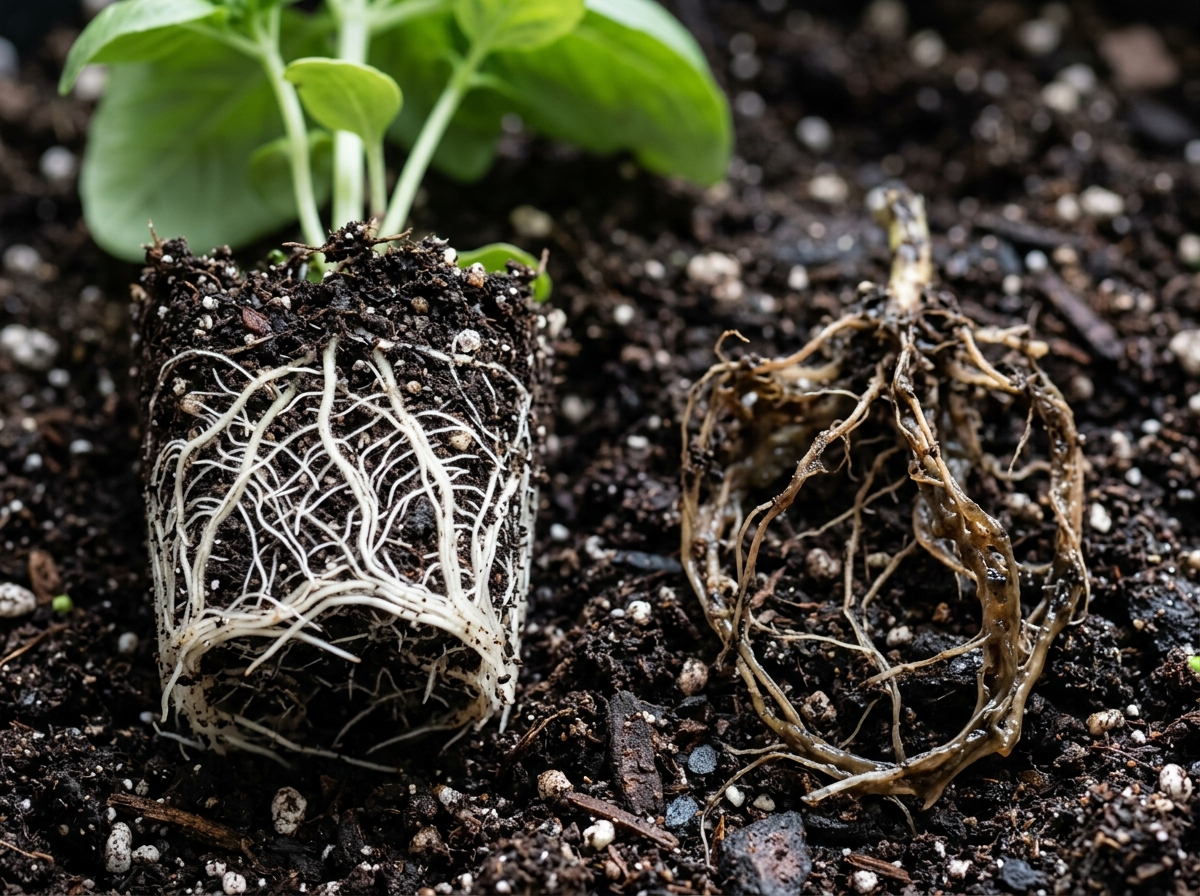
To be 100% sure, you’ll need to look beneath the surface. Healthy roots should be firm and white (or tan). Rotted roots are brown or black, slimy to the touch, and will often pull away easily from the plant. For a deep dive into maintaining plant vitality, check out our organic-care-tips-for-healthy-plants.
How Hydrogen Peroxide Root Rot Treatments Work
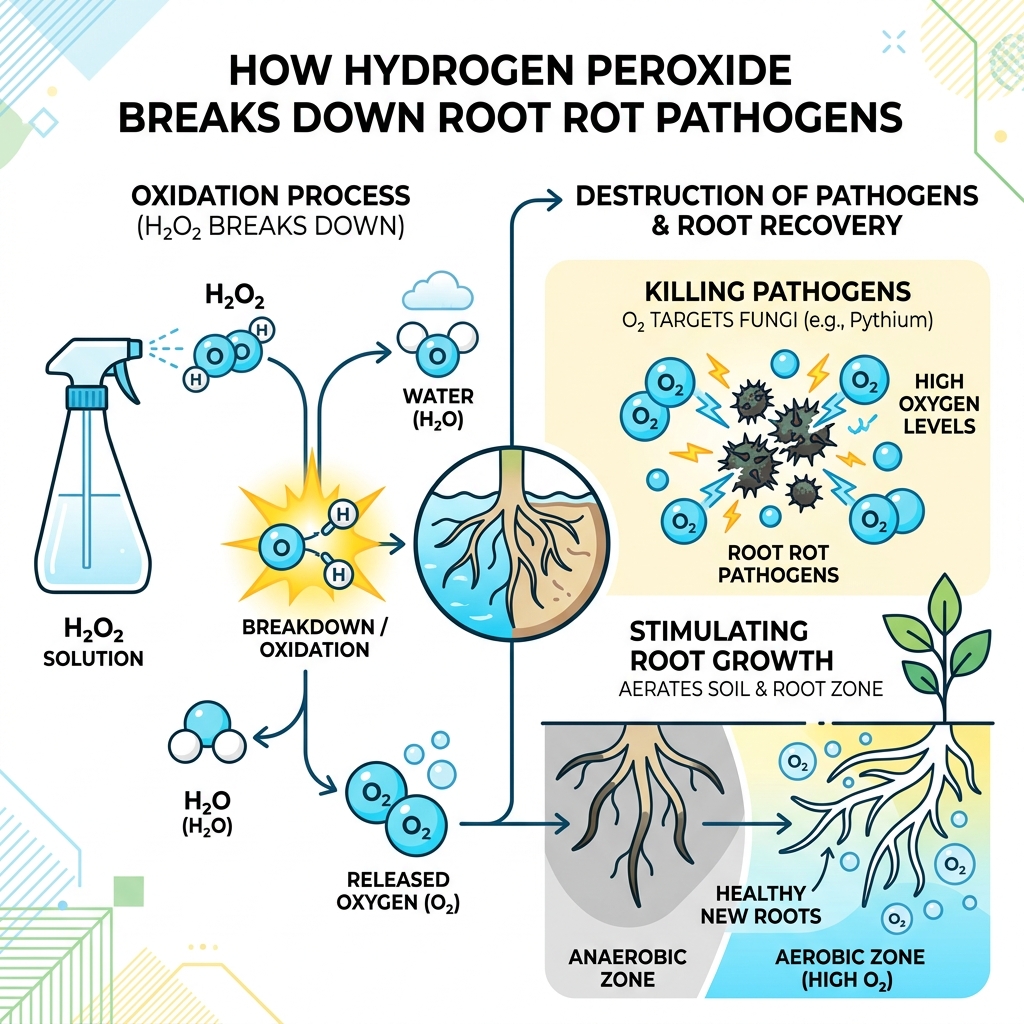
Think of hydrogen peroxide as the horticultural equivalent of a personal trainer who also happens to be a world-class janitor. Its chemical formula is H₂O₂ — basically water (H₂O) with an extra oxygen atom attached by a very loose bond.
The Power of Oxidation
Hydrogen peroxide is a phenomenal oxidizing agent. When it comes into contact with organic matter (like fungi or bacteria), that extra oxygen atom breaks free in a “fizzing” reaction. This process, called oxidation, destroys the cell walls of pathogens on contact. Research shows that certain H₂O₂ solutions can kill 99.99% of bacteria, viruses, and fungi, including E. coli and Salmonella.
Soil Aeration and Root Respiration
Beyond killing the “bad guys,” the byproduct of this reaction is pure oxygen and water. This is a massive win for your plant. In waterlogged soil, roots are essentially suffocating. The release of oxygen radicals provides an immediate breath of fresh air, stimulating root respiration and encouraging the plant to grow new, healthy tissue. It’s a dual-action approach: it cleans the environment and feeds the roots what they crave most. Proper watering is key to avoiding this mess in the first place; see our effective-watering-tips-for-organic-plants for more.
Safe Dilution Ratios for Hydrogen Peroxide Root Rot Treatment
When using hydrogen peroxide root rot solutions, “more” is not always “better.” Using a concentration that is too high can actually burn the delicate root hairs you are trying to save.
Most of us have the standard 3% hydrogen peroxide bottle from the local pharmacy. This is the baseline we use for our recipes.
| Severity of Rot | H₂O₂ Concentration (3%) | Water Amount | Application Method |
|---|---|---|---|
| Preventative | 1 Tablespoon | 1 Cup | Monthly Soil Drench |
| Mild Rot | 1 Part | 4 Parts | Weekly Soil Drench |
| Moderate Rot | 1 Part | 2 Parts | Root Soak (10 mins) |
| Severe Rot | Undiluted 3% | None | One-time root spray/drench |
Important Note on Grades: If you are using 6% or 12% “food grade” or horticultural peroxide, you must double or quadruple your water amount to reach the same safe levels. For our international friends, we recommend looking for 3% food-grade options like Essential Oxygen 3% to ensure there are no nasty additives or stabilizers that could harm your herbs.
Step-by-Step Guide to Saving Your Plants
If your plant is already showing signs of distress, a simple soil drench might not be enough. You need to perform “surgery.” Here is our tried-and-true rescue protocol.
1. Diagnose and Isolate
First, move the sick plant away from your healthy herb garden. Fungal spores can spread through water splashes or shared tools.
2. Unpot and Inspect
Gently remove the plant from its pot. Shake off as much of the old, infected soil as possible. If the soil is really stuck, you can rinse the roots under lukewarm tap water to get a clear view of the damage.
3. Prune the Rotted Roots
Using shears sterilized with undiluted H₂O₂ or alcohol, cut away every bit of mushy, brown, or smelly root. You want to leave only the firm, light-colored parts. Don’t be afraid to be aggressive here — if you leave rot behind, it will just spread again.
4. The Peroxide Bath
This is the root dipping technique often used in professional nurseries. Submerge the remaining healthy roots in a solution of 1 part 3% H₂O₂ to 2 parts water. Let them soak for about 10 to 30 minutes. This ensures any lingering microscopic spores are neutralized.
5. Repot in Fresh Soil
Never, ever reuse the old soil or the old pot without a deep scrub. The old soil is a reservoir for pathogens. Use a clean pot with plenty of drainage holes and a fresh, well-aerated potting mix. We recommend adding extra perlite or pumice to ensure the roots stay oxygenated. For more on soil health, see our tips-to-prepare-organic-soil.
Applying the Hydrogen Peroxide Root Rot Solution
Once your plant is repotted, the work isn’t quite over. For the first watering, use a mild hydrogen peroxide root rot mixture (1:4 ratio). This helps sterilize the new environment and gives the roots an oxygen boost to help them recover from the shock of “surgery.”
Monitor the plant closely for the next two weeks. You should see the wilting stop, and eventually, new green growth will appear. If you check the roots again in a month, you should find fresh, white tips poking through the soil.
Hydrogen Peroxide in Hydroponic and Aeroponic Systems
In soilless systems, root rot (often caused by Pythium) can spread like wildfire because the plants share the same water reservoir. If one plant gets it, they all do.
The Miracle of Dissolved Oxygen
In hydroponics, the primary cause of rot is usually water that is too warm (above 75°F / 24°C) or stagnant. Warm water holds less dissolved oxygen, creating the perfect breeding ground for “the slime.” Adding H₂O₂ to your reservoir can prevent and kill root rot by instantly boosting oxygen levels and sanitizing the solution.
Dosing for Hydroponics
- For Prevention: Add 3 mL of 3% H₂O₂ per gallon (approx. 1 liter) of nutrient solution every time you refresh the reservoir.
- For Active Treatment: Use 3 mL of 3% H₂O₂ per liter (about 10 mL or 2 teaspoons per gallon). Circulate this through the system for 24 hours to knock back the pathogen population.
Always monitor your water temperature. Keeping your reservoir between 65-68°F (18-20°C) is the best natural defense against rot. For more tips on vegetable and herb water management, read our guide on efficient-watering-tips-for-your-vegetable-garden.
Long-Term Prevention and Aftercare Strategies
Saving a plant once is great, but preventing the rot from returning is even better. We believe in an integrated approach to herb garden health.
- Drainage is Non-Negotiable: Always use pots with drainage holes. If you love a decorative pot that doesn’t have holes, use it as a “cachepot” (put the plant in a plastic nursery liner inside the decorative pot).
- The “Finger Test”: Before watering your herbs, stick your finger an inch into the soil. If it feels moist, wait. Most herbs, like rosemary and thyme, prefer to dry out slightly between waterings.
- Soil Amendments: Mix in perlite, coarse sand, or orchid bark to your potting mix. This creates “macro-pores” that hold air even when the soil is wet.
- Sterilize Your Tools: After pruning a plant, wipe your shears with H₂O₂. This prevents you from accidentally carrying disease from a sick plant to a healthy one.
- Moisture Meters: If you struggle to tell when a plant is thirsty, a simple moisture meter can be a lifesaver.
- Airflow: Use a small fan to keep air moving around your indoor herb garden. This helps the soil surface dry out and prevents fungus gnats. For gnat issues, we also recommend using sticky traps available on Amazon to catch the flying adults.
For a comprehensive look at setting up your garden for success, check out our preparation-tips-for-organic-soil and natural-pest-control-for-beginners.
Frequently Asked Questions about Hydrogen Peroxide Root Rot
Can hydrogen peroxide harm beneficial soil microorganisms?
This is a common concern. The short answer is: yes, it can. Hydrogen peroxide is an equal-opportunity sanitizer; it doesn’t distinguish between “good” and “bad” microbes. However, research suggests that at a 1:4 dilution, the impact is temporary. Beneficial populations usually recover within 24–48 hours. When you are facing an active infection that could kill your plant, the trade-off is almost always worth it. Once the rot is under control, you can “recharge” your soil with a high-quality compost tea or organic fertilizer.
Are some plants more sensitive to hydrogen peroxide?
Yes! While most herbs are quite hardy, some popular indoor plants are more sensitive. Peace lilies, orchids, African violets, and begonias have thinner leaf and root tissues. For these plants, always start with a more diluted solution (1:5 or 1:6) and do a “test spray” on one leaf or a small section of soil. Wait 48 hours to see if any yellowing or spotting occurs before treating the whole plant.
How often should I apply hydrogen peroxide for root rot?
- Active Treatment: Drench the soil every 3–4 days for about two weeks. This ensures that any spores hatching from the soil are caught before they can re-infect the roots.
- Preventative: Once the plant is healthy, you can move to a monthly application, or simply use it during particularly humid or rainy weeks when the soil is taking longer to dry out.
Conclusion
At Ponto de Arte, we are passionate about helping you grow the most vibrant, aromatic herbs possible. Whether you’re cultivating basil for the perfect pesto or mint for a refreshing tea, your plants rely on a healthy root system to thrive.
Hydrogen peroxide root rot treatment is a powerful, accessible tool in your gardening arsenal. It’s effective, breaks down into harmless water and oxygen, and provides a second chance for plants that might otherwise end up in the compost bin. By combining H₂O₂ treatments with proper drainage and smart watering habits, you can ensure your herb garden remains a lush, fragrant sanctuary.
Ready to take your herb gardening to the next level? Explore our specialized guides on aromatic spices and herbs to keep your garden pest-free and flourishing!
