
Why Your Lavender Is Turning White — and What to Do About It
Powdery mildew lavender is one of the most common fungal problems home herb gardeners face, and it can spread fast if you don’t catch it early.
Quick answer: If your lavender has a white or gray powdery coating on its leaves or stems, it almost certainly has powdery mildew — a fungal disease caused by Erysiphaceae fungi. Here’s what you need to know at a glance:
- What it looks like: White or gray powdery spots or felt-like patches on leaves, stems, and buds
- What causes it: Warm days (60–80°F), high night humidity, poor air circulation, and crowded plants
- Is it fatal? Rarely — but severe infections can stunt growth, reduce flowering, and weaken plants over time
- How to treat it: Remove infected parts, improve airflow, and apply organic sprays like potassium bicarbonate or a milk-water solution
- How to prevent it: Space plants well, prune regularly, avoid excess nitrogen, and choose resistant varieties
Lavender is supposed to be tough. It loves heat, tolerates drought, and generally shrugs off most problems. So when you walk out to your herb garden and find your plants dusted with white powder — or worse, losing leaves and looking sickly — it’s genuinely alarming.
You’re not alone. One grower in Linn County, Oregon reported losing or severely damaging around 150 lavender plants in a single fall season to what appeared to be powdery mildew or a related fungal disease. It can happen faster than most gardeners expect.
The good news? Once you know what you’re dealing with, powdery mildew is very manageable — especially with the right cultural habits and a few simple organic treatments.
This guide will walk you through exactly how to identify it, treat an active infection, and stop it from coming back next season.
Identifying Powdery Mildew Lavender Symptoms vs. Botrytis
When we see our beloved lavender looking “off,” our first instinct is often panic. However, proper identification is the first step toward a cure. While several fungi can affect herbs, the most common culprit for that “floured” look is powdery mildew lavender.
It is important to understand that these fungi are host-specific. This means the specific fungus attacking your lavender won’t jump over to your roses or your cucumbers, though those plants have their own versions of the disease. In lavender, you’ll primarily see white-gray splotches that look like someone accidentally tipped a bag of powdered sugar over the plant.
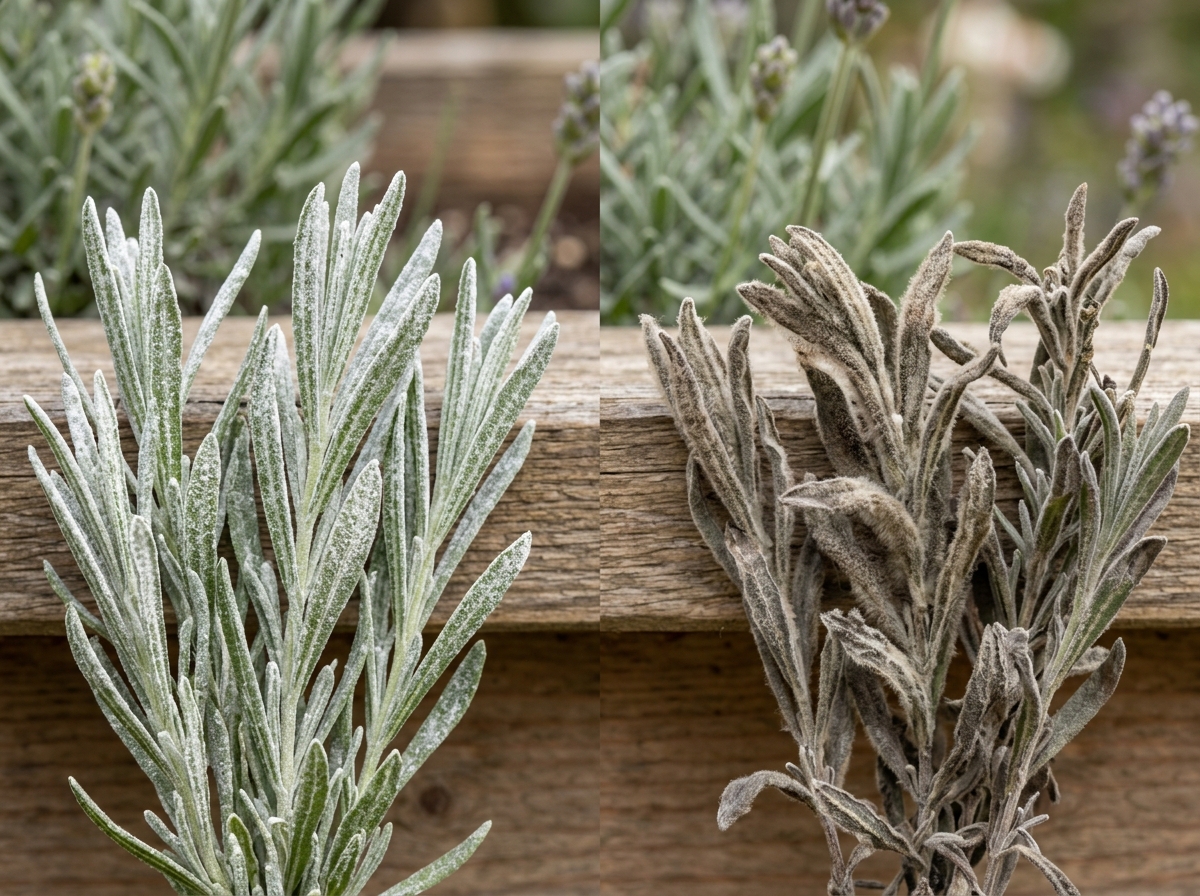
However, another common foe is Botrytis (gray mold). While they might look similar to the untrained eye, they require different approaches.
| Symptom | Powdery Mildew | Botrytis (Gray Mold) |
|---|---|---|
| Primary Color | Bright white to light gray | Fuzzy gray to brown |
| Texture | Powdery, talcum-like dust | Fuzzy, “hairy” mold |
| Leaf Effect | Distortion, purple-red tinting | Rapid browning, “rusty” look |
| Spotting | Spreading mats | Small black dots (sclerotia) |
| Conditions | Warm days, humid nights | Cool, wet, very damp weather |
According to Powdery Mildew on Landscape Plants, powdery mildew can cause leaves to twist or become stunted. If left unchecked, the plant may lose its vigor, and the aromatic oils we love so much can be compromised.
Recognizing Early Signs of Powdery Mildew Lavender
In the early stages, you might only notice tiny white spots on the lower leaves or stems. These are easy to miss! As the infection progresses, these spots merge into felt-like mats. You might also notice your lavender’s growth seems a bit “stunted.” If you see a strange purple or reddish discoloration on the leaves before the white powder appears, that’s a classic sign that the plant is under fungal stress. To get a head start on managing your garden naturally, check out our guide on natural pest control for beginners.
How Root Pests Exacerbate Fungal Issues
Sometimes, the white coating on the leaves is just the “check engine light” for a problem happening underground. We have seen cases where foliar damage that looked like a fungal disease was actually caused by root stress.
Voles and moles are often the secret villains here. Voles, in particular, love to hide under weed cloth or ground covers. They nibble on the roots and the crown of the lavender, weakening the plant’s immune system. A stressed plant with a damaged root system is far more likely to succumb to powdery mildew lavender. If you suspect your lavender is dying back in patches, it’s worth digging up one plant to check for root rot or gnaw marks. For more on protecting your herb roots, see our tips on pest control for herb gardens.
Environmental Triggers and Susceptible Varieties
Fungi are like uninvited houseguests: they only stay if the conditions are perfect. For powdery mildew lavender, the “perfect” party involves temperatures between 60°F and 80°F. Unlike many other fungi, powdery mildew doesn’t actually need wet leaves to sprout; in fact, heavy rain can sometimes wash the spores away! What it really loves is high humidity at night followed by warm, dry days.
Shade is another major factor. If your lavender is tucked into a corner with less than 6 hours of full sun, the lack of UV light and poor airflow creates a fungal playground. As noted in the Powdery Mildew- Ornamental Plants | Yard and Garden guide, stagnant air is one of the biggest contributors to outbreaks.
Lavender Varieties and Disease Resistance
Not all lavenders are created equal when it comes to fighting off mold. In large-scale plantings, we’ve observed that ‘Royal Velvet’ (L. angustifolia) tends to be more susceptible to fungal issues than the L. x intermedia varieties.
- Susceptible: ‘Royal Velvet’ and many other English lavenders (angustifolia) can struggle in humid climates.
- Resistant: ‘Intermedia Super’ and ‘Phenomenal’ are often cited for their better resistance to root rot and foliar diseases.
Choosing the right plant for your specific climate is the best “organic” treatment there is. You can find more variety-specific advice in our organic herb gardening tips.
The Role of Nitrogen and Irrigation
We all want our plants to grow big and beautiful, but over-fertilizing is a common mistake. High-nitrogen fertilizers produce “lush” new growth. While it looks pretty, this soft, succulent tissue is the easiest target for powdery mildew lavender.
Irrigation also plays a role. If you use drip irrigation under ground cloth, ensure the water is actually reaching the roots. If the soil stays dry but the air under the plant canopy stays humid, you’re inviting trouble. Proper hydration helps the plant maintain its natural defenses. Read more about organic care tips for healthy plants to balance your feeding and watering schedule.
Cultural Practices to Prevent Powdery Mildew Lavender
Prevention is always easier than a cure. At Ponto de Arte, we advocate for “Integrated Pest Management,” which starts with how you set up your garden.
- Spacing: Give your plants room to breathe! For larger varieties, 3×5 feet spacing is ideal. This allows wind to move through the foliage and dry out excess humidity.
- Sunlight: Lavender is a sun-worshipper. Ensure they are in the brightest spot in your garden.
- Watering: If you must water overhead, do it in the mid-morning. This allows the sun to dry the leaves quickly. Interestingly, a morning “wash” can actually knock spores off the leaves before they can infect the tissue.
- Sanitation: Always clean your tools! A simple 1:4 bleach-to-water solution or rubbing alcohol will prevent you from spreading spores from a sick plant to a healthy one.
For more preventative strategies, visit our organic herb gardening tips-2 page.
Pruning and Spacing for Airflow
Pruning isn’t just about shaping; it’s about health. By thinning the center of your lavender plant, you reduce the “dead air” zones where humidity gets trapped. We recommend a light pruning in the spring to remove any dead wood and a more thorough pruning after the first bloom to open up the canopy. This simple act can drop the humidity levels within the plant significantly. Learn more about natural pest control methods for organic gardening to see how pruning fits into a larger strategy.
Soil Management and Sanitation
Don’t let fallen leaves sit around. Powdery mildew survives the winter in plant debris. In the fall, rake up any old leaves and dispose of them—don’t put them in your home compost pile unless you’re sure it gets hot enough to kill the spores. Using wood chip mulch can help keep soil-borne pathogens from splashing up onto the lower leaves. Get more details on organic care tips for healthy plants-2.
Step-by-Step Guide to Treating Active Infections
If you already see the white fuzz, don’t worry—there’s still hope! Follow these steps to stop the spread:
- Isolate: If only a few leaves are affected, pinch them off and throw them in the trash.
- Mix Your Solution: Choose one of the organic remedies listed below.
- Timing: Spray in the early morning or at sunset. Never spray in the heat of the day (above 90°F), as this can burn the leaves.
- Coverage: Spray the tops and bottoms of the leaves, as well as the stems.
- Repeat: Fungal spores are persistent. Reapply every 7–14 days, and always reapply after a rainstorm.
For a deeper dive into application techniques, see our natural pest control for beginners-2 guide.
Organic Remedies for Powdery Mildew Lavender
We love these “kitchen cabinet” cures because they are safe for you and the bees:
- Potassium Bicarbonate: This is widely considered the most effective treatment. Mix 1 tablespoon per gallon of water with a teaspoon of liquid soap (to help it stick). It actually kills the fungus on contact.
- Baking Soda: A classic preventative. Mix 1 tablespoon baking soda, 1 tablespoon horticultural oil, and 1 teaspoon soap in a gallon of water. It changes the pH of the leaf surface, making it “un-growable” for the fungus.
- Milk Spray: Believe it or not, a 40/60 mix of milk and water works wonders. The proteins in the milk react with sunlight to create a natural antiseptic.
- Neem Oil: Great for mild cases and also keeps pests like aphids at bay.
Commercial Fungicides and Biological Controls
If the infection is severe, you might look for “Serenade.” This is a biological control containing Bacillus subtilis, a beneficial bacterium that eats the fungus. It’s organic-approved and very effective for herb gardens.
If you use synthetic fungicides like chlorothalonil or copper, remember to alternate active ingredients. Fungi are smart and can develop resistance if you use the same “medicine” every single time. Always read the label—especially if you plan on harvesting your lavender for tea or sachets!
Seasonal Management and Prevention Timing
The fight against powdery mildew lavender doesn’t end when the summer fades. The fungus creates “chasmothecia”—tiny, dark, round structures that act like survival pods for the winter. These hide in the cracks of the bark or in the fallen leaves.
As the RHS Advice on Powdery Mildews suggests, your best window for prevention is right at “bud break” in the spring. This is when the new, tender growth is most vulnerable. By applying a preventative sulfur or baking soda spray early in the season, you can stop the first generation of spores before they take hold.
Frequently Asked Questions about Lavender Health
Is powdery mildew fatal to lavender?
Rarely. While it makes the plant look terrible and can reduce the harvest, it usually won’t kill a mature lavender plant outright. However, it weakens the plant, making it more likely to die from winter cold or other pests.
Can I use milk to treat lavender fungus?
Yes! A mixture of 40% milk and 60% water is a scientifically backed remedy. It works best in bright sunlight, as the sun’s rays help activate the milk’s antifungal properties.
When is the best time to spray for mildew?
Mid-morning is generally best. It allows the spray to dry before the humidity of the evening sets in, but avoids the harshest midday sun which can cause “phytotoxicity” (leaf burn).
Conclusion
At Ponto de Arte, we believe that a healthy herb garden is a happy one. Protecting your aromatic lavender from powdery mildew lavender doesn’t require harsh chemicals—it just requires a bit of vigilance and the right cultural practices. By focusing on airflow, sunlight, and early organic intervention, you can keep your lavender looking vibrant and smelling sweet all season long.
Ready to give your herbs the best possible foundation? Learn more about organic soil for herbs and how the right dirt can make your plants naturally disease-resistant. Happy gardening!
