
Why Mosquito Repellent Plants Outdoor Are Worth Growing
Mosquito repellent plants outdoor are one of the most effective, chemical-free ways to reclaim your garden — and your sanity — during mosquito season.
Here are the top plants that naturally deter mosquitoes outdoors:
| Plant | Key Repellent Compound | Best For |
|---|---|---|
| Citronella Grass | Citronellal | Borders, large pots |
| Lavender | Linalool | Garden beds, pathways |
| Catnip | Nepetalactone | Containers, edges |
| Marigold | Pyrethrum | Vegetable beds, borders |
| Rosemary | Camphor, cineole | Herb gardens, pots |
| Basil | Linalool, eugenol | Herb gardens, patios |
| Lemon Balm | Citronellal | Container gardens |
| Peppermint | Menthol | Pots, patio areas |
If you grow herbs outdoors, you already know the frustration. You tend your garden carefully, nurture your plants, and then — mosquitoes move in and ruin the whole experience.
The good news? Many of the plants you may already be growing can actively work against mosquitoes.
Mosquitoes find their targets using scent receptors that detect carbon dioxide, body heat, and skin odors. Certain plants produce natural compounds that interfere with those receptors — masking your scent or outright confusing the insects. Some of these compounds are remarkably powerful. Research from Iowa State University found that catnip’s active compound, nepetalactone, can be up to ten times more effective than DEET at repelling mosquitoes in lab conditions.
The catch? Most plants need a little help to release those oils. Simply placing them in your yard won’t always be enough.
This guide walks you through exactly which plants to grow, how to get the most out of them, and how to design your outdoor space so mosquitoes stay out — without a drop of chemical spray.
Top Mosquito Repellent Plants Outdoor for Your Garden
When we look for the best mosquito repellent plants outdoor, we focus on species that produce high concentrations of essential oils. These oils aren’t just for our olfactory pleasure; they are a plant’s primary defense mechanism against herbivorous insects.
Citronella Grass (Cymbopogon nardus)
Often confused with the “citronella geranium,” true Citronella Grass is a tall, clumping grass that can reach up to six feet in height. It contains high levels of citronellal, a compound that masks the scents (like CO2 and lactic acid) that draw mosquitoes to humans. It is a tender perennial, hardy in USDA zones 10 to 12, but it thrives as a vigorous annual in cooler climates.
Lavender (Lavandula spp.)
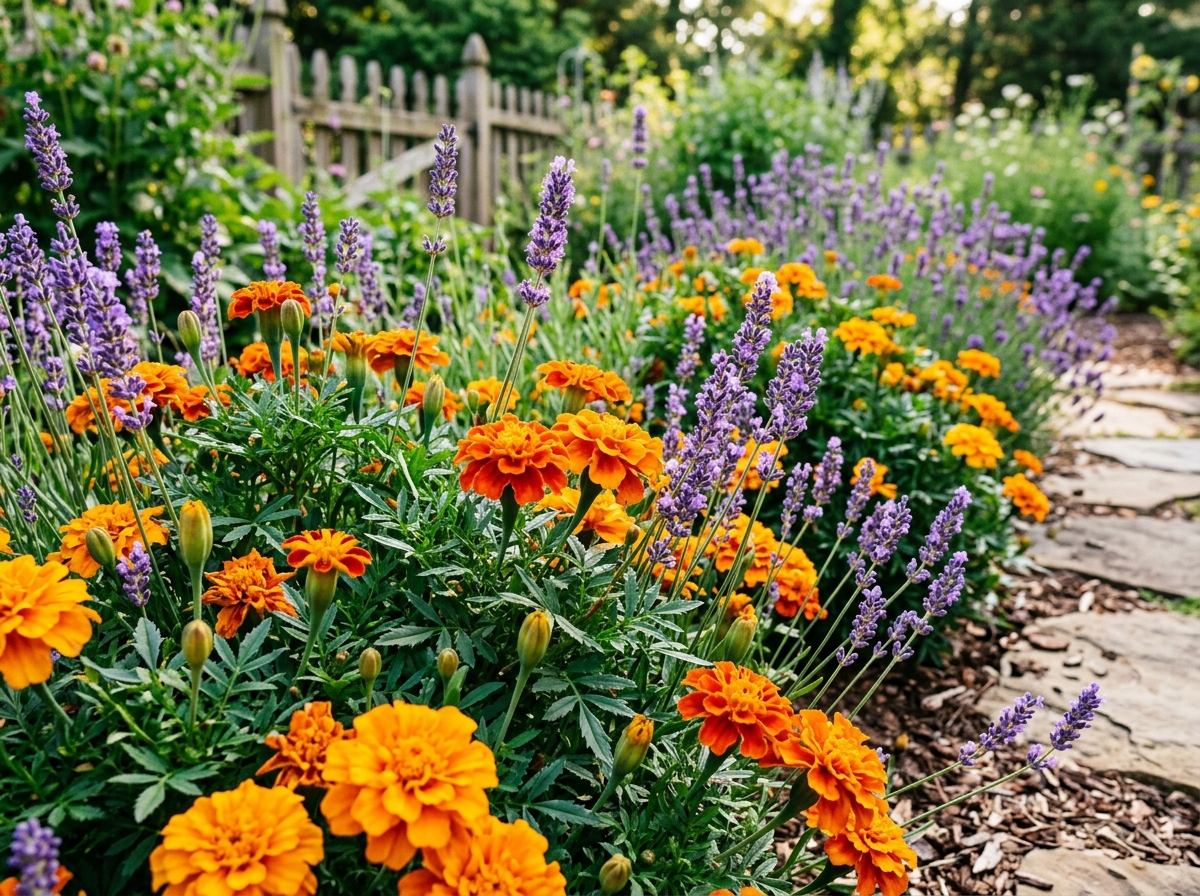
Lavender is a favorite in our aromatic herb gardens for its soothing scent and beautiful purple spikes. However, mosquitoes find the scent of linalool—the primary compound in lavender—utterly confusing. Scientific research on botanical repellents suggests that linalool can hinder a mosquito’s ability to smell its host. It thrives in full sun and well-drained soil, making it perfect for Mediterranean-style landscapes.
Marigolds (Tagetes spp.)
These cheerful annuals contain pyrethrum, a compound used in many commercial insect repellents. Marigolds are excellent for edging vegetable gardens or seating areas. They are easy to grow from seed and provide a bright pop of color while keeping the “skeeters” at bay.
Catnip (Nepeta cataria)
While it might send your feline friends into a frenzy, catnip is a powerhouse in natural pest control. A famous Catnip vs DEET study revealed that nepetalactone, the essential oil in catnip, is significantly more effective than DEET in laboratory trials. Be warned: it spreads easily, so we often recommend growing it in containers.
Bee Balm (Monarda spp.)
Also known as horsemint, Bee Balm is a double-threat. It produces a strong, incense-like vapor that mosquitoes dislike, yet its vibrant flowers are a magnet for bees and butterflies. It is incredibly hardy (zones 3-9) and adds a wild, cottage-garden feel to any outdoor space.
| Plant | Hardiness Zone | Bloom Time | Key Repellent Compound |
|---|---|---|---|
| Citronella Grass | 10-12 | Late Summer | Citronellal |
| Lavender | 5-9 | Summer | Linalool |
| Marigold | Annual | Summer/Fall | Pyrethrum |
| Catnip | 3-9 | Late Spring/Summer | Nepetalactone |
| Bee Balm | 3-9 | Summer | Thymol |
Best Culinary Mosquito Repellent Plants Outdoor
At Ponto de Arte, we specialize in protecting aromatic herb gardens. The beauty of these plants is their dual-purpose nature: you can season your dinner and save your skin at the same time.
- Rosemary: This woody perennial contains camphor and cineole. When you toss a few sprigs on the grill, the smoke creates a localized “no-fly zone.”
- Basil: One of the few plants that provides a repellent effect without needing its leaves crushed. Its strong scent deters both mosquitoes and houseflies.
- Peppermint: The high menthol content in mint is a natural deterrent. Because it is invasive, we always suggest keeping it in pots near your patio.
- Lemon Balm: A member of the mint family, it contains high levels of citronellal. It’s incredibly hardy and easy to grow, though it can take over a garden bed if not contained.
- Sage: Burning dried sage is a traditional method for clearing insects from an area, but even the living plant contributes to a scent barrier.
- Garlic: While eating it might not protect you, the sulfur compounds (allicin) in the growing plant can help deter pests from the surrounding area.
For those looking to dive deeper into protecting their edible crops, check out our more info about pest control for herb gardens.
Ornamental and Specialty Repellent Species
If you want to move beyond the herb spiral, several ornamental species offer fantastic protection.
- Floss Flower (Ageratum): These contain coumarin, a chemical often used in commercial mosquito sprays. However, they are toxic if ingested, so keep them away from pets and children.
- Lantana: Known for its pungent, citrusy scent, Lantana is a hardy shrub in warmer zones (8-11) that thrives in the heat.
- Eucalyptus: The leaves of certain eucalyptus species produce cineole (eucalyptol), a potent repellent.
- Scented Geranium: Specifically the “Citrosa” variety, these are bred for their heavy lemon scent. They make excellent patio plants.
- Allium: The broad family that includes onions and ornamental “giant Alliums” releases a fragrance that confuses many biting insects.
- Pennyroyal: A traditional repellent, though it must be used with extreme caution as it is toxic to humans and pets in high concentrations.
Science and Strategy: Activating Mosquito Repellent Plants Outdoor
We often hear the question: “I planted lavender, so why am I still getting bitten?” The answer lies in the delivery system.
Most mosquito repellent plants outdoor store their defensive chemicals deep within their leaves or stems. These compounds—like nepetalactone, linalool, and pyrethrum—are volatile organic compounds (VOCs). They are designed to be released when the plant is disturbed by a predator (like a hungry caterpillar) or environmental stress.
Scientific research on plant-based neurotoxins shows that these oils can act as mild neurotoxins to insects or mask the “human” signals we emit. To make them work for you, you have to play the role of the “disturber.”
Methods to Activate Mosquito Repellent Plants Outdoor
- Leaf Crushing: This is the most direct method. By gently bruising the leaves of Lemon Balm or Catnip, you release a concentrated burst of essential oils.
- Regular Pruning: Keeping your herbs trimmed doesn’t just make them bushier; it ensures a steady release of fragrance into the air.
- Burning Sprigs: Tossing rosemary or sage onto a fire pit or grill releases the oils through smoke, which is highly effective at clearing a small area quickly.
- Topical Rubbing: For some plants, like Citronella Geranium or Lemon Thyme, you can rub the crushed leaves directly onto your skin. Always test a small patch first to ensure you don’t have an allergic reaction.
- Strategic “Brushing”: Plant these species along narrow pathways where your legs will naturally brush against them as you walk by.
Garden Design and Maintenance for Maximum Effectiveness
Placement is everything. A single pot of basil in the corner of a half-acre yard won’t do much. You need to create “scent barriers.”
Strategic Placement
We recommend planting in clusters. Place your most fragrant mosquito repellent plants outdoor near:
- Seating Areas: Surround your patio or deck with large containers.
- Doorways: A “welcome mat” of lavender and rosemary can help prevent mosquitoes from hitchhiking into your home.
- Windows: Planting lemon balm under open windows can help deter insects from entering.
Container Gardening
Containers are our favorite tool for mosquito control. They allow you to move the protection exactly where you need it—whether that’s next to the grill or beside the hammock. They also help contain invasive species like mint and catnip. If you’re new to this, we have more info about natural pest control for beginners.
Caring for Your Repellent Garden
A healthy plant is a fragrant plant. If your herbs are stressed, they won’t produce the high levels of essential oils needed for repulsion.
- Sunlight: Most of these plants (especially Mediterranean herbs like Lavender and Rosemary) require at least 6 to 8 hours of full sun.
- The 75% Dry Rule: For Citronella and Scented Geraniums, wait until the soil is about 75% dry before watering. Overwatering leads to root rot, which kills the plant’s ability to produce oils.
- Well-Drained Soil: Ensure your pots have drainage holes. Standing water in a pot is an invitation for mosquitoes to lay eggs—the exact opposite of our goal!
- Fertilizing: Use a balanced, organic fertilizer every two weeks during the growing season to encourage lush foliage.
- Overwintering: In zones 9-11, many of these are perennials. In colder climates, you’ll need to bring your Citronella and Geraniums indoors before the first frost.
A Holistic Approach to a Mosquito-Free Yard
Plants are a powerful tool, but they are part of a larger ecosystem. To truly enjoy a bite-free summer, you must combine planting with yard hygiene.
- Remove Standing Water: This is the golden rule. Mosquitoes can breed in as little as a teaspoon of water. Check saucers, gutters, and birdbaths.
- Trim Long Grass: Mosquitoes love to hide in tall, cool grass during the heat of the day. Keeping your lawn manicured removes their resting spots.
- Use the Wind: Mosquitoes are weak fliers. A simple oscillating fan on your patio can be more effective than any spray, as it physically prevents them from landing.
- Natural Pesticides: If the population is out of control, consider more info about diy organic pesticides for home gardeners to knock down numbers without harming beneficial insects.
Common Questions Regarding Natural Pest Control
Do mosquito-repellent plants really work or are they overhyped?
The truth is somewhere in the middle. If you expect a single plant to act like a bug zapper, you will be disappointed. However, scientific evidence confirms that the oils within these plants do repel mosquitoes. The key is “active” vs. “passive” repulsion. You must interact with the plants to release the oils, and you must use enough of them to create a concentrated scent zone. They provide short-term, localized protection that is a fantastic supplement to other methods.
Which plants are safe for pets and children?
Safety is paramount. While most culinary herbs like Basil, Rosemary, and Lemon Balm are perfectly safe, others require caution:
- Citronella: Toxic to dogs and cats if ingested; can cause skin irritation.
- Floss Flower (Ageratum): Contains coumarin, which is toxic if eaten.
- Pennyroyal: Highly toxic to pets; avoid planting where they roam.
- Catnip: Safe, but will certainly attract every neighborhood cat to your garden!
Can these plants attract pollinators while repelling pests?
Absolutely! This is one of the biggest benefits of a natural approach. Bee Balm, Lavender, and Marigolds are favorites for bees, butterflies, and even hummingbirds. By using mosquito repellent plants outdoor instead of broad-spectrum chemical sprays, you maintain a healthy biodiversity in your yard, allowing “good bugs” to thrive while discouraging the “bad” ones.
Conclusion
Creating a mosquito-free sanctuary doesn’t require harsh chemicals or expensive equipment. By choosing the right mosquito repellent plants outdoor and using them strategically, you can create a garden that is beautiful, fragrant, and functional.
At Ponto de Arte, we believe that your outdoor space should be a place of relaxation, not a battleground. Whether you are looking for specialized pest management for your herb garden or just want to enjoy a quiet evening on the porch, nature has provided the tools you need.
Ready to transform your backyard? Start your urban gardening journey with us today and discover the power of aromatic protection!
