
Your Kitchen Is Missing a Basil Plant in a Pot
A basil plant in a pot is one of the easiest, most rewarding herbs you can grow at home. Fresh basil on your windowsill means better-tasting food, lower grocery bills, and a kitchen that smells incredible.
Here’s the short answer for growing basil in a pot:
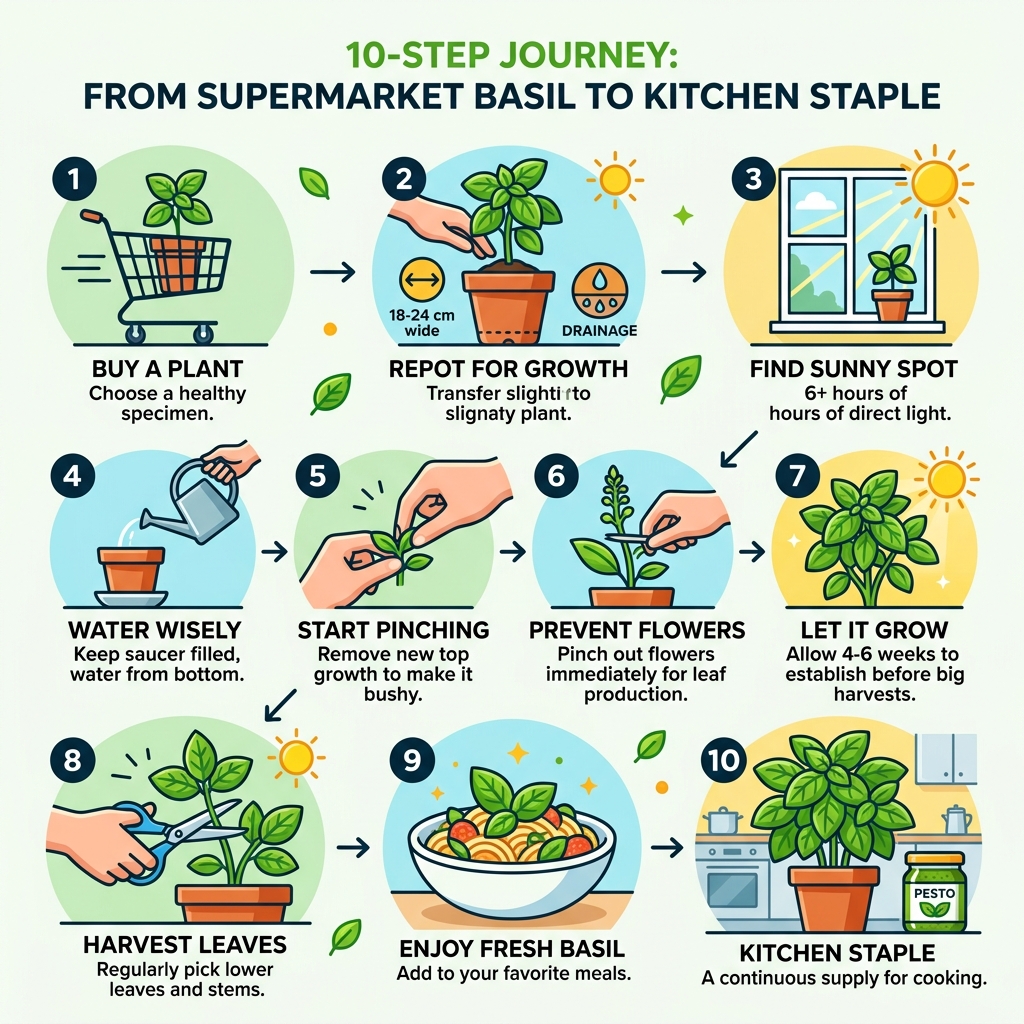
- Choose the right pot – at least 18-24 cm wide with drainage holes
- Give it sun – 6+ hours of direct light daily, east-facing windows work great
- Water from the bottom – keep a saucer filled so roots draw up moisture naturally
- Pinch the tops – trim above leaf nodes to keep plants bushy, not leggy
- Remove flowers immediately – this keeps leaves flavorful and productive
- Wait 4-6 weeks before your first real harvest so the plant can establish itself
One healthy, well-pruned plant can give you around half a cup of fresh leaves every week. That adds up fast.
The best part? You don’t need a garden. A sunny windowsill, a good pot, and a little know-how are all it takes. Whether you’re starting from a supermarket plant or growing from seed, this guide walks you through everything — from first pot to fresh pesto.
Why You Should Grow a Basil Plant in a Pot and Essential Supplies

We often get asked why basil is the “gateway herb” for home gardeners. The answer is simple: productivity and accessibility. A single, well-maintained basil plant in a pot can supply about 1/2 cup of fresh leaves every single week. When you compare that to the $4 plastic clamshells at the grocery store that wilt in two days, the cost-effectiveness is undeniable.
Beyond the kitchen, having a basil plant in a pot near your door or on a patio serves as a natural mosquito deterrent. The aromatic oils that we find delicious are actually quite offensive to many biting insects.
To get started, we recommend the following essential supplies:
- The Right Pot: For bushy growth, aim for a container with a top diameter of 18-24 cm.
- Terracotta vs. Plastic: While plastic is lightweight, terracotta is breathable and helps regulate moisture. Just ensure it has substantial drainage holes; basil hates “wet feet.”
- A Large Saucer: This is the secret to the “bottom-watering” trick we’ll discuss later.
If you are living in an apartment, check out our guide on Container Gardening for City Homes for more space-saving tips.
Basil Variety Comparison Table
Not all basil is created equal. Depending on your culinary goals, you might want to choose a specific variety:
| Variety | Flavor Profile | Best Use | Growth Habit |
|---|---|---|---|
| Genovese/Sweet | Classic, peppery, sweet | Pesto, Caprese salad | Large, bushy leaves |
| Thai Basil | Anise, licorice, spicy | Stir-fries, Pho | Sturdy stems, purple flowers |
| Lemon Basil | Tangy, citrusy | Fish, teas, salads | Slender, light green leaves |
| Globe/Boxwood | Classic sweet | Garnish | Tiny leaves, naturally round |
Optimal Conditions: Light, Temperature, and Soil
Basil is a tropical plant at heart. To make a basil plant in a pot thrive indoors, we need to mimic a warm, Mediterranean summer.
Light Requirements: Basil craves at least 6 hours of direct sunlight daily. An east-facing window is often the “Goldilocks” spot—it provides bright morning sun without the scorching midday heat that can wilt tender leaves. If your kitchen is dark, don’t worry; high-quality grow lights can fill the gap.
Temperature Thresholds: This herb is incredibly sensitive to the cold. Growth usually explodes when temperatures are between 80°F and 90°F. However, if temperatures drop below 50°F, the plant will suffer. If you keep your pots outside during summer, always bring them back inside once the autumn chill hits. For a deeper dive into seasonal care, see this guide on How to Grow and Care for Basil Plants—Indoors and Outside.
Choosing the Right Soil for a Basil Plant in a Pot
The foundation of a healthy plant is its “home.” We recommend using a high-quality, peat-free potting mix rather than garden soil, which is too heavy for containers.
- pH Balance: Basil prefers a neutral pH between 6.0 and 7.0.
- Drainage: Look for mixes containing perlite or rice hulls to ensure the water moves through freely.
- Nutrients: Mixing in a bit of organic compost provides a slow-release food source. You can find more specific recipes in our article on Organic Soil for Herbs or check out these Organic Herb Gardening Tips.
Companion Plants for Potted Basil
If you have a larger planter box, your basil plant in a pot doesn’t have to live alone. In fact, it has several “best friends” in the plant world:
- Tomatoes: The classic pairing. Many gardeners believe basil improves the flavor of neighboring tomatoes and helps repel thrips.
- Parsley and Peppers: These share similar water and light requirements.
- Avoid: Keep basil away from rue and sage, as they can compete for resources or have conflicting growth habits.
Planting and Maintenance Strategies
Whether you are starting from seed or “rescuing” a supermarket plant, the planting process is critical. If you buy a pot from a store, you’ll notice it’s usually packed with 10–15 tiny seedlings. They are fighting for space! We recommend gently splitting the root ball and repotting them into 2 or 3 separate containers to give them room to breathe.
If you’re sowing seeds:
- Plant seeds about 1/4 inch deep.
- Keep the soil consistently moist until they germinate (usually 5–7 days).
- Once they have two sets of “true leaves,” thin them out so they are at least 6 inches apart.
Fertilization: Potted plants lose nutrients every time you water them. We suggest a monthly dose of diluted liquid kelp or a slow-release organic fertilizer to keep the leaves vibrant green. For more on the basics of herb planting, check out How to Plant and Grow Basil.
The Best Watering Technique for a Basil Plant in a Pot
Watering is where most beginners fail. If you water from the top and get the leaves wet, you risk fungal diseases like powdery mildew.
The Saucer Trick: This is a game-changer for a basil plant in a pot. Place your terracotta pot in an oversized (XL) saucer. Instead of pouring water onto the soil, fill the saucer. The terracotta and the soil will “wick” the moisture upward through the drainage holes. This encourages the roots to grow deep and strong.
Always try to water in the morning. This gives any accidental splashes on the leaves time to dry in the sun. For more professional hydration advice, read our Tips for Watering Herbs.
Harvesting, Pruning, and Propagation Techniques
The more you harvest, the more your basil grows—provided you do it correctly. Never just pluck individual leaves from the bottom. This leaves the plant “leggy” and weak.
How to Prune for Bushiness:
- Wait: Give a new plant about 4 to 6 weeks to establish before the first major harvest.
- The Cut: Look for a “node”—the spot where two new leaves are emerging from the stem. Snip the main stem just above that node.
- The Result: The plant will now send out two new branches from that spot, doubling your yield!
Preventing Bolting: When basil gets stressed or too hot, it tries to produce flowers (bolting). Once it flowers, the leaves can become bitter and woody. Pinch off any flower buds the moment you see them. (Fun fact: the flowers are edible and have a mild basil flavor!)
Propagation: Want free plants? Take a 4-inch cutting of a healthy stem, strip the bottom leaves, and place it in a glass of water. You’ll see roots form within a week. Once the roots are an inch long, move your new basil plant in a pot with fresh soil.
Storage: If you have a massive harvest, don’t let it go to waste. You can freeze leaves whole in airtight bags or puree them with olive oil and freeze them in ice cube trays—perfect for “pesto cakes” later in the winter.
Managing Pests and Common Growth Issues
Even indoors, your basil plant in a pot can attract unwanted guests. Because you’ll be eating these leaves, we never recommend harsh chemicals.
- Aphids and Whiteflies: These tiny sap-suckers love tender basil. A simple spray of soapy water (a few drops of organic dish soap in a liter of water) usually does the trick. For more help, read Aphids on Basil Indoors Are a Real Buzzkill.
- Japanese Beetles: These are easier to spot. The best method is to hand-pick them in the evening and drop them into a bucket of soapy water.
- Root Rot: If your leaves turn yellow and the stems feel mushy, you are likely overwatering. Let the soil dry out and ensure your drainage holes aren’t blocked.
At Ponto de Arte, we specialize in identifying these issues early. If you’re struggling with a stubborn infestation, consult our Pest Control for Herb Gardens guide.
Frequently Asked Questions about Potted Basil
How long does a basil plant in a pot live?
Outdoors, basil is a tender annual that dies at the first frost. Indoors, a typical supermarket basil plant in a pot usually stays productive for 6 to 9 months. However, with expert care, consistent pruning, and repotting, some varieties can live as short-lived perennials for 1 to 4 years.
Why is my basil plant flowering?
This is called “bolting.” It happens when the plant feels the season is ending (due to heat or age) and wants to create seeds. To stop it, pinch off the flower spikes immediately. This redirects the plant’s energy back into leaf production and keeps the flavor sweet.
Can I split a supermarket basil plant?
Yes! In fact, you should. Supermarket pots are overcrowded to look “lush” on the shelf, but the plants will eventually choke each other out. Gently tip the plant out of its pot, tease the roots apart into 3 or 4 clumps, and give each their own basil plant in a pot setup.
Conclusion
Growing a basil plant in a pot is a journey toward a more flavorful and sustainable kitchen. By providing the right light, mastering the “saucer trick” for watering, and pruning with confidence, you can enjoy fresh pesto and aromatic garnishes all year long.
At Ponto de Arte, we are dedicated to helping your aromatic herb gardens flourish. From specialized pest management to organic growing advice, we’re here to ensure your kitchen garden remains a vibrant, healthy sanctuary.
Ready to expand your green thumb? Explore more organic herb gardening tips on our blog and start your next planting project today!
