
Why Pest Control for Herbs Matters More Than You Think
Pest control for herbs is one of the most important skills any herb gardener can develop — and the good news is that you don’t need harsh chemicals to do it well.
Quick answer: How to control pests on herbs
- Aphids, spider mites, whiteflies, slugs, and caterpillars are the most common culprits
- Spray with neem oil or insecticidal soap to knock back most soft-bodied insects
- Use garlic spray or diatomaceous earth as a natural barrier
- Plant companion herbs like chives, basil, or rosemary to repel pests naturally
- Hand-pick larger pests like caterpillars and drop them in soapy water
- Introduce beneficial insects like ladybugs to eat aphids and other pests
- Keep the garden clean — remove dead leaves and debris where pests hide
Herbs are surprisingly resilient plants. But they are also incredibly attractive to pests.
Aphids alone can produce hundreds of offspring within a single month. A small infestation on your basil can spiral into a serious problem faster than you’d expect. And for herbs used in cooking or home remedies, a chemical fix can be worse than the pest itself — residues on edible plants are a real concern.
The stakes are even higher for medicinal herbs. Pests don’t just damage leaves — they can degrade the active compounds that make medicinal plants valuable in the first place.
The good news? Most herb garden pest problems are very manageable once you know what to look for and which tools to reach for first.
This guide walks you through exactly that — from spotting the first signs of trouble, to organic sprays, companion planting, and long-term prevention strategies that keep your herb garden thriving naturally.
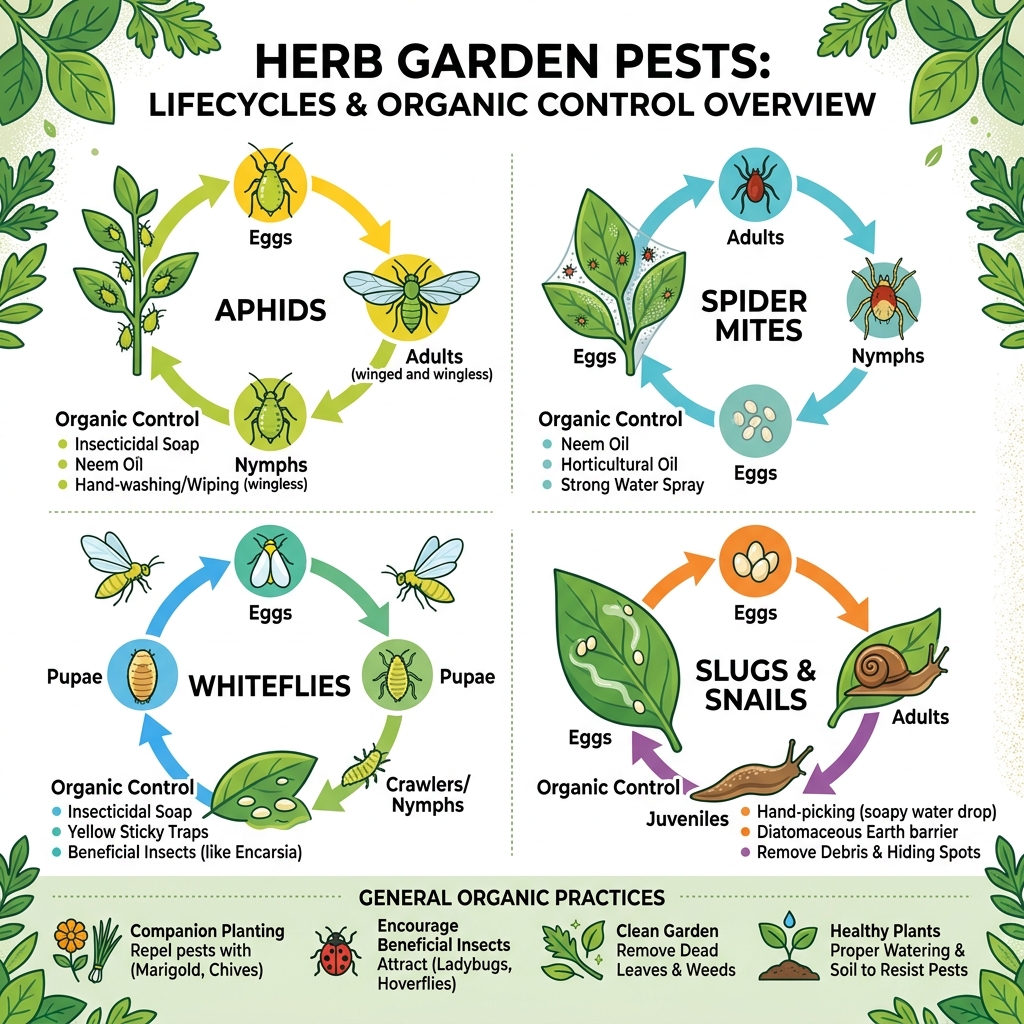
Identifying Common Pests in Your Herb Garden
Before we can fight the “bad guys,” we have to know who they are. In our experience at Pontodearte, most herb garden drama is caused by a handful of usual suspects. Identifying them early is the difference between a minor trim and losing your entire harvest.

The Usual Suspects
- Aphids: These are the “tiny green vampires” of the garden. They cluster on young stems and the undersides of leaves, sucking out plant juices. One female aphid can produce hundreds of offspring in a month, so they multiply at a terrifying rate.
- Spider Mites: Almost invisible to the naked eye, these tiny arachnids thrive in hot, dry conditions. If your dill or cilantro looks dusty or has fine webbing between the stems, you likely have mites.
- Whiteflies: These look like tiny white moths. If you brush against your mint and a cloud of white “dust” flies up, those are whiteflies. They weaken plants by feeding on sap and can spread viral diseases.
- Caterpillars: Whether it’s the cabbage looper or the tomato hornworm, these larvae have one job: eating. They can defoliate a small herb plant overnight.
- Slugs and Snails: These nighttime ninjas leave behind shiny slime trails and ragged holes in your leaves. They love damp, cool environments and are particularly fond of tender seedlings.
Knowing what you’re up against is half the battle. If you aren’t sure what’s eating your garden, check out our guide on identifying the little black bugs eating your herbs for more specific visual cues.
| Pest Name | Key Damage Signs | Preferred Herbs |
|---|---|---|
| Aphids | Curled leaves, sticky honeydew, yellowing | Basil, Dill, Parsley |
| Spider Mites | Fine webbing, stippled (dotted) leaves | Cilantro, Dill, Lemon Balm |
| Whiteflies | Sticky residue, soot-like mold, fluttering bugs | Mint, Sage, Oregano |
| Caterpillars | Large irregular holes, missing leaves | Parsley, Dill, Basil |
| Slugs | Silvery slime trails, ragged edges | Low-growing herbs, Seedlings |
Managing Sap-Suckers and Soil Pests
Sap-sucking insects like aphids are a real nuisance, especially indoors. If you’ve ever dealt with them on your windowsill plants, you know that aphids on basil indoors are a real buzzkill. These pests produce a sticky substance called “honeydew,” which can lead to sooty mold growth, further damaging the plant’s ability to photosynthesize.
Don’t forget about the pests you can’t see easily. Root Nematodes are microscopic roundworms that attack the root system, causing stunting and wilting that looks like a watering issue. Fungus Gnats are those annoying little flies that hover around the soil; their larvae live in the dirt and eat tiny root hairs. For those growing in controlled environments, understanding Pest Management for Herb Bedding Plants Grown in the Greenhouse is essential for keeping these soil-dwellers at bay. If you’re currently seeing sticky leaves, we recommend reading our guide to aphid-free herbs to stop the cycle immediately.
Effective Organic and DIY Pest Control for Herbs
When it comes to pest control for herbs, we always advocate for the “kitchen-safe” approach. Since you’re likely going to eat these plants, using synthetic neurotoxins is a bad idea. Organic methods are not only safer for you and the environment, but they also help preserve the delicate essential oils that give herbs their flavor and medicinal power.
The Organic Toolkit
One of the most effective tools in your arsenal is Neem Oil. Derived from the seeds of the neem tree, it disrupts the life cycle of pests and prevents them from feeding or reproducing. It’s a “must-have” for any serious herb gardener.
Another staple is Insecticidal Soap. This isn’t just regular dish soap (though a very mild, pure liquid soap can work in a pinch). It works by disrupting the cell membranes of soft-bodied insects like aphids and whiteflies. For those just starting out, we have a great resource on natural pest control for beginners that covers these basics in depth.
If you enjoy a good weekend project, you can even make your own diy organic pesticides for home gardeners. These often use household items to create a hostile environment for bugs without harming your family or pets. You can find more organic pest control for herb gardens: effective strategies that focus on long-term sustainability.
Natural Sprays and Physical Barriers for Pest Control for Herbs
Sometimes, you need to get a little “spicy” with your defense.
- Garlic and Pepper Sprays: Pests hate the strong aromatic compounds in garlic and the heat of capsaicin. Blending 2-3 cloves of garlic with a quart of water and a teaspoon of cayenne pepper creates a powerful repellent.
- Diatomaceous Earth (DE): This is a powder made from fossilized algae. To us, it feels like flour; to a bug, it’s like walking over microscopic glass shards that dehydrate them. Sprinkle it around the base of your plants to stop crawling insects.
- Beer Traps: If slugs are your main enemy, bury a shallow container (like a tuna can) at soil level and fill it with beer. The slugs are attracted to the yeast, crawl in, and drown.
- Physical Barriers: Floating row covers are lightweight fabrics that let in light and water but keep out egg-laying moths and beetles.
For more hands-on tips, How to Kill Bugs in Herb Gardens offers excellent step-by-step instructions. And if you’re looking for even more ways to keep things green, check out natural pest control for beginners-2 for additional DIY inspiration.
Cultural Practices and Companion Planting for Prevention
The best way to manage pests is to make sure they never want to move in. This is where “cultural practices” come in—essentially, how you manage your garden’s environment.
Prevention Through Practice
- Crop Rotation: Don’t plant the same herb in the exact same spot every year. Rotating your crops disrupts the life cycle of soil-dwelling larvae.
- Field Sanitation: Keep your garden clean! Remove dead leaves, fallen fruit, and weeds. These are prime real estate for pests to hide and overwinter.
- Proper Spacing: We know it’s tempting to pack your herbs in, but they need to breathe. Good air circulation prevents the humid, stagnant conditions that spider mites and fungal diseases love.
- Soil Health: A stressed plant is a target. By using organic compost and maintaining nutrient-rich soil, you help your herbs grow strong enough to resist minor pest attacks on their own.
For a deeper dive into these preventative measures, we recommend exploring our 10 best herbs for pest control to save your garden and our general overview of pest-control-for-herb-gardens.
Using Companion Plants as Pest Control for Herbs
Companion planting is the art of placing plants together for mutual benefit. Some plants act as “trap crops,” luring pests away from your prized herbs, while others act as natural repellents.
- Marigolds: These are the workhorses of companion planting. Their scent repels aphids and whiteflies, and their roots release chemicals that kill harmful nematodes in the soil.
- Chives: Their pungent onion-like odor discourages aphids, mites, and even rabbits.
- Mint: Great for driving off ants and flea beetles, but keep it in a pot! Mint is aggressive and will take over your garden if you let it.
- Rosemary: This hardy herb helps repel cabbage moths and bean beetles.
You can find a wealth of information on 10 pest-repelling herbs that make great companion plants and the top 23 herbs and flowers for organic pest control. If you also grow vegetables, learning about 10 herbs to grow with tomatoes for natural pest control can create a self-protecting ecosystem in your backyard.
Implementing Integrated Pest Management (IPM) and Biological Controls
Integrated Pest Management (IPM) sounds fancy, but it’s really just a common-sense approach to gardening. Instead of reaching for a spray bottle the moment you see one bug, IPM involves monitoring, setting “action thresholds,” and using a tiered approach to control.
The IPM Steps
- Monitoring: Walk through your garden weekly. Check the undersides of leaves.
- Identification: Make sure the bug you found is actually a pest. Many bugs are friends!
- Action Thresholds: One aphid isn’t a crisis. Fifty aphids on one leaf is a problem. Decide when you need to act.
- Control: Start with the least invasive method (like a blast of water or hand-picking) before moving to organic sprays.
A major part of IPM is using Biological Controls—essentially, letting nature do the work for you. By avoiding broad-spectrum pesticides, you allow “nature’s army” to thrive.
- Ladybugs: A single ladybug can devour 50 aphids a day.
- Lacewings: Their larvae are nicknamed “aphid lions” for a reason.
- Parasitic Wasps: These tiny wasps lay eggs inside caterpillars, stopping them in their tracks.
- Beneficial Nematodes: These are added to the soil to hunt down fungus gnat larvae and other soil-dwelling pests.
For more on these living solutions, check out natural-pest-control-methods-for-organic-gardening and 6 natural ways to deter insects from your herbs.
Modern Technology and the Future of Herb Cultivation
While many of us enjoy the peace of a small garden, herb cultivation on a larger scale—especially for medicinal purposes—is getting a high-tech upgrade. Modern technology is making pest control for herbs more efficient and sustainable than ever before.
The Drone Revolution
Precision agriculture is changing the game. Drones are now being used to monitor and treat crops with incredible accuracy.
- Efficiency: A single drone can cover and spray up to 50 acres in a single day.
- Yield: Targeted drone spraying can improve crop output by around 15% by ensuring every plant gets exactly what it needs.
- Sustainability: Drones use up to 90% less water than traditional spraying methods. Because they can target specific “hot spots” of infestation, they can reduce chemical or organic input use by about 40%.
- Cost Savings: Farmers using these technologies report a 20-30% reduction in overall farming costs.
This targeted approach means fewer residues on the herbs and a much smaller environmental footprint, ensuring that the medicinal plants of the future are as pure as possible.
Frequently Asked Questions about Herb Pests
Why is organic pest control particularly important for medicinal herbs?
Medicinal herbs are grown specifically for their chemical compounds. Synthetic pesticides can leave residues that are unsafe for consumption and can actually interfere with the plant’s natural chemistry. Organic methods ensure plant purity and consumer safety while preserving the high quality of the medicinal harvest.
How can I effectively monitor my herb plants for early signs of infestation?
We recommend weekly inspections. Look closely at the undersides of leaves and the new growth at the tips of the plant. You can also use “sticky traps” (yellow cards with glue) to catch flying insects. A simple trick is the “white sheet method”: shake a plant gently over a white piece of paper or cloth; any tiny pests will fall off and be easily visible against the white background.
What are the benefits of using beneficial insects over chemical pesticides?
Beneficial insects provide long-term, self-sustaining control. Unlike chemicals, pests don’t develop resistance to being eaten! Introducing ladybugs or lacewings supports biodiversity, aids in pollination, and keeps your garden’s ecosystem in a healthy, natural balance without any toxic runoff or residues.
Conclusion
At Pontodearte, we believe that a thriving herb garden should be a source of joy, flavor, and health—not stress. By focusing on specialized herb protection and sustainable practices, you can enjoy a bountiful harvest year after year. Whether you are managing a large plot of medicinal plants or just keeping a Kitchen Windowsill Herb Garden, the key is to stay observant and act naturally.
Remember: a healthy garden isn’t one with zero bugs; it’s one where the “good guys” and your own organic strategies keep the “bad guys” in check. Happy planting!
