
Why Your Herb Garden Needs a Natural Aphid Killer (And What Actually Works)
The best herb garden aphid killer methods you can use right now:
- Blast them off – Use a strong stream of water on stems and leaf undersides
- DIY soap spray – Mix 1 tsp castile soap per quart of water and spray directly on aphids
- Neem oil – Apply every 7-10 days to disrupt feeding and reproduction
- Essential oil spray – Combine peppermint, rosemary, and clove oil with water
- Attract predators – Encourage ladybugs and lacewings by planting dill, fennel, or yarrow
- Companion planting – Grow chives, garlic, or nasturtiums near vulnerable herbs
You’re tending your herb garden, excited about fresh basil or fragrant mint — and then you spot them. Tiny, pear-shaped insects clustered on the soft new growth, slowly draining the life from your plants.
Aphids are relentless. A single female can produce up to 80 offspring in one week — no partner needed. Within days, a small cluster becomes a full infestation.
They pierce plant stems and suck out nutrient-rich sap. This leaves behind curled leaves, yellowing foliage, and a sticky residue called honeydew that attracts ants and breeds sooty black mold. For an herb garden, where you’re growing food you actually eat, chemical pesticides aren’t a great option. The good news? They don’t need to be.
Natural methods work — and they work well — when you understand what you’re dealing with and apply the right combination of tactics.
Identifying the “Tiny Green Vampires” in Your Herb Garden
Before we can deploy our herb garden aphid killer strategy, we need to know exactly what we’re looking at. We often call them “tiny green vampires” because of the way they drain the life out of tender herb stems.
Aphids are small, soft-bodied insects, usually between 1/16 and 1/4 inch long. While many are lime green, they can also be black, red, yellow, or even a dusty gray. If you look closely (a magnifying glass helps!), you’ll see two tiny tube-like structures on their rear ends called cornicles. These look like little tailpipes and are a dead giveaway that you’re dealing with aphids.
Signs of an Infestation
You might notice the damage before you see the bugs themselves. Keep an eye out for:
- Curled or Misshapen Leaves: As aphids suck the sap, the leaves lose their structure and twist.
- Yellowing Foliage: Stunted growth and yellow patches are common signs of nutrient loss.
- Sticky Residue (Honeydew): This sugary excretion coats the leaves and can lead to a black, sooty mold.
- Ant Activity: If you see trails of ants heading up your basil or mint, they aren’t there for the herbs. They are “farming” the aphids, protecting them from predators in exchange for that sweet honeydew.
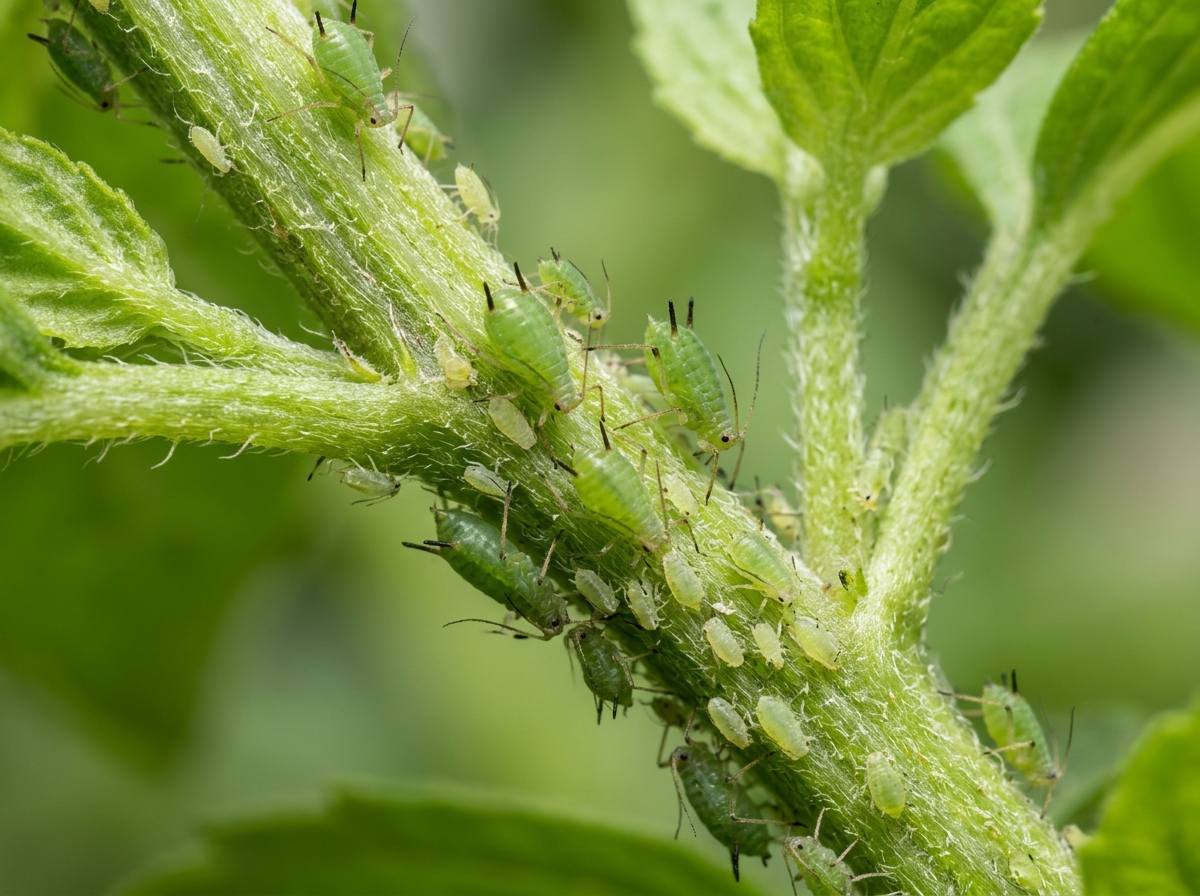
If you’re seeing small dark spots and aren’t sure if they are aphids, check out our guide on Identifying the Little Black Bugs Eating Your Herbs for more details. Catching them early is the key to a successful Stop the Sap Suckers: A Guide to Aphid-Free Herbs campaign.
The Ultimate Herb Garden Aphid Killer: Natural and Organic Sprays
When we find an infestation, our first instinct is often to reach for a bottle. But in an aromatic herb garden, we want to keep things as clean as possible. The simplest herb garden aphid killer isn’t a chemical at all—it’s physics.
The Power of Water
For many herbs, a strong blast of water from a garden hose is enough to dislodge most of the population. Aphids are relatively weak crawlers; once knocked off, they rarely find their way back to the same plant. We recommend doing this in the morning so the leaves have time to dry, which prevents fungal issues. Just be careful with delicate herbs like young cilantro or dill—you don’t want to snap the stems!
Manual Removal
If you only see a few clusters, you can simply pinch them off or wipe them away with a damp cloth. For a more aggressive manual approach, prune off heavily infested stems and drop them into a bucket of soapy water. According to experts at Garden Design, treating infestations early before they reproduce rapidly is the most effective way to keep your garden healthy.
DIY Insecticidal Soap: A Simple Herb Garden Aphid Killer
If water alone doesn’t do the trick, a homemade soap spray is our next line of defense. Soap works by breaking down the aphid’s protective outer layer, causing them to dehydrate.
The Recipe:
- 1 quart of water
- 1 to 2 teaspoons of pure liquid soap (like Castile soap)
- Important: Avoid detergents or soaps with degreasers or moisturizers, as these can kill your plants along with the bugs.
Mix the solution in a spray bottle and soak the aphids directly. You must hit the bugs for the spray to work; it has no effect once it dries. Pay special attention to the undersides of the leaves, where the “vampires” love to hide. For more recipes, check out our DIY Organic Pesticides for Home Gardeners.
Neem Oil and Essential Oils: The Aromatic Herb Garden Aphid Killer
Neem oil is a powerhouse in the organic gardening world. It contains azadirachtin, a compound that disrupts the hormonal systems of insects, preventing them from feeding and molting.
To use it, mix neem oil with water according to the package instructions (usually adding a drop of soap to help it emulsify). Spray it on your herbs every 7 to 10 days. Just be cautious: while it’s organic, neem can sometimes repel the “good bugs” too, so use it targetedly.
If you want to lean into the aromatic nature of your garden, essential oils are a fantastic herb garden aphid killer and repellent.
- Peppermint Oil: Contains menthol, which is highly irritating to aphids and ants.
- Rosemary and Clove Oil: These act as natural repellents that mask the scent of your herbs.
A mix of 20-30 drops of peppermint oil in a quart of water can create a protective barrier that smells great to us but is a nightmare for pests. This is especially helpful if Aphids on Basil Indoors Are a Real Buzzkill for your kitchen garden.
Biological Warfare: Attracting Natural Predators
Why do the work yourself when you can hire a tiny army? In a balanced garden ecosystem, predators keep aphid populations in check.
The Ladybug Legend
Most people know ladybugs eat aphids, but here’s a pro tip: the adults are the “scouts,” but the larvae are the real “tanks.” Ladybug larvae look like tiny black and orange alligators, and they can eat hundreds of aphids a day. If you see them, don’t spray! They are your best friends.
Green Lacewings and Others
Green lacewing larvae are often called “aphid lions” because of their voracious appetite. You can actually purchase lacewing eggs to release in your garden. Other allies include:
- Hoverflies: Their larvae are excellent aphid hunters.
- Parasitic Wasps: These tiny wasps lay eggs inside aphids, killing them from the inside out (it sounds like a sci-fi movie, but it’s very effective).
To keep these helpers around, we suggest installing an “insect hotel” and planting flowers like yarrow, dill, and fennel, which provide nectar for the adult predators. For more on this, read our Natural Pest Control for Beginners.
Strategic Planting: Using Herbs to Protect Herbs
One of the most beautiful things about an herb garden is that many of the plants we love for cooking are also natural pest deterrents. This is the heart of companion planting.
Repellent Plants vs. Trap Crops
We use two main strategies when planting:
- Repellents: Plants that smell so strong (to a bug) that aphids stay away.
- Trap Crops: Plants that aphids love more than your prize basil, drawing them away to a sacrificial area.
| Plant Type | Examples | Role in the Garden |
|---|---|---|
| Alliums | Garlic, Chives, Onions | Repels aphids with strong sulfur scents. |
| Aromatic Herbs | Rosemary, Lavender, Sage | Masks the scent of vulnerable plants. |
| Trap Crops | Nasturtiums, Zinnias, Calendula | Attracts aphids away from your herbs. |
| Beneficial Attractors | Dill, Fennel, Yarrow | Attracts ladybugs and lacewings. |
Planting chives near your basil is a classic move. The onion-like scent of the chives confuses the aphids’ sensors. Similarly, nasturtiums act as a “decoy.” Aphids will flock to the nasturtiums, leaving your rosemary and thyme alone. You can then treat the nasturtiums or simply remove them once they become heavily infested.
For a deeper dive into these strategies, see 10 Best Herbs for Pest Control to Save Your Garden and Your Guide to Companion Planting for a Thriving Vegetable Garden.
Advanced Tactics for Root Aphids and Prevention
Sometimes the enemy isn’t on the leaves—it’s underground. Root aphids are a common problem, especially in potted herbs. They look like tiny white, waxy dots on the roots and can cause a plant to wither even if it’s well-watered.
Dealing with Root Aphids
If you suspect root aphids:
- Beneficial Nematodes: These microscopic organisms can be added to the soil to hunt down and kill root-dwelling pests.
- Cleanliness: Never reuse potting soil from an infested plant.
- Neem Drench: A diluted neem oil soil drench can help discourage root aphid spread.
Preventative Measures
Prevention is always easier than a cure. Here is how we keep our herb gardens resilient:
- Nitrogen Management: Aphids love the tender, succulent growth caused by high-nitrogen fertilizers. Use slow-release organic fertilizers or compost to encourage steady, sturdy growth instead.
- Garden Hygiene: Remove dead plant material every week. Many aphid species overwinter as eggs in garden debris.
- Airflow: Proper spacing between your herbs prevents the humid, stagnant conditions that aphids thrive in.
For more professional tips, check out the Cooperative Extension guidelines on managing large outbreaks and our own Organic Herb Gardening Tips.
Frequently Asked Questions about Aphid Control
What is the best time of day to apply an aphid treatment?
We always recommend applying sprays—whether it’s soap, neem, or essential oils—in the early morning or late evening. During the heat of the day, the sun can magnify through the liquid droplets and scorch your herb leaves. Additionally, many beneficial insects, like bees, are less active during these cooler times, reducing the risk of accidental harm to our pollinator friends.
How do I treat aphids on sensitive herbs like basil or mint?
Basil is notoriously sensitive to heavy oils and strong soaps. Always test your herb garden aphid killer spray on a single leaf and wait 24 hours to see if it turns black or wilts. For mint, which is quite hardy, you can be a bit more aggressive, but mint can also be invasive—growing it in pots makes it easier to isolate if an infestation occurs. If you’re growing indoors, Aphids on Basil Indoors Are a Real Buzzkill and require extra vigilance with humidity and airflow.
Are homemade soap sprays safe for all herbs?
Generally, yes, but with a caveat: avoid using “dish detergents” which often contain harsh degreasers. Stick to pure liquid soaps like Dr. Bronner’s. Some herbs with hairy or very thin leaves can be more prone to “phytotoxicity” (plant injury from chemicals). Always do a test patch! For more safety tips, visit Natural Pest Control Methods for Organic Gardening.
Conclusion
At Ponto de Arte, we believe that a thriving herb garden should be a source of joy and flavor, not a source of stress. Protecting your aromatic herbs from pests doesn’t require a cabinet full of toxic chemicals. By using a combination of physical removal, DIY organic sprays, and the help of natural predators, you can maintain a healthy, vibrant garden that is safe for your family and the environment.
The goal isn’t necessarily to kill every single aphid in the world, but to create a balanced ecosystem where your herbs can flourish. Whether you’re “chive talkin'” to your plants or watching the aphids “walkin'” away from your peppermint spray, stay persistent and enjoy the process of sustainable gardening.
Ready to expand your garden? Explore our premium selection of aromatic herbs and spices and start your journey toward a more flavorful, eco-friendly home today.
