The Bay Laurel Scale Insect: What It Is and How to Beat It

Bay laurel scale insect is a common sap-sucking pest that attacks Laurus nobilis — the aromatic herb behind every bay leaf in your kitchen. If you’ve spotted sticky residue, black sooty patches, or tiny brown bumps on your bay laurel, you likely have a scale infestation.
Quick answer — how to treat scale on bay laurel:
- Manually remove visible scale by scrubbing with a cotton swab dipped in rubbing alcohol
- Spray with a mix of warm water, a few drops of dish soap, and rubbing alcohol
- Apply horticultural or neem oil to smother crawlers (the mobile young stage)
- Repeat every few days until no live insects remain (test by trying to squish them — living scale bugs have guts inside)
- Isolate the plant to stop spread to other herbs
Scale insects are sneaky. They barely look like insects at all — more like little brown bumps or patches of bark. Many gardeners don’t notice them until their bay laurel starts looking sickly, dropping leaves, or developing a sticky, grimy coating.
Bay laurel is especially vulnerable indoors, where low humidity, warm stable temperatures, and the absence of natural predators give scale insects ideal conditions to multiply unchecked. And because you cook with those leaves, you can’t just reach for any pesticide.
The good news? With the right approach, you can get your plant back to health — and keep it that way.
Identifying the Bay Laurel Scale Insect on Your Plants
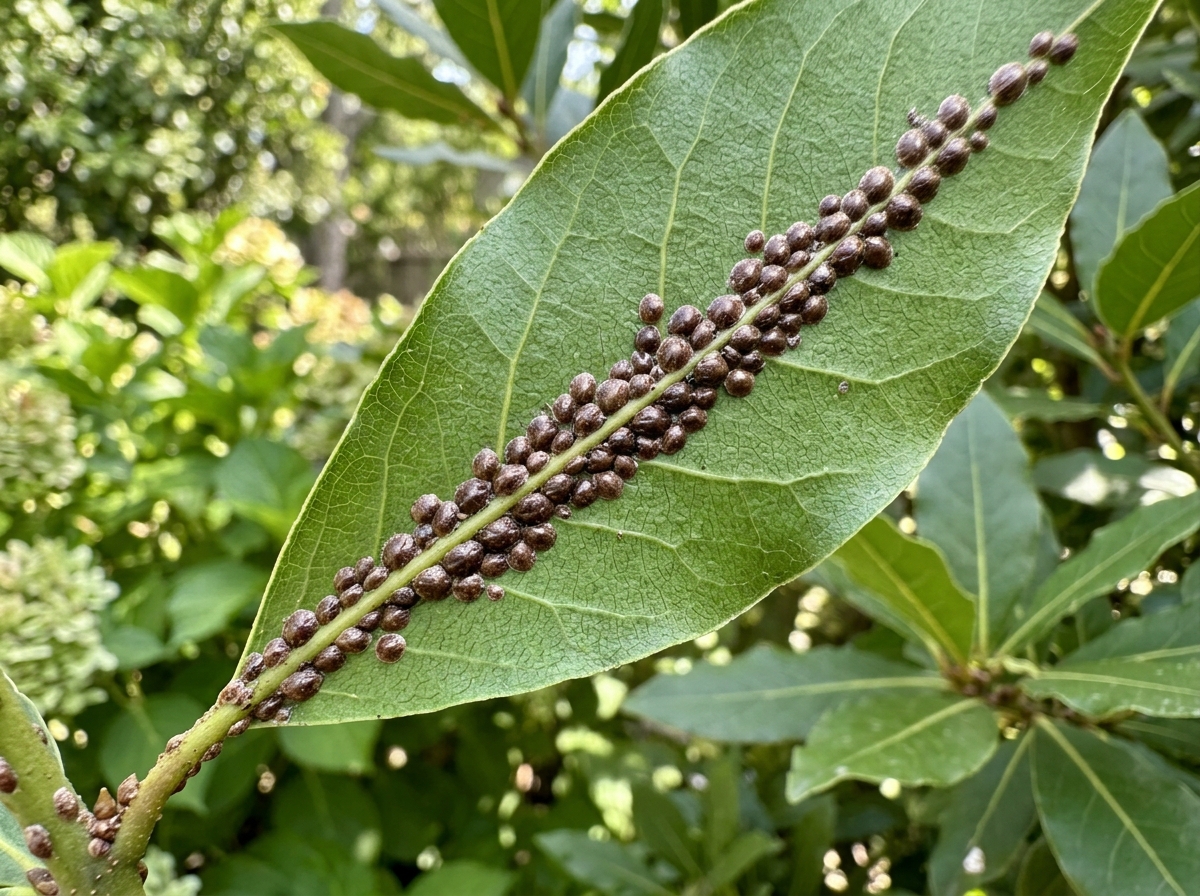
To the untrained eye, a bay laurel scale insect looks less like a bug and more like a natural part of the plant’s anatomy. These pests are masters of disguise, often mimicking the color of the stems or the texture of the leaf veins.
There are approximately 8,000 species of scale bugs globally, with more than 1,000 species found right here in North America. When dealing with bay laurel, we usually encounter insects that are between one-eighth and a quarter of an inch in size. They don’t fly around or crawl quickly across the leaves like aphids; instead, they find a choice spot, hunker down, and stay there for the duration of their adult lives.
Adult females are “sessile,” meaning they are immobile. They lose their legs as they mature and develop a protective waxy coating that acts like a shield against predators and, unfortunately, many topical sprays. This waxy “shell” is what makes them look like small, raised bumps. You can learn more about these fascinatingly frustrating creatures in this guide on Common Insect Pests Of The Bay Laurel Tree.
Soft vs. Armored Scale Types
When we talk about the bay laurel scale insect, it’s important to distinguish between the two main categories: soft scale and armored scale.
- Soft Scale (e.g., Coccus hesperidum): These are the most common culprits on indoor bay laurels. They produce a waxy, cottony, or powdery covering that is part of their body. A key trait of soft scale is that they excrete “honeydew,” a sugary substance that makes your leaves feel like they’ve been sprayed with soda. If you’re seeing “little black bugs” or sticky residue, check out our guide on identifying the little black bugs eating your herbs.
- Armored Scale: These insects create a hard, separate shell that is not attached to their body. They are generally tougher to kill because that “armor” is very effective at repelling water-based treatments. They do not produce honeydew, so they are often harder to spot until the plant begins to wilt.
Symptoms of a Bay Laurel Scale Insect Infestation
How do you know if your bay is under attack? Since they don’t move, you have to look for the secondary signs of their presence:
- Sticky Honeydew: As scale insects suck the nutrient-rich sap from your bay laurel, they excrete excess sugar. This sticky film coats the leaves and can even drip onto your furniture or floor.
- Sooty Mold: This is a black, charcoal-like fungus that grows specifically on the honeydew. While the mold itself doesn’t eat the plant, it blocks sunlight, which prevents photosynthesis and weakens the tree.
- Yellowing Foliage (Chlorosis): Because the insects are literally draining the life-blood (sap) from the plant, the leaves will eventually lose their green luster, turn yellow, and fall off.
- Stunted Growth: A heavy infestation can kill a host plant within months if left untreated. Even a moderate case will cause the plant to stop producing those delicious new leaves we want for our stews.
For a deeper dive into the “why” behind these symptoms, the Bulb Society offers great insights on Why does my Bay Laurel have Scale Insects: Causes & Treatments.
Why Scale Thrives on Indoor Herbs
If you grow your bay laurel in a pot and bring it inside for the winter, you’ve likely noticed that the bay laurel scale insect seems to “party” once it gets through your front door. There are a few reasons for this indoor explosion.
First, indoor environments offer stable temperatures and low humidity. Most homes are kept at a comfortable 68-72°F, which is exactly what scale insects need to breed year-round. Outside, cold snaps or extreme heat can keep populations in check, but inside, it’s eternal spring for them.
Second, there is a lack of natural predators. In the garden, ladybugs, lacewings, and tiny parasitic wasps treat scale insects like an all-you-can-eat buffet. Indoors, there are no “good bugs” to keep the “bad bugs” in line.
Third, many species, like the Soft Brown Scale, reproduce via parthenogenesis. This means the females don’t even need a male to reproduce; they can produce live young (crawlers) all on their own. If even one insect escapes your treatment, the infestation can resume in six months or a year.
As noted by the Laidback Gardener, it can feel like a losing battle, but understanding their biology is the first step to winning. While these leaves are great in the kitchen, they need to be healthy to be useful! See our tips on bay leaves as a secret weapon in your pantry for more on using your harvest.
Step-by-Step Treatment for Edible Plants
Because we use bay leaves for cooking, we have to be extremely careful about what we spray on them. We don’t want to season our Boeuf Bourguignon with heavy-duty synthetic pesticides.
The “Scrub and Spray” Method (Our Preferred DIY Approach)
For small to medium infestations, manual removal is the most effective and safest method.
- The Alcohol Swab: Dip a cotton swab in 70% rubbing alcohol. Dab each visible scale bug. The alcohol dissolves their waxy coating and kills them on contact.
- The Manual Scrub: For larger areas, use a soft toothbrush or a facial sponge dipped in soapy water to gently scrub the stems and leaf veins.
- The DIY Spray: Mix 500 ml of hot water, 2-3 tablespoons of rubbing alcohol, and 1 teaspoon of mild dish detergent (not degreaser) or liquid insecticidal soap. Spray the entire plant, especially the undersides of leaves where scale loves to hide.
- The Rinse: After about 20 minutes, rinse the plant with lukewarm water to remove the soap and dead bugs.
For more recipes like this, check out our guide on diy organic pesticides for home gardeners and our natural pest control for beginners.
Managing the Bay Laurel Scale Insect with Horticultural Oils
If the infestation is widespread, you’ll need to target the “crawler” stage. Crawlers are the microscopic, mobile nymphs that emerge from under the mother’s shell. They are the only stage that is truly vulnerable to sprays.
Neem oil and horticultural oils work by smothering the insects. They coat the breathing pores of the scale, causing them to suffocate.
- Application: Apply in the evening or on a cloudy day to avoid “sunburn” on the leaves.
- Timing: You must repeat this every 7-10 days for at least a month to catch new generations as they hatch.
The UNH Extension provides excellent advice on how to get rid of brown soft scale on bay laurel, emphasizing that consistency is key.
Physical Cleaning and Pruning
Sometimes, “tough love” is required.
- Vigorous Spraying: Take your plant to the shower or outside and use a steady stream of water to blast off crawlers and honeydew.
- Thumbnail Squishing: It sounds gross, but it’s effective. If you see a bump, squish it with your thumbnail. If it “crunches” or exudes liquid, it was alive.
- Pruning: If a specific branch is heavily encrusted with scale, it’s often better to just prune it off and burn it (or bag it and throw it in the trash—don’t compost live scale!).
- Isolation: Move the infested plant away from your other herbs immediately. Scale can move between plants surprisingly easily. Learn more about protecting your other herbs in our guide to stopping sap-suckers like aphids.
Safety and Prevention Strategies
When treating herbs, the “safety first” rule applies to both the plant and the person eating it. Many commercial “systemic” pesticides (which are absorbed into the plant’s tissues) stay in the leaves for months.
| Treatment Type | Effectiveness | Safety for Edibles | Residual Period |
|---|---|---|---|
| Manual Removal | High (for light cases) | Very Safe | None |
| Neem Oil | Moderate/High | Safe (Wash before use) | 1-3 Days |
| Insecticidal Soap | Moderate | Safe (Wash before use) | None |
| Systemic Chemicals | Very High | NOT RECOMMENDED | 2+ Months |
A note on systemic pesticides: Products containing ingredients like imidacloprid are very effective against scale because the bug eats the poison while sipping the sap. However, these chemicals can take 60 days or more to metabolize out of the plant. If you use them, you cannot harvest your bay leaves for a long time. Always consult our pest control for herb gardens guide before applying any chemicals.
Long-term Prevention and Monitoring
The best way to handle the bay laurel scale insect is to never let it get established.
- Quarantine: When you buy a new bay laurel, keep it in a separate room for at least 2-3 weeks. Inspect it every few days with a magnifying glass.
- Regular Scouting: Make it a habit to check the undersides of leaves while you water. Look for that tell-tale “shiny” sticky spot.
- Beneficial Insects: If your plant is outdoors, encourage ladybugs and lacewings. You can even buy these “good bugs” to release in your garden. For a list of plants that attract these helpers, see the 10 best herbs for pest control.
- Optimal Conditions: A stressed plant is a target. Ensure your bay laurel has deep but infrequent watering and plenty of light. The UC IPM guide on California Bay highlights how proper care reduces pest susceptibility.
Frequently Asked Questions about Bay Laurel Scale
Can a scale infestation kill my bay laurel?
Yes. While a few scale bugs are just a nuisance, a heavy infestation will eventually deplete the plant’s energy reserves. Over several months, the plant will stop growing, drop its leaves, and eventually die. Because scale reproduces so quickly indoors, a “minor” problem can become fatal in just one winter season.
How do I know if the scale insects are dead after treatment?
This is the trickiest part! Even a dead scale bug stays stuck to the plant. To test them, use a toothpick or your fingernail to flip one over.
- Alive: The insect will be moist inside, and you’ll see “guts” or liquid.
- Dead: The shell will be dry, brittle, and hollow. If you find live ones, it’s time for another round of treatment.
Are bay leaves still edible after a scale infestation?
Technically, yes, but they require a very thorough cleaning. You must wash off all honeydew and sooty mold. However, if you have used any non-organic pesticides, you must follow the harvest interval on the label strictly. If the leaves are heavily covered in black mold, it’s usually better to prune those off and wait for new, clean growth to emerge.
Conclusion
At Ponto de Arte, we know that your herb garden is more than just a hobby—it’s the heart of your kitchen. Dealing with the bay laurel scale insect can be a test of patience, but with consistent manual cleaning and the right organic oils, you can save your 35-year-old “friend” or your brand-new sapling alike.
Keep those leaves aromatic and your garden healthy! For more expert advice and more info about herb pest control services, visit our main site and let us help you grow your best garden yet.
