
Why Natural Pest Control for Herbs Matters More Than You Think
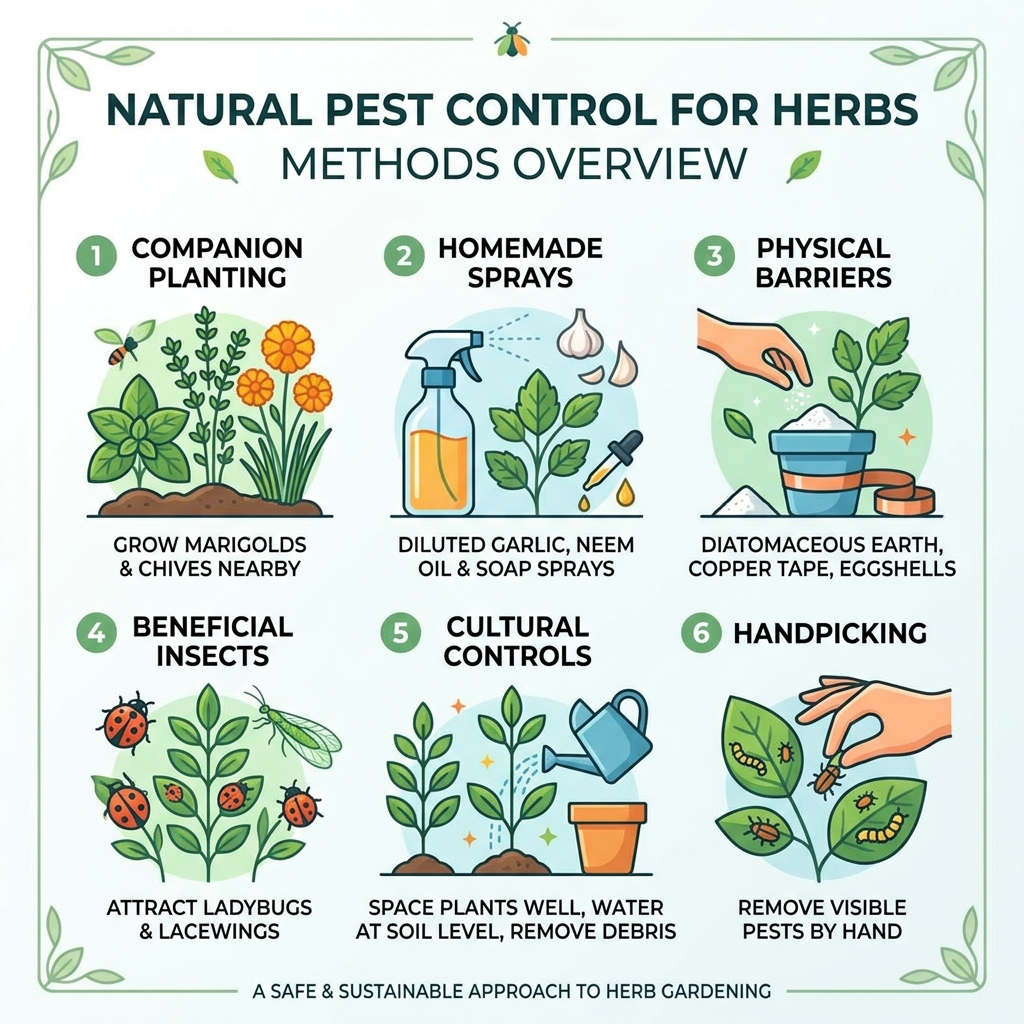
Natural pest control for herbs is the practice of protecting your herb garden from damaging insects and pests using safe, chemical-free methods. Here’s a quick overview of the most effective approaches:
Top natural pest control methods for herbs:
- Companion planting – Grow marigolds, nasturtiums, or chives nearby to repel common pests
- Homemade sprays – Use diluted garlic, neem oil, or castile soap sprays directly on affected plants
- Physical barriers – Apply diatomaceous earth, copper tape, or eggshells around plant bases
- Beneficial insects – Attract ladybugs and lacewings, which eat aphids and other soft-bodied pests
- Cultural controls – Space plants well, water at soil level, and remove debris regularly
- Handpicking – Remove visible pests by hand for small infestations
Few things are more frustrating than nurturing a thriving herb garden, only to find your basil riddled with aphids or your mint leaves shredded overnight.
And here’s the real problem: herbs are food. You pinch them, crush them, and drop them straight into your cooking. Spraying them with harsh chemical pesticides defeats the whole purpose.
The good news? Pests attacking your herbs are actually a manageable problem. Pest attacks destroy up to 40% of global crops annually, but herb gardens respond remarkably well to natural defenses — often better than chemical ones.
The key is knowing which tools to use, and when.
This guide walks you through every proven, chemical-free method to protect your herbs, from the soil up.
The Benefits of Chemical-Free Herb Gardening
When we choose natural pest control for herbs, we aren’t just avoiding “the bad stuff.” We are actively building a miniature ecosystem that works in our favor. In our experience at Ponto de Arte, we’ve seen that aromatic herbs are uniquely suited for organic management because their very essence—those essential oils we love—serves as a built-in defense mechanism.
Using chemical pesticides on edibles is a bit like using a sledgehammer to swat a fly. The fly is gone, but you’ve also smashed the table. Synthetic “cides” (insecticides, herbicides, fungicides) are often broad-spectrum, meaning they kill the “good bugs” like bees and ladybugs along with the “bad” ones. This creates a vacuum that usually results in a bigger pest explosion later on because the natural predators are gone.
Furthermore, there is a fascinating silver lining to a little bit of pest activity. A study by Texas A&M University showed that strawberry leaves with pest-imitated holes actually contained more antioxidants and nutrients than those that weren’t attacked. The plant senses the “wound” and ramps up its own internal health systems. By sticking to organic methods, we allow our herbs to become more resilient and, ultimately, more nutritious for our kitchens.
Identifying Pests that Require Natural Pest Control for Herbs
To win the battle, we have to know who we are fighting. In an herb garden, the culprits are usually small, stealthy, and very hungry. Identifying them early is the difference between a minor trim and losing the whole plant. For more detailed help on specific varieties, you can check our guide on pest-control-for-herb-gardens.
- Aphids: These tiny, pear-shaped “green vampires” suck the sap out of tender new growth, especially on basil and parsley.
- Whiteflies: If you brush against your herbs and a cloud of tiny white “gnats” flies up, you have whiteflies. They hide on the undersides of leaves.
- Spider Mites: These are nearly invisible to the naked eye but leave behind tell-tale yellow stippling (dots) on leaves and fine webbing.
- Caterpillars: The “hungry caterpillars” of the garden world can strip a parsley plant to the stems in 48 hours.
- Slugs and Snails: These nighttime ninjas leave slimy trails and large, ragged holes in your mint and cilantro.
Common Signs of Herb Infestations
Keep a close eye on your plants during your morning coffee. Look for leaf stippling (tiny yellow or white dots), which often signals mites. If the leaves feel sticky, that’s “honeydew”—an excrement left by aphids and whiteflies that can lead to black sooty mold.
Timing is everything because these pests are professional multipliers. A single aphid can produce up to 80 offspring weekly. Without a plan for natural pest control for herbs, your garden can be overrun in a matter of days.
Companion Planting and Repellent Herbs
One of the most beautiful ways to manage pests is to let the plants do the work for us. This is called companion planting. By mixing different species, we create a “confusing” environment for pests that usually rely on sight or smell to find their favorite meal.
| Repellent Herb/Flower | Target Pests | Best Companion For |
|---|---|---|
| Marigolds | Whiteflies, Nematodes | Almost everything |
| Nasturtiums | Aphids, Squash bugs | Cabbage, Kale |
| Chives | Aphids, Japanese beetles | Basil, Parsley |
| Borage | Tomato hornworms | Strawberries, Herbs |
| Mint | Ants, Fleas, Mice | Containers near doors |
Using “trap crops” is another clever strategy. For example, nasturtiums are so attractive to aphids that the bugs will often swarm them and leave your prized basil alone. You can learn more about these biological synergies in our article on natural-pest-control-methods-for-organic-gardening.
Best Practices for Natural Pest Control for Herbs
At Ponto de Arte, we advocate for high-density, biodiverse planting. Don’t just plant a row of sage; interplant it with rosemary and lavender. These woody herbs have incredibly strong scents that mask the “smell” of more vulnerable plants.
- Rosemary: Its needle-like leaves and pungent aroma deter cabbage loopers and carrot flies.
- Sage: Excellent for repelling the moths that produce cabbage worms.
- Lemongrass: Contains citronella, which helps keep mosquitoes and certain flies at bay.
For those looking for professional-grade insights, the UConn Integrated Pest Management resources offer great scientific backing for these traditional methods.
Homemade Sprays and Physical Barriers
Sometimes, prevention isn’t enough, and you need to take direct action. The beauty of DIY sprays is that you know exactly what’s in them—usually items already sitting in your pantry. We have a full breakdown of recipes at diy-organic-pesticides-for-home-gardeners.
Homemade Sprays for Natural Pest Control for Herbs
The “Big Three” of natural sprays are Garlic, Neem, and Soap.
- Garlic & Chili Spray: Blend two cloves of garlic with a tablespoon of chili powder and a quart of water. Let it sit overnight, strain it through a nut milk bag, and spray. The pungent smell and “heat” make the herb leaves very unattractive to munching insects.
- Neem Oil: This is a powerhouse. Neem extracts affect nearly 400 species of insects. It doesn’t always kill them instantly; instead, it disrupts their hormones so they stop eating and breeding. Mix 1 teaspoon of neem oil with a half-teaspoon of liquid castile soap in a quart of water.
- Soap Spray: Simple liquid castile soap (like Dr. Bronner’s) works by suffocating soft-bodied insects like aphids. Use about 1 tablespoon per quart of water.
Crucial Tip: Always perform a patch test. Spray one leaf and wait 24 hours to make sure the plant doesn’t have a bad reaction. Also, apply these in the early morning or late evening to avoid “sunburn” on the leaves.
Effective Physical Barriers for Crawling Pests
If your enemy is crawling rather than flying, you need a perimeter defense.
- Diatomaceous Earth (DE): This looks like white flour but is actually fossilized algae. To an insect, it’s like walking over microscopic glass shards. It dehydrates slugs, ants, and beetles. Reapply after it rains!
- Copper Tape: Some gardeners swear by putting 2-inch wide copper tape around the rims of pots. It’s thought to give slugs a tiny “electric shock” when they touch it.
- Eggshells: Crushed, dried eggshells create a jagged barrier that slugs and snails hate to cross.
- Beer Traps: Slugs are strangely attracted to yeast. Bury a small container (like a margarine tub) so the rim is level with the soil and fill it with beer. They crawl in and… well, they don’t crawl out. You can find ready-made traps online if you prefer a tidier look.
Biological Controls and Cultural Management
Nature has its own clean-up crew. If you see a ladybug in your garden, give it a name and leave it alone! A single ladybug can devour 50 aphids a day.
By avoiding chemicals, you invite these “beneficials” into your space. Lacewings, parasitic wasps (which don’t sting humans!), and praying mantises are the lions of the herb garden. If you’re just starting out, our guide on natural-pest-control-for-beginners is a great place to learn how to attract them.
Cultural Controls for Prevention
The way you grow your herbs determines how much the pests will love them. Pests and diseases thrive in “stressed” environments.
- Proper Spacing: Don’t crowd your herbs. Airflow is vital. Without it, you get “stagnant air” which invites spider mites and fungal diseases.
- Watering: Always water at the base of the plant, not the leaves. Fungal infections cause 85% of herb plant diseases, and wet foliage is an open invitation for mold.
- Sanitation: Remove dead leaves and debris weekly. These are the “hotels” where pests hide and breed during the day.
- Pruning: If you see a leaf covered in bugs, don’t wait—pinch it off and throw it in the trash (not the compost!).
Frequently Asked Questions about Herb Pest Management
What is the safest natural pest control for edible herbs?
The safest method is a combination of handpicking for large pests and castile soap sprays for smaller ones. Since castile soap is non-toxic and biodegradable, it’s safe to use on plants you plan to eat, provided you give them a good rinse before cooking.
How often should I apply neem oil to my herbs?
For an active infestation, once every 7 days is standard. If it rains, you’ll need to reapply. For prevention, once every two weeks is usually enough. Always stop using neem oil about a week before you plan to do a major harvest to ensure there’s no lingering taste.
Do beneficial insects like ladybugs damage herb leaves?
No! Ladybugs and lacewings are carnivores; they are only interested in the bugs eating your plants, not the plants themselves. They are the best “employees” you could ever hire for your garden.
Conclusion
Mastering natural pest control for herbs is a journey of observation and patience. At Ponto de Arte, we believe that a healthy herb garden isn’t one that is 100% bug-free—it’s one where the ecosystem is balanced enough that the “good guys” keep the “bad guys” in check.
By moving away from harsh chemicals, you ensure that your rosemary, basil, and thyme are as healthy and flavorful as nature intended. If you’re ready to dive deeper into organic gardening, explore our further resources at natural-pest-control-for-beginners-2 or Discover more organic gardening tips on our blog.
Happy gardening, and may your harvest be bug-free and delicious!
