
Why Pests on Chives Are More Common Than You Think
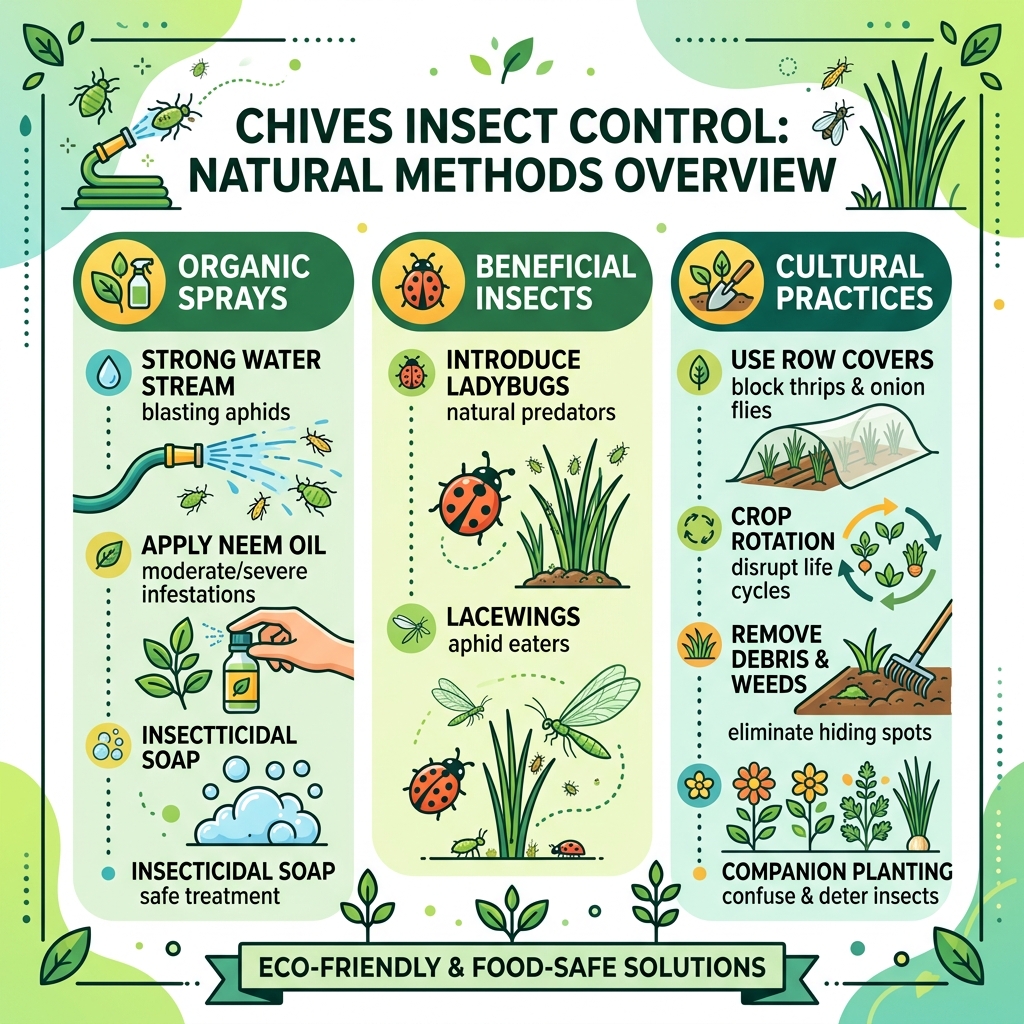
Chives insect control methods range from simple cultural practices to organic sprays — here’s a quick overview of what works best:
- Blast aphids off with a strong stream of water
- Apply neem oil or insecticidal soap for moderate to severe infestations
- Introduce beneficial insects like ladybugs and lacewings
- Use row covers to block thrips and onion flies
- Practice crop rotation to disrupt pest life cycles
- Remove debris and weeds to eliminate pest hiding spots
- Plant companion crops nearby to confuse and deter insects
Chives are tough little herbs. Their strong sulfur scent naturally pushes away many common garden pests. But they’re not invincible.
Aphids, thrips, onion maggots, and whiteflies can all move in — and if you miss the early signs, the damage adds up fast. In fact, aphids alone can reduce chive yields by up to 40% when left unmanaged.
The good news? Most chive pest problems respond well to natural, food-safe solutions. You don’t need harsh chemicals to keep your herb garden thriving.
This guide walks you through exactly what to look for and how to handle it.
Why Chives are a Powerhouse for Natural Pest Repellency
At Ponto de Arte, we often call chives the “silent guardians” of the herb garden. Their effectiveness isn’t just a gardening myth; it’s rooted in some pretty cool biology. Chives belong to the Allium family, making them cousins to garlic and onions. This lineage gives them a secret weapon: allicin.
When chive tissues are bruised or bitten, they release volatile organic sulfur compounds. These compounds create that signature onion-like aroma that we love on our baked potatoes but that many insects find absolutely repulsive. According to Biology Insights, these scents interfere with an insect’s sensory receptors, effectively “jamming” their ability to find their favorite host plants.
This makes chives one of the 10 best herbs for pest control to save your garden. They are particularly famous for deterring:
- Japanese Beetles: These metallic-green leaf-munchers hate the scent of chives.
- Carrot Rust Flies: By planting chives near your carrots, the strong scent masks the smell of the carrots, leaving the flies confused and looking elsewhere.
- Aphids: While chives can get their own species of aphids, they are remarkably good at keeping generalist aphids away from more sensitive neighbors like roses.
In fact, many gardeners plant chives in a ring around rose bushes. This strategic placement helps repel aphids and has even been shown to help prevent fungal issues like black spot, though it may take two to three years to see the full effect.

Identifying Common Pests and Chives Insect Control Methods
To protect our harvest, we first have to know who the enemy is. While chives are naturally resistant to many larger herbivores like caterpillars, they are susceptible to “sap-suckers” and “root-dwellers.”
- Onion Aphids (Neotoxoptera formosana): These are often black or dark purple dots clustered on the stems. They reproduce through parthenogenesis (basically making clones of themselves without mating), which is why an infestation seems to explode overnight. Look for yellowing, curling leaves and a sticky residue called “honeydew.”
- Thrips: These tiny, 1-2mm long insects look like moving slivers. They love to hide right where the leaf meets the bulb. They leave behind silvery streaks and tiny black specks of waste.
- Onion Maggots: If your chives are wilting and turning yellow despite plenty of water, you might have maggots attacking the roots. These are especially common in cool, moist spring weather.
- Spider Mites: These thrive in hot, dry conditions. You’ll notice fine webbing and tiny yellow stippling on the leaves.
If you are seeing mysterious marks on your plants, check out our guide on identifying the little black bugs eating your herbs for more visual cues.
Cultural Practices as Chives Insect Control Methods
Before we reach for the sprays, we look at how we manage the garden itself. Prevention is the foundation of any chives insect control methods strategy.
- Crop Rotation: According to USU Extension, using a 5-year crop rotation for Alliums can prevent the buildup of soil-borne diseases like pink root and pests like onion maggots.
- Spacing and Airflow: Don’t crowd your chives! Proper spacing ensures that leaves dry quickly after rain or watering, which discourages whiteflies and fungal diseases like downy mildew.
- Mulching: A 2-3 inch layer of organic mulch helps regulate soil moisture. This prevents the “stress-thirst-pest” cycle where dehydrated plants become easy targets for spider mites.
- Weed Management: Keep the area around your chives clean. Weeds often act as “bridge hosts,” giving pests a place to hang out before they jump onto your herbs.
- Solarization: If you’ve had a severe infestation of root-dwelling pests, solarizing the soil (covering it with clear plastic during the hottest part of summer) can help kill off larvae and pathogens.
For those just starting out, we have a great primer on natural pest control for beginners that covers these basics in more detail.
Implementing Integrated Pest Management (IPM) for Chives
Integrated Pest Management, or IPM, is the “gold standard” for modern gardening. It’s a holistic approach that focuses on long-term prevention rather than just reactive killing.
1. Monitoring and Early Detection We recommend a weekly “inspection tour.” Use a magnifying glass to check the undersides of leaves. Early detection is the difference between a quick water-blast and losing 40% of your crop. In 2025, some commercial growers are even using satellite NDVI monitoring and AI pest detection to spot plant stress before the human eye can see it!
2. Biological Controls Mother Nature has her own pest control crew. By avoiding broad-spectrum chemicals, we allow beneficial insects to do the heavy lifting.
- Ladybugs and Lacewings: These are aphid-eating machines.
- Parasitic Wasps: These tiny, non-stinging wasps lay eggs inside pests like whiteflies.
- Nematodes: Beneficial nematodes can be added to the soil to hunt down onion maggot larvae.
3. Physical Removal Sometimes the best chives insect control methods are the simplest. If you see a cluster of aphids, a sharp burst of water from a garden hose can dislodge them. Once they are on the ground, most of them can’t make the long trek back up the plant. For slugs and snails, hand-picking them at dusk and dropping them into a bucket of soapy water is highly effective. Check out more on chives as a natural slug repellent for tips on creating “barrier borders.”
| Method | Target Pest | Estimated Effectiveness |
|---|---|---|
| Biological Control (Ladybugs) | Aphids | 85-90% |
| Horticultural Oils | Thrips/Mites | 80-90% |
| Physical Removal (Water) | Aphids | 75-85% |
| Floating Row Covers | Onion Flies | 90-95% |
Organic and Biological Solutions for Herb Gardens
When cultural practices and ladybugs aren’t enough, it’s time to use organic treatments. These are safer for you, your pets, and the environment.
- Neem Oil: This is a gardener’s best friend. It disrupts the life cycle of pests like whiteflies and thrips, preventing eggs from hatching.
- Insecticidal Soap: This works by breaking down the protective outer shell of soft-bodied insects like aphids. You can even make a diy organic pesticide for home gardeners using a mild, additive-free liquid soap.
- Diatomaceous Earth: This fossilized algae powder is like microscopic shards of glass to crawling insects. Sprinkle it around the base of your plants to stop weevils and slugs.
- Chive Tea: Interestingly, you can use chives to protect other plants! A “tea” made from steeped chive leaves can be sprayed on apple trees to help prevent apple scab.
- Resistant Varieties: Look for varieties with thicker waxy coatings or “trichomes” (tiny hairs) that make it harder for insects to feed.
Applying Natural Chives Insect Control Methods
The way you apply these treatments is just as important as what you use. Here are our top tips for successful application:
- Timing is Everything: Always apply oils and soaps in the early morning or late evening. If you spray in the heat of the day, the sun can magnify through the liquid and burn the delicate chive leaves.
- Target the Underside: Most pests, especially whiteflies and aphids, hide on the undersides of the leaves. Ensure your spray bottle reaches those hidden spots.
- Dilution Ratios: More is not better! Follow the label instructions exactly. A solution that is too strong can damage the plant’s natural waxy protection.
- Repeat Applications: Most organic methods don’t kill eggs. You’ll usually need to repeat the treatment every 7-10 days for at least three weeks to catch new generations as they hatch.
- Wash Before Eating: Even though these are “natural,” you should always thoroughly rinse your chives before using them in the kitchen.
For more specific advice on other herbs, see our guide on pest control for herb gardens.
Frequently Asked Questions
How do chives repel slugs and snails?
Chives contain sulfur compounds like allicin that emit a strong scent slugs find unappealing. By planting them as a border or intercropping them with leafy greens like lettuce, you create a scent barrier that discourages these slimy invaders from entering the area.
Can aphids on chives be controlled without chemicals?
Absolutely! For light infestations, a strong stream of water is often enough. For more persistent cases, insecticidal soap or neem oil are highly effective organic options. Encouraging natural predators like ladybugs is also a great long-term solution. For more tips on keeping your herbs clean, read our guide on how to stop the sap-suckers.
Which companion plants work best with chives for pest control?
Chives are social butterflies! They pair wonderfully with:
- Roses: To deter aphids and black spot.
- Carrots: To mask the scent from carrot rust flies.
- Tomatoes: To improve flavor and deter spider mites.
- Strawberries: To help manage pests that target berries. Just avoid planting them near beans or peas, as chives can actually stunt the growth of legumes.
Conclusion
At Ponto de Arte, we believe that a healthy herb garden shouldn’t depend on a cabinet full of chemicals. By understanding chives insect control methods, you can work with nature rather than against it. Whether it’s the strategic use of allicin to mask your carrots or the introduction of a few hundred ladybugs to patrol your stems, these sustainable practices ensure your chives stay vibrant and flavor-packed.
Ready to take your garden to the next level? Explore more info about spice gardening services or check out our tips for best herbs for beginners to expand your aromatic oasis. Happy gardening!
