
When Pests Attack Your Herb Garden, Here’s What Actually Works
Herb pests organic solutions are the safest and most effective way to protect your basil, mint, oregano, and other aromatics without putting harsh chemicals near your food.
Quick answer — the most effective organic solutions for herb pests:
| Method | Best For | How Fast It Works |
|---|---|---|
| Neem oil spray (2%) | Aphids, spider mites, whiteflies | Days to 1 week |
| Insecticidal soap | Soft-bodied insects (aphids, thrips) | Hours to days |
| Diatomaceous earth | Slugs, crawling pests | Immediate barrier |
| Beneficial nematodes | Soil-dwelling larvae, grubs | 1-2 weeks |
| Garlic or chili spray | General pest deterrent | Immediate repellent |
| Companion planting | Long-term prevention | Weeks to season |
| Physical mesh barriers | Flying insects, caterpillars | Immediate |
Here’s the frustrating reality: herb gardens are magnets for pests. Aphids alone can produce hundreds of offspring within a single month under ideal conditions. One overlooked cluster on your basil can become a full-blown infestation before your next harvest.
But here’s the good news — you don’t need toxic chemicals to win this fight.
Herbs are grown to be eaten. That means whatever you spray on them ends up in your kitchen, your food, and your body. Organic pest control isn’t just an eco-friendly choice — for edible plants, it’s the only choice that makes real sense.
The methods in this guide work with your garden’s natural ecosystem rather than against it. They protect your plants, your pollinators, and your peace of mind.
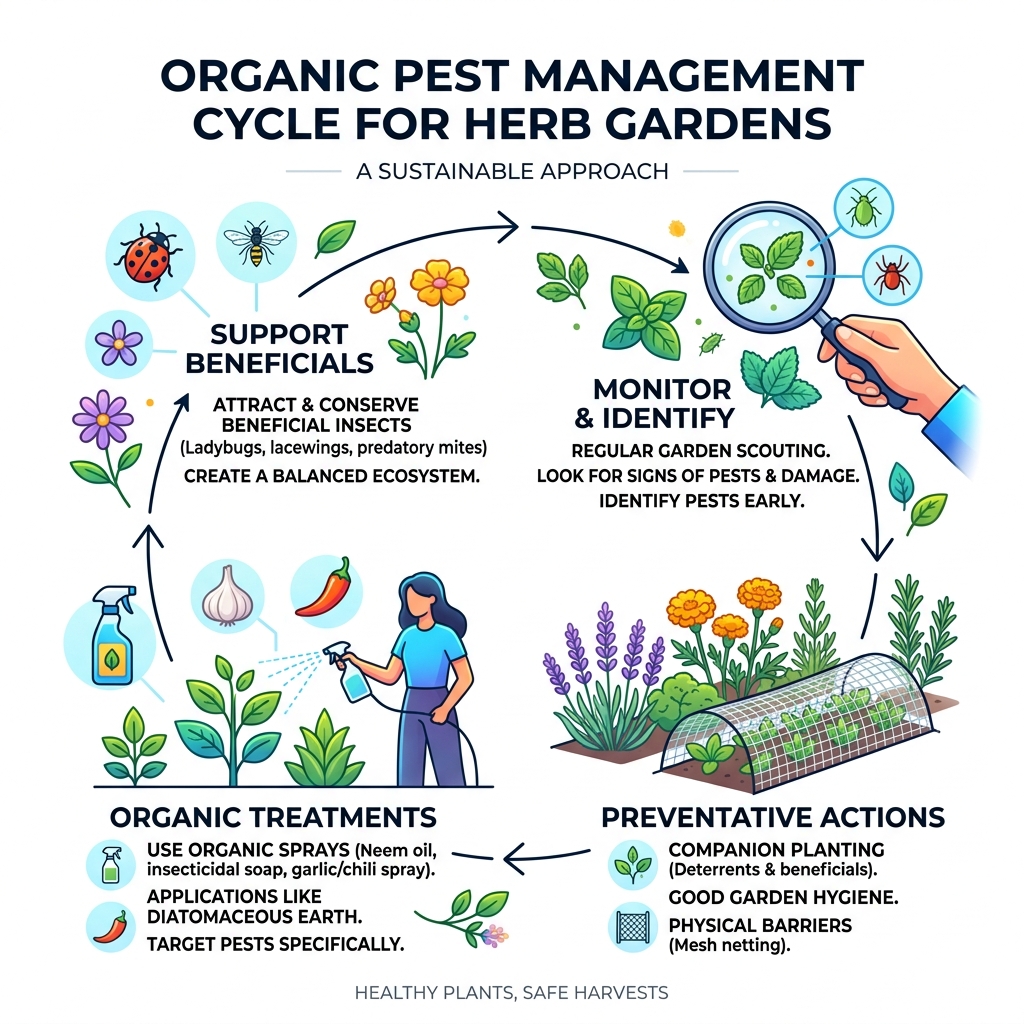
Why Choose Herb Pests Organic Solutions for Your Garden?
When we talk about our kitchen gardens, the word “purity” should be front and center. Choosing herb pests organic solutions isn’t just about being “green”; it’s about culinary safety. If you use synthetic pesticides on a sprig of rosemary, those chemicals don’t just disappear—they linger on the leaves that eventually flavor your roasted potatoes.
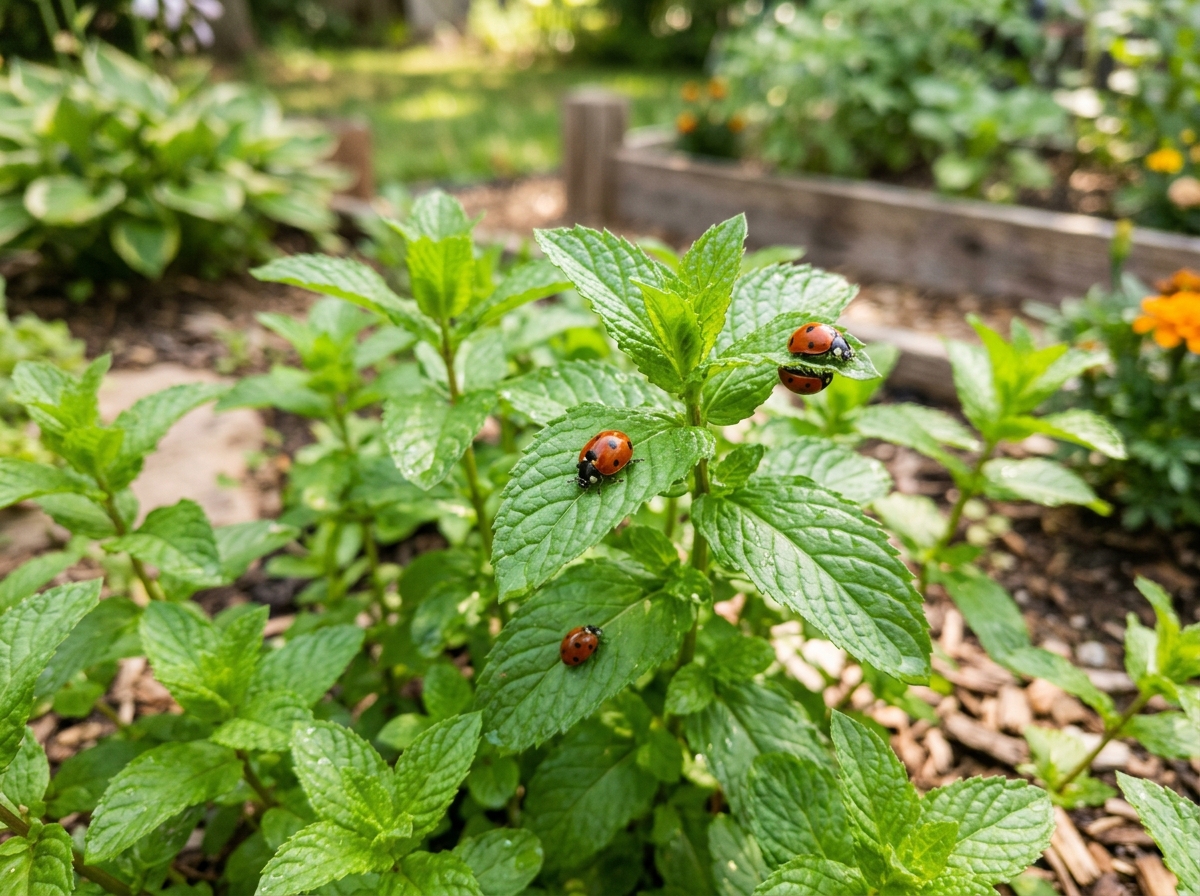
Beyond our own health, organic methods protect the very creatures that help our gardens thrive. Synthetic sprays are often “broad-spectrum,” meaning they kill the bad bugs but also wipe out the bees and butterflies we desperately need for pollination. By using natural pest control methods for organic gardening, we ensure that our backyard remains a safe haven for beneficial life.
Furthermore, organic solutions respect the soil microbiome. Healthy soil is a living community of fungi and bacteria that help your herbs grow strong. Chemical residues can disrupt this delicate balance, leading to weaker plants that are actually more susceptible to future attacks. For those just starting out, we recommend checking out our guide on natural pest control for beginners 2 to understand how to build a resilient garden from the ground up.
Identifying Common Invaders and Their Damage
Before we can fight back, we need to know who we’re fighting. Pests leave “calling cards” that tell us exactly who has been snacking on our cilantro or oregano. Early detection is a total game-changer; catching a few aphids today prevents a thousand next week.
If you notice your herb leaves curling, yellowing, or feeling sticky, you likely have sap-suckers. These tiny vampires drain the energy right out of your plants. If you’re seeing little black bugs eating your herbs, it’s time for a closer inspection.
The “Most Wanted” List of Herb Pests
- Aphids: These are perhaps the most common. They cluster on fresh, tender growth and produce a sticky substance called “honeydew.” We’ve put together a guide to aphid-free herbs specifically to help you stop these sap-suckers in their tracks.
- Spider Mites: If you see fine, silky webbing on your oregano or mint, you’ve got mites. They thrive in hot, dry conditions and cause leaves to look speckled or faded.
- Whiteflies: These tiny white insects hang out on the undersides of leaves. When you brush the plant, they fly up in a cloud. They steal nutrients and can spread plant viruses.
- Thrips: These leave behind “glittering” silver streaks on leaves and can cause distorted growth.
- Slugs and Snails: They leave large, ragged holes in leaves and tell-tale silvery slime trails. They love damp, cool environments.
- Leaf Miners: These aren’t bugs you see easily, but you’ll see their work: winding, translucent “tunnels” inside the leaves where the larvae have eaten their way through.
| Pest | Primary Symptom | Best Organic Treatment |
|---|---|---|
| Aphids | Curled leaves, sticky residue | Neem oil, water blast, ladybugs |
| Spider Mites | Fine webbing, yellow stippling | Increase humidity, predatory mites |
| Whiteflies | Cloud of tiny white bugs | Sticky traps, insecticidal soap |
| Slugs | Large holes, slime trails | Copper tape, beer traps, DE |
| Caterpillars | Chewed leaf edges, dark droppings | Hand-picking, BT spray |
| Leaf Miners | Winding white trails in leaves | Remove affected leaves, neem oil |
Top Organic Products and Remedies for Herb Protection
Once you’ve identified the culprit, it’s time to choose your weapon. We advocate for a “tiered” approach: start with the gentlest method (like a blast of water) and move up to specialized products if the problem persists.
Neem Oil: The Organic Powerhouse
Neem oil is a versatile tool that every herb gardener should have. Its active compound, Azadirachtin, disrupts the life cycle of nearly 400 species of insects, including moths, beetles, and leaf miners. It doesn’t just kill on contact; it prevents pests from feeding and reproducing. A 2% neem oil spray applied every week is usually enough to keep oregano and basil pests at bay.
Insecticidal Soap
This is a must-have for soft-bodied insects like aphids and thrips. It works by breaking down the insect’s protective outer layer, causing them to dehydrate. For the best results, you must spray the insect directly. It’s safe, but we always recommend rinsing your herbs before eating if you’ve sprayed them recently.
Diatomaceous Earth (DE)
DE is a powder made from fossilized algae. To us, it feels like soft flour; to a slug or an ant, it’s like walking over microscopic shards of glass. It’s an incredible physical barrier. Just remember to reapply it after rain, as it loses its effectiveness when wet.
Homemade Remedies
You can often find herb pests organic solutions right in your pantry. We love diy organic pesticides for home gardeners because they are cost-effective and immediate.
- Garlic & Chili Spray: Blend 15 hot peppers and a bulb of garlic with a liter of water. Let it steep for 24 hours, strain, and spray. It’s a powerful deterrent—bugs hate the smell and the “heat” even more than we do!
- Bacillus thuringiensis (BT): This is a naturally occurring soil bacterium that specifically targets caterpillars without harming other insects.
- Beneficial Nematodes: These microscopic roundworms live in the soil and hunt down larvae like fungus gnats or grubs. They are a “set it and forget it” solution for soil-borne issues.
Essential Oils as Herb Pests Organic Solutions
Aromatic herbs are already full of essential oils, but adding a few more can create a “scent barrier” that confuses pests.
- Peppermint Oil: Excellent for driving away ants and aphids.
- Rosemary Oil: Great for repelling flies and mites.
- Thyme Oil: Contains chemicals that naturally deter many garden invaders.
- Cedarwood & Citronella: Effective for keeping larger flying insects away.
When using oils, dilution is key. A few drops in a spray bottle of water is plenty. Check out our specific guide on kitchen mint bug sprays for recipes that won’t ruin the flavor of your plants.
Biological Warfare: Using Nature’s Predators
Sometimes, the best way to handle a pest problem is to hire a professional—a professional predator, that is.
- Ladybugs: A single ladybug can devour up to 50 aphids a day.
- Green Lacewings: Often called “aphid lions,” their larvae are voracious eaters of thrips and whiteflies.
- Parasitic Wasps: Don’t worry, they don’t sting humans! They lay eggs inside pests like caterpillars or aphids, controlling the population from the inside out.
To keep these “good bugs” around, you need to provide them with a snack. Planting nectar-rich flowers like sweet alyssum or dill can attract beneficial insects from up to 50 feet away. For more ideas on which plants to add, see our list of the 10 best herbs for pest control.
Cultural and Physical Barriers for Long-Term Defense
Prevention is always easier than a cure. By changing how we grow our herbs, we can make our garden a very unattractive place for pests to live.
Physical Barriers
If a bug can’t touch the plant, it can’t eat the plant. It’s that simple.
- Mesh Netting: Using fine-gauge insect mesh is one of the most effective herb pests organic solutions. It allows sun and rain in but keeps butterflies (who lay caterpillar eggs) and beetles out. We discuss this in detail in our guide on netting for flea beetle freedom.
- Floating Row Covers: Lightweight fabrics that rest on the plants can protect young seedlings during their most vulnerable stages.
- Copper Tape: If you grow herbs in pots, wrap a ring of copper tape around the rim. It gives slugs a tiny, unpleasant electric shock, keeping them away from your precious basil.
The Power of Diversity
- Companion Planting: This is nature’s version of a security system. Planting marigolds near basil deters aphids, while garlic planted near parsley can ward off spider mites.
- Trap Crops: These are “sacrificial” plants. For example, planting nasturtiums can lure aphids away from your main herb crop. The aphids feast on the nasturtiums, leaving your herbs alone.
- Crop Rotation: Don’t plant the same herb in the same spot every year. Rotating your crops disrupts the life cycles of soil-dwelling pests.
Implementing Preventive Herb Pests Organic Solutions
A healthy plant is a resilient plant. Most pests are opportunists—they target plants that are already stressed.
- Airflow Management: Don’t crowd your plants. Good spacing prevents the humid, stagnant air that spider mites and fungal diseases love.
- Watering Techniques: Always water at the base of the plant. Wet leaves are an open invitation for slugs and powdery mildew.
- Sanitation: Keep your garden clean. Remove dead leaves and fallen debris where pests like to hide and over-winter.
- Regular Monitoring: Spend time with your herbs! We like to say the “gardener’s shadow” is the best fertilizer—and the best pest control. Check your plants weekly, especially the undersides of leaves.
- Quarantine: When you bring a new herb home from the nursery, keep it away from your other plants for a week. This ensures you aren’t accidentally introducing a “Trojan Horse” of aphids into your garden. For more on these basic steps, visit our pest control for herb gardens pillar page.
Frequently Asked Questions about Organic Herb Care
How often should I apply organic sprays to my herbs?
Most organic sprays, like neem oil or insecticidal soap, should be applied once a week. However, if it rains, you should reapply as soon as the leaves dry. For active infestations, you may need to spray every 3-4 days to break the pest’s reproductive cycle. Always spray in the early morning or late evening to avoid burning the leaves in the sun and to protect active pollinators.
Is neem oil safe to use on herbs I plan to eat?
Yes, neem oil is considered non-toxic to humans and is a staple in herb pests organic solutions. However, it has a very strong, bitter taste. We recommend stopping neem applications about 5-7 days before you plan to harvest. Always wash your herbs thoroughly with cool water before using them in your cooking.
What is the best way to get rid of aphids on indoor basil?
Indoor basil is particularly prone to aphids because there are no natural predators like ladybugs inside. Aphids on basil indoors can be managed by taking the pot to the sink and using a steady stream of water to wash the bugs off. You can also use yellow sticky traps to catch flying adults and increase the humidity around the plant, as aphids prefer dry air.
Conclusion
At Ponto de Arte, we believe that a thriving garden is a balanced one. You don’t need a shelf full of toxic chemicals to enjoy a bountiful harvest of mint, rosemary, and basil. By embracing herb pests organic solutions, you are choosing to work with nature’s own defense systems.
From the protective power of neem oil to the simple brilliance of companion planting, these methods ensure your herbs stay healthy and your kitchen stays safe. The goal isn’t necessarily a garden with zero bugs—it’s a garden where the “good guys” keep the “bad guys” in check.
Ready to expand your aromatic collection? Explore our guides on Aromatic Spices and Herbs to find new varieties that will flourish under your expert, organic care. Happy gardening!
