
The Best Mulch for an Herb Garden — Quick Answer
Mulch for herb garden success comes down to matching the right material to your herbs’ needs. Here’s a quick overview of the best options:
| Mulch Type | Best For | Key Benefit |
|---|---|---|
| Compost | All herbs | Nutrients + moisture retention |
| Shredded leaves | Most herbs | Free, improves soil structure |
| Wood chips (cedar/cypress) | Perennial herbs | Long-lasting weed suppression |
| Grass clippings | Annual herbs | High nitrogen, free |
| Gravel or pea stone | Lavender, rosemary, thyme, sage | Drainage + heat reflection |
| Pine needles | Sage, lavender | Slow breakdown, good drainage |
| Straw | Most herbs | Insulation, moisture retention |
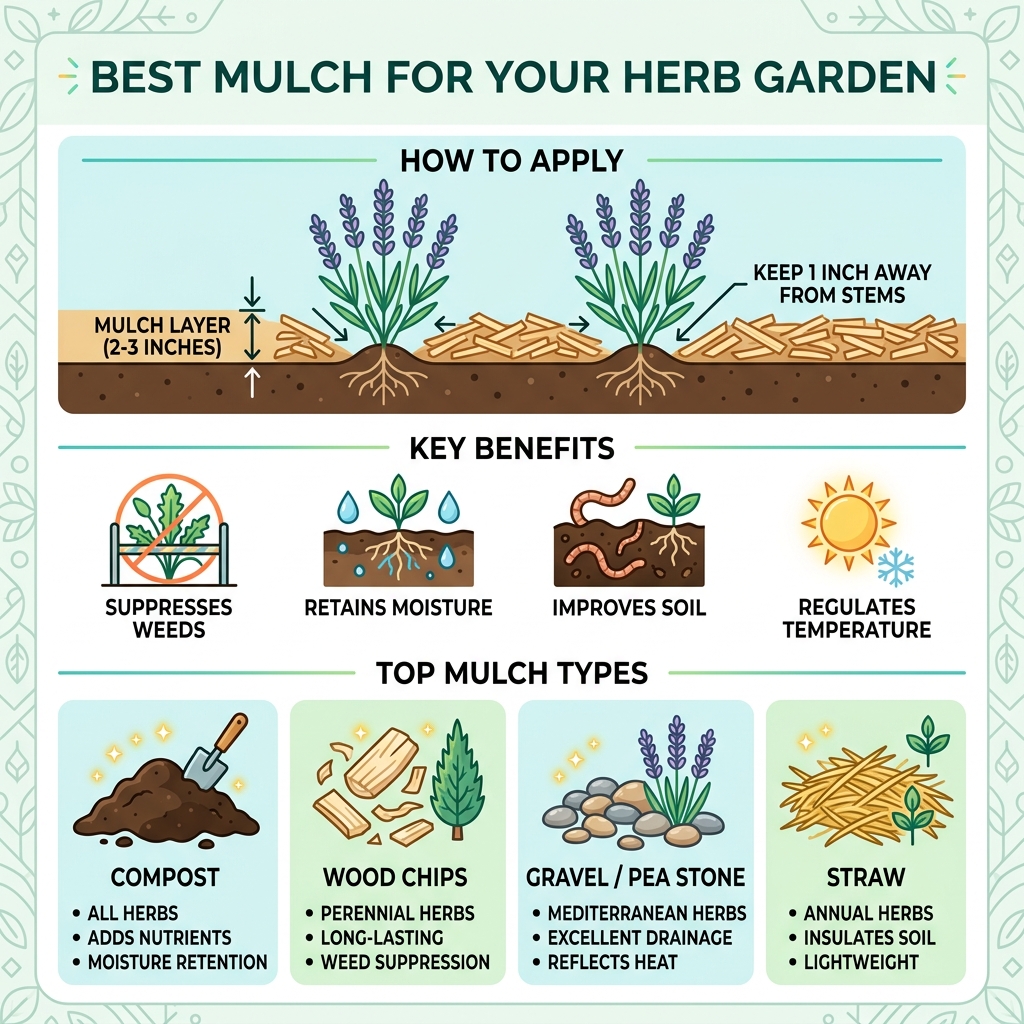
General rule: Apply 2–3 inches of organic mulch, keeping at least 1 inch away from plant stems.
Growing herbs is one of the most satisfying things you can do in a garden. Fresh basil, fragrant rosemary, sprawling thyme — they’re easy to love. But they’re also easy to lose.
Pests nibble leaves. Weeds crowd roots. Heat dries out the soil faster than you’d expect. And if you’re trying to grow herbs without harsh chemicals, the challenge gets even bigger.
That’s where mulch comes in.
The right mulch acts like a quiet guardian for your herb garden. It holds moisture in the soil, keeps weeds from taking over, and buffers your plants against temperature swings. Some mulches even support the beneficial organisms that naturally protect your plants.
But not all mulch is the same — and the wrong choice can actually harm the herbs you’re trying to protect. Dense, moisture-trapping mulch around drought-loving Mediterranean herbs like lavender? That’s a fast track to root rot.
This guide will walk you through everything you need to know: which mulches work best for which herbs, how to apply them correctly, and how to avoid the most common mistakes gardeners make.
Why You Should Use Mulch for Herb Garden Success
We often hear gardeners ask if they really need to mulch their herbs. After all, many herbs are famously “easy” to grow. Some, like mint, would probably grow on the moon if given half a chance! However, even the hardiest rosemary or the most prolific basil performs significantly better with a protective layer.
The primary benefit of using mulch for herb garden beds is moisture conservation. Herbs like basil and cilantro have high water needs; mulch prevents the sun from baking the moisture out of the soil, reducing how often you need to reach for the hose. Conversely, for herbs that hate “wet feet,” the right mulch can actually improve drainage and prevent soil-borne diseases from splashing onto the leaves during heavy rains.
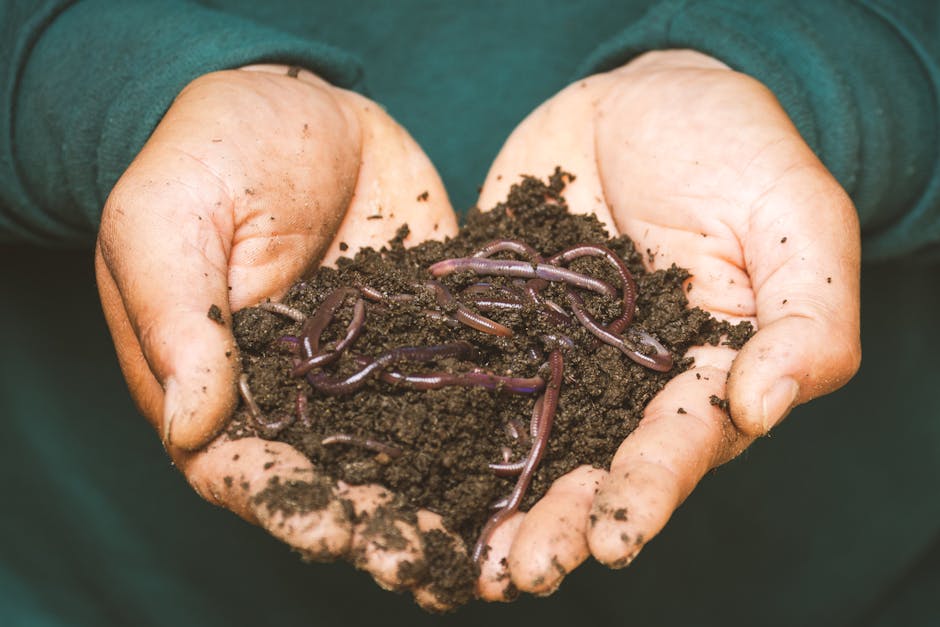
Beyond water management, mulch is a powerhouse for soil health. As organic materials break down, they invite earthworms into the garden. These tiny tillers aerate the soil and leave behind nutrient-rich castings that act as a natural fertilizer. This process is a cornerstone of organic care tips for healthy plants, as it builds soil structure without the need for synthetic inputs.
Furthermore, mulch provides critical insulation. In the heat of summer, it keeps roots cool. In the winter, a thick layer can protect early-season plants like chives or garlic from unexpected freezes. By following these organic herb gardening tips, you create a stable environment where your aromatic plants can focus on producing the essential oils that give them their flavor.
Choosing the Right Organic Mulch for Herb Garden Beds
When we talk about organic mulch, we are referring to materials that were once alive and will eventually decompose back into the earth. This is generally the best choice for food-producing plants.
- Shredded Leaves: These are one of our favorite “free” options. However, if you’re using leaves that might have been treated with chemicals, we recommend aging them for at least 9 months. Mowing over them first helps them break down more efficiently.
- Grass Clippings: These are packed with nitrogen, which is great for leafy herbs. Just be sure to dry them out first; otherwise, they can turn into a slimy, stinky mat that blocks air.
- Wood Chips (Cedar or Cypress): These are excellent for permanent herb beds. Cedar and cypress are naturally rot-resistant and can help deter some pests.
- Pine Needles (Pine Straw): These break down very slowly and are surprisingly effective for herbs like sage. Despite common myths, they won’t drastically change your soil pH overnight.
For more on building the foundation for these mulches, check out our guide on composting for the organic gardener and how to use these materials when creating homemade organic fertilizers.
Using Compost as a Mulch for Herb Garden Health
Compost is the “gold standard” of mulch for herb garden use. It serves a dual purpose: it protects the surface and feeds the plants simultaneously. A 2-inch layer of well-aged compost is usually sufficient. It improves soil structure and ensures that nutrients are slowly released exactly where the roots need them. This is particularly vital when establishing organic soil for herbs, as it boosts the microbial life necessary for aromatic herb success.
Sheet Mulching and Biodegradable Barriers
If you are starting a new herb garden over a grassy patch, sheet mulching is a “no-dig” miracle. By layering cardboard or newspaper and soaking it with water, you can smother weeds and build a new bed from the top down. This method mimics nature’s way of recycling organic debris.
For those looking for a more commercial but still eco-friendly solution, products like Ecomulch Paper Mulch | Territorial Seed offer a biodegradable barrier that suppresses weeds while eventually tilling back into the soil at the end of the season.
Inorganic Mulch for Mediterranean and Heat-Loving Herbs
Not every herb wants a cozy blanket of damp wood chips. Mediterranean herbs—like lavender, rosemary, sage, and thyme—evolved in rocky, well-draining soils. For these plants, organic mulch can sometimes hold too much moisture, leading to the dreaded root rot.
| Feature | Organic Mulch | Inorganic Mulch (Gravel/Sand) |
|---|---|---|
| Moisture Retention | High | Low |
| Soil Nutrition | Adds nutrients as it decays | None |
| Temperature | Cools the soil | Reflects heat/Warms soil |
| Best For | Basil, Mint, Parsley, Cilantro | Lavender, Rosemary, Sage |
Inorganic mulches like gravel, pea stone, or sand are the secret to success for these heat-lovers. These materials reflect sunlight up into the plant, helping to dry out the foliage in humid climates and keeping the “crown” of the plant dry. As noted in this guide on How to Choose the Best Mulch for Herb Garden & How Much You Need, a 2-inch layer of sand or small gravel is often the best way to mimic the natural habitat of rosemary and lavender.
How to Apply Mulch for Herb Garden Longevity
Applying mulch isn’t just about dumping a bag and walking away. Proper technique ensures your herbs thrive rather than suffocate.
- Check the Depth: For most organic mulches, aim for a 2-3 inch layer. If you are using coarser materials like large wood chips or straw, you can go up to 4 inches.
- Mind the Gap: This is the most important rule! Always keep mulch at least 1 inch away from the plant stem. Piling mulch against the stem traps moisture and invites rot and pests.
- Prepare the Soil: Before mulching, ensure the ground is weed-free and slightly moist. Review our preparation-tips-for-organic-soil or tips-to-prepare-organic-soil for the best start.
Seasonal Timing for Mulch Application
When you apply your mulch for herb garden beds matters as much as what you use.
- Spring: Wait until the soil has warmed up slightly before applying a fresh layer. This helps suppress the first wave of spring weeds.
- Summer: Use mulch to keep roots cool and moisture locked in during the peak heat.
- Fall/Winter: This is about protection. Applying mulch in the fall helps insulate perennials against the coming frost. As explained in Mulching Herbs For Protection Year-Round – The Kitchen Herbs, timing your application before heavy winter rains can also prevent soil compaction.
Custom Winter Mulch for Herb Garden Protection
In regions with particularly harsh winters, a standard layer of bark might not be enough. Some experts recommend a “special recipe” to keep herbs dormant and healthy. According to Sheena’s Best Mulch for Herbs – BC Living, a mix of coir, bone meal, glacial rock dust, and lime can provide trace elements and reduce soil acidity, ensuring your herbs emerge stronger in the spring.
Common Mulching Mistakes and How to Avoid Them
Even with the best intentions, it’s easy to make a few missteps. We’ve seen many gardens struggle because of these common errors:
- The “Mulch Volcano”: Never pile mulch high against the base of the plant. This creates a bridge for pests and fungus to attack the stem.
- Using Dyed Mulch: Avoid mulches dyed with industrial chemicals. These can leach into the soil and eventually into the herbs you plan to eat.
- Over-Mulching: If the layer is too thick (over 4-5 inches), oxygen can’t reach the soil, and the roots may literally suffocate.
- Ignoring Invasive Herbs: Be careful when mulching around mint. If you mulch it too well, it will spread even faster! We often recommend keeping mint family herbs in containers, as discussed in herb-garden-in-small-spaces.
By avoiding these pitfalls and using natural pest control methods for organic gardening, you can maintain a balanced, healthy ecosystem.
Frequently Asked Questions about Herb Mulching
What is the best mulch for lavender and rosemary?
For these Mediterranean herbs, inorganic mulch is king. Use 1–2 inches of pea gravel, crushed shells, or coarse sand. This ensures excellent drainage around the crown of the plant and reflects heat to keep the foliage dry, which prevents fungal issues.
How deep should I apply mulch in my herb garden?
For fine materials like compost or shredded leaves, 2 inches is plenty. For coarser materials like wood chips or straw, 3–4 inches is appropriate. Always remember to leave a 1-inch gap around the plant stems.
Can I use free yard waste as mulch for my herbs?
Yes! Grass clippings and shredded leaves are fantastic, nutrient-rich options. Just ensure the grass hasn’t been treated with herbicides and that leaves are shredded so they don’t mat down and block water from reaching the soil.
Conclusion
Finding the perfect mulch for herb garden success is a blend of art and science. Whether you’re using free autumn leaves to feed your basil or white gravel to keep your lavender happy, the goal is the same: creating a stable, protected environment where your plants can thrive.
At Pontodearte, we know that a healthy garden starts with the soil but ends with protection. Our specialized focus on protecting aromatic herb gardens from pests means we understand the delicate balance required to keep your herbs fragrant and flavorful. By choosing the right mulch, you aren’t just suppressing weeds; you’re building a fortress for your garden’s health.
For more tips on setting your garden up for success, check out our More info about organic soil for herbs guide. Happy gardening!
